




Antique Cobalt Garniture
These antique cobalt garniture sets bring symmetry and striking blue depth to a mantelpiece, offering matched groups of vases or clock sets.
Antique Cobalt Garniture
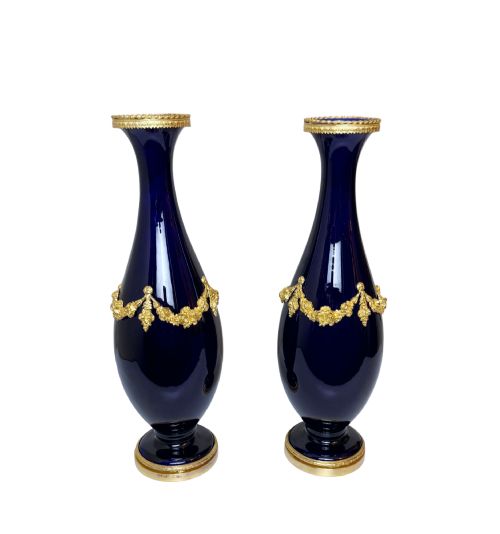
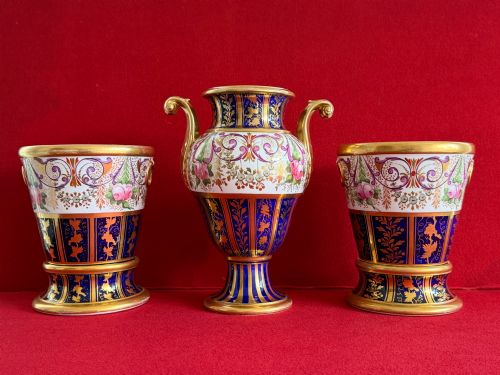
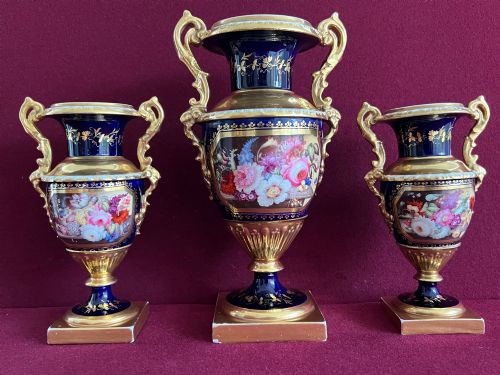
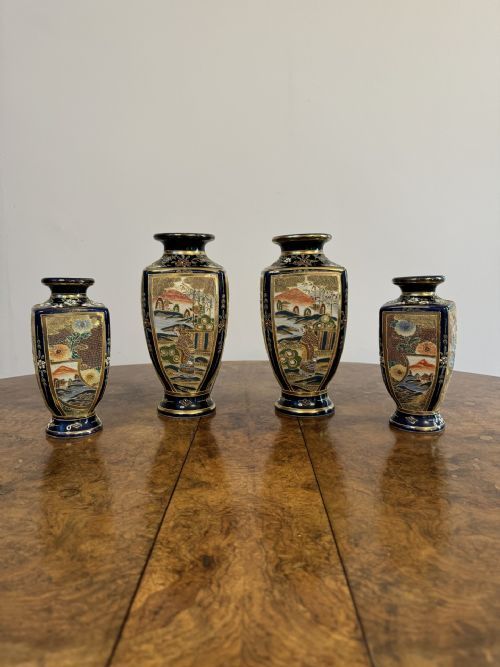
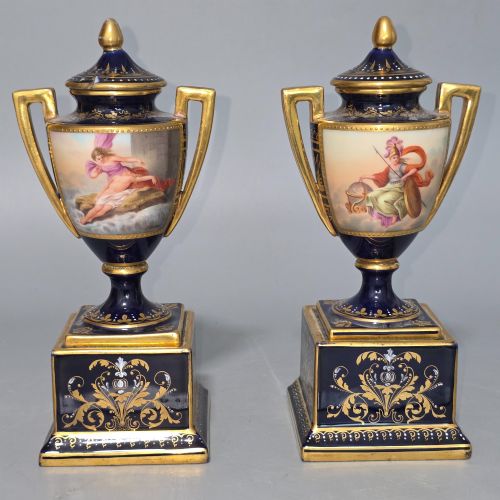
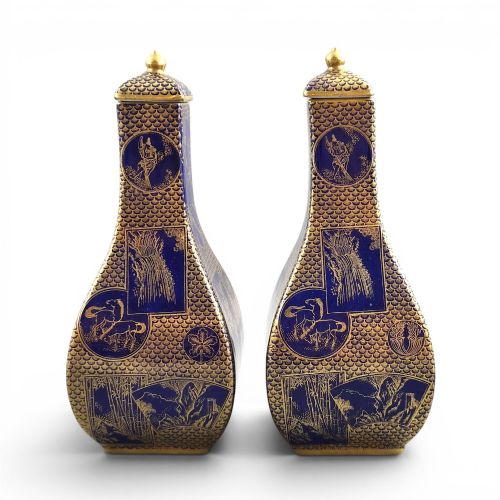
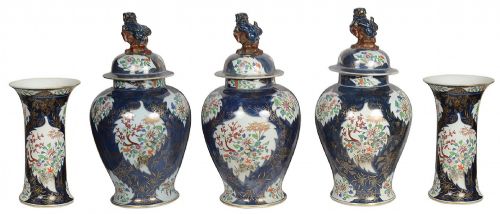
An antique cobalt garniture consists of a matched set of three, four, or five vases, or a central clock flanked by matching vases and urns, unified by deep blue ceramic grounds. When buyers search for an antique cobalt garniture, they encounter matching sets designed for symmetrical display upon a mantelpiece or sideboard.
The pieces listed span the eighteenth, nineteenth, and early twentieth centuries, drawing on European porcelain factories like Sèvres, Vienna, Minton, and Samson, alongside Japanese Satsuma and Edo period Imari workshops. Sets range from small three-piece groupings to large monumental pairs and clock garnitures mounted with ormolu.
Vases, urns, and lyre clocks dominate the object types, often featuring gilt bronze, gold leaf, and enamel highlights set against rich blue glazes. These decorative groupings reflect diverse stylistic influences, including French Rococo Revival, Empire, Chinoiserie, and Japanese traditions.
What varies in quality
Quality rests in the crispness of the gilt bronze mounts and the depth of the cobalt glaze, where finer examples display precise hand-chased ormolu and flawless blue saturation. The execution of hand-painted decoration and the integrity of matched sets elevate certain groupings above standard production pieces.
The prestige of the manufactory and signed pieces by notable artists or makers establish a higher tier of craftsmanship within these matched decorative sets.
Antique Cobalt Garniture Retail Price Guide 2026
Typical asking prices for cobalt garniture among the pieces listed under this phrase on Sellingantiques today, from the lower quarter to the upper quarter. They describe what is for sale here now, not the wider market.
Listings feature porcelain, earthenware, and glass objects mounted with ormolu, gold leaf, and gilt bronze across the nineteenth century.
Mason's Patent Ironstone·Vienna Porcelain·Sèvres·Minton Porcelain·Samson Porcelain
The Antique Cobalt Garniture Glossary
- Garniture
- A matched set of ornamental vases, jars, or urns designed to be displayed together on a mantelpiece or cabinet. These groupings typically comprise three or more pieces.
- Ormolu
- Finely ground high-carat gold applied to a bronze base using a mercury amalgamation technique, or cast gilt bronze. This material provides rich metallic mounts for porcelain bodies.
- Bleu de Roi
- A deep, rich royal blue enamel or glaze developed at the Sèvres porcelain factory during the eighteenth century. It forms the primary background colour on many French decorative vases.
- Imari
- A style of Japanese porcelain decorated in underglaze blue, iron red, and gold, produced in Arita and exported widely. These palettes heavily influenced European ceramic design.
- Amphora
- A two-handled jar with a narrow neck, modelled on ancient Greek and Roman vessels. Victorian and nineteenth-century makers reinterpreted this form in porcelain and earthenware.
Antique Cobalt Garniture: Frequently Asked Questions
What is a garniture set?
A garniture set is a matched group of three or more ornamental vases or urns designed to be displayed symmetrically together. They were traditionally placed on mantelpieces, sideboards, or large furniture pieces to create a balanced decorative scheme.
Over the centuries, these sets expanded to include clock garnitures, where a central clock is flanked by matching vases or candelabra. Each piece shares consistent decorative motifs, materials, and colour palettes.
How do I display a garniture?
Garnitures look best arranged symmetrically on a wide mantelpiece, console table, or sideboard, with the tallest piece or clock in the centre. The matching side vessels should mirror each other in placement to preserve the visual balance intended by the maker.
Ensure the surface is stable and deep enough to support the footprint of each piece safely, away from high-traffic household areas.
How do I date a porcelain garniture?
Dating a garniture relies on examining the factory marks, glaze characteristics, and the style of the metal or ormolu mounts. Nineteenth-century pieces frequently feature impressed factory ciphers, painted pattern numbers, or artist signatures on the base.
The stylistic clues, such as French Empire or Rococo Revival motifs, also help narrow down the period of manufacture alongside the material composition.
Are clock garnitures still working?
Clock garnitures often house mechanical movements that may require professional servicing to run accurately. Many survive with their original pendulum and key, though the mechanical condition varies across individual pieces.
Collectors frequently acquire them for their exceptional decorative presence and craftsmanship, treating the clock mechanism as an added historical feature.