
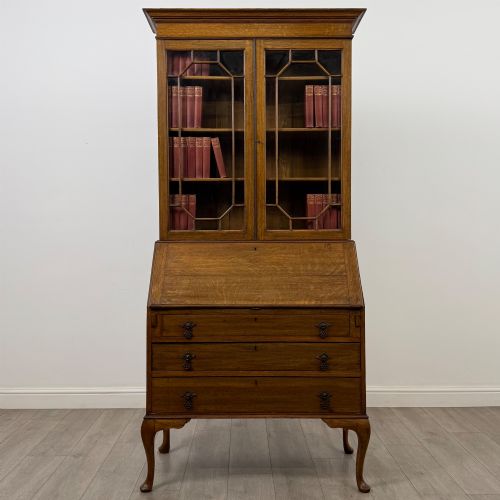
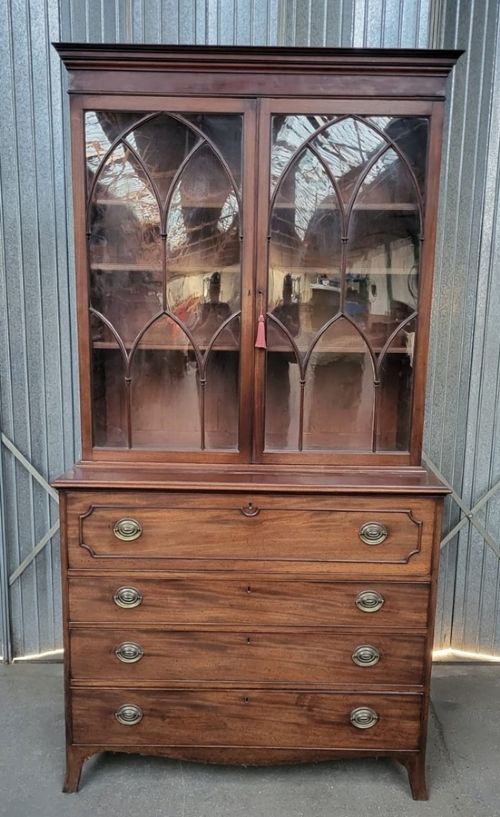
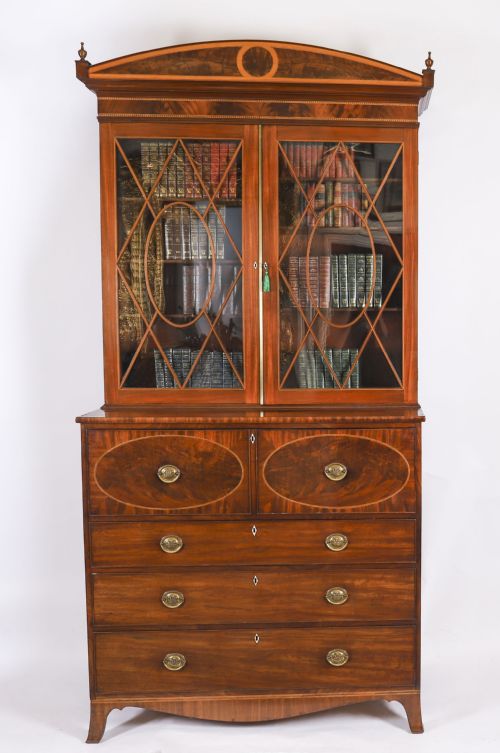
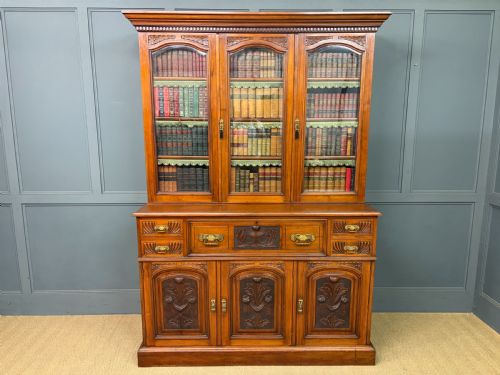


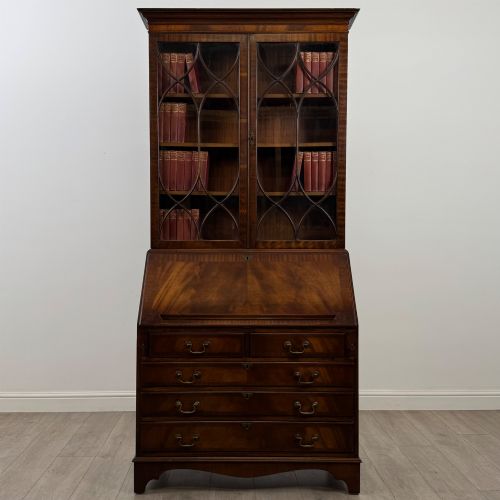
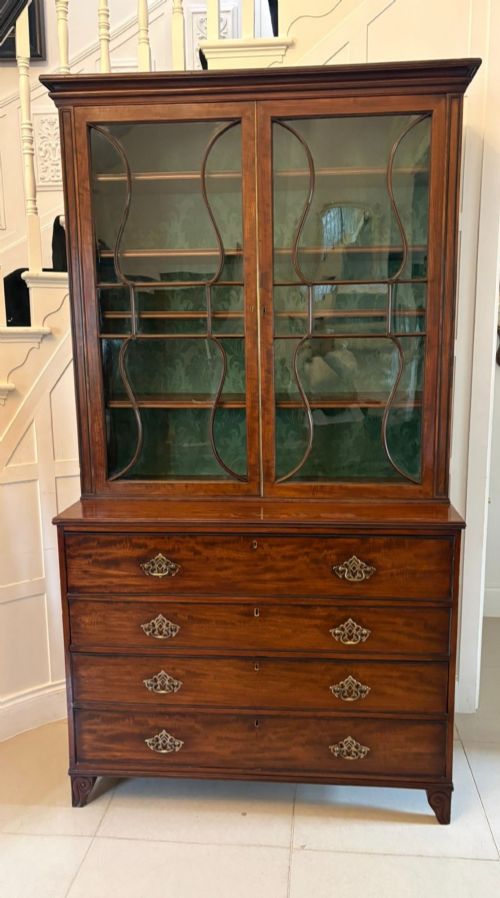
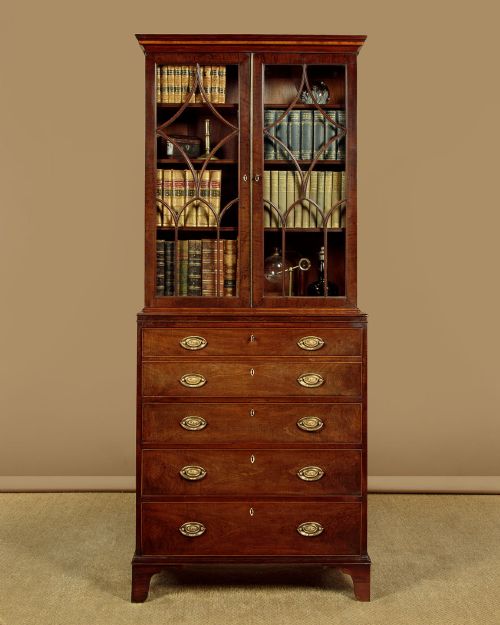
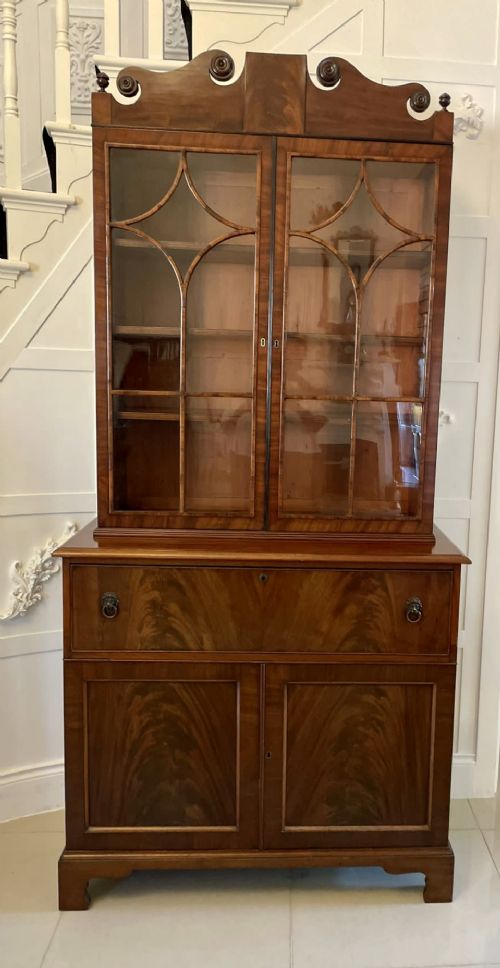
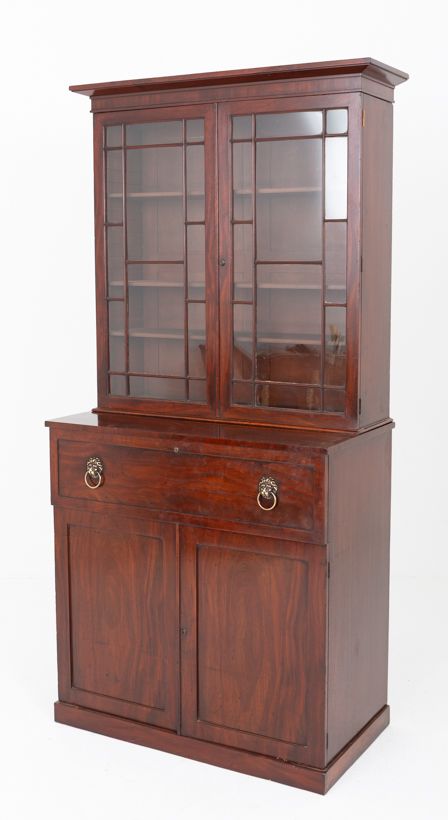
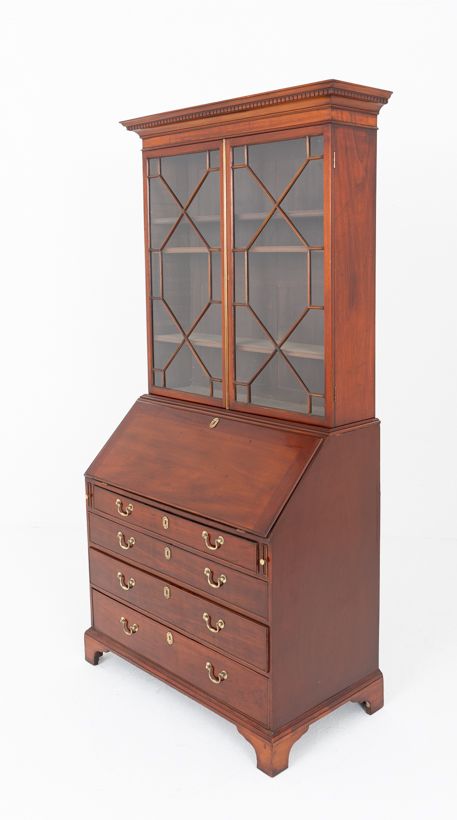
Glazed Writing Cabinet
A glazed writing cabinet brings together upper display doors and a drop-front desk, offering a practical combination for working and storage.
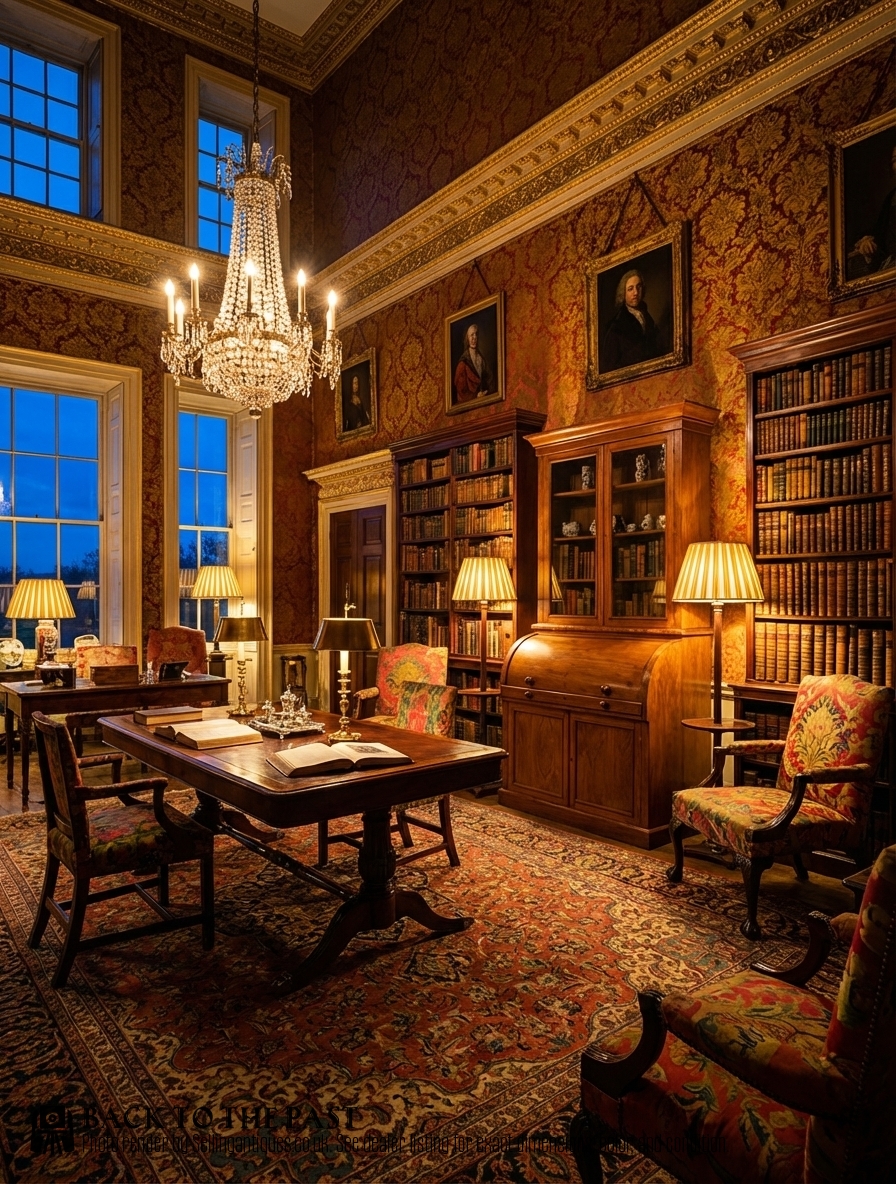
Glazed Writing Cabinet
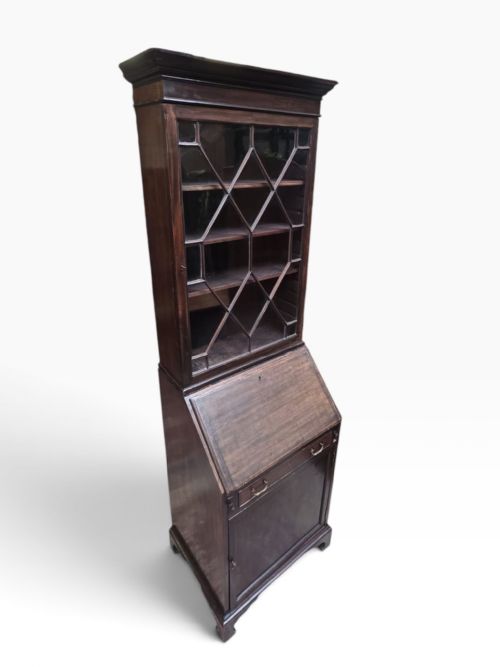
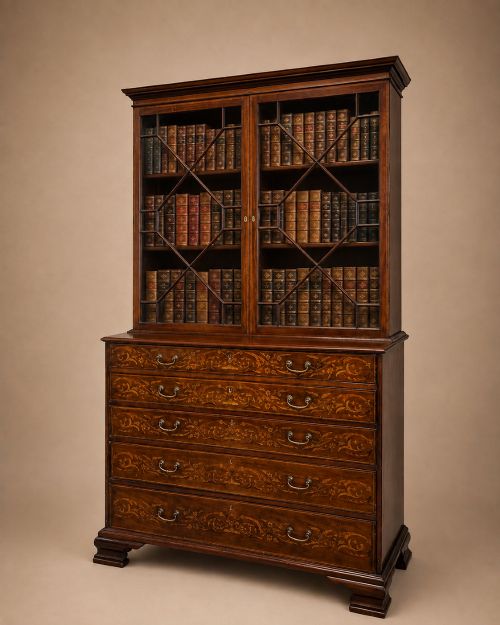
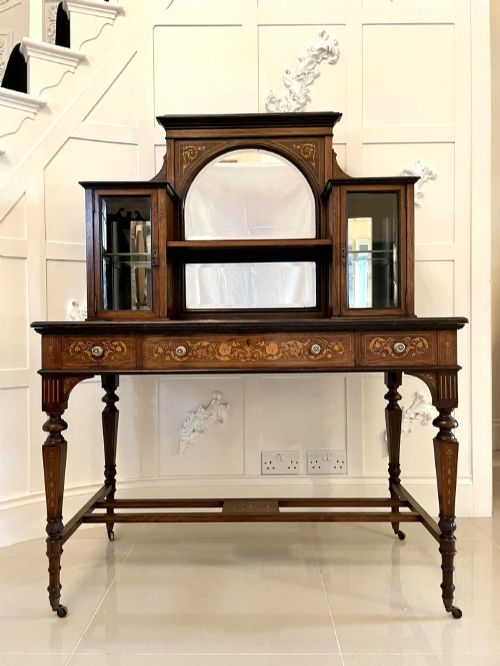
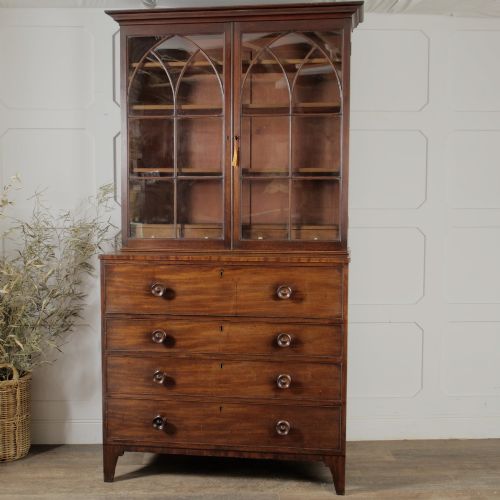
A glazed writing cabinet combines a shelved upper section enclosed by glass doors with a lower desk component that opens for correspondence. When searching for a glazed writing cabinet, collectors encounter a variety of forms including bureau bookcases and secretaire bookcases.
The material record spans centuries from the 18th century through the Georgian, Regency, and Victorian eras into Edwardian and 1920s interpretations. Pieces appear in distinct regional and revival styles such as Jacobean Revival and Queen Anne style.
Mahogany remains the predominant timber across most periods, often accented with satinwood, burr walnut, or marquetry details. Oak and yew wood examples also emerge, particularly within Edwardian and later groupings.
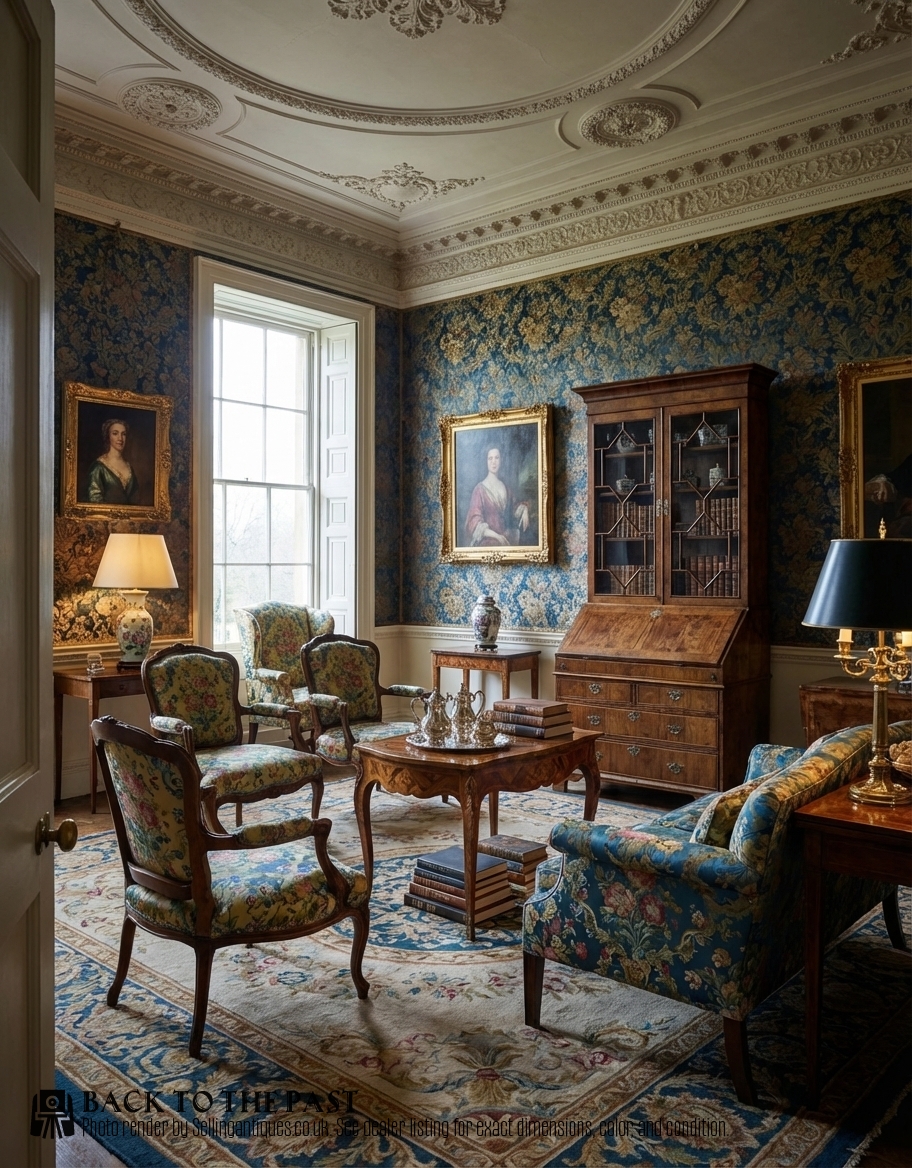
Judging Quality
Quality rests in the selection of timbers and the precision of cabinetmaking details. Finely figured mahogany, balanced flame veneers, and intricate marquetry indicate higher workshop standards.
Interior organisation reveals construction care through closely fitted pigeonholes, smooth drawer action, and tidy hidden compartments. The crispness of carved wooden elements and the proportion of the glazed framing also distinguish finer pieces from standard production.
Glazed Writing Cabinet Retail Price Guide 2026
Typical asking prices for glazed writing cabinet among the pieces listed under this phrase on Sellingantiques today, from the lower quarter to the upper quarter. They describe what is for sale here now, not the wider market.
Materials span glass, brass, mahogany, satinwood, oak, walnut, leather, and burr walnut.
George Oakley·Tudor and Burrey·Edwards and Roberts·Gillows
The Glazed Writing Cabinet Glossary
- Secretaire bookcase
- A tall storage piece containing a desk drawer with a drop-front that conceals a fitted interior of small drawers and pigeonholes.
- Astragal glazed
- Glass cabinet doors divided into smaller panes by narrow wooden glazing bars.
- Marquetry
- Decorative patterns formed by fitting together thin veneers of different coloured woods.
- Cylinder bureau
- A writing desk featuring a rounded rolling shutter that encloses the writing surface.
- Fitted interior
- The arrangement of small internal drawers, compartments, and pigeonholes revealed when opening a desk section.
Glazed Writing Cabinet: Frequently Asked Questions
How do I use a secretaire drawer?
The front of the drawer pulls down on hinges to create a horizontal writing surface while the cabinet remains locked or closed.
Inside, small drawers and compartments hold stationery and writing tools ready for use.
What is the difference between a bureau bookcase and a secretaire bookcase?
A bureau bookcase typically uses a sloping slanted flap that folds down for writing.
A secretaire bookcase uses a drawer front that pulls straight down, maintaining a more formal chest profile when closed.
Where should I place a glazed writing cabinet?
Position the piece away from direct sunlight to protect antique wood finishes and interior leather surfaces from fading.
Ensure adequate floor space in front of the cabinet so the drop-front desk can open fully.
How do I identify a Georgian glazed writing cabinet?
Look for dense solid mahogany timbers, hand-cut dovetails on internal drawers, and astragal glazed doors framing the upper shelves.
Proportions tend to be architectural with restrained classical mouldings characteristic of the 18th and early 19th centuries.