


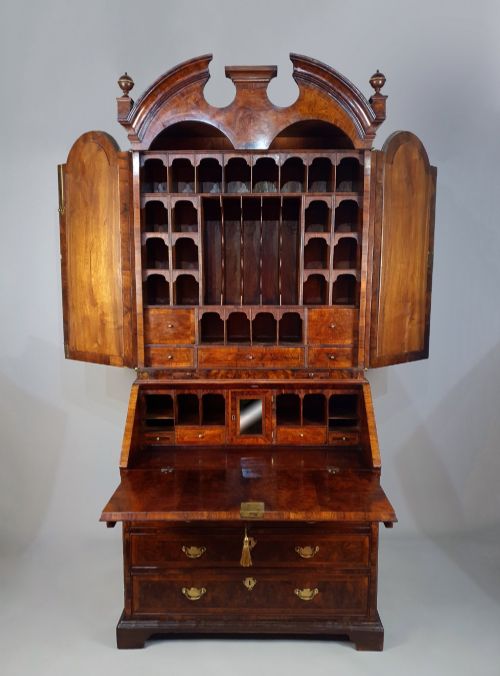
Writing Bureau with Bookcase
A writing bureau with bookcase combines a drop-front writing surface with upper shelving behind doors, offering a dual-purpose piece for study and storage.
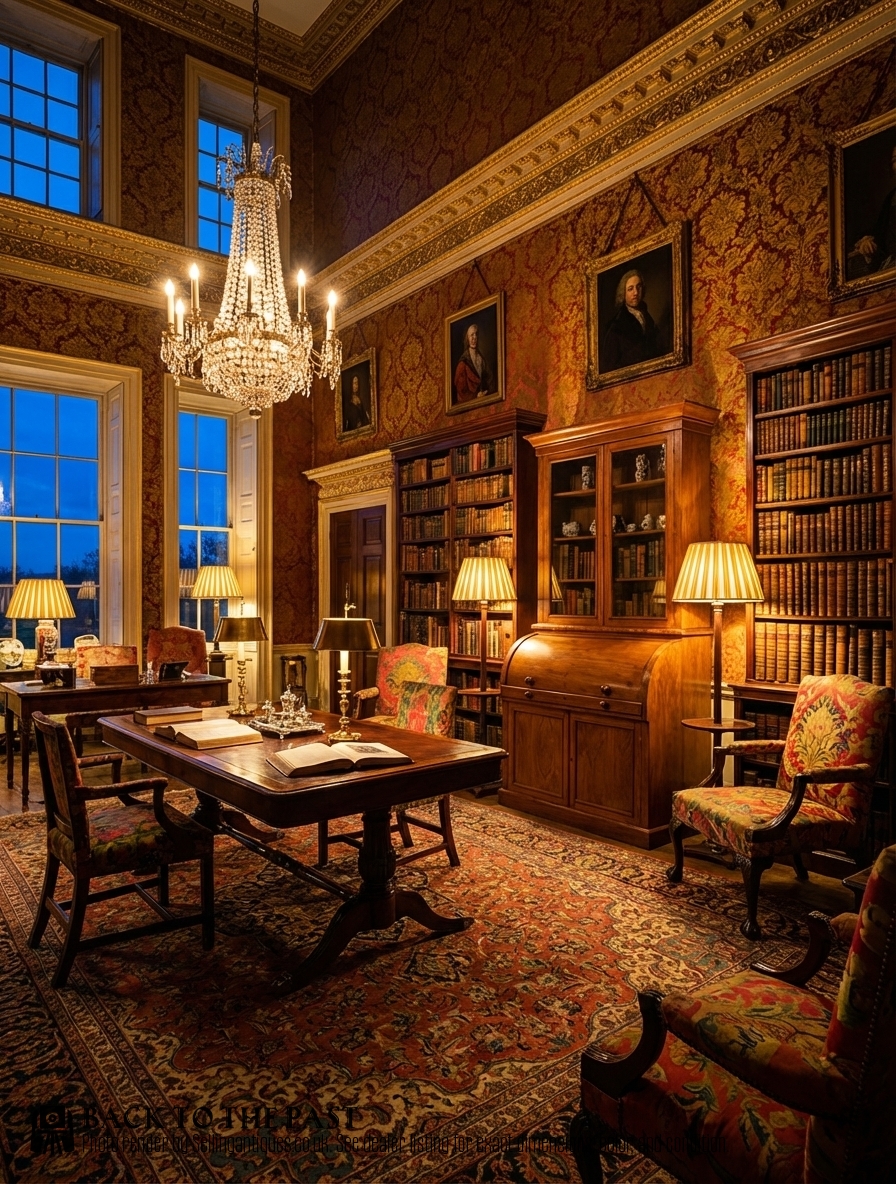
Writing Bureau with Bookcase
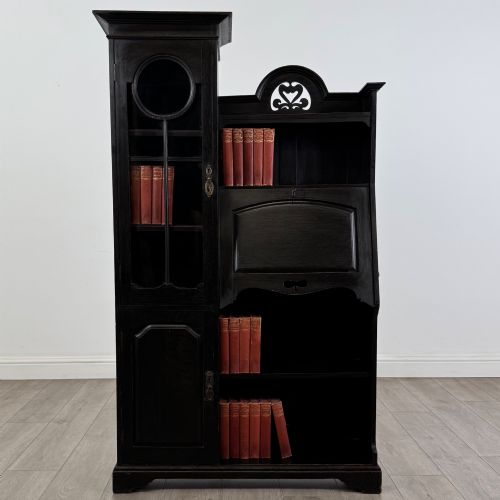
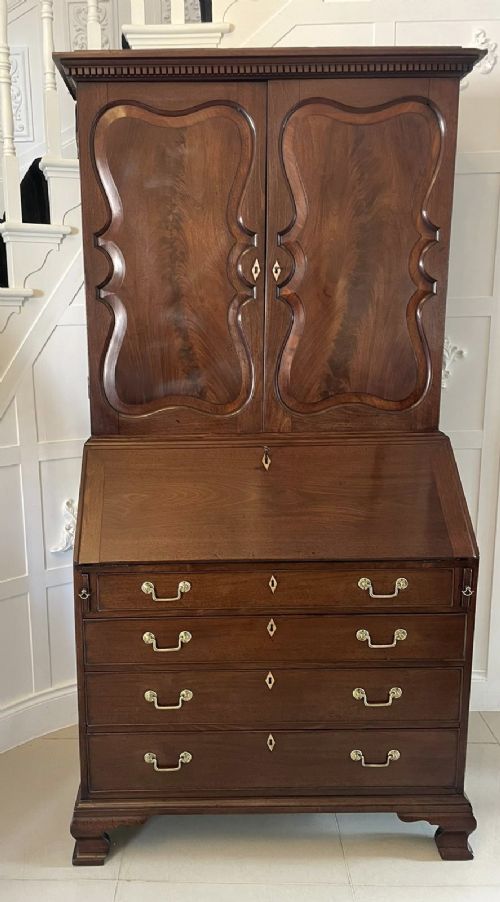
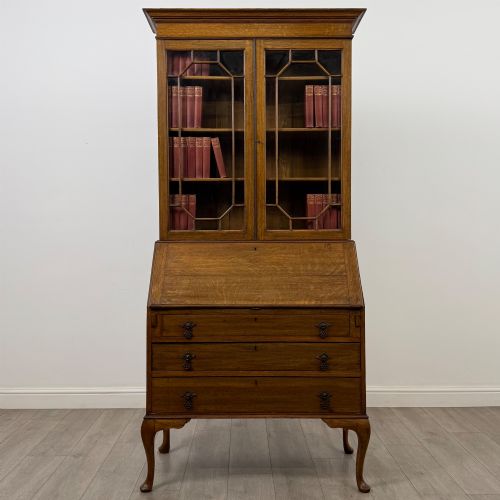
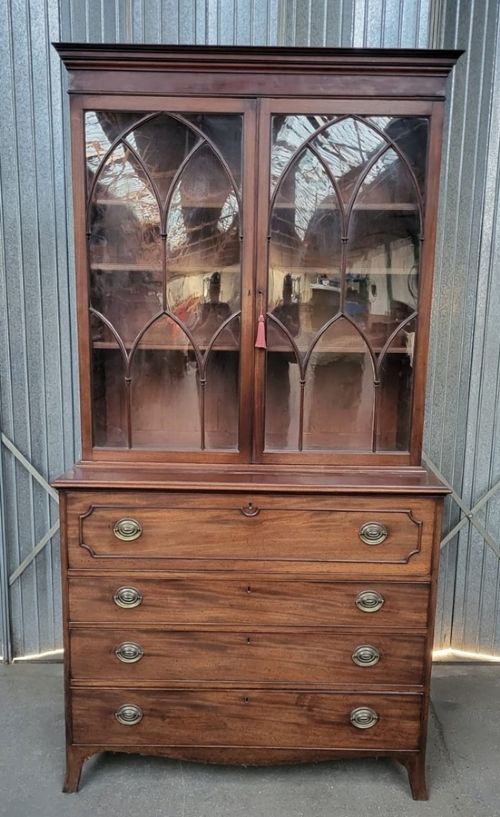
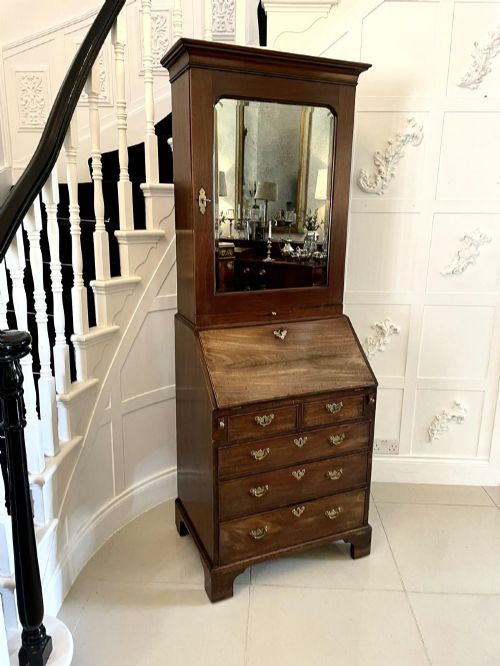
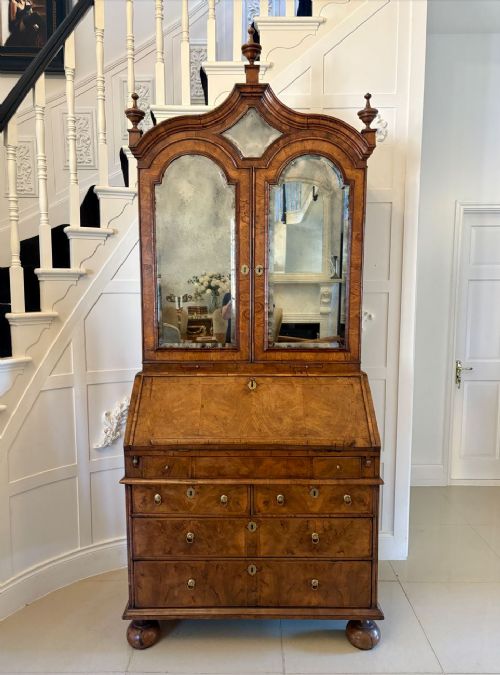
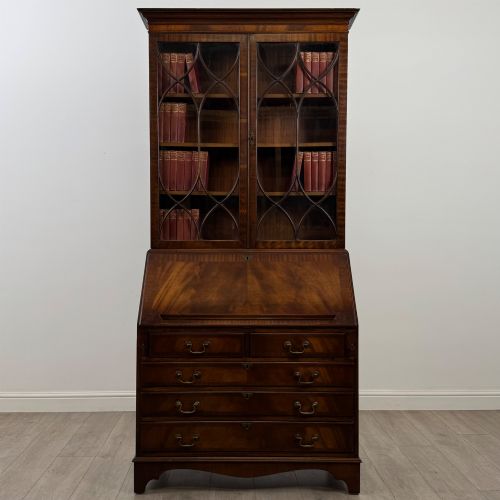
A writing bureau with bookcase provides a dedicated writing compartment combined with enclosed upper shelving for books and display. The form integrates a sloping fall-front desk or a pull-out cylinder front with glazed or panelled cabinet doors above.
Examples on this page span several centuries, with a strong representation of 18th-century pieces alongside Georgian, Regency, Victorian, and later revivals. Buyers encounter regional English variations as well as continental European craftsmanship.
Woods such as mahogany, oak, and walnut dominate the selection, often enriched with figured veneers, satinwood, or burr patterns. Interior configurations frequently include stepped compartments, small drawers, and pigeonholes for correspondence.
Materials and Construction Techniques
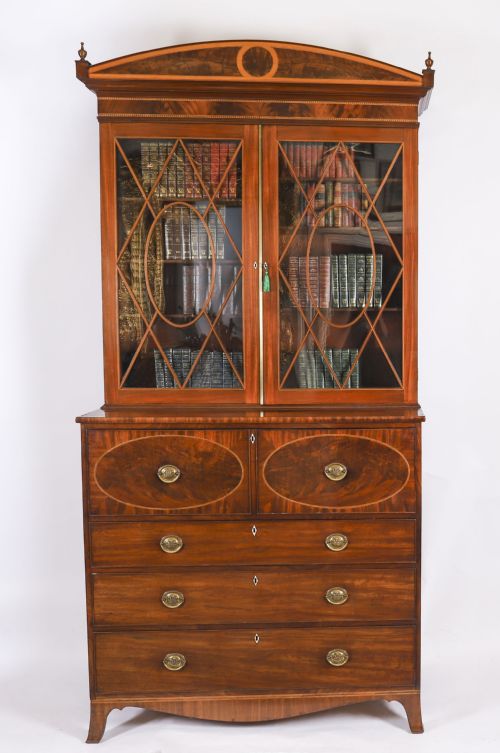
Cabinet makers utilised solid timbers alongside choice veneers, applying mahogany, burr walnut, and oak over robust structural carcasses. Crossbanding and inlay work in satinwood or lighter stringing accentuate the geometric lines of the falls and door panels.
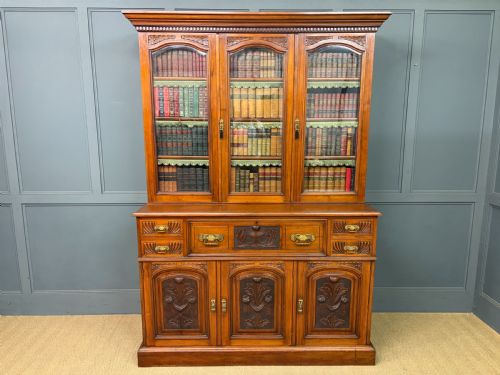
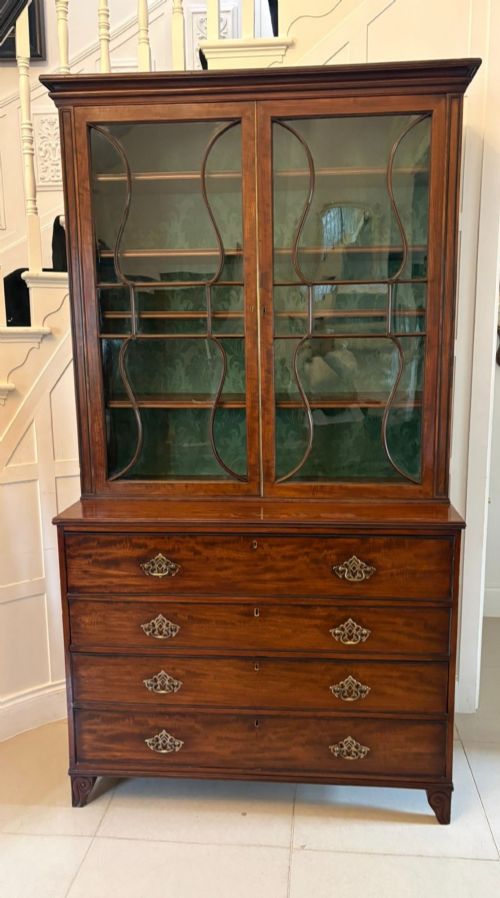
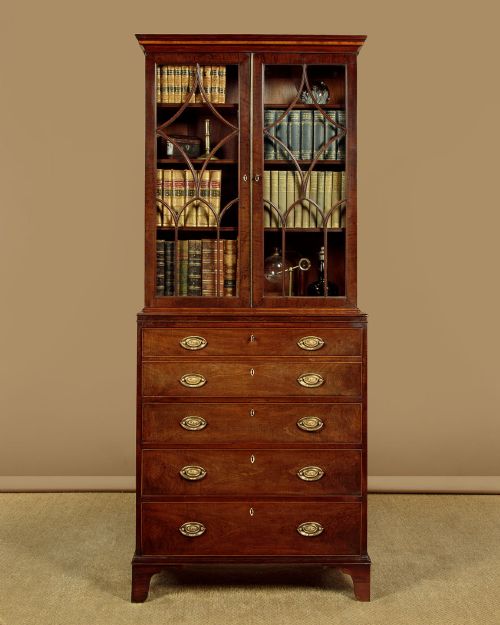
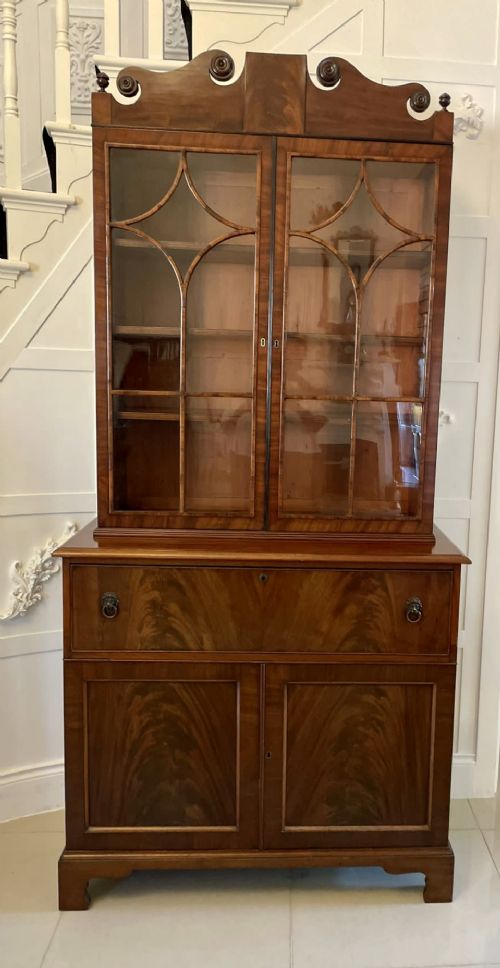
Upper bookcase sections utilise fitted interior shelving enclosed by wooden frame doors holding glass panes. Brass hardware, including drop handles, escutcheons, and hinges, secures the working components and adds structural contrast.
The writing mechanism relies on internal pigeonholes and small drawers arranged in stepped tiers, supported by lopers that pull out to bear the weight of the open fall-front desk.
Current listings include examples spanning the 18th century, Georgian period, Regency, Victorian era, and early 20th century, constructed in mahogany, oak, walnut, and satinwood.
Differentiating Quality and Craftsmanship
The sophistication of the internal fittings defines the tier of craftsmanship, separating standard utility pieces from fine cabinet work. Elaborate stepped interiors with secret compartments and finely turned small drawers indicate superior workshops.
The choice and matching of timber veneers dictate visual depth, particularly on burr walnut or figured mahogany surfaces where grain patterns flow symmetrically. Finely executed inlay, crisp mouldings, and original brass hardware elevate an example above plainer iterations.
Tudor & Burrey·Edwards & Roberts
The Writing Bureau with Bookcase Glossary
- Bureau bookcase
- A combination furniture piece featuring a writing desk base with a shelved cabinet superstructure above. The lower section typically encloses a sloping writing flap.
- Secretaire
- A desk or cabinet containing a writing drawer or pull-out writing shelf with fitted compartments. It often integrates into the upper portion of a tall bookcase.
- Fall-front
- A hinged writing flap that opens downward to provide a horizontal surface for correspondence. When closed, it conceals the internal drawers and pigeonholes.
- Loper
- A pull-out wooden arm or runner that extends from the desk carcass to support the open writing flap. It prevents structural strain on the hinges.
- Stepped interior
- An arrangement of internal compartments and small drawers set back in tiers within the desk section. This layout is typical of finer 18th-century cabinet work.
Writing Bureau with Bookcase: Frequently Asked Questions
How do I use a bureau bookcase?
To use the desk, you pull out the wooden support lopers and lower the hinged flap to create a writing surface. The interior compartments organise stationery, papers, and writing implements.
The upper shelves accommodate book collections or decorative objects, keeping them visible through glass doors or concealed behind solid wood panels.
How do I tell Georgian from Victorian pieces?
Georgian pieces often display restrained classical proportions, premium mahogany or walnut veneers, and finely stepped interior drawer arrangements. Cabinet work from this era focuses on architectural harmony and subtle stringing.
Victorian examples frequently incorporate heavier proportions, darker finishes, and revival styles such as Jacobean or Sheraton influences. The interior fittings tend to be more standardised and practical.
Where should I place it at home?
A writing bureau with bookcase suits studies, living rooms, or home offices where floor space allows for a tall cabinet. Ensure adequate clearance in front of the piece for the drop-front desk and pull-out lopers.
Positioning the unit away from direct sunlight and heat sources protects the timber veneers and historical polished finishes from drying out.