
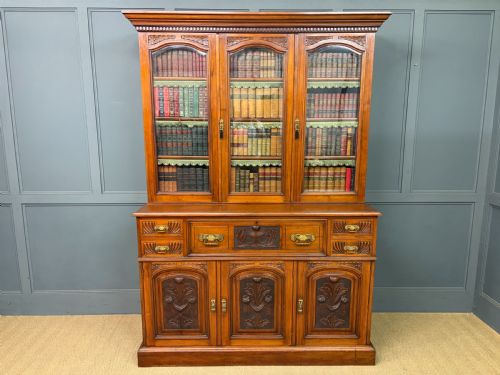
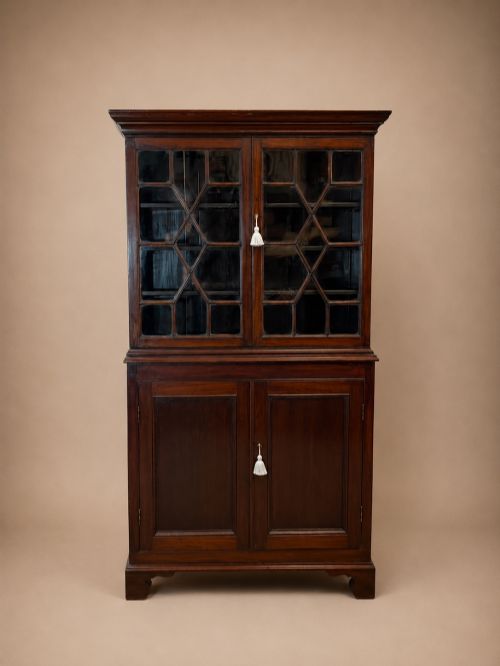
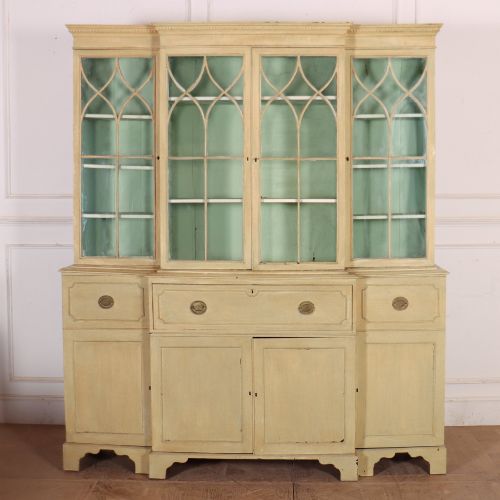
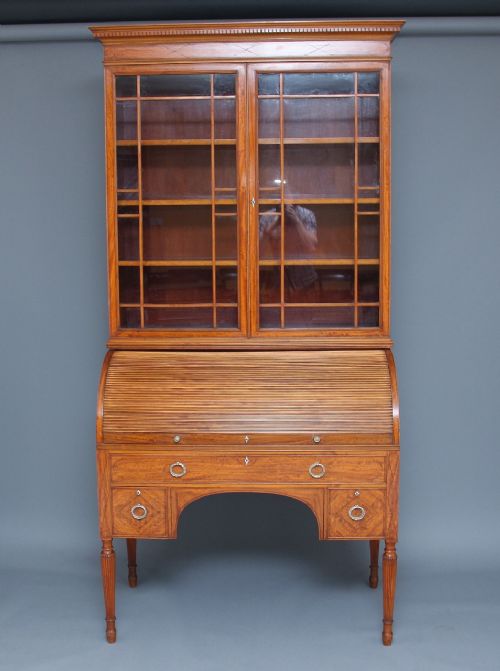
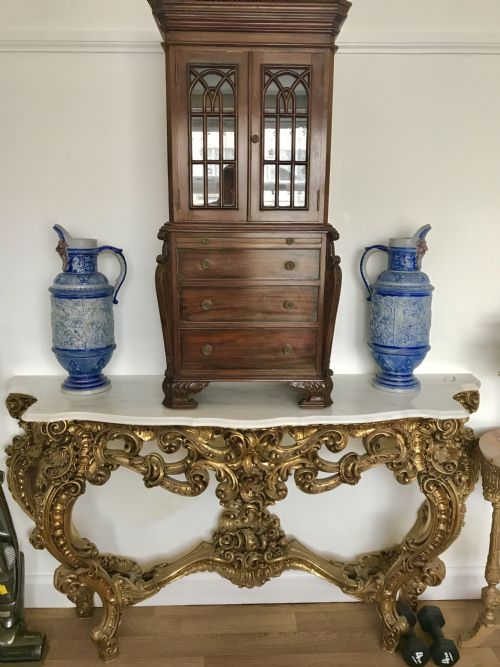


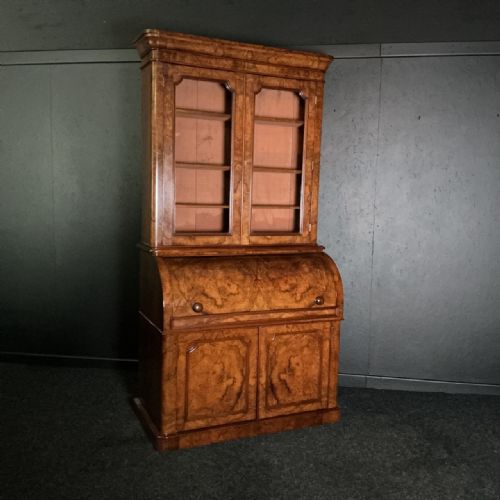

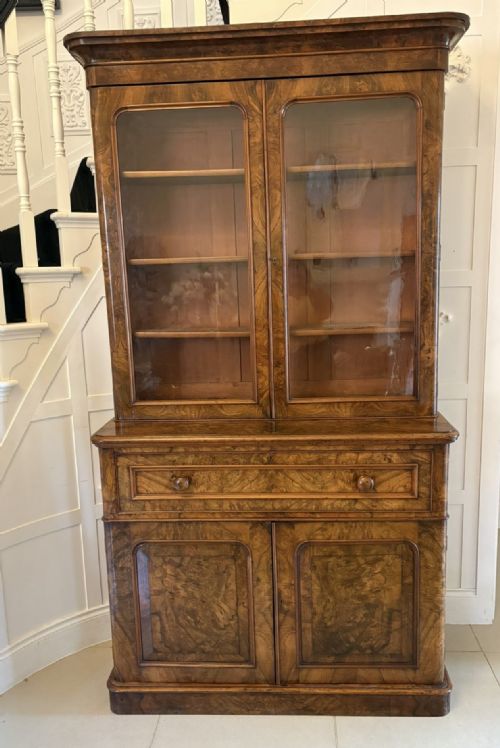


Victorian Glazed Bookcase Bureau
A victorian glazed bookcase bureau combines a practical writing desk with upper display shelving, offering a functional centrepiece for the home.
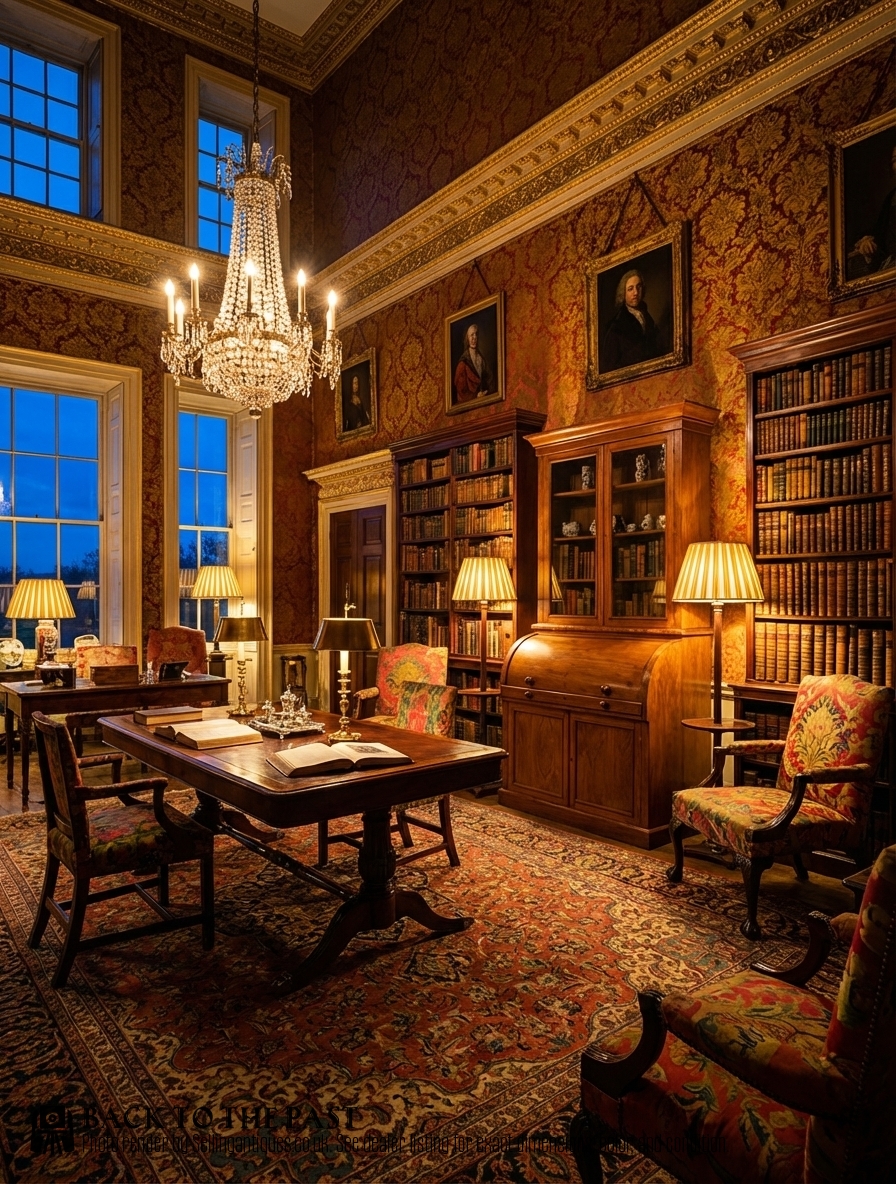
Victorian Glazed Bookcase Bureau
A victorian glazed bookcase bureau is a substantial dual-purpose item featuring a fitted writing compartment paired with upper glass-fronted shelves for books or display. The lower section typically conceals a fall-front desk or cylinder roll top hiding pigeonholes and small drawers.
Most examples found in these listings date from the nineteenth century, ranging from early Victorian mahogany pieces to late Victorian walnut and oak iterations. Makers often incorporated glazed upper doors to protect valuable volumes from dust while maintaining visibility.
Variants span full-sized library furniture down to miniature apprentice samples, alongside regional interpretations in pine and pollard oak. Stylistic influences draw upon Georgian traditions, Arts and Crafts ideals, and Victorian Gothic Revival aesthetics.
Assessing Quality and Craftsmanship
Quality rests upon the selection of timber veneers and the precision of the internal stationery fittings within the desk section. Superior items display finely figured burr walnut or satinwood alongside smooth cylinder roll tops and well-balanced glazed doors.
Listings feature woods spanning mahogany, walnut, burr walnut, satinwood, oak, pollard oak, and pine, alongside glass and brass elements.
Edwards & Roberts·Morris & Co·George W Jack·Harris Lebus
The Victorian Glazed Bookcase Bureau Glossary
- Secretaire
- A piece of furniture containing a concealed writing drawer or fold-down writing flap. This mechanism drops forward to reveal a fitted interior of small drawers and pigeonholes.
- Cylinder top
- A curved wooden roll top that slides back into the body of the desk to expose the writing surface. It operates on tracks to enclose the desk interior completely when closed.
- Astragal glazed
- Glass doors divided into smaller panes by narrow wooden mouldings called glazing bars. These grids often form geometric or Gothic patterns across the bookcase front.
- French polished
- A wood finishing technique that applies numerous thin coats of shellac using a rubbing pad. This process imparts a deep, glossy lustre that highlights the natural grain of mahogany and walnut.
Victorian Glazed Bookcase Bureau: Frequently Asked Questions
What is a secretaire bookcase?
A secretaire bookcase combines a bookshelf with a pull-down or drop-front writing desk. The internal compartments organise letters and stationery behind a locked exterior.
Lower storage typically consists of drawers or cabinet doors, creating a tall multi-functional unit for a study or library.
How do I use a cylinder bureau?
The curved wooden cylinder rolls backward into the desk housing to reveal the leather-lined writing surface and internal pigeonholes. Pushing the cylinder forward conceals your work instantly.
This mechanism keeps ongoing correspondence tidy without requiring you to clear the desk surface every day.
Are these pieces suitable for modern books?
Most nineteenth-century shelves are adjustable or built with sufficient depth to accommodate standard modern hardbacks and reference volumes. The glazed doors protect delicate bindings from dust and sunlight.
Measure the shelf depth and height of your specific books before arranging heavier volumes on upper wooden tiers.
How do I date a Victorian bookcase bureau?
Dating relies on timber choices, hardware styles, and structural hallmarks such as dovetail construction and veneer thickness. Early Victorian pieces often feature solid mahogany, while late Victorian items frequently utilise walnut or oak.
Maker stamps, paper labels, and stylistic cues like Arts and Crafts or Gothic Revival details further narrow the decade of manufacture.