
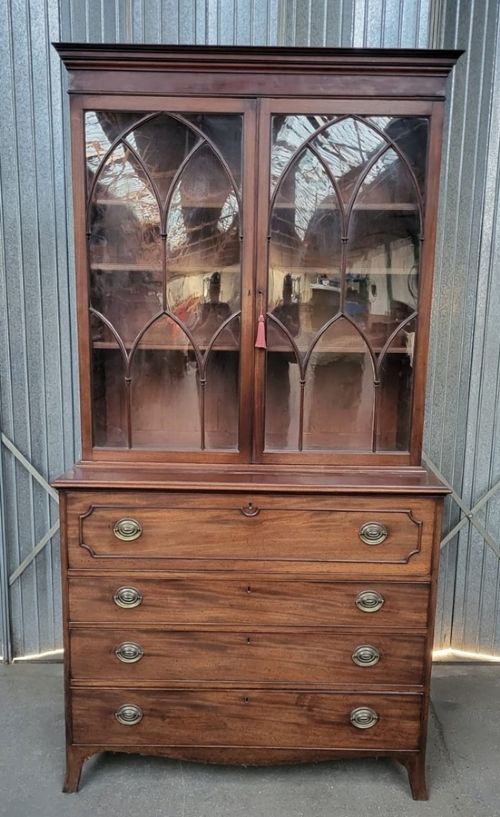
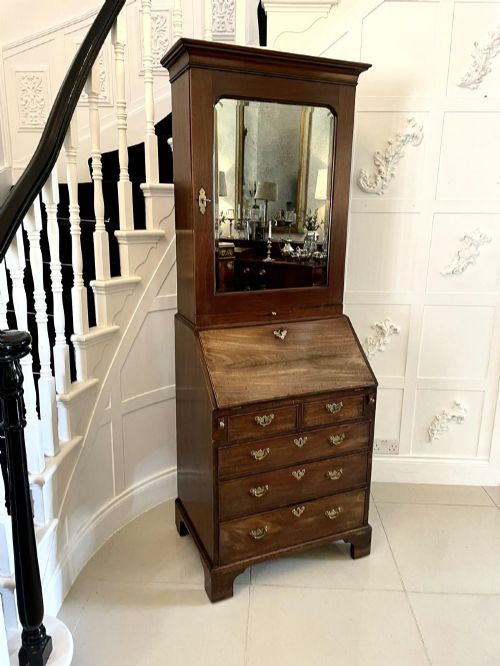


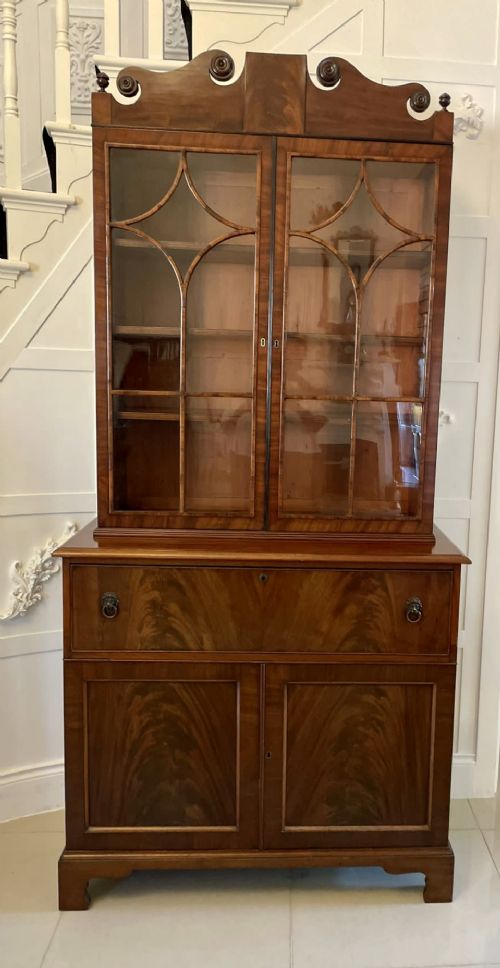
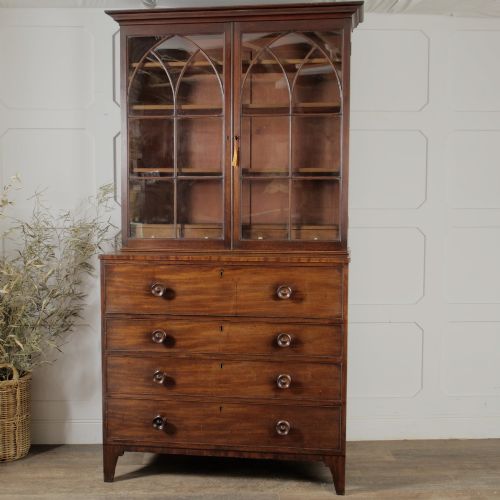
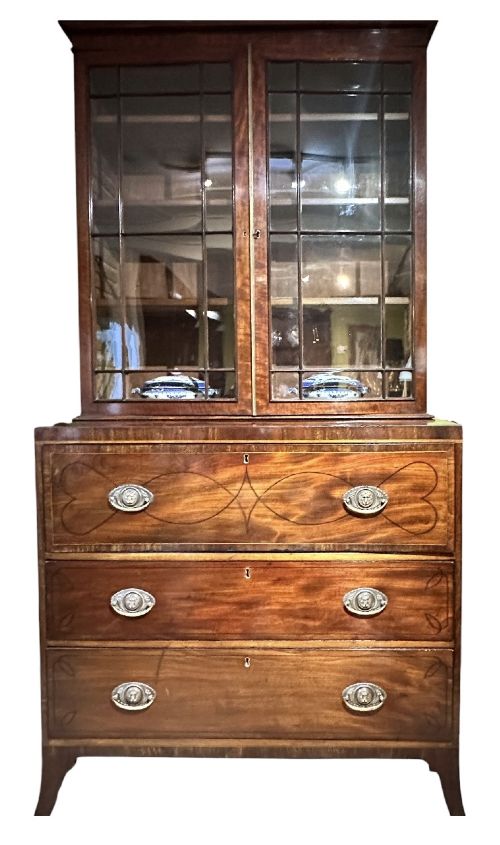
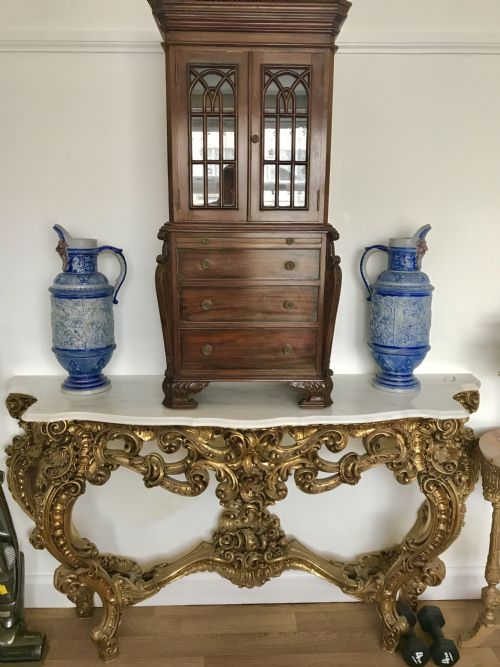


Brown Wood Bookcase Desk
A brown wood bookcase desk brings together shelving and a writing surface, combining practicality and display.
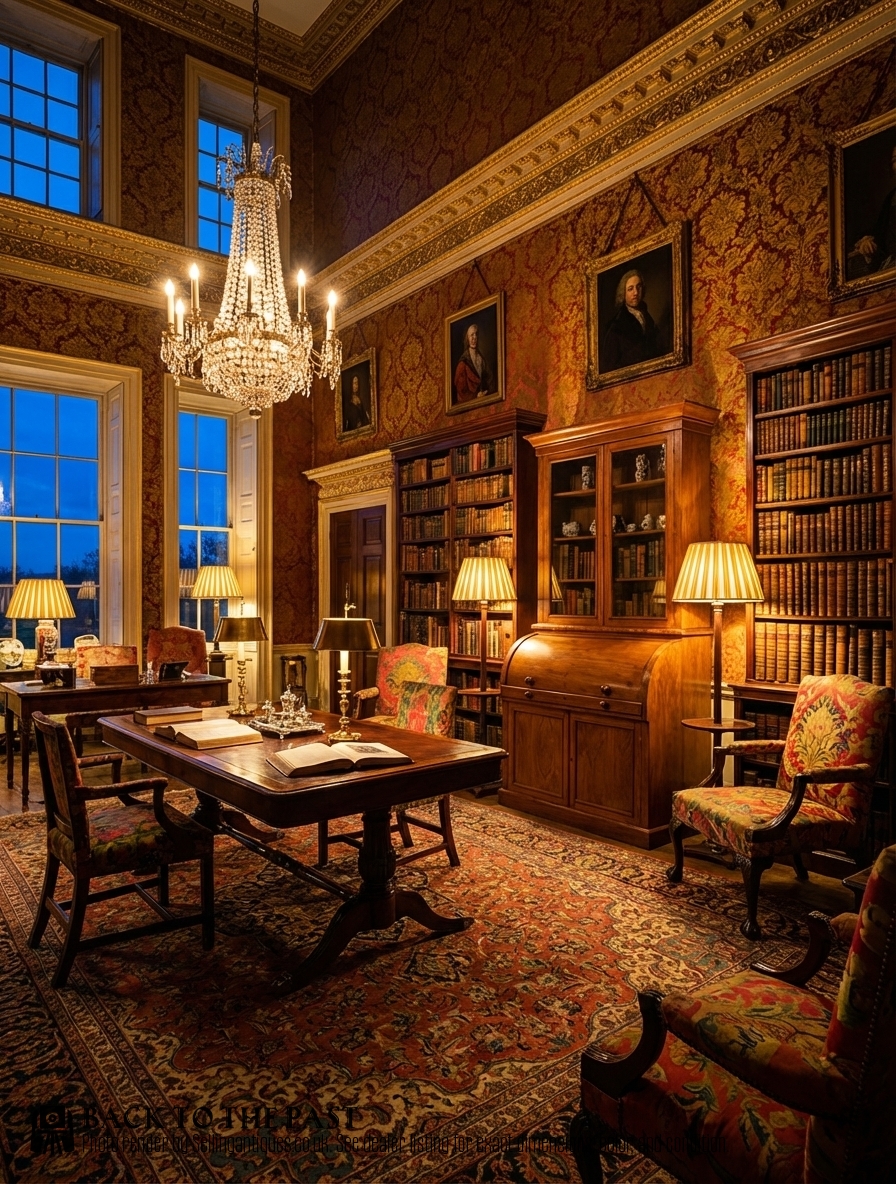
Brown Wood Bookcase Desk
A brown wood bookcase desk, also encountered as a bureau bookcase or secretaire bookcase, unites an upper tier for books with a lower writing compartment. These pieces appear across eighteenth-century, nineteenth-century, and twentieth-century periods, spanning Georgian, Regency, Victorian, and Edwardian eras.
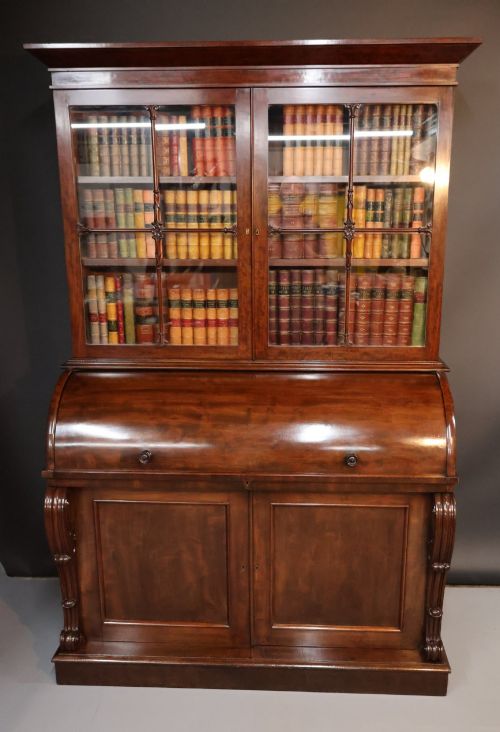
The most common formats on this page are tall mahogany or walnut bureau bookcases featuring glazed upper doors and drop-down writing drawers. Variations include cylinder desks, tambour writing tables, and miniature furniture samples.
Origins range from English workshops to Dutch bombe designs, Italian marquetry cabinets, and Channel Island examples. Makers and designers such as Thomas Hope influence specific stylistic details within these regions.
Materials and Construction
Construction relies primarily on dense hardwoods such as mahogany, walnut, and oak, often enhanced with figured veneers, satinwood, and yew wood. Brass hardware and glass panes complete the upper cabinet doors, while writing surfaces frequently feature inset leather.
Cabinetmakers utilised traditional joinery alongside intricate decorative techniques including marquetry inlay, French polishing, and tambour mechanisms. Structural elements balance heavy book storage above with stable desk surfaces below.
One listed item is a miniature mahogany bureau bookcase reduced to a quarter size as an apprentice French polished furniture sample.
Craftsmanship and Proportion
Quality separates through the selection of timber veneers and the precision of inlay work, such as marquetry patterns. Finer pieces demonstrate careful grain matching across large surfaces and sophisticated internal drawer arrangements within the desk section.
Proportion and architectural detailing also divide standard items from superior examples. Well-executed glazing bars, balanced cornice mouldings, and retained original brasses distinguish higher-grade specimens from later alterations.
The Brown Wood Bookcase Desk Glossary
- Secretaire bookcase
- A cabinet featuring a fitted writing drawer that drops open to reveal pigeonholes and small drawers, positioned beneath a bookcase section.
- Bureau cabinet
- An alternative term for a desk and storage unit, frequently used to describe walnut or mahogany pieces from the eighteenth century onwards.
- Cylinder bureau bookcase
- A piece characterised by a quarter-cylinder rolling shutter that encloses the writing desk area.
- Tambour
- A flexible shutter made of narrow vertical strips of wood glued to canvas, used to enclose desk compartments.
- Glazed bookcase
- An upper cabinet section fitted with glass paned doors designed for the display and protection of books.
Brown Wood Bookcase Desk: Frequently Asked Questions
How do I use a bureau desk?
The writing flap folds down to create a stable desk surface while concealing internal pigeonholes and small drawers for stationery. When not in use, the flap closes to hide papers and maintain a tidy room.
Upper glass doors provide visible storage for books, allowing the piece to function simultaneously as a library cabinet and a writing station.
What is a secretaire drawer?
A secretaire drawer pulls out like a standard drawer but includes a drop-front mechanism revealing an integrated writing desk. This design offers a concealed workspace without requiring a traditional sloping desk lid.
Inside, small compartments organise letters and documents while maintaining the exterior appearance of a formal cabinet.
How do I date an antique bookcase?
Dating relies on identifying timber choices, construction methods, and stylistic details associated with periods like Georgian, Regency, or Edwardian. Walnut predominates in earlier eighteenth-century examples, while mahogany becomes widespread later in the Georgian and nineteenth-century eras.
Hardware types, foot designs, and interior construction details further clarify the era of manufacture.
Are these desks suitable for modern rooms?
These dual-purpose cabinets fit well in studies, living rooms, and bedrooms by combining vertical bookshelf storage with a compact writing desk. Their enclosed compartments help conceal modern stationery and clutter.
Careful measurement of ceiling height and floor space ensures these substantial wooden pieces complement the proportions of contemporary interiors.