





Walnut Secretaire Desk
A walnut secretaire desk brings together concealed writing compartments and fine timber, offering a practical writing surface alongside enclosed storage.
Walnut Secretaire Desk
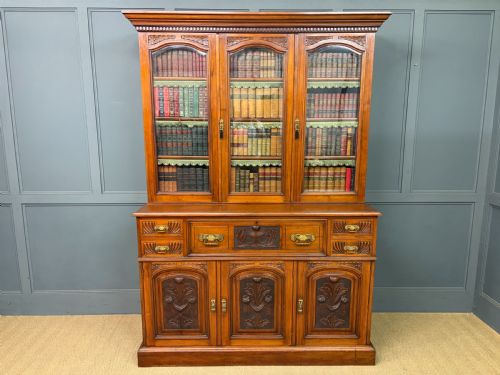
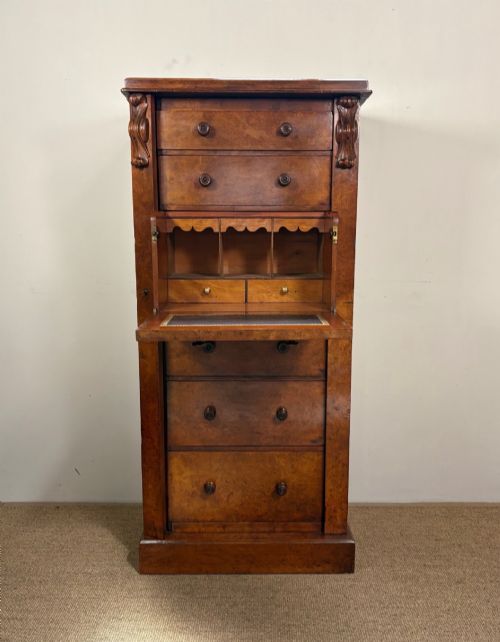
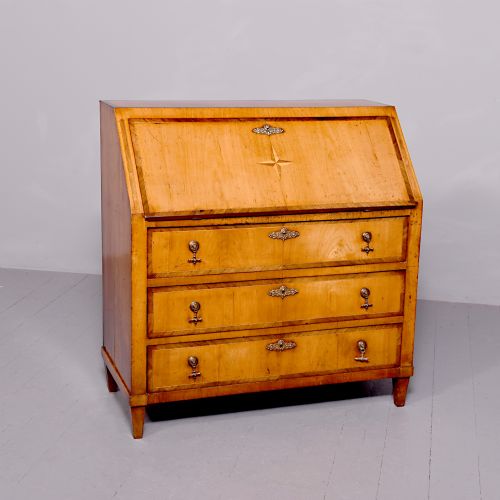
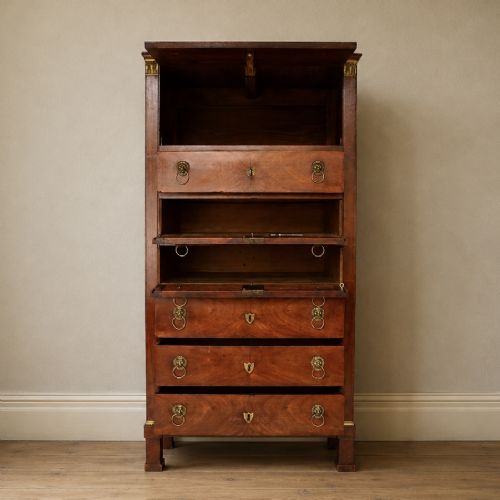
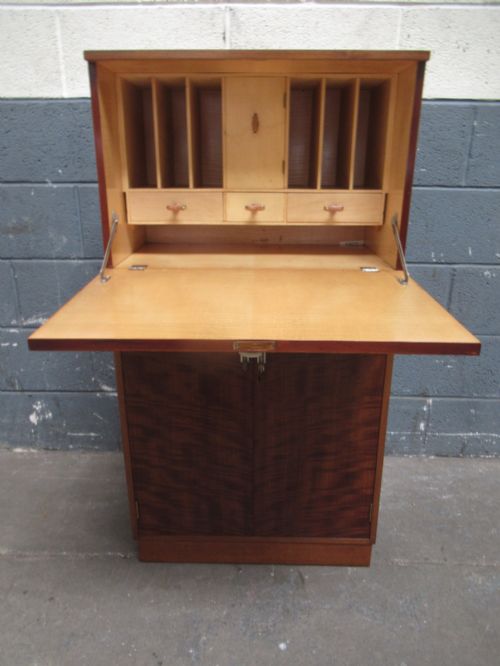
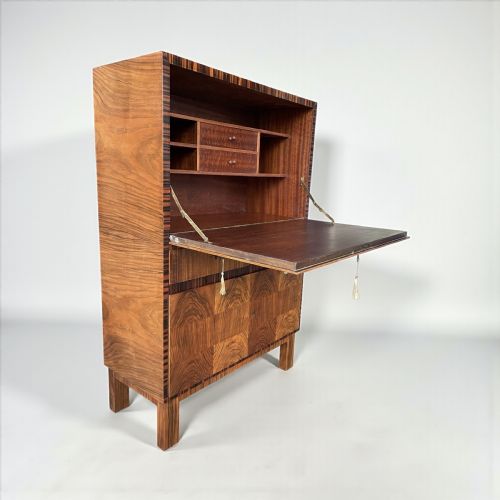
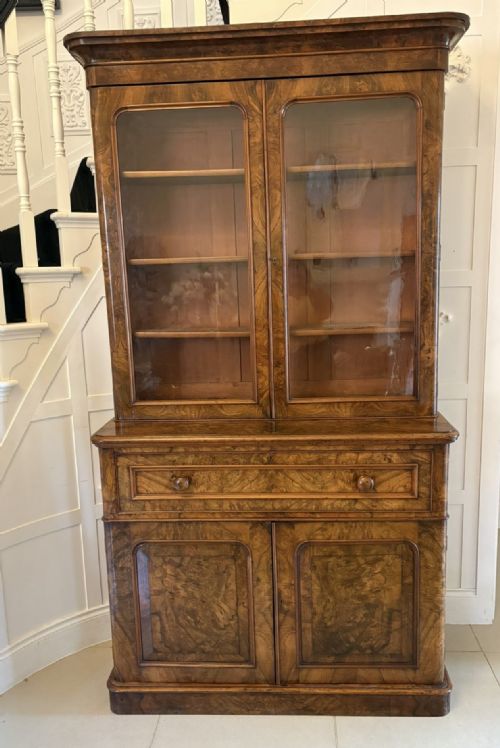
A walnut secretaire desk combines a drop-front or drawer-front writing drawer with internal pigeonholes and small drawers, often set beneath a bookcase or built into a chest of drawers. When exploring a walnut secretaire desk, a buyer encounters pieces originating from the eighteenth century through to the twentieth century, with distinct styles ranging from Queen Anne and Georgian to Victorian and Art Deco.
The format varies from tall bureau bookcases and chest on chest configurations down to compact writing cabinets, Davenport desks, and French secrétaires abattants fitted with marble tops. English examples from the Georgian and Queen Anne periods sit alongside continental pieces showing Dutch Baroque and French Empire influences.
Materials and construction
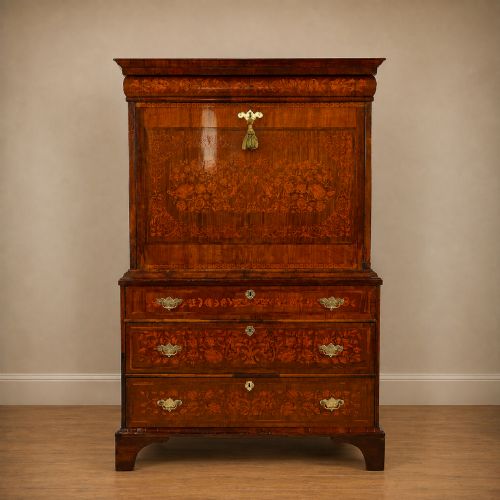
Makers utilised solid walnut and figured burr walnut veneers applied to secondary woods such as oak, building carcasses that housed complex drawer configurations and fall-front writing compartments. Surface decoration frequently incorporates floral marquetry, parquetry, and rosewood or satinwood inlay.
Fittings include brass drop handles, escutcheons, and gilt bronze mounts, while interiors often feature leather or baize writing surfaces. Certain pieces integrate glass door panels for upper bookcase sections and specialised tambour fronts.
Walnut Secretaire Desk Retail Price Guide 2026
Typical asking prices for walnut secretaire desk among the pieces listed under this phrase on Sellingantiques today, from the lower quarter to the upper quarter. They describe what is for sale here now, not the wider market.
Listings feature walnut secretaire desks spanning the eighteenth, nineteenth, and twentieth centuries, incorporating oak, brass, glass, and leather.
Assessing quality
The standard of a walnut secretaire desk depends upon the selection of timber figure, particularly the richness of burr walnut veneer and the symmetry of matched grain patterns across the fall-front and drawer faces. Superior execution shows in the precision of floral marquetry and parquetry work, as well as the integration of decorative elements like gilt bronze mounts and marble tops.
Internal joinery dictates much of the standing, seen in the craftsmanship of secret compartments, pigeonhole arrangements, and small internal drawers. Proportion and balance also define better examples, whether dealing with diminutive early eighteenth-century chests or grander bureau bookcases.
Gregory & Co. of London·Adriano Brambilla
The Walnut Secretaire Desk Glossary
- Secretaire
- A desk or cabinet featuring a pull-down or drop-front writing flap that conceals small drawers and pigeonholes. This central feature distinguishes writing furniture from standard chests or bookcases.
- Burr walnut
- Timber taken from a tree growth where the grain has grown in a deformed, swirling pattern. This highly decorative veneer appears on the primary surfaces of finer desks.
- Marquetry
- Decorative inlay technique using pieces of various woods to form pictorial or floral patterns. Craftsmen applied this to the exterior surfaces of continental and English cabinets.
- Escritoire
- An alternative term for a writing cabinet or desk. The form often incorporates a fall-front writing surface.
- Baize
- A coarse woolen material used to line writing surfaces and pull-out flaps. It provides a soft, durable layer for writing.
Walnut Secretaire Desk: Frequently Asked Questions
What is a walnut secretaire desk?
A walnut secretaire desk is a piece of furniture featuring a specialised writing drawer or drop-front panel that conceals a fitted interior of small compartments. These desks range from tall bureau bookcases to compact cabinets.
Built primarily from walnut and burr walnut, these pieces combine concealed writing facilities with everyday storage or display space.
How do I date a walnut secretaire desk?
Dating relies on observing structural proportions, timber choice, and decorative styles such as Georgian marquetry, Victorian carving, or Art Deco restraint. Early eighteenth-century pieces often display figured walnut on smaller proportions.
Later nineteenth-century iterations incorporate revival styles, heavier mouldings, and machine-cut veneers alongside traditional cabinetmaking techniques.
Where were these desks used?
These desks served as private writing and correspondence centres in the principal rooms of grand houses and town residences. The enclosed writing compartments allowed owners to secure private papers and letters.
Upper bookcase sections provided functional storage for libraries, while lower drawer configurations housed household documents and personal effects.
How do I care for walnut furniture?
Maintaining walnut furniture involves keeping pieces away from direct sunlight and steady sources of artificial heat to prevent veneer lifting. Regular dusting with a soft, dry cloth preserves the polished finish.
A light application of appropriate wax feeding helps maintain the moisture and depth of the timber figure over time.