





Cylinder Fall Writing Desk
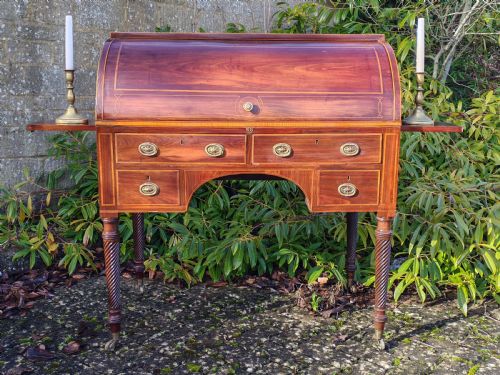
A cylinder fall writing desk brings together clever mechanics and fine cabinet-making, offering a curved roll-top that conceals fitted pigeonholes and a pull-out writing surface.
Cylinder Fall Writing Desk
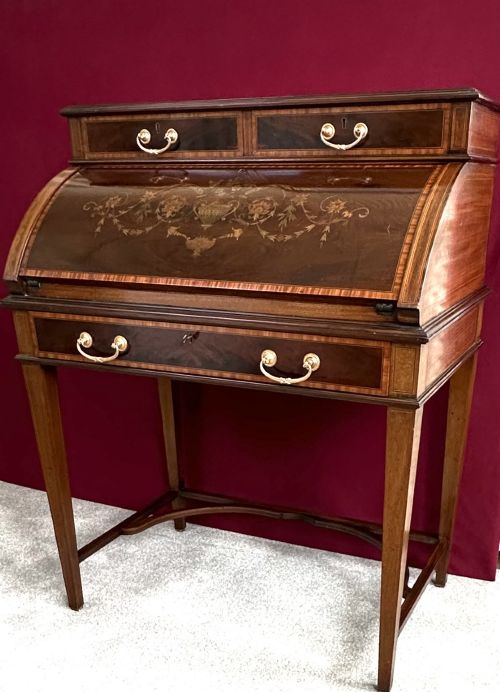
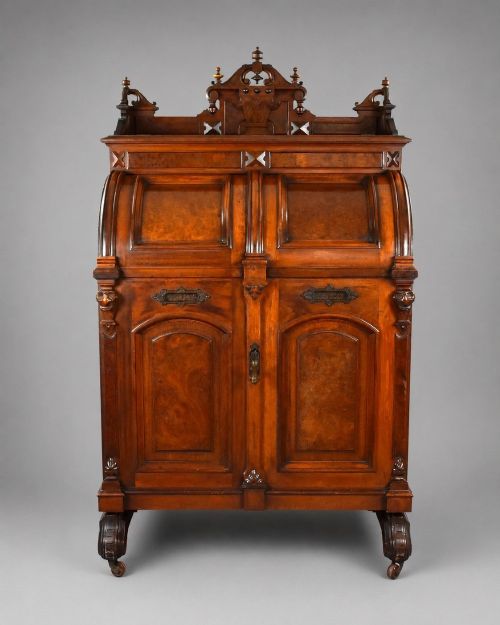
A cylinder fall writing desk is a form of workspace designed to hide papers and writing instruments beneath a rotating quarter-cylinder lid. The pieces appearing on this page span the Georgian, Victorian, and Edwardian periods, stretching back to 1700 and forward into the twentieth century.
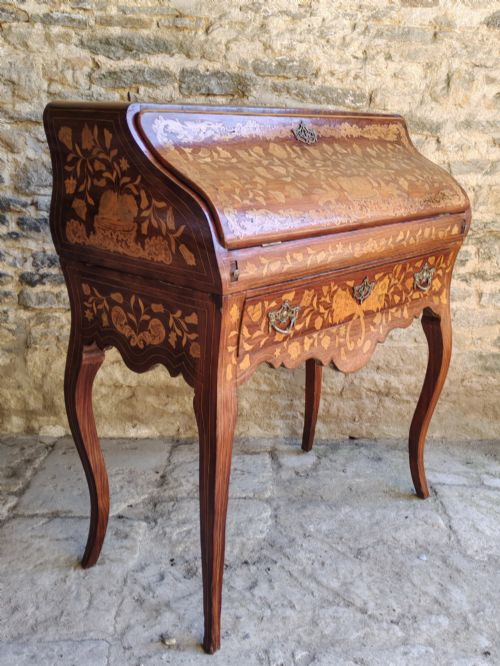
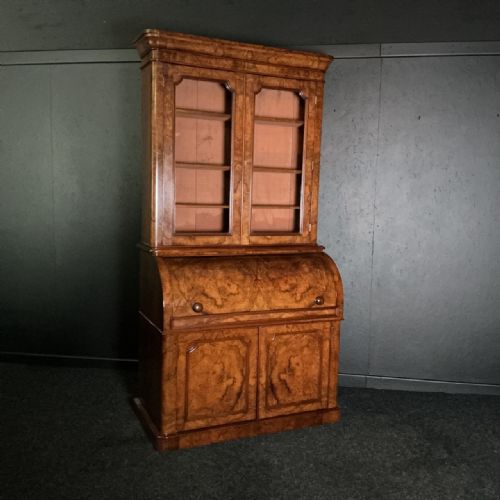
Most examples take the form of standard desks or bureaux, while others combine the cylinder action with upper bookcases. Their origins range across English cabinet traditions as well as continental Dutch marquetry and French-influenced Louis XVI styles.
Buyers will encounter compact ladies' desks alongside larger library pieces. The surviving forms reflect the changing domestic habits of writers and readers over two centuries.
How they were made
Cabinet-makers relied on dense timbers such as mahogany, walnut, burr walnut, and satinwood, often enhanced with figured veneers. Selected pieces display elaborate floral marquetry inlay using contrasting woods.
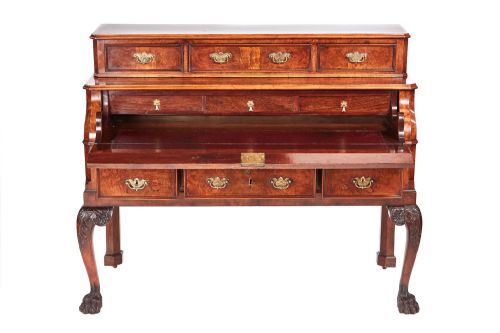
The distinctive curved cylinder mechanism required precise joinery so the shutter slid smoothly within internal grooves. Mounts in brass and ormolu often secure corners and drawer pulls, while writing surfaces are frequently lined in leather and topped with glass on specific variants.
Cylinder Fall Writing Desk Retail Price Guide 2026
Typical asking prices for cylinder fall writing desk among the pieces listed under this phrase on Sellingantiques today, from the lower quarter to the upper quarter. They describe what is for sale here now, not the wider market.
Listings feature woods including mahogany, satinwood, burr walnut, and yew wood, paired with brass and ormolu hardware.
What varies in quality
The distinction between ordinary and superior pieces rests on the choice of timber and the precision of the cylinder action. Finely figured grains on satinwood or burr walnut indicate a maker who selected stock for decorative impact rather than utility alone.
Secondary details such as hand-cut dovetails in the interior drawers and the crispness of marquetry inlay separate standard production from master craftsmanship. Well-balanced proportions and smooth mechanical movement dictate the standing of any given desk.
The Cylinder Fall Writing Desk Glossary
- Cylinder top
- A curved wooden shutter that rolls back into the body of the desk to reveal the writing surface and interior compartments. This mechanical action distinguishes the form from flat-topped tables.
- Marquetry
- Patterns formed by fitting decorative wood veneers into a background panel to create floral or geometric pictures. It appears frequently on Dutch and Edwardian Sheraton Revival examples.
- Secretaire cabinet
- A tall piece of furniture incorporating a writing drawer or pull-out cylinder compartment behind a drop or rolling front. These units often feature bookcase shelving above.
- Ormolu
- Gilt-bronze mounts applied to furniture for decorative accent, common in French-influenced pieces. The metal is cast and chased before receiving its gold finish.
- Satinwood
- A lustrous, pale yellowish timber imported from the tropics and utilised extensively in Georgian and Sheraton Revival cabinet-making. Its golden tone catches the light effectively.
Cylinder Fall Writing Desk: Frequently Asked Questions
How does a cylinder fall mechanism operate?
The curved wooden shutter moves within curved tracks cut into the sides of the desk carcass. Pulling the writing slide forward often retracts the cylinder automatically.
Internal linkages coordinate the movement so the shutter slides out of sight above the pigeonholes.
Where were these desks placed in a home?
These desks served as private writing spaces in libraries, drawing rooms, and private studies. Their ability to conceal correspondence made them popular in communal rooms.
Smaller ladies' desks were frequently kept in private boudoirs or corner sitting areas.
How do I distinguish Georgian from Edwardian examples?
Georgian pieces rely on structural restraint, solid proportions, and natural timber grains like mahogany or satinwood. They date from the eighteenth and early nineteenth centuries.
Edwardian desks, particularly those in the Sheraton Revival style, often feature lighter frames, delicate marquetry, and softer painted or inlaid details from around 1900.
Are writing surfaces usually lined?
Many pull-out writing surfaces feature panels of tooled leather to provide a smooth base for ink and paper. The leather protects the underlying wood from spills and scratches.
Some variants leave the polished timber exposed or use glass protective covers over the writing bed.
What is the difference between a bureau and a cylinder desk?
A traditional bureau uses a sloped flap that hinges downward to create a writing shelf. A cylinder desk employs a rolling rounded drum that slides back horizontally.
Both forms conceal similar internal banks of small drawers and document slots.