




Burr Walnut Cylinder Bureau
These burr walnut cylinder bureau pieces offer clever concealment for correspondence, combining figured veneers with practical writing surfaces.
Burr Walnut Cylinder Bureau
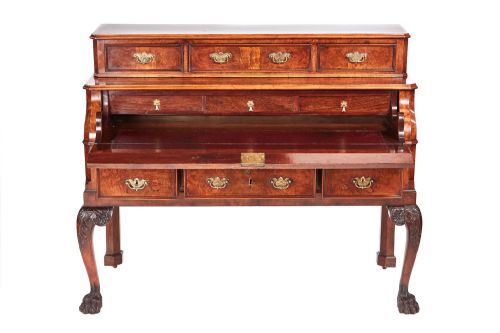
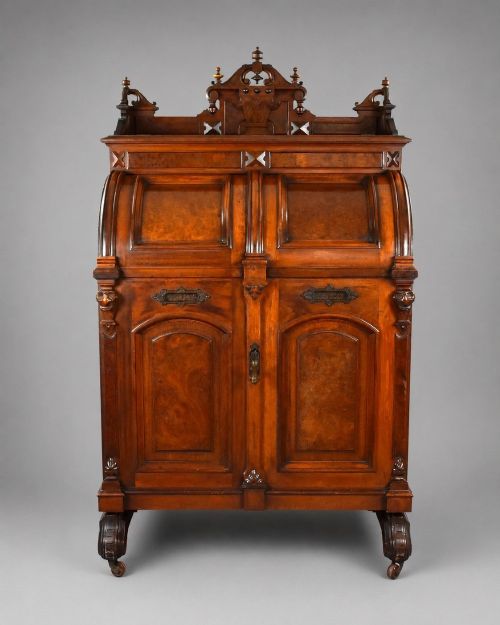
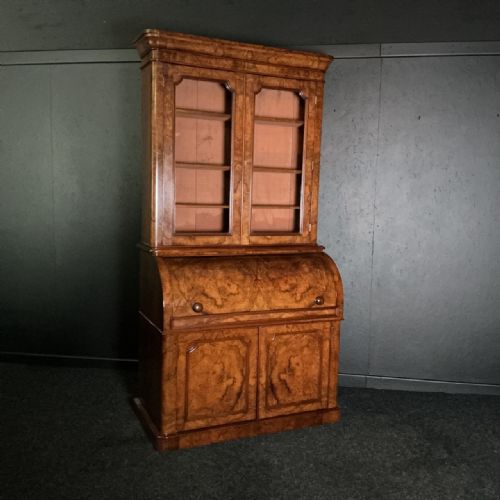
A burr walnut cylinder bureau represents a sophisticated form of antique desk that conceals its writing compartment beneath a curved rolling shutter. The pieces span periods from the William and Mary era through the eighteenth and nineteenth centuries, taking the form of standalone desks or grand bureau bookcases. Makers employed rich timber grains and fitted interiors to create functional workspace within domestic settings.
Buyers browsing this selection will encounter various regional interpretations, including Dutch marquetry examples and Victorian carved designs. The form accommodates both compact writing desks and towering cabinetry with integrated bookcase sections above. Walnut and burr walnut dominate the construction, often enhanced by fruitwood inlay and brass mounts.
The layout typically integrates pigeonholes, small drawers, and a pull-out slide for correspondence. Surviving examples reflect centuries of craftsmanship ranging from English Victorian workshops to continental European cabinetmakers. Each piece demonstrates how historical writing furniture prioritised both decorative impact and secure storage.
How they were made
Cabinetmakers constructed these cylinders and carcases using solid oak and pine as secondary woods, onto which they laid decorative burr walnut veneers. The characteristic swirling grain patterns of burr walnut required careful slicing and bookmatching to achieve symmetrical visual appeal across curved surfaces. Fruitwood inlay and marquetry added floral detail to continental pieces, contrasting sharply with the deep brown tones of the primary timber.
The cylinder mechanism itself relies on precise joinery, allowing the curved wooden shutter to slide smoothly within concealed tracks. Brass hardware, including drop handles and escutcheons, reinforced structural corners and secured interior compartments. Leather inserts often lined the pull-out writing surfaces to provide a durable platform for ink and quill.
Burr Walnut Cylinder Bureau Retail Price Guide 2026
Typical asking prices for burr walnut cylinder bureau among the pieces listed under this phrase on Sellingantiques today, from the lower quarter to the upper quarter. They describe what is for sale here now, not the wider market.
Desks occasionally conceal hidden release buttons behind pigeonholes, designed for storing secret love letters.
What varies in quality
Quality in a burr walnut cylinder bureau rests primarily on the selection and preservation of the veneer. Superior examples display dense, lively burr patterns that wrap continuously around curves and drawer fronts without jarring interruptions. The intricacy of any floral marquetry or fruitwood inlay further distinguishes exceptional cabinetwork from utilitarian production.
The smoothness of the mechanical cylinder action indicates the precision of the original joinery and subsequent maintenance. Fitted interiors with secret compartments, pigeonholes, and subsidiary drawers reveal the level of patience invested by the maker. Structural integrity in the secondary woods, such as oak carcasses, ensures the heavy bureau resists warping over centuries of changing humidity.
The Burr Walnut Cylinder Bureau Glossary
- Burr walnut
- A prized timber harvested from walnut tree growths, featuring swirling, knotted grain patterns. Cabinetmakers sliced these burls into thin veneers to cover larger furniture surfaces.
- Cylinder bureau
- A writing desk featuring a curved, quarter-circle wooden shutter that rolls back into the body of the desk. This action conceals the writing surface and interior compartments.
- Marquetry
- The art of applying decorative pieces of veneer to a structure to form intricate floral or geometric designs. Artisans used contrasting woods like fruitwood to achieve tonal depth.
- Bureau bookcase
- A dual-purpose piece of furniture combining a lower writing desk with an upper shelving unit enclosed by doors. These towers maximised vertical storage space in period interiors.
Burr Walnut Cylinder Bureau: Frequently Asked Questions
What is a cylinder bureau?
A cylinder bureau is a form of writing desk that uses a curved, rolling wooden shutter to cover the workspace and interior compartments. Pulling the cylinder forward reveals a fitted interior with small drawers and pigeonholes.
This design kept correspondence private and protected writing materials from dust when not in use. The mechanism combines the enclosed security of a slope-front desk with the modern convenience of a flat writing surface.
How do I date these desks?
Dating relies on examining the secondary woods, construction techniques, and stylistic markers present in the cabinetwork. Earlier pieces from the William and Mary period feature different structural proportions compared to Victorian interpretations.
Hardware styles, veneer thickness, and decorative techniques like floral marquetry also provide clues to origin and period. Comparing the interior layout to known historical examples helps narrow down the decade of manufacture.
Are these desks practical for daily use?
These desks suit modern use if handled with the care appropriate for antique timber and vintage mechanisms. The pull-out writing slides and internal compartments accommodate laptops and paperwork effectively.
Placing the furniture away from direct heat sources and sunlight protects the delicate burr walnut veneers and leather writing surfaces. Regular maintenance ensures the rolling cylinder mechanism continues to operate smoothly.
What distinguishes Dutch marquetry pieces?
Dutch marquetry examples stand out through elaborate floral and bird inlay executed in various fruitwoods across the entire exterior. These pieces often date to the eighteenth century and reflect continental decorative preferences.
The intricate craftsmanship creates a striking contrast against the dark background of the burr walnut veneer. Such desks generally serve as decorative focal points within a room.