
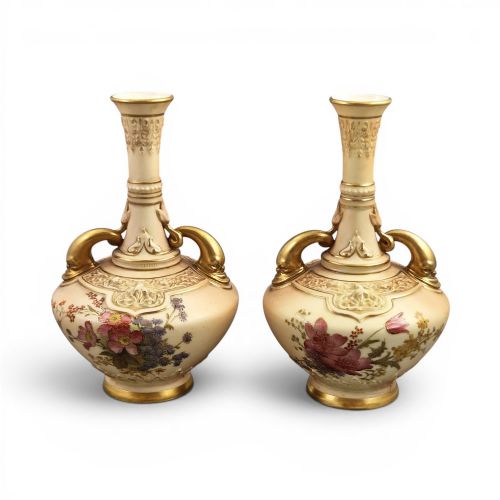


Gilt Twin Handled Vase
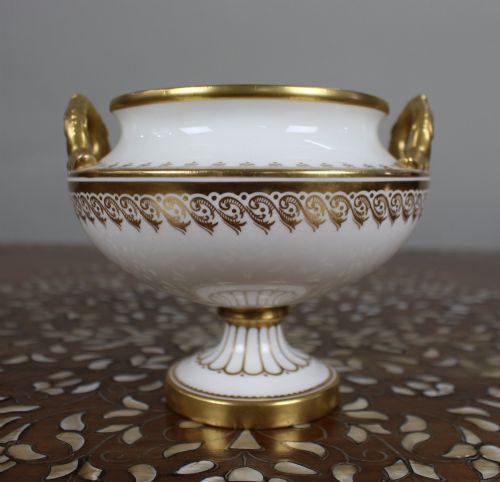
A gilt twin handled vase brings monumental presence to a room through neoclassical form and rich metallic embellishment.
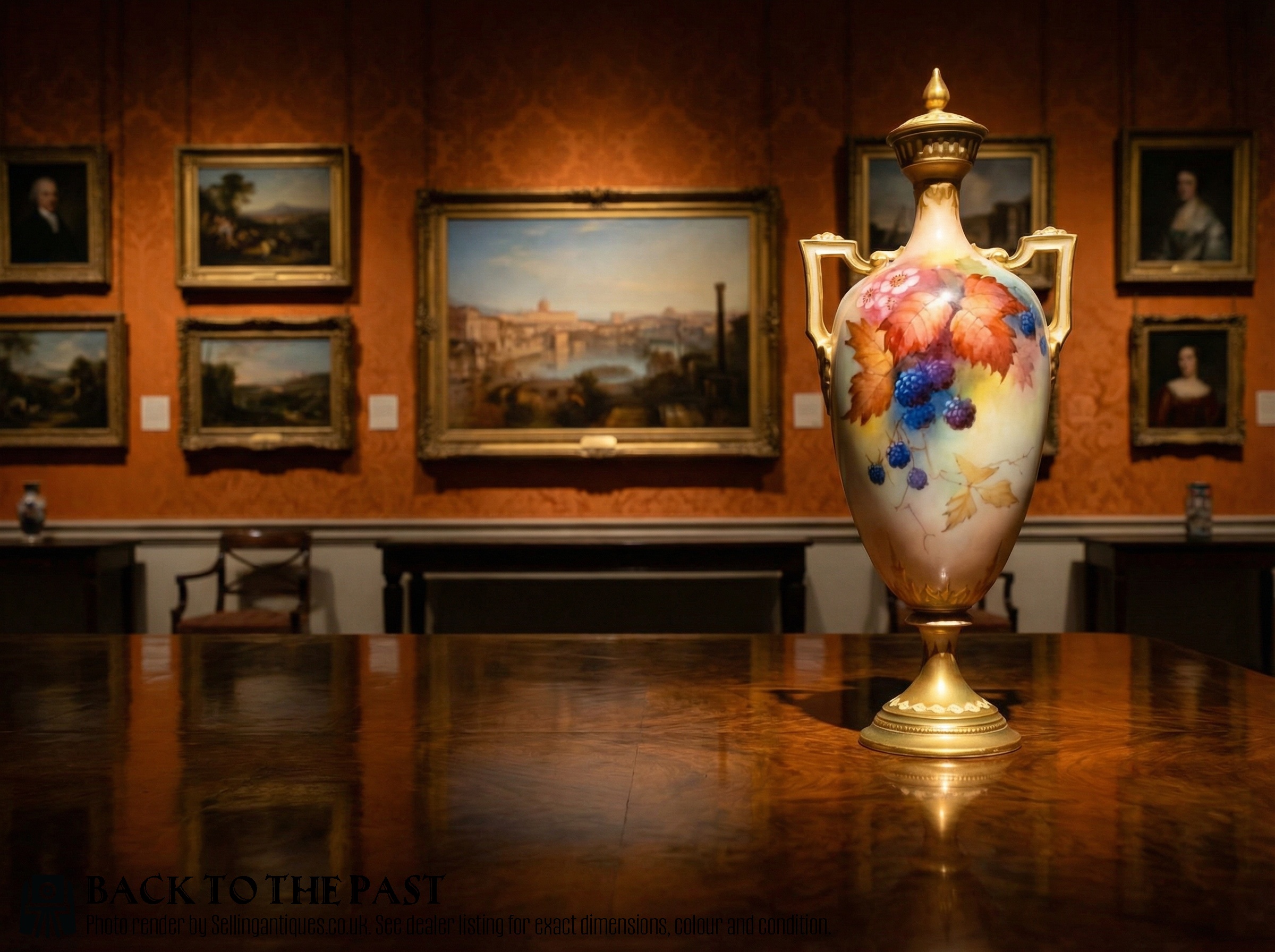
Gilt Twin Handled Vase
A gilt twin handled vase combines traditional ceramic vessels with symmetrical side handles, often taking the form of an urn, loving cup, or pedestal vase. These pieces emerge across the nineteenth and twentieth centuries in styles spanning Victorian, Edwardian, and Art Nouveau periods.
The version most commonly met on this page is the porcelain vessel, frequently originating from English factories like Royal Worcester or continental makers, enriched with hand-painted floral or figural motifs alongside metallic gilding.
Makers utilise ironstone and bone china alongside porcelain, shaping forms that range from miniature cabinet vessels to large decorative centrepieces designed for prominent display.
Materials and production
Potters shape porcelain, bone china, or ironstone bodies by hand or mould, applying smooth glazes to create the primary canvas before firing at high temperatures in kilns.
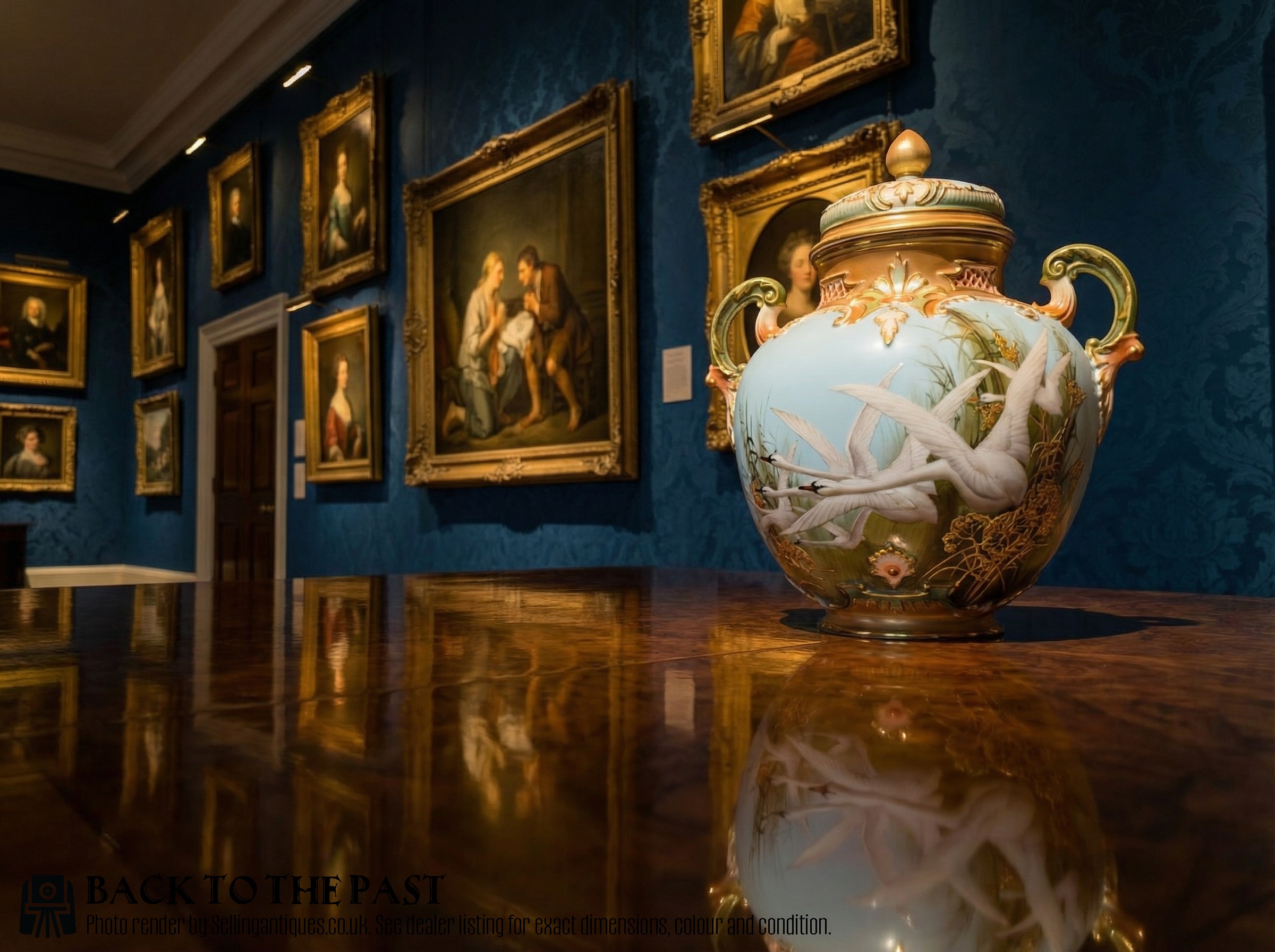
Artisans layer gold leaf, gilding, and raised white enamel onto the ceramic surfaces, often combining these metallic accents with hand-painted botanical or avian scenes signed by notable factory artists.
Dolphin-handled vessels bring marine mammals to the parlour.
Judging quality and execution
The standard of a piece rests on the execution of its hand-painted decoration, where named artists delivering detailed bird or portrait studies distinguish exceptional cabinet works from standard floral patterns.
The crispness of the moulding on handles and the density of the gold leaf application determine the overall refinement of the vessel.
Royal Worcester·Royal Crown Derby·Spode·Minton·Samson Paris·Royal Vienna
The Gilt Twin Handled Vase Glossary
- Gilding
- The application of gold leaf or gold dust suspended in a medium to ceramic or bronze surfaces. This process adds a reflective metallic border or highlight to the vessel.
- Blush ivory
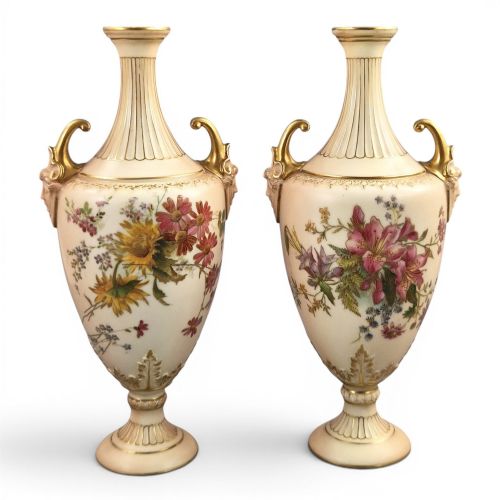
- A specialist cream-coloured ceramic ground developed by Royal Worcester in the late nineteenth century. It provides a soft matte background for hand-painted floral subjects.
- Imari
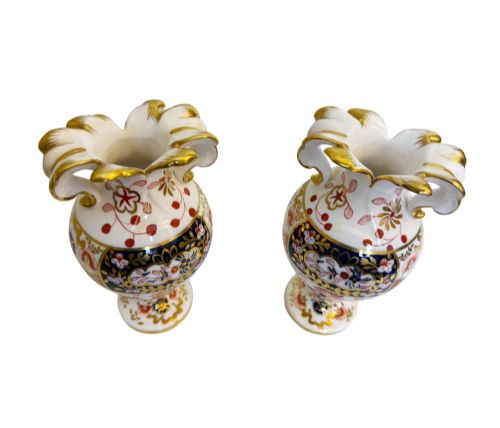
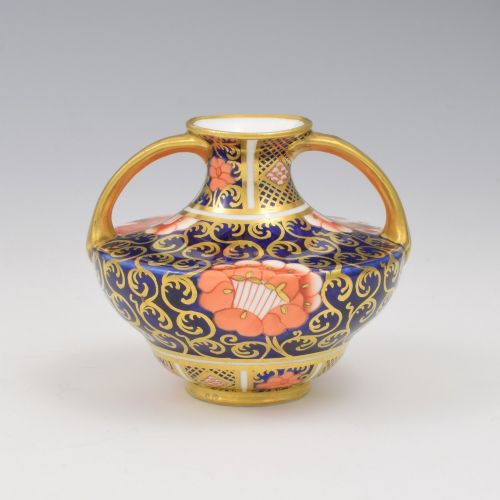
- A decorative palette originating in Japan and adopted by European factories, characteristically using underglaze blue, iron red, and abundant gilt detailing. This style appears on several nineteenth-century porcelain pieces.
- Potpourri
- A decorative vase or jar featuring a pierced or perforated lid designed to diffuse scent from dried flower petals. These lidded vessels often incorporate twin handles.
- Ironstone
- A heavy, durable type of earthenware patented in the nineteenth century as a robust alternative to porcelain. It accepts enamels and gilding with solid reliability.
Gilt Twin Handled Vase: Frequently Asked Questions
How do I date an antique porcelain vase?
Examine the base for factory stamped ciphers, registration numbers, or painted symbols that correspond to manufacturer date codes.
Style indicators such as Aesthetic Movement motifs or Art Nouveau sinuous lines also help narrow the decade of production.
What is blush ivory porcelain?
Blush ivory is a specialised ceramic body developed during the Victorian era, characterised by a warm, creamy matte finish.
Factories like Royal Worcester used this surface to create a subtle background for delicate hand-painted flowers.
How were twin handled urns used?
These vessels served primarily as decorative garniture sets on mantelpieces, credenzas, or centre tables in formal nineteenth-century interiors.
Some lidded versions functioned to hold scented potpourri rather than fresh floral arrangements.
Are painted signatures important?
Signatures from recognised factory artists indicate a higher tier of individual artistry and studio production.
Works bearing legible names by painters such as Walter Powell or Harry Davis attract particular attention from collectors.