


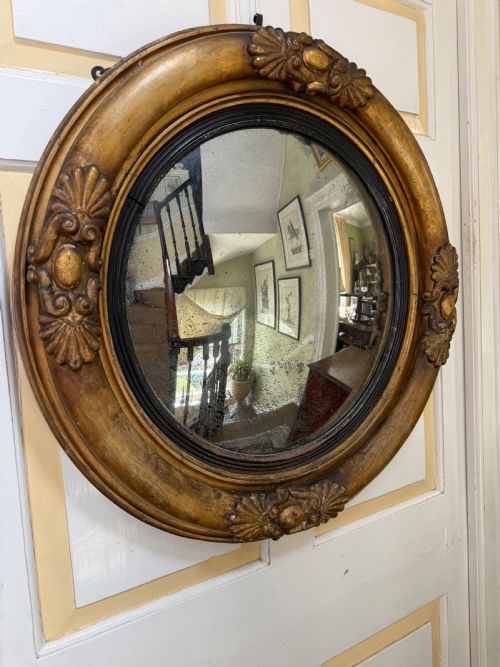
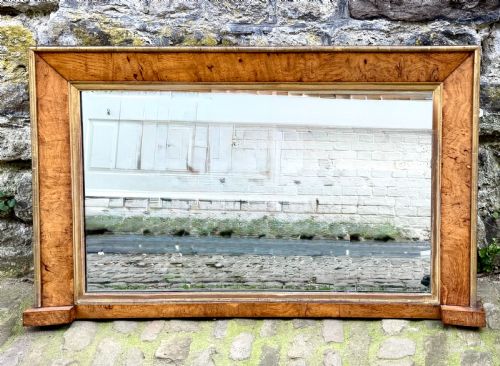


Gilt Slip Wall Mirror
A gilt slip wall mirror brings interior depth and warm reflective light, anchored by a slender inner moulding finished in gold leaf.
How they were made
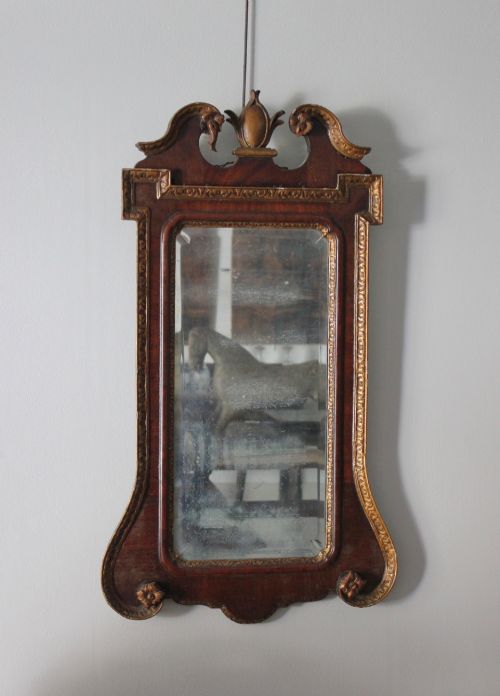
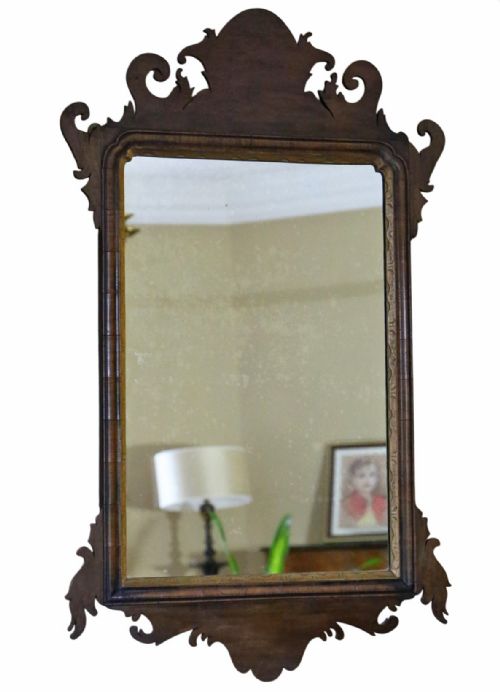
Craftsmen built timber carcases using native hardwoods such as mahogany, walnut, sycamore, and birds-eye maple, often shaping them into fretwork silhouettes or turning them on lathes for circular convex forms.
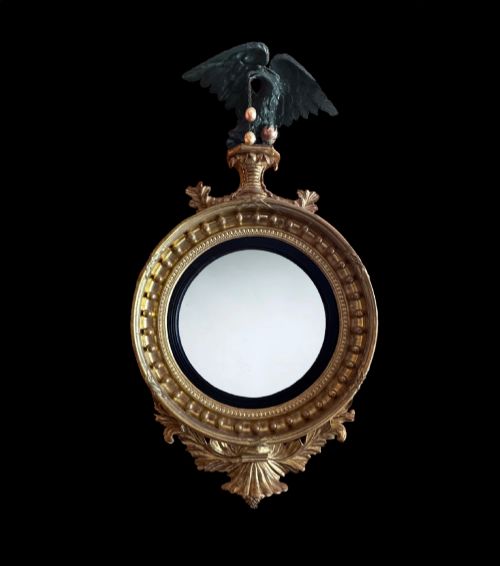
Makers applied gesso directly to the wooden substrate to build up fine decorative details, sculptural ornaments like eagle surmounts, and the precise profile of the slip before laying gold leaf.
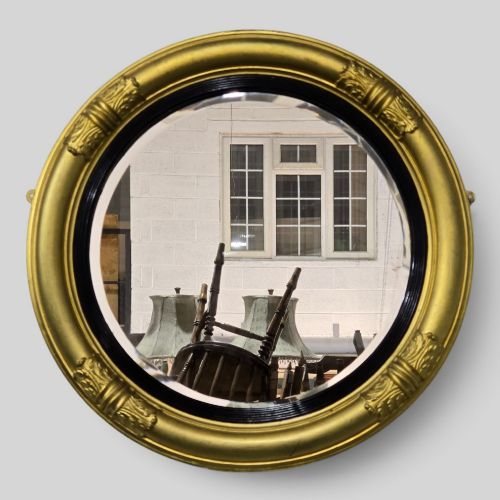
Silvered mirror glass, including Vauxhall plates and heavy convex discs, was fitted into the rebates, secured behind timber backs, and occasionally complemented by ebonised wood mouldings.
What varies in quality
The fidelity of the carved ornament dictates the distinction between standard production and superior examples. Crisp execution in the gesso and hand-carved woodwork reveals the maker's competence.
The integrity of the original mercury or silvered glass plate contributes significantly to the character and desirability of the mirror. Original convex plates with subtle distortion and foxing retain authentic period atmosphere.
Gilt Slip Wall Mirror Retail Price Guide 2026
Typical asking prices for gilt slip wall mirror among the pieces listed under this phrase on Sellingantiques today, from the lower quarter to the upper quarter. They describe what is for sale here now, not the wider market.
Materials recorded across current listings include glass, giltwood, ebonised wood, gesso, mahogany, walnut, mirror glass, and brass.
The Gilt Slip Wall Mirror Glossary
- Slip
- A narrow internal moulding fitted directly against the edge of the glass plate. It is traditionally finished in gilt to create a bright border between the reflection and the outer frame.
- Gesso
- A plaster-like mixture applied to wood frames to provide a smooth ground for gilding. Skilled artisans carved and moulded this substance before applying gold leaf.
- Convex
- A curved, outward-bulging mirror glass that captures a wide-angle reflection of the room. These circular plates were popular during the Regency period.
- Fretwork
- Openwork patterns cut into thin boards of wood using a fret saw. Georgian and revival cabinet makers utilised this technique for silhouette wall mirrors.
- Overmantel
- A large horizontal mirror designed to hang directly above a fireplace mantelpiece. They often feature tripartite glass plates and architectural framing.
Gilt Slip Wall Mirror: Frequently Asked Questions
Where should I hang a convex mirror?
Convex mirrors project a wide-angle reflection of an entire interior space, making them effective opposite windows or in entrance halls to maximise ambient light.
Because they concentrate perspective within a compact circular frame, they function well as focal points in smaller rooms or above principal pieces of furniture.
How do I date an antique mirror?
Dating relies on examining the secondary timbers at the reverse, the construction of the frame joinery, and the characteristics of the glass plate. Hand-cut veneers and original pine backboards generally point to Georgian or Regency origins.
Revival pieces from the early twentieth century often display machine-sawn timber or alternative backing methods combined with period stylistic motifs.
What is a Vauxhall mirror?
Vauxhall mirrors refer to English looking glasses produced using high-quality glass plates manufactured at the famous London glasshouse during the 17th and 18th centuries. These plates are distinguished by hand-bevelled edges and exceptional clarity for the period.
Finding an original Vauxhall plate within an 18th-century walnut or gilt frame indicates high workshop standards.
How do I care for giltwood frames?
Giltwood and gesso surfaces require gentle dusting with a soft, dry brush to prevent accumulation without disturbing the delicate gold leaf layer. Moisture and abrasive cleaners should be avoided entirely.
Positioning the mirror away from direct sunlight and damp environments preserves the stability of the wood and the brilliance of the historic gilding.