

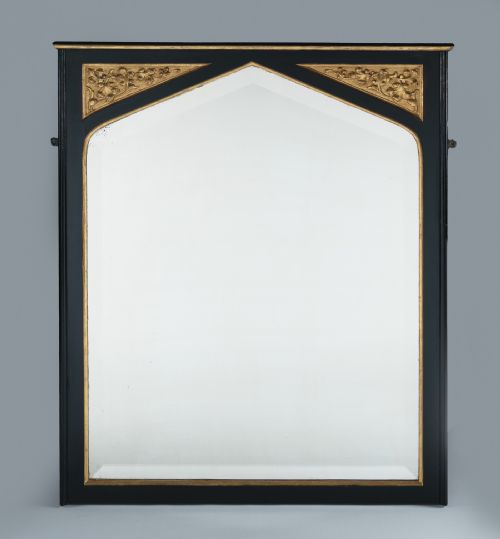
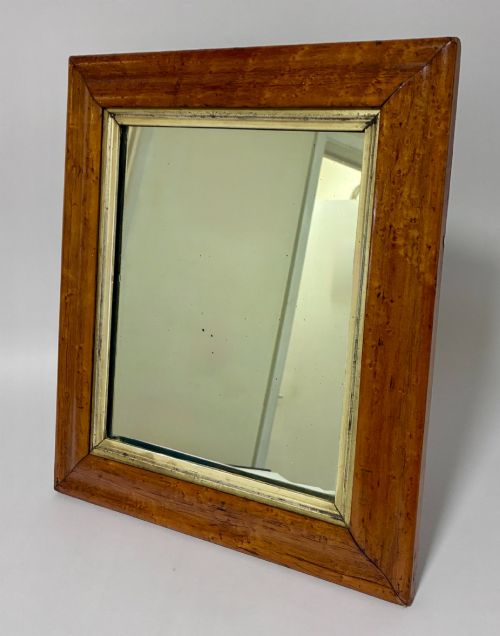
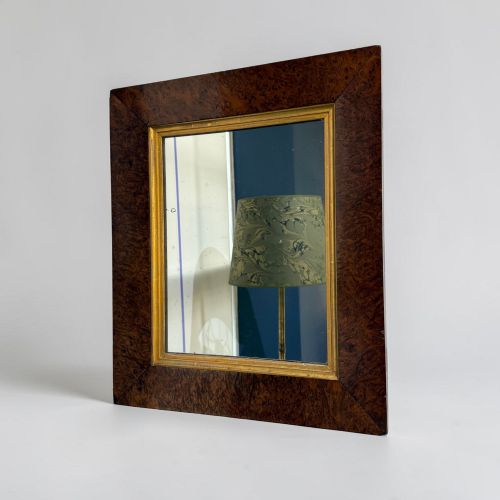
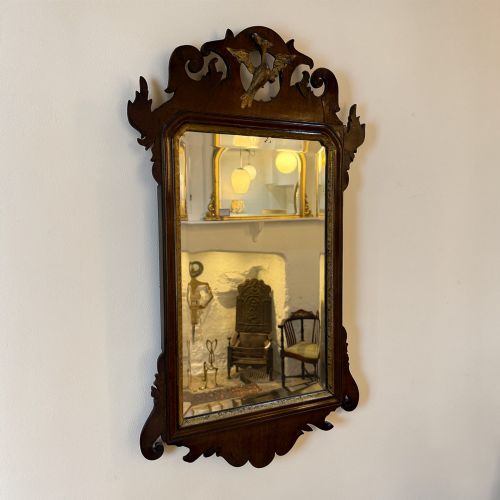


Gilt Slip Mirror
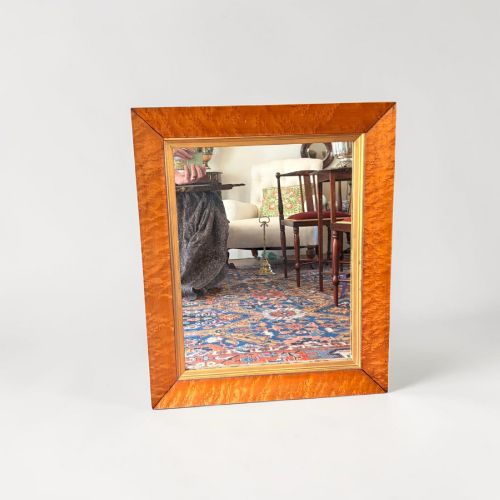
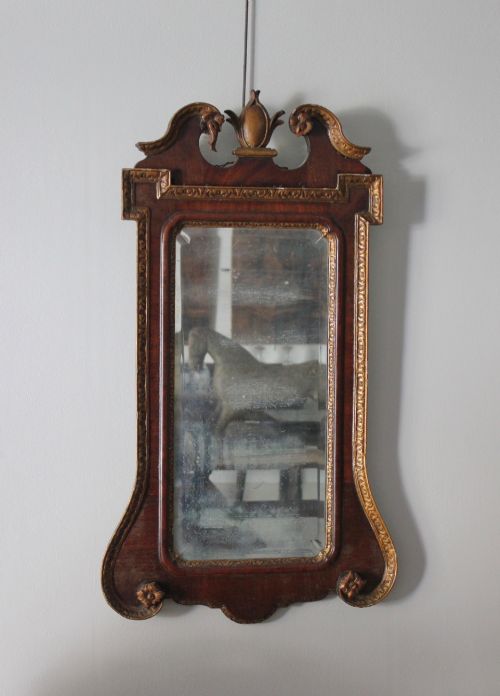
A gilt slip mirror brings a crisp inner border of gold to the frame, setting off the glass with sharp definition.
Gilt Slip Mirror
The forms range from eighteenth-century fretwork wall mirrors in walnut or sycamore to nineteenth-century overmantels and convex circular frames. The version most commonly met here pairs a dark wood exterior, such as mahogany, walnut, or ebonised timber, with that bright gilded inner slip.
How they were made
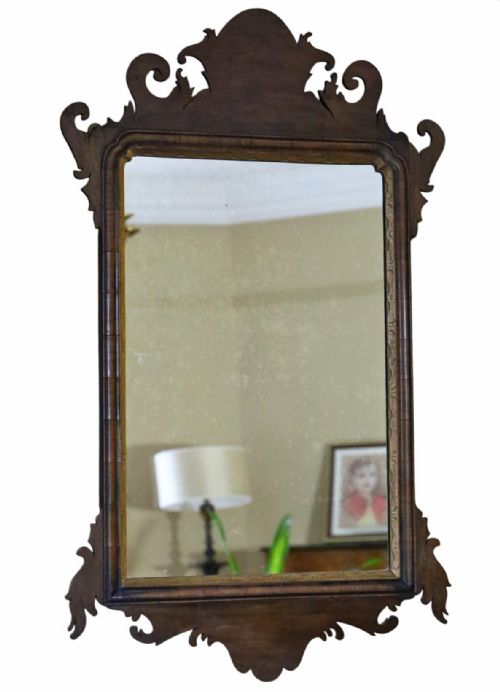
Frames rely on cabinet timbers like mahogany, walnut, sycamore, and birds eye maple, often formed with fret-cut silhouettes or classical architectural proportions. Gesso is applied beneath the gold leaf on the slip and carved mouldings to build a smooth base for gilding.
Convex circular glasses require specialised curved plates held within deep frames, sometimes accompanied by reeded slips or applied brass details. Rectangular plates often use traditional construction with walnut veneers or solid mahogany borders.
Gilt Slip Mirror Retail Price Guide 2026
Typical asking prices for gilt slip mirror among the pieces listed under this phrase on Sellingantiques today, from the lower quarter to the upper quarter. They describe what is for sale here now, not the wider market.
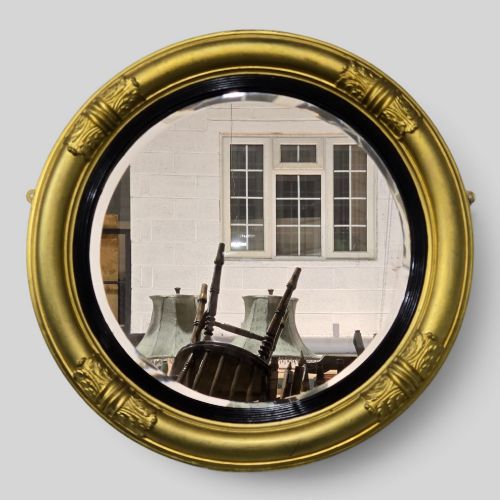
Convex mirrors are often called butler's mirrors because their wide-angle view once allowed estate staff to monitor a dining room from a single vantage point.
What varies in quality
The crispness of the fretwork and the depth of the carving determine the refinement of earlier wall mirrors. Sharp edges on mahogany scrolls and well-defined leaf carving on giltwood sections indicate skilled hand work.
The preservation of the original mirror glass and the integrity of the gilt slip relative to the outer frame separate standard examples from finer ones. Harmony between the timber body and the inner gold slip creates visual balance.
The Gilt Slip Mirror Glossary
- Gilt slip
- A narrow inner moulding covered in gold leaf that separates the mirror plate from the outer frame. This bright border catches the light and frames the reflection.
- Fretwork
- Openwork ornamentation cut from thin boards using a fine saw. It defines the scrolling outlines of eighteenth-century and revival wall mirrors.
- Convex mirror
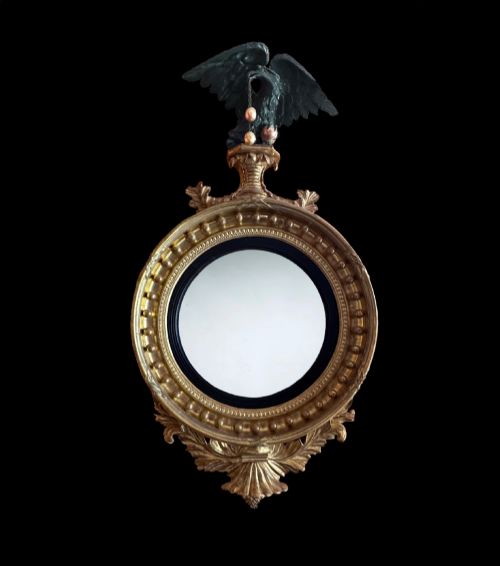
- A circular mirror with an outward-curving spherical glass plate that provides a wide-angle reflection of the room. These are frequently set within deep gilded frames.
- Overmantel mirror
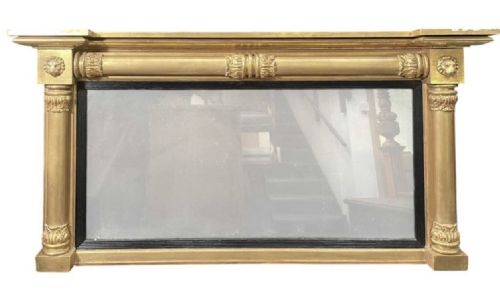
- A wide horizontal mirror designed to sit above a fireplace mantel. They often feature triptych glass divisions and architectural columns.
- Vauxhall mirror
- An early mirror type named after the London glasshouse, typically featuring bevelled edges and stacked plate construction. These appear in Georgian walnut frames.
Gilt Slip Mirror: Frequently Asked Questions
What is a gilt slip?
A gilt slip is the narrow inner frame surrounding the mirror glass that carries a gold leaf finish. It provides a bright visual boundary between the dark wood or moulded exterior frame and the reflective plate.
This technique directs the eye inward toward the reflection while adding a layer of contrast to pieces like walnut and mahogany wall mirrors.
How do I date a convex mirror?
Dating relies on the construction of the backboards, the depth of the frame, and decorative details like eagle surmounts or ball-studded bezels. Regency examples often feature heavy giltwood mouldings with detailed carved foliage.
Later nineteenth-century and revival pieces replicate these proportions but use different timber construction methods and modern backboard fixings.
Where should I hang an overmantel mirror?
An overmantel mirror sits naturally above a fireplace mantel, reflecting the room and drawing light into the centre of the space. Their wide horizontal proportions suit large wall expanses.
Ensure the wall fixings are secured directly into studs or masonry to support the considerable weight of these substantial nineteenth-century frames.
What is a fretwork mirror?
A fretwork mirror is a wall hanging featuring a wooden frame shaped with intricate pierced scrollwork and geometric patterns. Cabinetmakers cut these designs from mahogany, walnut, or sycamore during the Georgian period and later revival eras.
The fret-cut silhouette gives the frame a lighter appearance than solid architectural mouldings while retaining structural strength.