
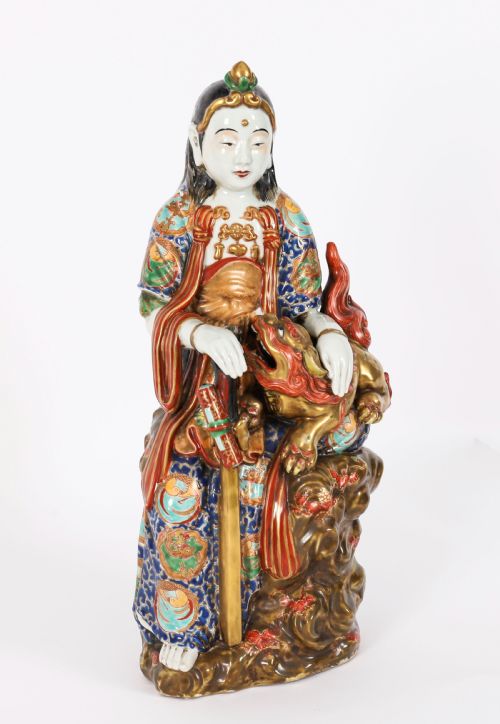


Gilt Porcelain Statue
When you search for a gilt porcelain statue, you are looking at ceramic figures and groups enriched with metallic leaf or paint.
Gilt Porcelain Statue
A gilt porcelain statue encompasses figures, busts, and sculptural groups produced across European and Japanese kilns from the eighteenth century into the twentieth century. These objects portray classical deities, allegorical figures, historical personages, and domestic subjects modelled in three dimensions.
The version you are most likely to meet on this page is a nineteenth-century Continental or English figure decorated with painted or applied metallic highlights. Such pieces range from Derby shepherdesses and Samson copies of Chelsea models to large Royal Worcester carrier figures.
European factories such as Meissen, Derby, and Sevres established distinct traditions in figurine modelling that later manufacturers and revivalists emulated. Japanese makers contributed Satsuma and Kutani okimono works that introduced alternative decorative vocabularies to the category.
Materials and methods
Manufacturers shaped these objects using hard-paste porcelain, soft-paste porcelain, earthenware, and unglazed bisque, depending on the period and the factory tradition. Potters shaped the forms by pressing clay into moulds or by slip-casting, after which skilled workers applied fine details by hand.
Glazes, enamels, and oxide colours provided the underlying palette for the ceramic body before firing in kilns. Artisans then applied gold leaf, metallic gilding, or Patent Metallic solutions to accentuate garments, bases, and decorative accessories.
Gilt Porcelain Statue Retail Price Guide 2026
Typical asking prices for gilt porcelain statue among the pieces listed under this phrase on Sellingantiques today, from the lower quarter to the upper quarter. They describe what is for sale here now, not the wider market.
Among the deities and aristocrats, several ceramic pugs and Staffordshire dogs stand guard with gleaming gilt collars.
Distinguishing quality
The integrity of the gilding and the application of enamel colours distinguish standard production wares from superior artist-led studio pieces. Original factory marks, impressed ciphers, and registration details provide further indication of a piece's origin and standard of execution.
Royal Worcester·Samson of Paris·Meissen·Derby·Royal Dux·Makuzu Kozan II
The Gilt Porcelain Statue Glossary
- Bisque Porcelain
- Unburnt or unglazed porcelain that has a matte, tactile surface resembling marble. It was frequently used for portrait busts and classical figures.
- Gilding
- The application of gold leaf or powdered gold to the surface of a ceramic object. It highlights specific design elements such as borders, garments, and attributes.
- Okimono
- A Japanese ornamental carving or ceramic figure intended for display on a shelf or in a traditional alcove. These pieces often depict genre scenes, deities, or animals.
- Slip-casting
- A manufacturing technique where liquid clay slip is poured into a plaster mould to create hollow ceramic figures. It permitted the efficient production of complex sculptural forms.
- Soft-paste porcelain
- An artificial ceramic paste composed of white clay and fritted glass used by European factories before the widespread discovery of true hard-paste porcelain. It produces a warm texture beneath translucent glaze.
Gilt Porcelain Statue: Frequently Asked Questions
How do I clean a gilt porcelain statue?
Dust the surface gently with a soft, dry brush to prevent the accumulation of dirt within the intricate crevices of the modelling. Avoid using water, abrasive cloths, or chemical cleaning agents, as these can damage fragile enamel paints and wear away delicate gold leaf.
Inspect the piece under natural light before cleaning to locate any historical repairs or weak points in the ceramic body. Handle the object by its sturdy base rather than protruding limbs or delicate attributes like musical instruments and baskets.
Are all gilt porcelain figures marked?
Many factory pieces bear painted underglaze marks, impressed ciphers, or incised numbers that identify the kiln and occasionally the modeller. However, unmarked pieces remain common, particularly among early figures, smaller workshops, and nineteenth-century Continental interpretations of eighteenth-century models.
Attribution for unmarked items relies on stylistic comparisons, paste characteristics, and the specific manner of gilding. Documentation and expert appraisal help determine the likely origin when factory stamps are absent.
What subjects are common in these figures?
Classical mythology provides many subjects, including figures of Zeus, Neptune, Pluto, and allegorical representations of the four seasons or elements. Domestic and pastoral scenes featuring shepherds, musicians, grape harvesters, and water carriers also appear frequently across various manufacturing periods.
Portrait busts of historical figures like Marie Antoinette and Queen Elizabeth reflect the commemorative aspect of nineteenth-century production. Japanese examples often feature traditional figures such as Bijin and Guanyin alongside animals like Mandarin ducks.
How can I tell an eighteenth-century figure from a nineteenth-century copy?
Examination of the porcelain paste under magnification reveals differences in vitrification, weight, and translucency between periods. Eighteenth-century soft-paste bodies often display distinct shrinkage cracks and uneven glaze pooling compared to later industrial output.
Stylistic execution and the composition of the ceramic body provide clues to dating. Nineteenth-century revivalists like Samson of Paris intentionally copied earlier models, making material analysis essential for accurate attribution.