
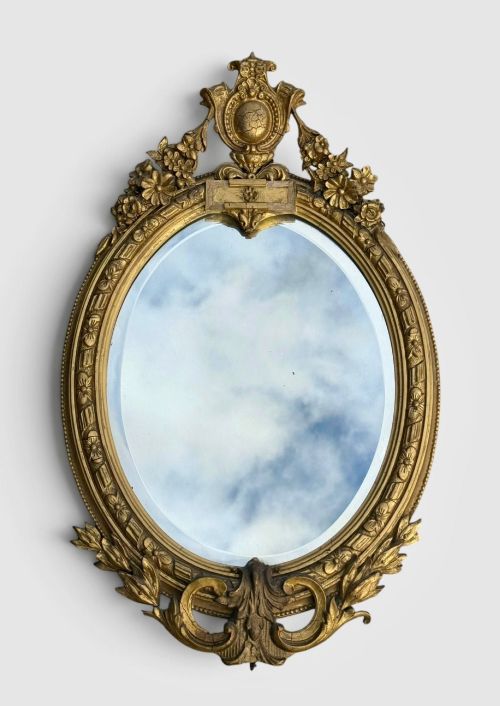
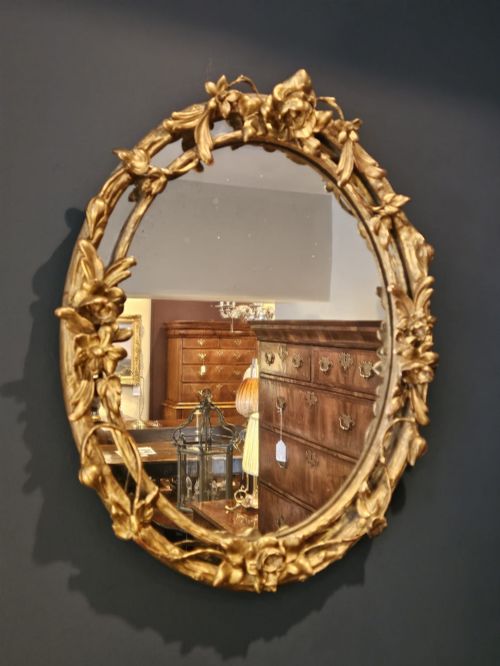
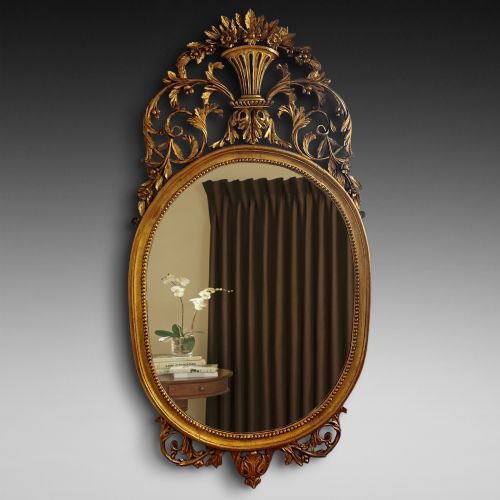
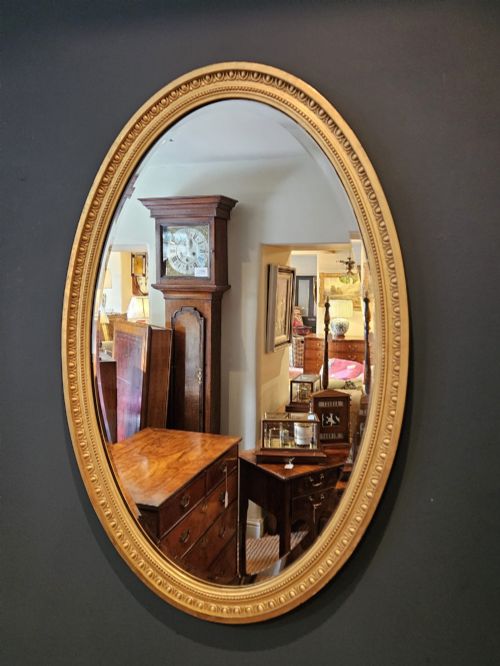
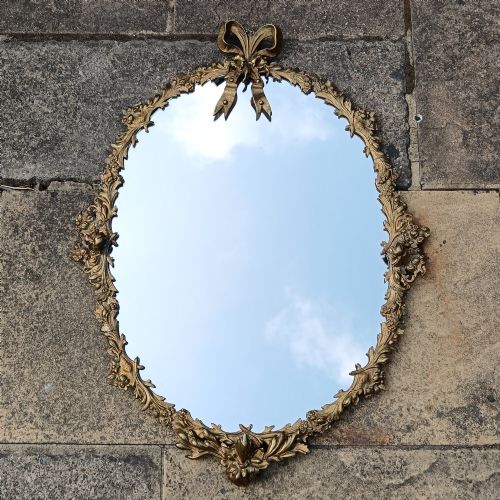
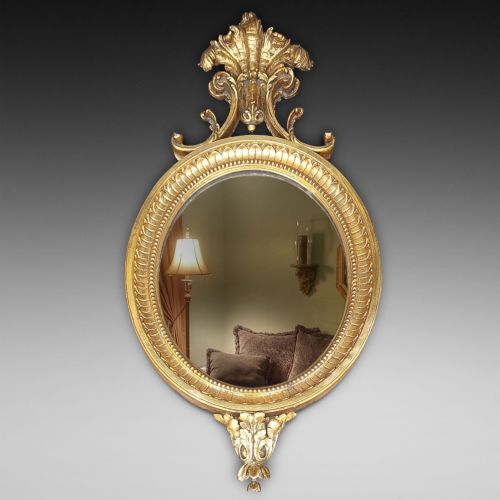
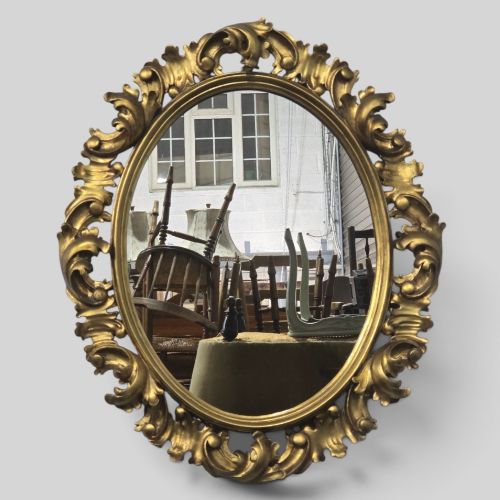

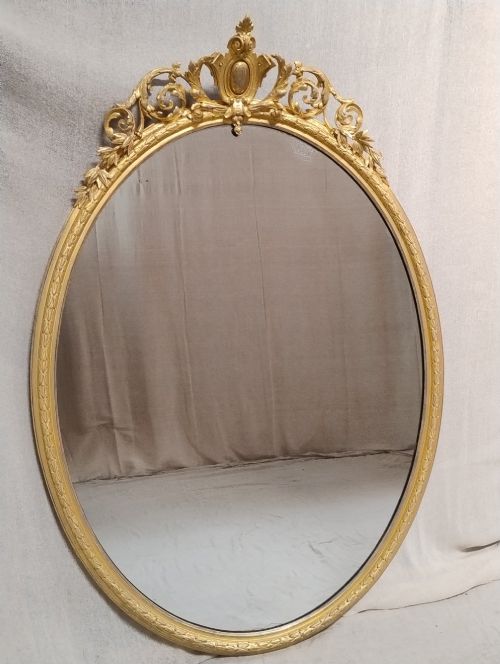
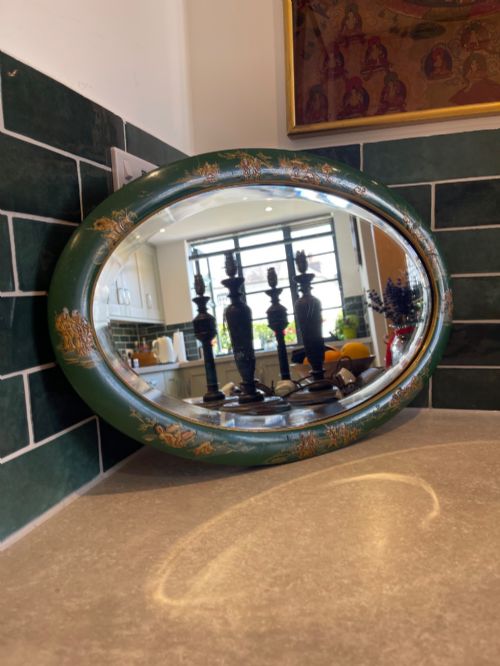
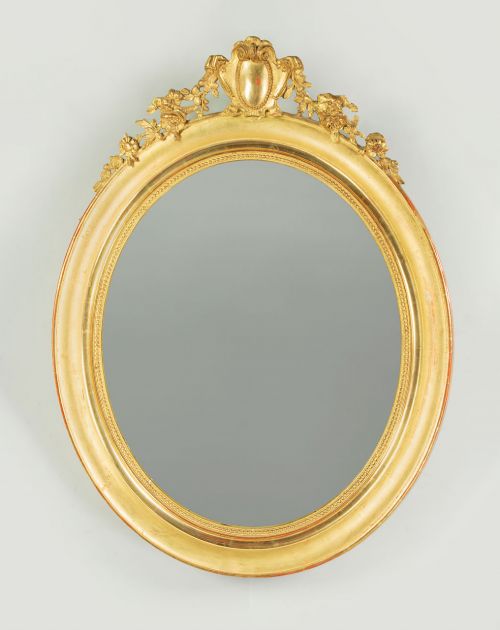
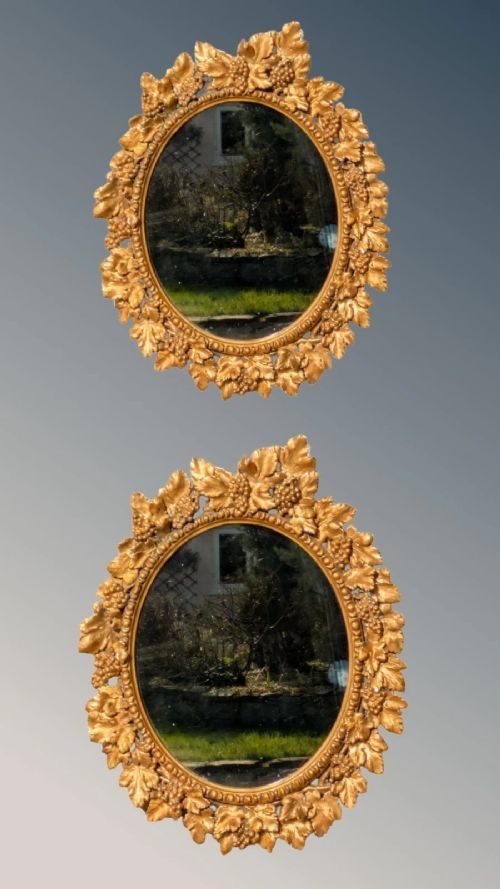
Gilt Framed Oval Mirror
When you select a gilt framed oval mirror, you bring home a wall piece shaped by centuries of French and English design traditions.
Gilt Framed Oval Mirror
A gilt framed oval mirror functions primarily as a wall hanging, originating across periods ranging from the Georgian era through to the early twentieth century. These pieces appear frequently in Victorian incarnations, alongside examples reflecting French Neoclassical, Rococo Revival, and Chinoiserie styles.
Makers shaped timber, gesso, and glass into symmetrical and cushion forms designed for hallways, drawing rooms, and overmantels. Buyers encounter everything from small decorative accents to enormous wall mirrors spanning significant proportions.
How they were made
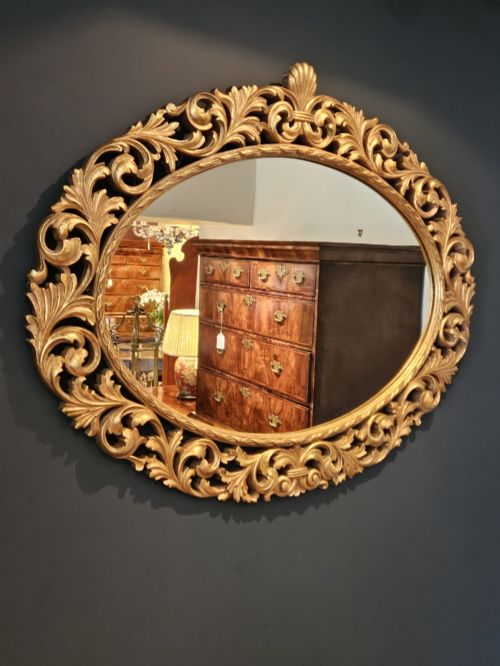
Craftsmen built the underlying support from timber or wood, applying layers of gesso and composition paste to carve intricate botanical motifs, vines, and floral garlands. Artisans then applied gold leaf or parcel-gilt finishes over the prepared surfaces to achieve a luminous metallic sheen.
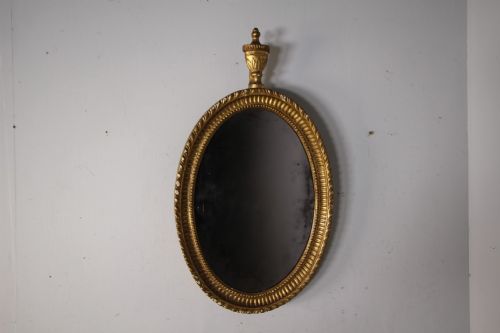
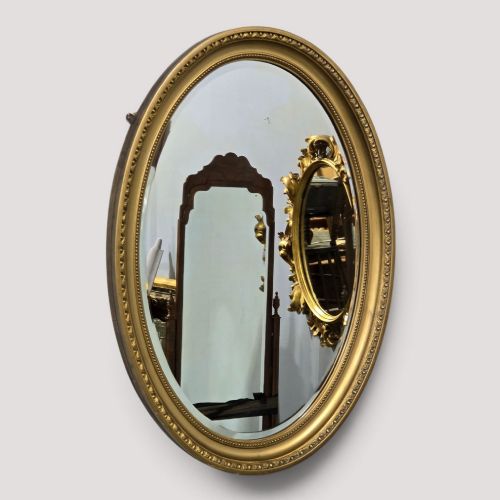
Early examples frequently incorporate original mercury plate glass, reflecting an older silvering technique that produces a dark, mottled appearance. Later nineteenth and twentieth-century iterations often utilise standard mirror glass set within moulded or reeded frames.
Listings feature timber, glass, gesso, and gold leaf as the primary materials used across Victorian, Georgian, and twentieth-century periods.
What varies in quality
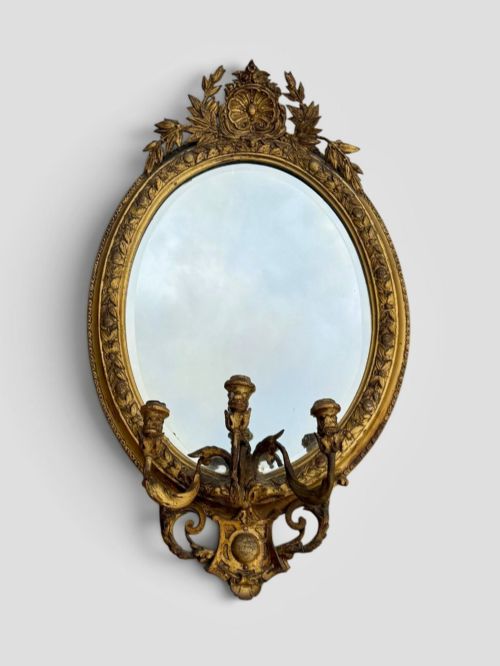
The depth and crispness of the hand-carved decoration separate simpler moulded pieces from finer works produced by skilled hands. Reliefs featuring sharp rose vines or delicate floral ribbons demonstrate superior craftsmanship compared to mass-produced composition ornament.
The integrity of the original gilding and the preservation of antique mirror plates heavily influence the character of the object. Pieces retaining their initial mercury glass and undisturbed gold leaf display a depth of tone absent in later replacements.
The Gilt Framed Oval Mirror Glossary
- Gesso
- A plaster-like mixture applied to wood frames to provide a smooth base for carving and gilding. This material allows artisans to fashion deep relief ornaments.
- Giltwood
- Timber that has been coated with gold leaf or metallic powder. It forms the primary structural and decorative medium for traditional wall mirrors.
- Mercury plate
- An early glass silvering method utilising a tin and mercury amalgam. It creates a characteristic mottled reflection valued by collectors.
- Parcel-gilt
- A decoration technique where only specific portions of an object receive gold leaf, leaving the underlying wood or ebonised surface exposed elsewhere.
- Girandole
- A branched wall bracket designed to hold candles, often attached to the base or frame of a mirror. These fittings enhance the reflective quality of the glass by multiplying candlelight.
Gilt Framed Oval Mirror: Frequently Asked Questions
How do I hang a heavy gilt oval mirror?
Heavy wall mirrors require secure fixings anchored directly into masonry or wall studs to support the substantial weight of timber and glass.
Professional mirror hangers utilise brackets rated for the specific load to ensure the frame remains stable against the wall.
Are mercury glass plates original?
Original mercury plates exhibit a distinct darker reflection with characteristic spots and foxing accumulated over the centuries.
Replacement glass appears notably clearer and lacks the aged imperfections found in pieces dating to the eighteenth and early nineteenth centuries.
What rooms suit an oval mirror?
Oval forms soften angular architectural spaces, making them effective additions above mantelpieces, console tables, and narrow hallways.
Their curved silhouette introduces a classical balance to contemporary and period interiors alike.