

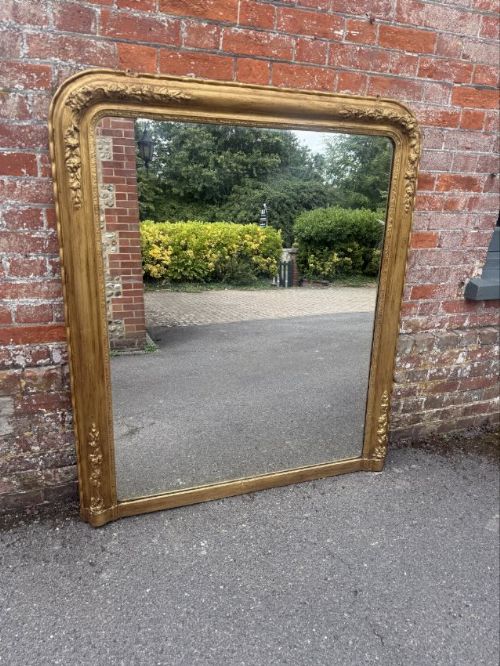
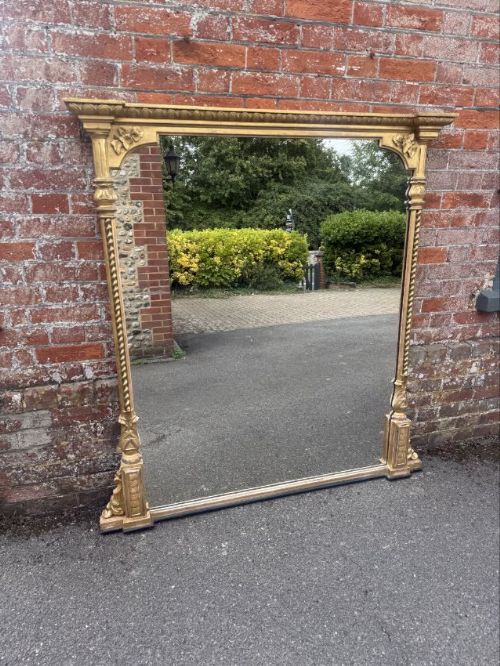
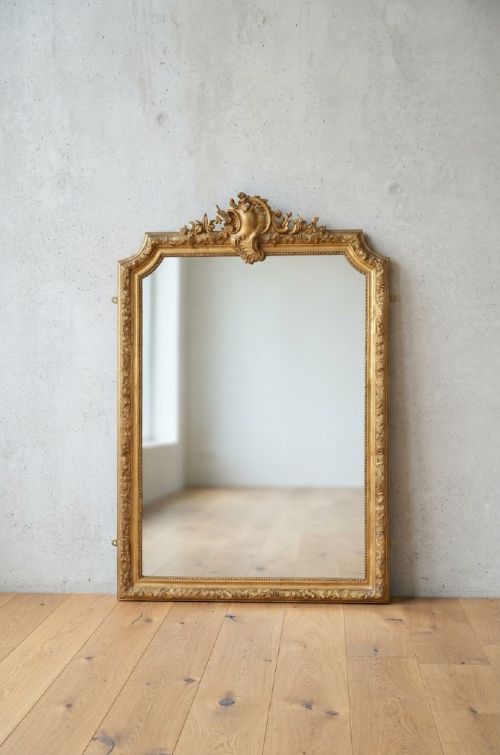
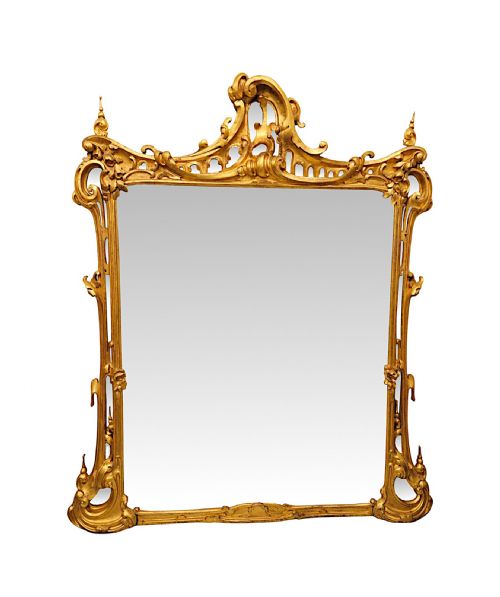
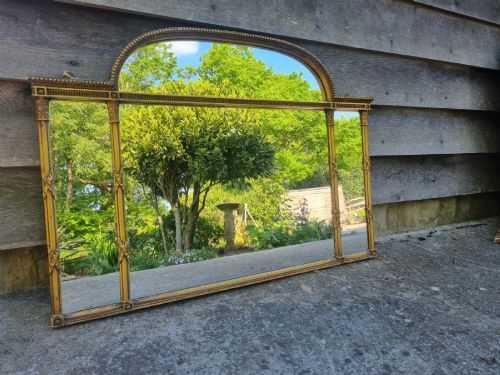
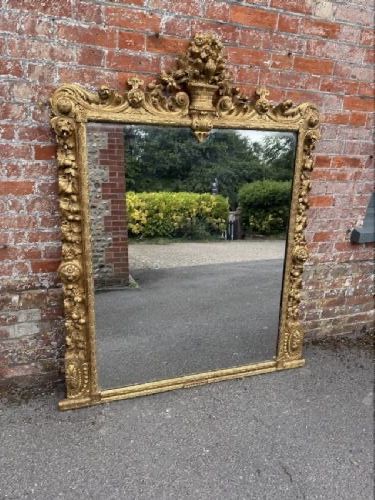
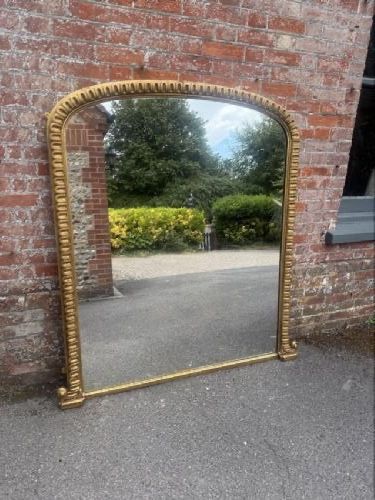
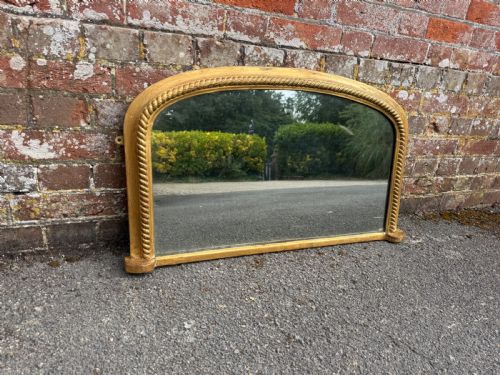
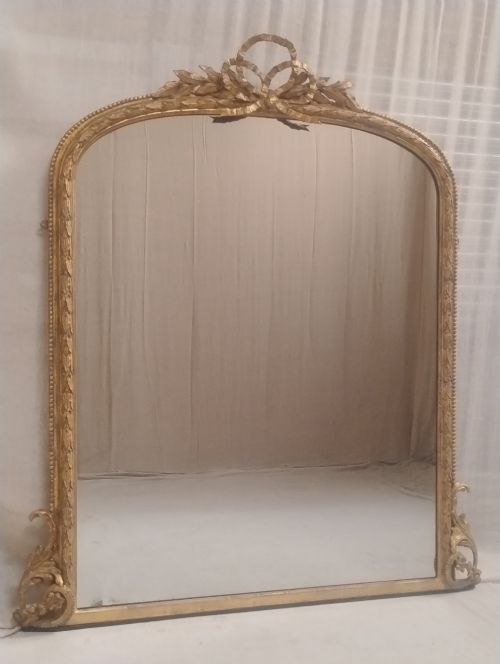
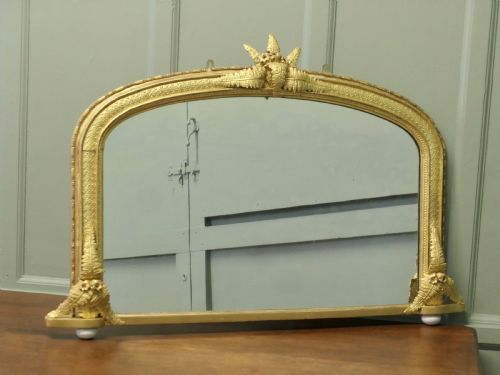
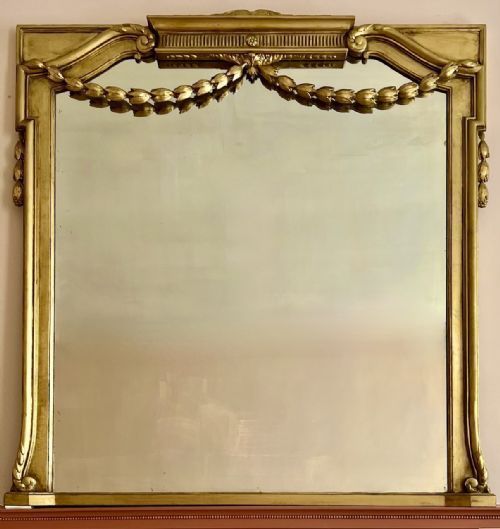
Gilt Fireplace Mirror
When you search for a gilt fireplace mirror, you are looking at nineteenth-century overmantel mirrors designed to sit above the hearth and reflect light around a room.
Gilt Fireplace Mirror
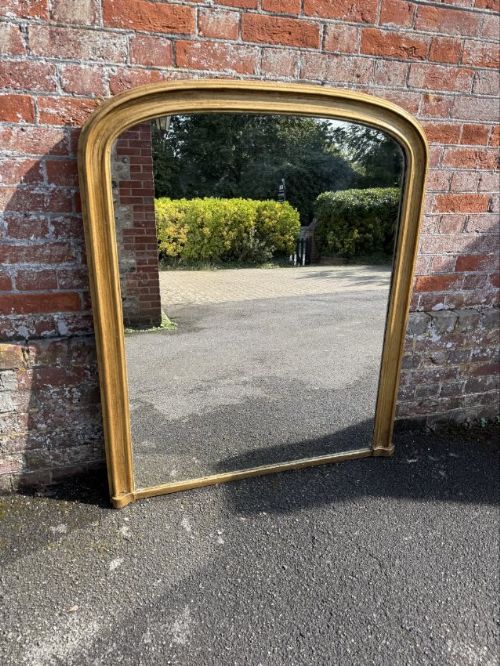
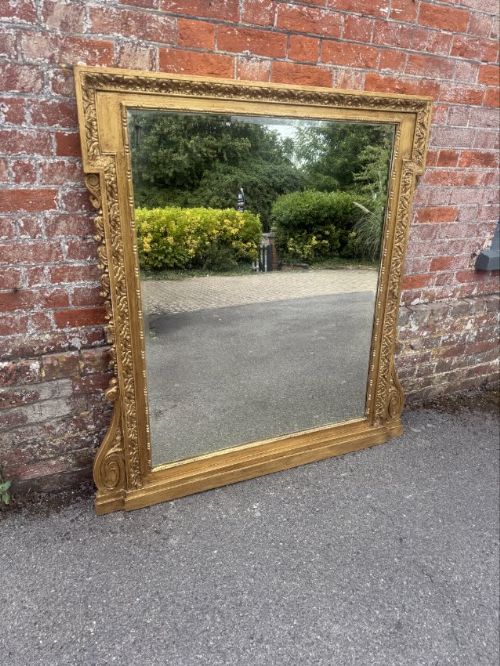
A gilt fireplace mirror is typically a large overmantel mirror designed to sit directly above a chimneypiece. The pieces available here span the nineteenth century, including Victorian, Regency, and William IV eras, along with French styles such as Rococo Revival and Louis Philippe.
Most examples function as substantial wall mirrors or overmantels, often featuring arched tops, rectangular proportions, or triple plates. They originate from English and French workshops, utilising grand proportions intended to command the chimney breast.
How they were made
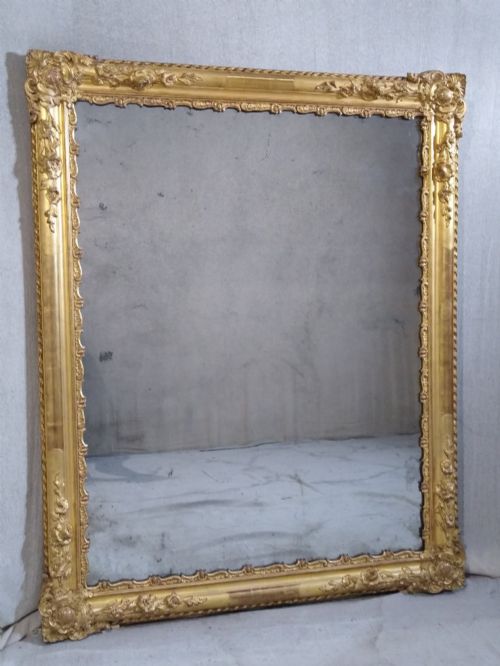
These frames are constructed from carved wood, gesso, and giltwood, applying layers of gold leaf or composition to wooden carcases. Artisans shaped intricate details such as rope twists, columns, crestings, and floral motifs directly into the gesso over timber.
Mirrors utilise silvered glass, sometimes retaining original foxed plates that show age through dark spots. Frames range from solid giltwood to parcel-gilt and ebonised wood combinations.
Gilt Fireplace Mirror Retail Price Guide 2026
Typical asking prices for gilt fireplace mirror among the pieces listed under this phrase on Sellingantiques today, from the lower quarter to the upper quarter. They describe what is for sale here now, not the wider market.
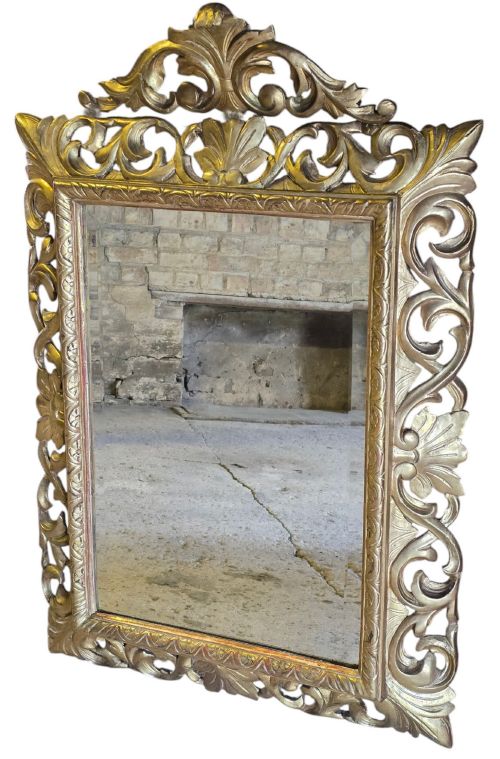
Overmantel mirrors on this page incorporate French styles including Rococo Revival, Louis Philippe, and Florentine designs.
What varies in quality
Quality in a gilt fireplace mirror rests upon the depth and crispness of the hand-carved gesso ornamentation against the wooden base. Crisp rope twists, sharp architectural columns, and detailed crestings separate masterwork carving from simpler moulded composition.
The integrity of the original gilding and the character of the mirror glass determine the overall preservation. Original silvering with natural foxing carries more authenticity than modern replacement glass.
The Gilt Fireplace Mirror Glossary
- Giltwood
- Wood that has been covered with thin sheets of gold leaf. This finish creates a warm metallic sheen that ages differently than modern metallic paint.
- Gesso
- A plaster-like mixture applied to wood frames and carved into intricate decorative details. It provides the smooth base needed for applying gold leaf.
- Overmantel
- A large mirror or painting specifically designed to hang on the wall directly above a fireplace mantelpiece. These pieces often anchor the decorative scheme of a reception room.
- Foxed glass
- Mirror glass that has developed dark spots and blemishes due to the breakdown of the silver backing over time. Collectors value this natural ageing as proof of genuine antiquity.
- Composition
- A moulded mixture of whiting, resin, and glue pressed into decorative ornaments for frames. It was frequently used alongside hand-carved wood to create ornate mouldings more efficiently.
Gilt Fireplace Mirror: Frequently Asked Questions
What is the difference between an overmantel and a wall mirror?
An overmantel mirror is specifically proportioned to sit horizontally or vertically above a fireplace mantelpiece. Their frames are often designed to complement architectural chimneypieces.
Standard wall mirrors lack this specific hearth-focused proportion and historical relationship to nineteenth-century interior heating structures.
How do I clean antique giltwood frames?
Dust giltwood frames gently with a very soft, dry brush to remove particles without disturbing delicate gesso. Moisture can damage fragile gold leaf and composition.
Avoid chemical polishes and commercial cleaners entirely, as they strip the historic surface finish from the wood.
How can I date a nineteenth-century gilt mirror?
Dating relies on examining the construction of the wooden backboards, the style of the gesso mouldings, and the characteristics of the glass plate. Regency and Victorian pieces exhibit distinct decorative vocabularies, such as classical columns or exuberant Rococo curves.
Foxing patterns and hand-beveled edges also offer clues to the manufacturing decade.