


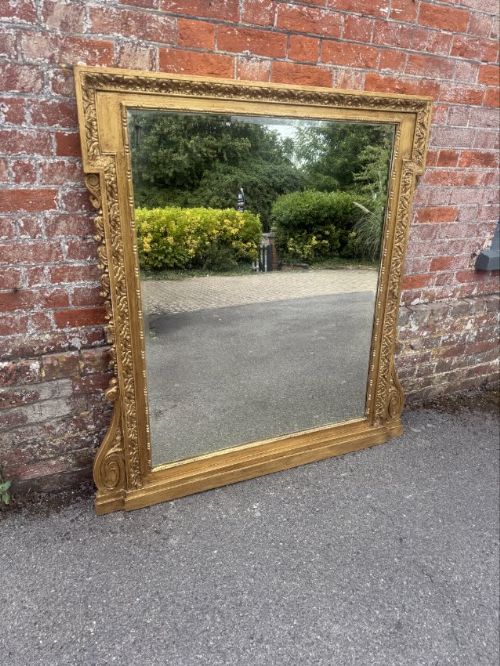
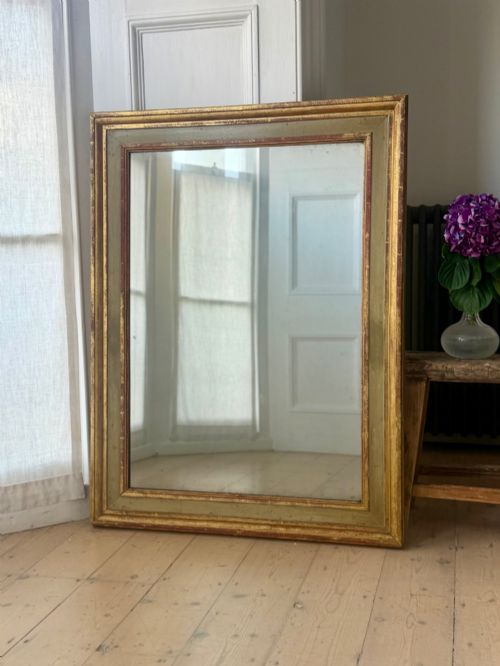
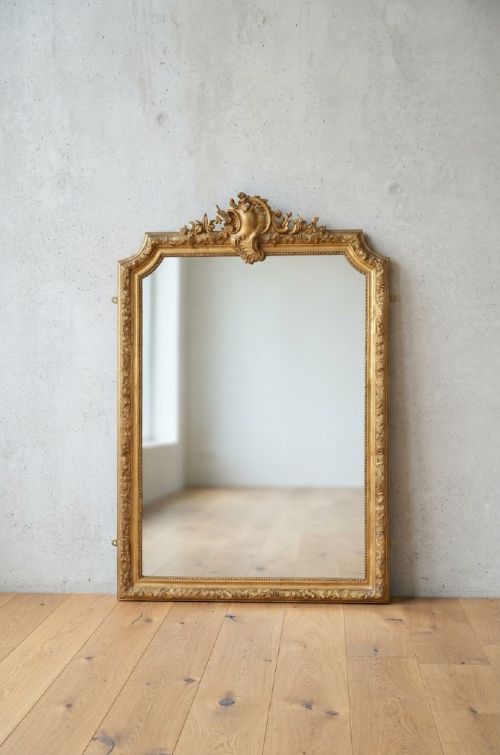
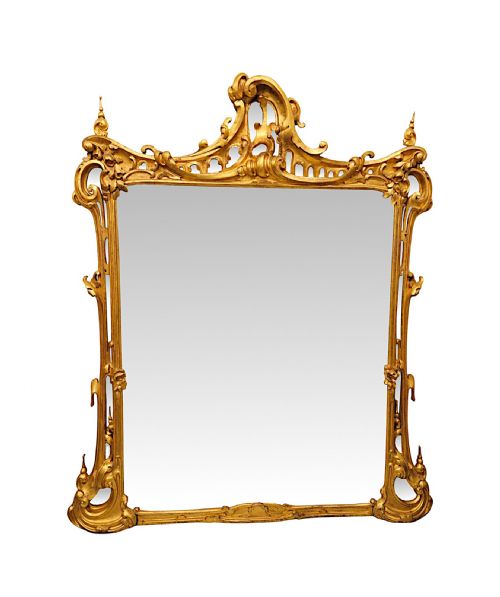
Gold Mantel Mirror
A gold mantel mirror brings light and scale to a room, anchoring a fireplace with a decorative gilded frame.
What a gold mantel mirror is
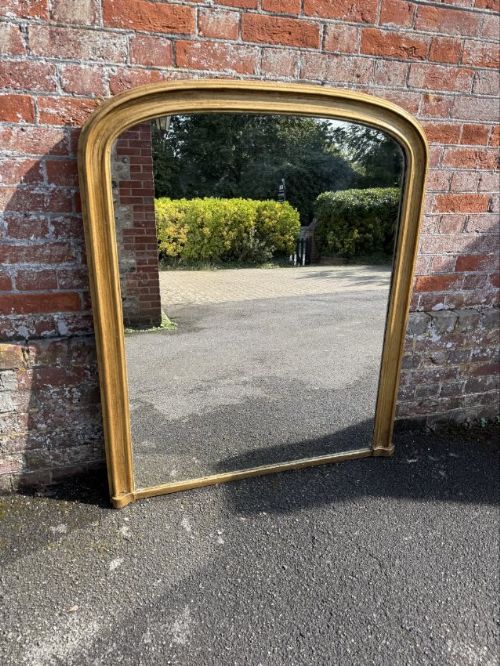
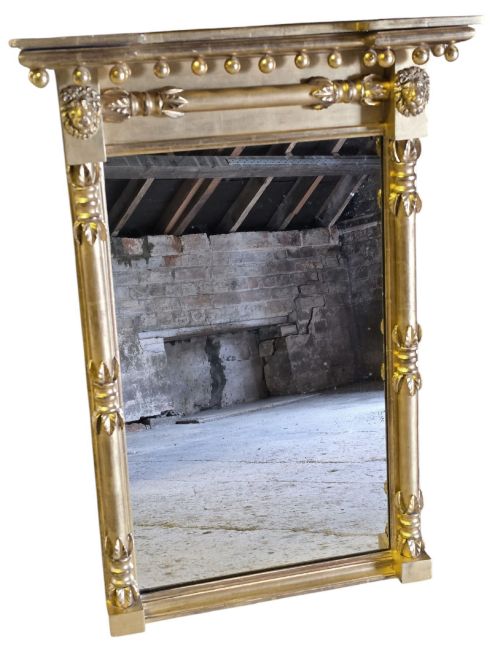
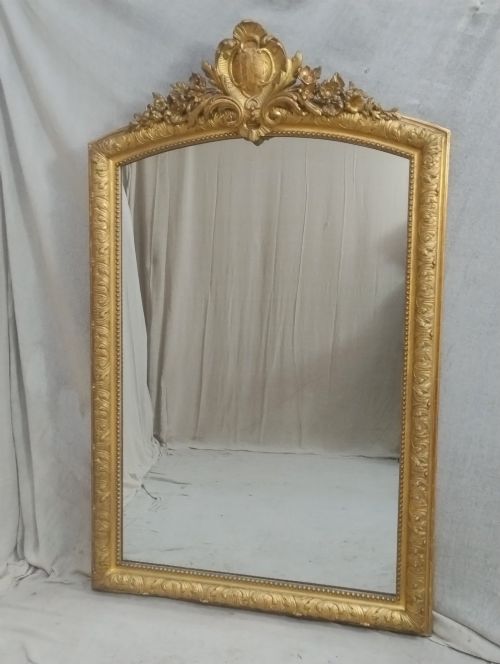
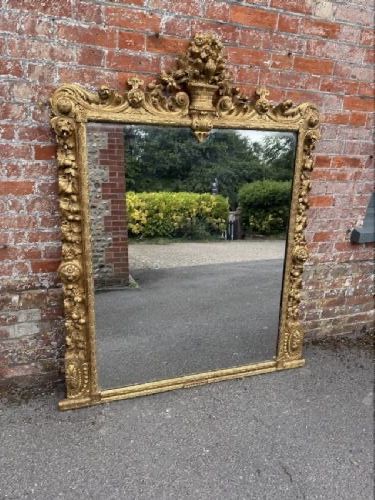
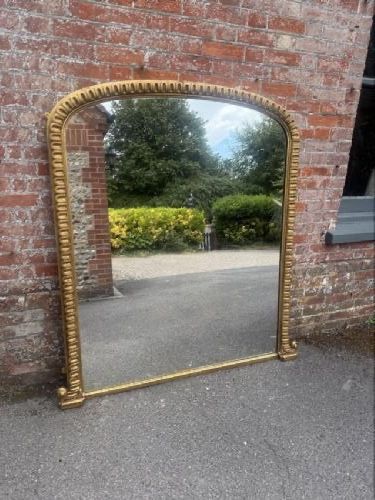
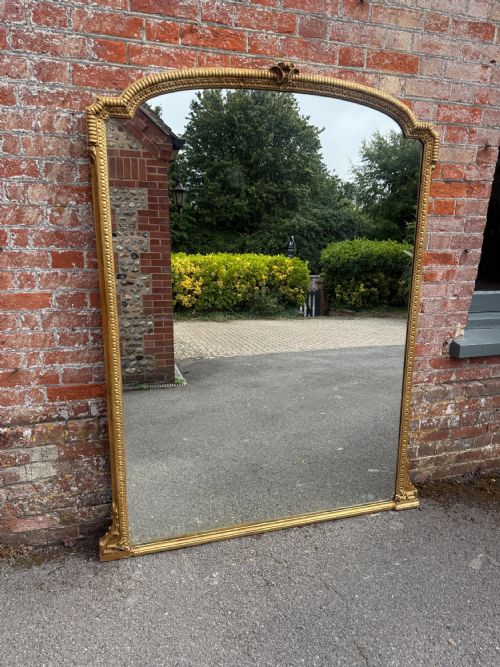
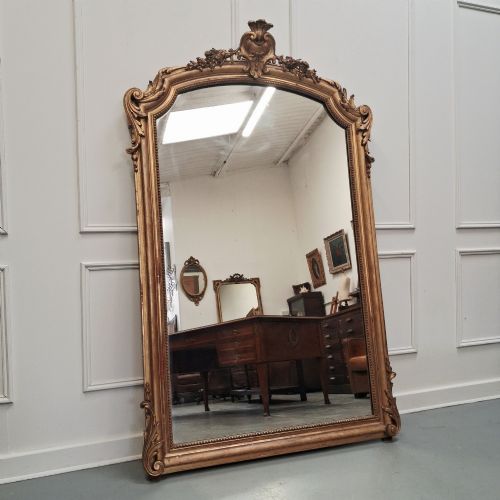
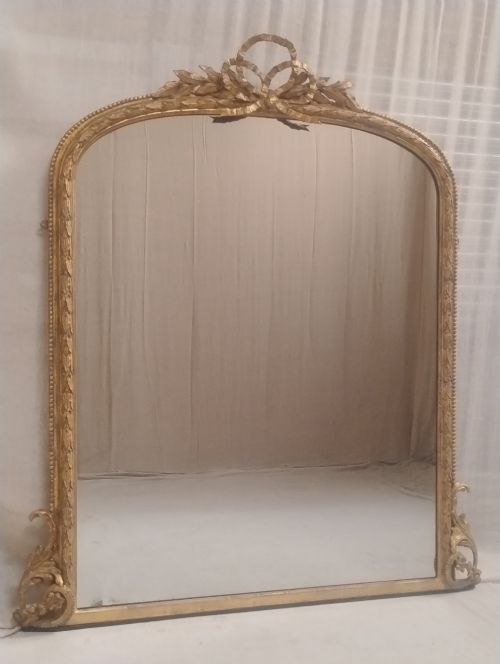
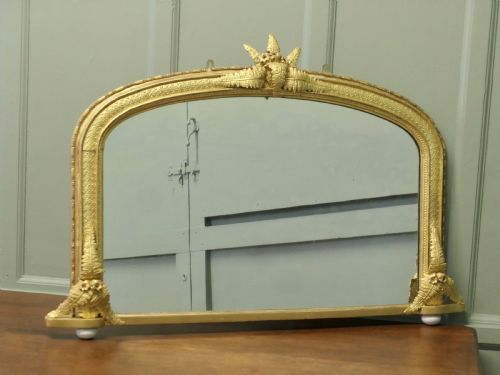
A gold mantel mirror sits above a fireplace, taking the form of an overmantel, wall mirror, or French chateau design. These pieces span the Regency, Victorian, and nineteenth-century periods, showing classical revival styles and triple plate layouts.
The version most commonly met on this page is the nineteenth-century overmantel mirror, often framed in giltwood or gesso over timber. These mirrors range from small Regency pieces to large statement frames designed to reflect light across a room.
How they were made
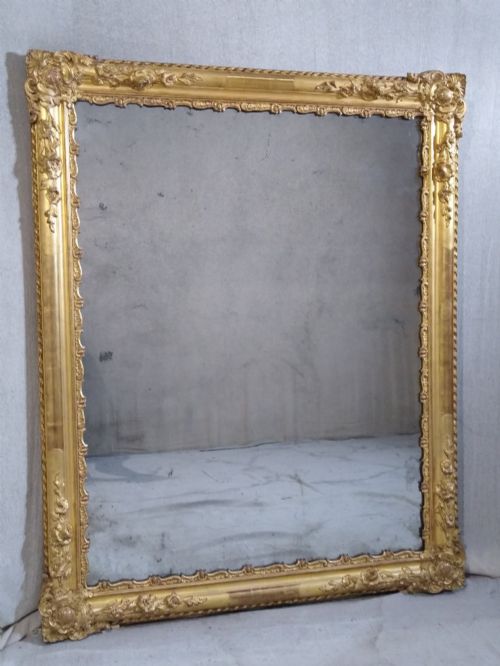
Frames are constructed from wood, timber, and carved wood, providing a sturdy base for decorative surface layers. Plaster and gesso are applied over the timber to build up ornate relief details and mouldings.
Gold leaf and giltwood finishes provide the characteristic metallic surface, while mirror glass and silvered glass form the reflective panels. Some examples also incorporate ebonised sections alongside the gold leaf.
Retail Price Guide 2026
Typical UK retail prices for gold mantel mirror, calculated from the Sellingantiques database of over a million retail prices indexed since 2003. This retail price guide relies exclusively on Sellingantiques data; no external sources or auction records are used, so the figures do not describe the wider market.
Listings feature pieces from the Victorian and Regency periods, alongside nineteenth-century French designs.
What varies in quality
The depth and intricacy of the carved wood and gesso ornamentation separate simpler frames from more elaborate examples. Superior pieces show crisp relief work and careful application of gold leaf over the timber base.
The treatment of the glass plates also defines the standard of the piece, with multi-plate configurations and bevelled edges reflecting greater ambition in design and construction.
The Gold Mantel Mirror Glossary
- Giltwood
- Wood that has been coated with gold leaf or a thin layer of gold paint. This finish creates the bright metallic surface seen on period frames.
- Gesso
- A plaster mixture applied to wood frames and carved into decorative relief patterns. It provides the smooth base needed for gilding.
- Overmantel mirror
- A large mirror specifically designed to be hung or placed on the mantelpiece above a fireplace. These pieces often feature wide horizontal proportions.
- Regency
- An English design period dating from the early nineteenth century. Pieces from this era often feature clean classical lines and refined ornamentation.
- Triple plate
- A mirror construction using three separate glass panels within a single frame. This layout is frequently found in nineteenth-century overmantel designs.
Frequently Asked Questions
Where should I hang a gold mantel mirror?
These mirrors are traditionally placed directly above a fireplace mantelpiece to reflect light and fill the vertical space on the wall. They also work effectively on large blank walls in reception rooms.
Because of their substantial weight and scale, secure wall fixings are essential to support the heavy timber and glass construction safely.
How do I date a gold mantel mirror?
Dating relies on examining the framing materials, construction methods, and stylistic cues such as Victorian classical revival or Regency details. The backing boards and fixings also offer clues to the period of manufacture.
Nineteenth-century examples often feature distinct gesso formulations and hand-carved wood elements that differ from later reproductions.
Are these mirrors heavy?
Many pieces use solid timber frames combined with thick mirror glass and layered gesso, resulting in significant weight. Large overmantel formats require robust fixings attached directly to wall studs.
Checking the weight distribution and frame construction helps ensure safe installation in a domestic interior.
What is an overmantel mirror?
An overmantel mirror is a large wall mirror built to sit horizontally above a fireplace opening. Their proportions were designed to complement the width of the hearth below.
They served both a practical purpose in reflecting firelight and a decorative role in nineteenth-century room design.