


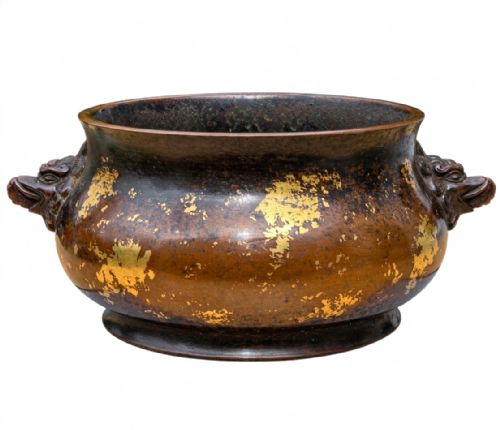
Gilt Bronze Bowl
A gilt bronze bowl brings heavy, warm metalwork and fine glass or porcelain together to anchor a grand table.
Gilt Bronze Bowl
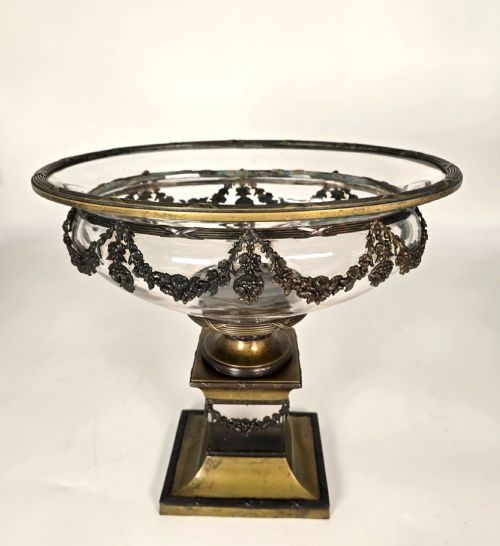
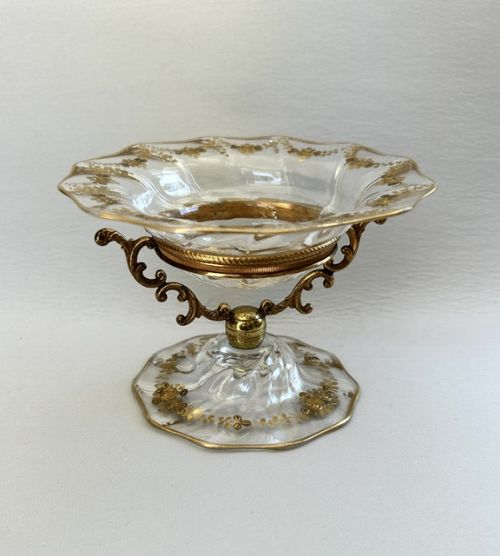
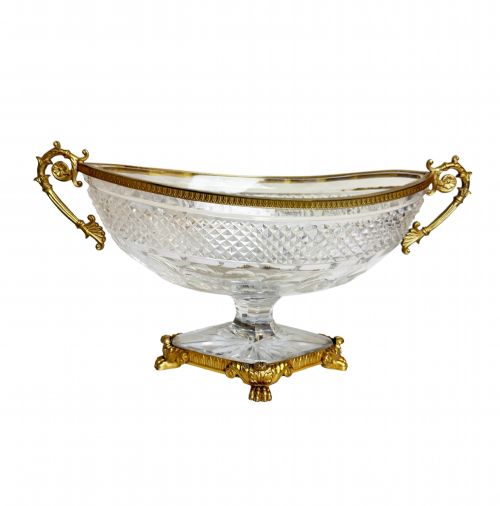
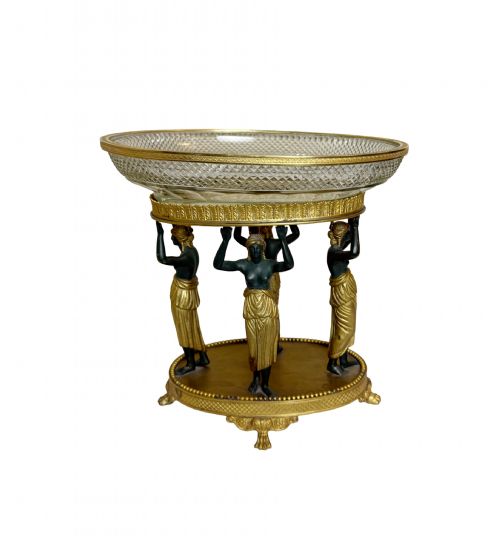
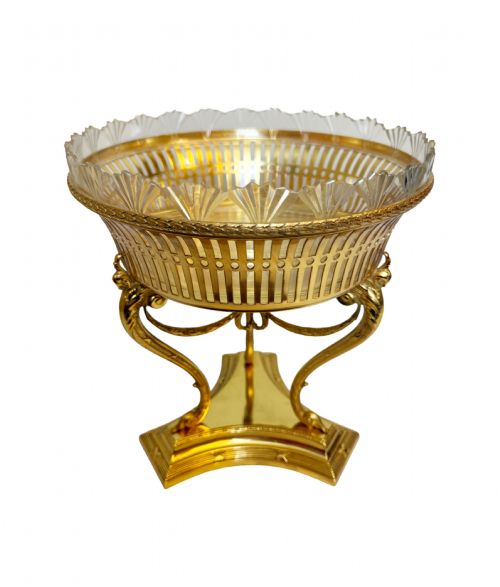
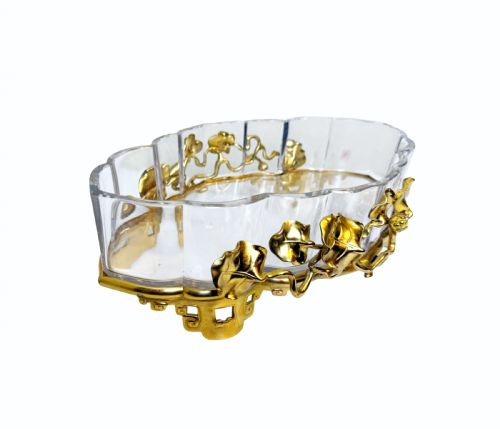
A gilt bronze bowl functions primarily as a centrepiece, tazza, or jardiniere designed to draw the eye on a dining table or console. The versions met most often on this page date from the nineteenth century, drawing heavily on French Empire, Rococo revival, and neoclassical aesthetics.
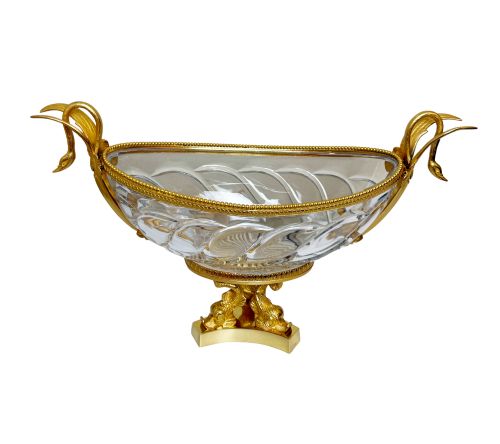
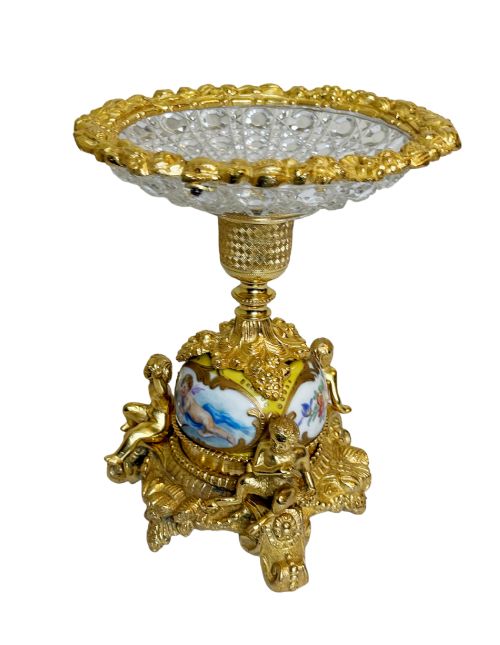
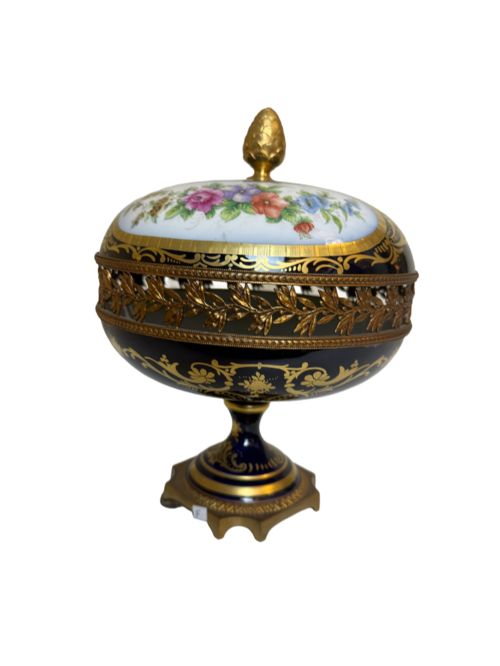
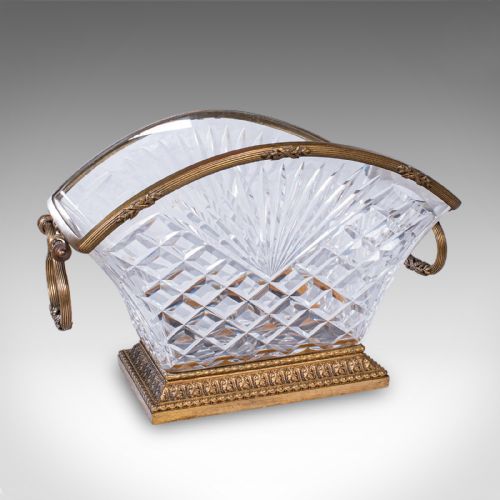
These pieces frequently combine a cast metal frame with inserts of cut crystal, Sevres style porcelain, or coloured glass. Makers across France and Britain produced them to serve both decorative and functional roles in formal interiors, ranging from shallow dishes on pedestals to heavy mounted jardinieres.
Beyond standard centrepieces, the selection incorporates specialised forms such as lidded dishes, tazzas with marble or onyx bases, and mounted Chinese porcelain. Each variant displays the characteristic union of metallic lustre and contrasting mineral bodies found across nineteenth-century salons.
Materials and Techniques
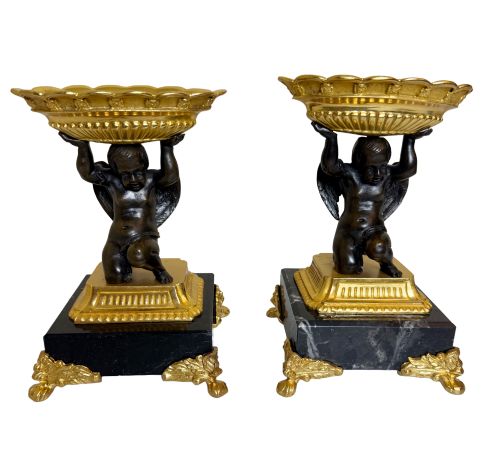
The foundation of these objects lies in cast bronze, finished with fire gilding or ormolu to create a durable, golden surface layer. Founders used sand casting and lost-wax methods to achieve intricate relief details like cherubs, mermen, and neoclassical foliage before applying the mercury gilding process.
Glass components such as cut crystal inserts and coloured vessels were heavily wheel-cut or moulded to catch the light alongside the metal mounts. Porcelain elements, including Sevres style plaques and Limoges dishes, were frequently fitted directly into custom bronze frames designed to hug their contours.
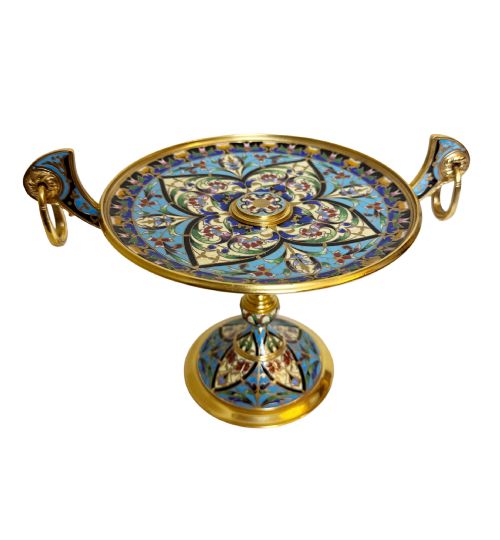
Enamelling techniques like champlevé add vibrant patches of colour to the metal framework, contrasting with natural stones such as malachite, onyx, and marble. Craftsmen secured these complex assemblies using threaded rods and screws hidden beneath the bases of the vessels.
Distinctions in Execution
The crispness of the chased detail separates standard production from exceptional work. Superior examples exhibit hand-chased surface definition on the bronze, where feathers, hair, and acanthus leaves remain sharp and deep rather than soft and blurred from worn moulds.
The harmony between the metal mount and its glass or ceramic insert indicates the maker's ambition. High-grade pieces feature custom mounts tailored precisely to the contours of the porcelain or crystal, whereas lesser items rely on generic frames that sit loosely against the body.
The weight and resonance of the cast bronze alongside the selection of secondary materials elevate certain items. Solid, thick-walled bronze combined with hardstones like agate or lapis lazuli demonstrates a commitment to costly raw materials.
Christofle Paris·Paul Louchet
The Gilt Bronze Bowl Glossary
- Ormolu
- Finely chopped high-karat gold applied to a bronze base using a mercury amalgam technique. This historic process yields a warm, satin finish distinct from modern electroplating.
- Tazza
- A shallow saucer-shaped vessel mounted on a stem and foot. Originating as a ceremonial cup, it became a standard nineteenth-century table decoration for fruit or sweetmeats.
- Jardiniere
- An ornamental receptacle designed to hold growing plants or floral arrangements. They frequently incorporate waterproof metal liners to protect the surrounding bronze and gilt surfaces.
- Champlevé
- An enamelling technique where troughs are carved into the metal surface and filled with vitreous paste before firing. The resulting coloured patterns sit flush with the surrounding bronze borders.
- Comport
- A standing dish or bowl used on a dining table for serving fruit or dessert. These pieces typically elevate the contents above the table surface on a decorative pedestal.
Gilt Bronze Bowl: Frequently Asked Questions
What is a gilt bronze bowl?
A gilt bronze bowl is a decorative vessel featuring a copper-alloy metal base treated with a golden surface finish, often paired with glass, porcelain, or stone.
These objects were created primarily as ornamental centrepieces for nineteenth-century dining tables and drawing rooms.
Were these bowls used for dining?
Many examples served as centrepieces for displaying fruit, flowers, or sweetmeats during formal nineteenth-century dinner parties.
Others functioned purely as decorative garniture elements on mantels and sideboards rather than utilitarian tableware.
How to date a gilt bronze bowl?
Dating relies on stylistic clues like neoclassical motifs, Empire proportions, or Aesthetic movement asymmetry, combined with construction methods.
Examining the casting quality, the type of gilding, and any maker stamps or registry marks helps narrow the period of origin.