




Ormolu Mounted Centrepiece
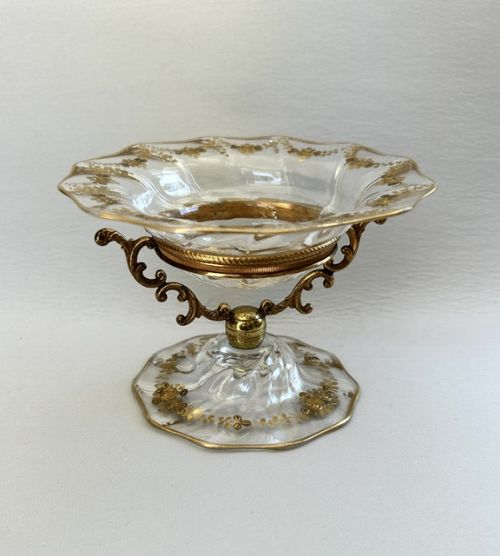
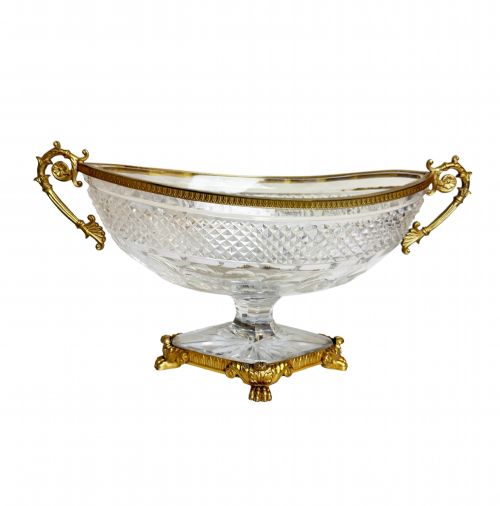
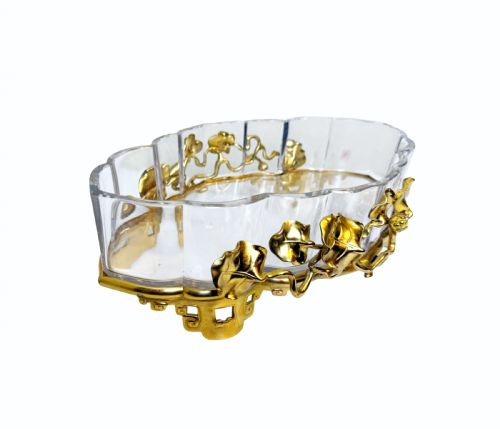
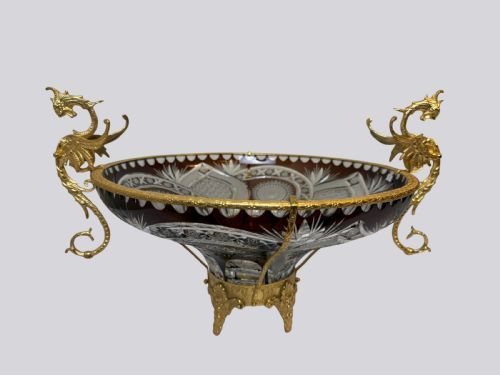
An ormolu mounted centrepiece brings gilded brass mounts and porcelain or crystal together to anchor a dining table or sideboard with French style.
Ormolu Mounted Centrepiece
An ormolu mounted centrepiece is a decorative vessel designed to sit in the middle of a table, combining a central body of porcelain, glass, crystal, onyx, or marble with metal mounts. These decorative objects emerge from French workshops during the 18th century and continue through the 19th century in styles such as Rococo Revival, Empire, and Second Empire.
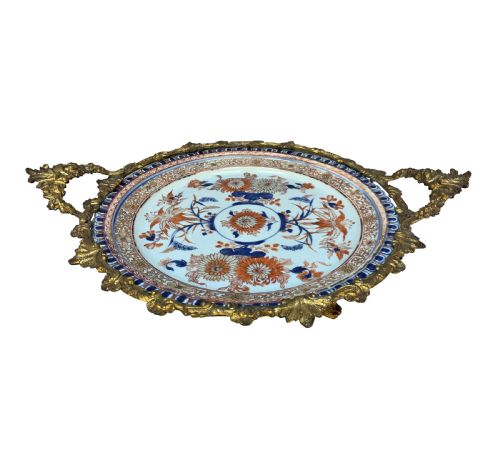
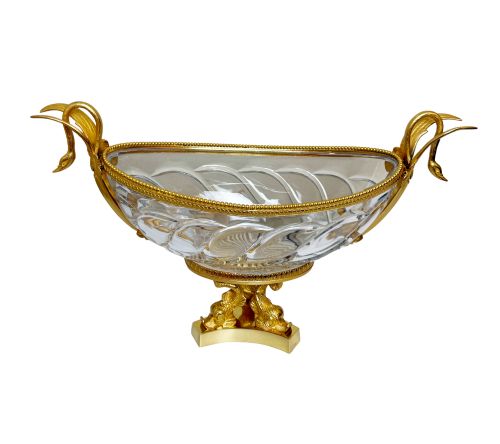
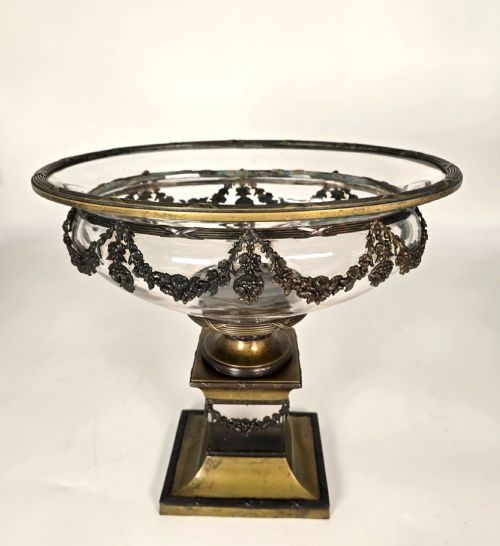
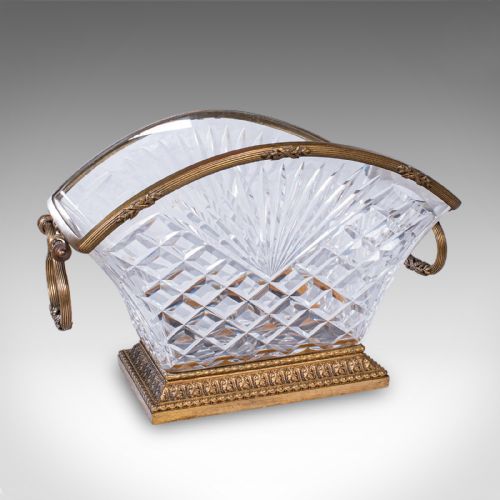
The form appears most frequently as a bowl, comport, or jardiniere supported by a gilt bronze or ormolu frame, stand, or handles. Buyers encounter pieces utilising Chinese Imari, Canton, Sevres style porcelain, or cut glass paired with cast bronze mounts.
Beyond bowls, the selection includes garniture sets, candelabra, and vases that share the same vocabulary of gilded metal framing ceramic or stone bodies. These objects function primarily as decorative focal points rather than utilitarian tableware.
How they were made
Makers combine cast metal with fired ceramics, blown glass, or carved stone, securing the components with threaded rods and nuts hidden beneath the base. Gilt bronze and ormolu undergo casting and chiselling before receiving a layer of gold through mercury gilding or electroplating.
Porcelain bodies originate from factories producing Sevres style wares, Paris porcelain, Majolica, or imported Chinese and Cantonese pieces. Glass and crystal elements are blown or cut into bowls and vases, then fitted precisely into cast metal collars and feet.
Several porcelain birds manage to perch permanently inside ormolu candelabra without ever requiring seed.
What varies in quality
Quality rests in the crispness of the bronze chasing and the depth of the gilding on the metal mounts. Finer mounts display sharp leaf and scroll work with hand-finished detail, whereas lesser pieces show softer cast surfaces.
The material of the vessel body also distinguishes the tier of the piece, with hand-painted porcelain or heavy cut crystal representing a more ambitious standard than plain glass.
Samson Porcelain
The Ormolu Mounted Centrepiece Glossary
- Ormolu
- Gilt bronze, derived from the French term ouou moulu denoting ground gold. This material provides the gilded metal mounts characteristic of French decorative arts.
- Comport
- A raised bowl or dish on a foot or pedestal, often utilised for fruit or sweetmeats on a dining table. These vessels form a primary shape within this category.
- Jardiniere
- An ornamental pot or stand designed to hold plants or flowers. In this context, the ceramic or glass body sits within a decorative metal frame.
- Champlevé enamel
- A technique where troughs are dug into a metal surface and filled with vitreous enamel before firing. This method appears on mounts and frames alongside gilt bronze.
Ormolu Mounted Centrepiece: Frequently Asked Questions
What is an ormolu mounted centrepiece?
An ormolu mounted centrepiece is a decorative table vessel featuring a body of porcelain, glass, crystal, or stone set within cast and gilded bronze mounts. These objects originate mainly from French design traditions spanning the 18th and 19th centuries.
They serve as ornamental centerpieces for dining tables, sideboards, or console tables, combining utilitarian materials like glass and ceramic with sculptural metalwork.
How do I date a centrepiece?
Dating relies on identifying stylistic markers such as Rococo Revival scrolls or Empire classical symmetry, alongside the manufacturing techniques of the porcelain or glass. Materials like green onyx, champlevé enamel, and specific porcelain styles point toward the 19th century.
Examining the construction methods of the metal mounts and the assembly screws underneath provides further clues to the period of manufacture.
How were these centrepieces used?
These pieces function primarily as decorative display items for formal dining rooms and drawing rooms. Some forms, like jardinieres or comports, hold flowers or fruit during gatherings.
Others act purely as visual anchors for a room, often paired with matching candelabra or urns as part of a garniture set.
How do I care for ormolu mounts?
Ormolu mounts require gentle dusting with a soft, dry brush to prevent the accumulation of dirt in the chased recesses. Moisture and harsh cleaning agents damage the delicate gold finish on the bronze.
Glass and porcelain portions can be cleaned separately with mild soap and water, ensuring no moisture reaches the metal joints or adhesives.