

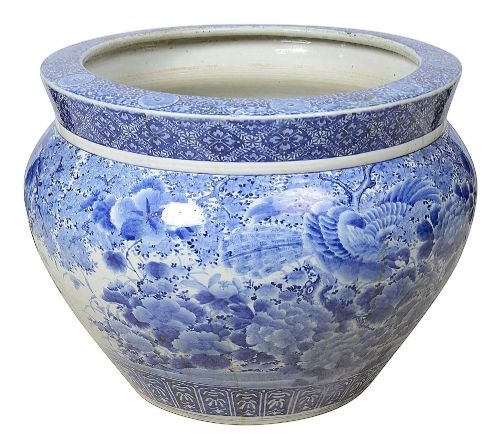


Hand Painted Porcelain Jardiniere
These hand painted porcelain jardiniere pieces bring colour and botanical display together, offering classic planting vessels for interiors.
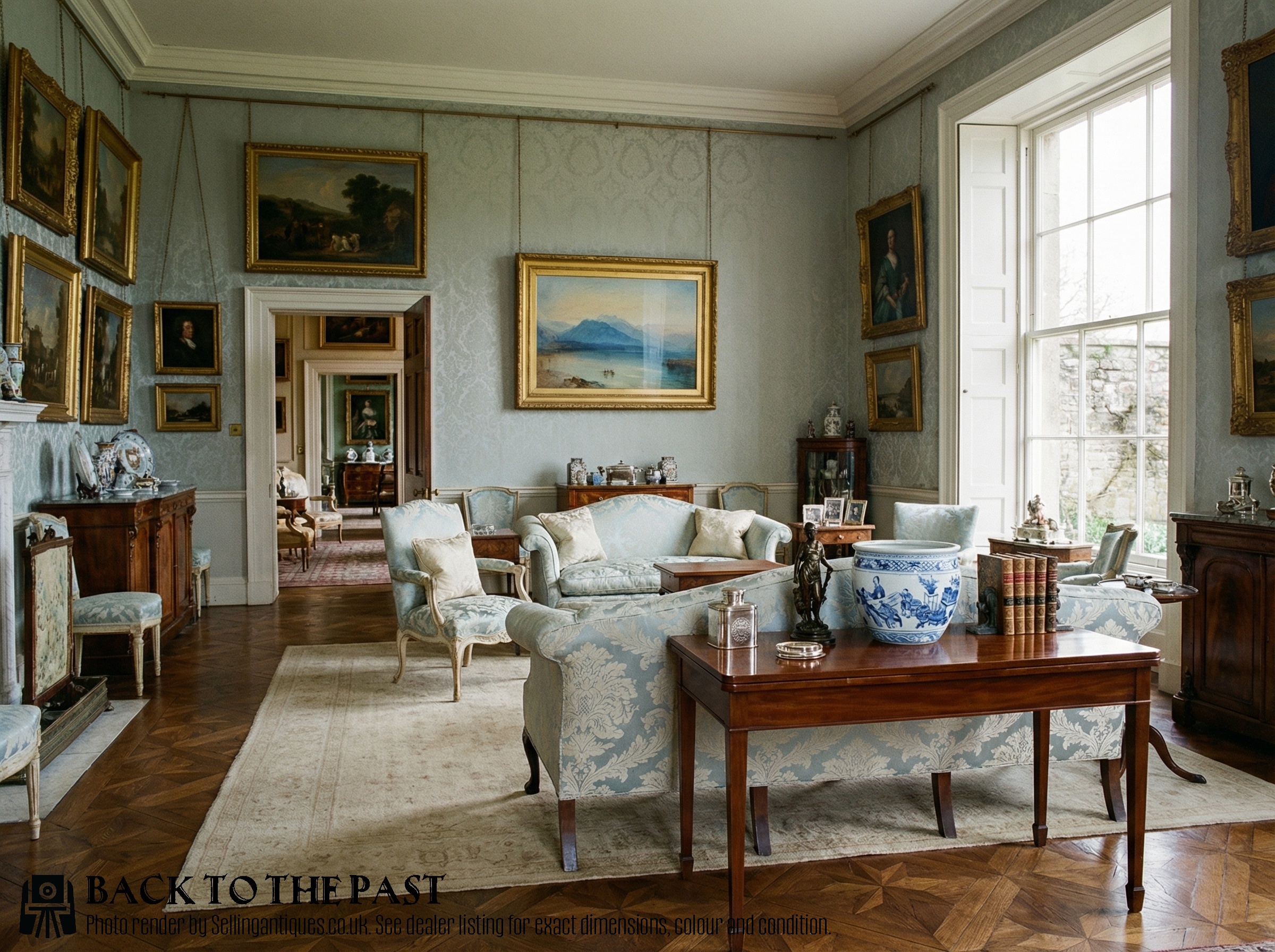
Hand Painted Porcelain Jardiniere
A hand painted porcelain jardiniere serves as a decorative plant pot or cachepot, designed to house indoor greenery while adding colour and pattern to a room. You will encounter pieces spanning several centuries, featuring forms ranging from traditional fish bowls to hexagonal planters and bough pots.
The selections on this page draw from diverse origins, including English factories like Worcester and Coalport, continental European kilns, and East Asian traditions such as Japanese Imari and Chinese Canton wares. These vessels adapt readily to modern interiors while retaining their historic character and hand-painted detail.
How they were made
The foundation of each piece rests on ceramic or porcelain bodies, shaped into vessels and finished with smooth glazes. Artisans applied cobalt underglaze, enamel pigments, and gold leaf by hand before firing the ceramics to set the colours.
Detailed brushwork characterises the decoration, incorporating motifs from Chinoiserie scenes to floral sprays and bird studies. Gilding and enamel work add layered texture to the surface of the porcelain.
Songbirds and peonies share the painted landscape of these vessels, quietly supervising your houseplants from the edge of the porcelain.
What varies in quality
The refinement of the hand painting distinguishes standard production wares from exceptional studio and factory pieces. Crispness in the enamel details and precision in the cobalt underglaze mark superior execution.
The weight and balance of the porcelain body, alongside the complexity of the glaze and gilding application, indicate the skill of the original maker.
Barr Flight and Barr·Royal Worcester·Royal Crown Derby·Coalport
The Hand Painted Porcelain Jardiniere Glossary
- Jardiniere
- An ornamental pot or receptacle for holding flowers or plants. They sit on tables or stands rather than being planted directly.
- Cachepot
- A decorative container used to conceal an ordinary flowerpot. The word derives from the French for hiding a pot.
- Imari
- A style of Japanese export porcelain characterised by a palette of underglaze blue, iron red, and gold. It gained immense popularity in European interiors.
- Famille Rose
- A major palette of Chinese ceramic glaze introduced in the Qing Dynasty, distinguished by opaque pink or rose enamel colours. The style depicts naturalistic floral and avian subjects.
- Bough Pot
- A type of bulb or flower holder popular in the Georgian era, often featuring a pierced lid for arranging cut stems.
Hand Painted Porcelain Jardiniere: Frequently Asked Questions
How do I use a jardiniere indoors?
Place a smaller potted plant inside the vessel so that excess water collects safely away from the porcelain base. This method protects the historic glaze and interior from moisture damage.
Alternatively, use the container to display dried stems, floral arrangements, or simply allow the hand-painted exterior to stand alone as an ornamental centrepiece on a table.
Can I plant directly into an antique jardiniere?
Direct planting is generally discouraged because moisture and soil can seep into unglazed portions of older ceramics over time. Using an inner nursery pot preserves the integrity of the material.
This approach also makes it simpler to swap plants in and out without disturbing the antique vessel.
How do I distinguish 18th-century pieces from later ones?
Examination of the foot ring, glaze texture, and pigment saturation often reveals the characteristics of earlier production periods. Eighteenth-century pieces frequently display specific potting traits and hand-mixed mineral pigments distinct from later manufacturing.
Factory marks, where present, help narrow down the decade of creation by connecting the piece to known operational years of makers like Worcester.
How should I clean porcelain jardiniere pieces?
Dust the surface gently with a soft dry cloth to remove everyday particles without risking the enamel or gilding. Avoid harsh chemical cleaners or abrasive scrubbing.
If washing is necessary, use lukewarm water with mild soap, followed by immediate drying with a lint-free cloth.
What is the difference between a jardiniere and a cachepot?
While both terms describe decorative plant holders, jardiniere often refers to larger, freestanding or centrepiece vessels used for major floral displays. Cachepots specifically function to hide plain planting pots.
In historical listings, these terms frequently overlap depending on the maker and the specific shape of the vessel.