





Asian Ceramic Planter
An Asian ceramic planter brings hand-painted colour and sculptural presence to an interior, whether potted with ferns or displayed alone.
Asian Ceramic Planter
When you search for an Asian ceramic planter, you encounter robust vessels intended to house indoor greenery, often paired with matching drip trays or associated hardwood stands. The pieces seen here span the nineteenth and early twentieth centuries, originating from Japanese and Chinese workshops during periods such as the Meiji era and the Qing dynasty.
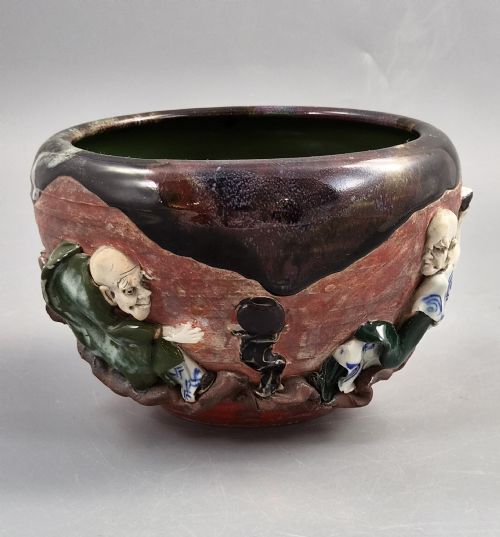
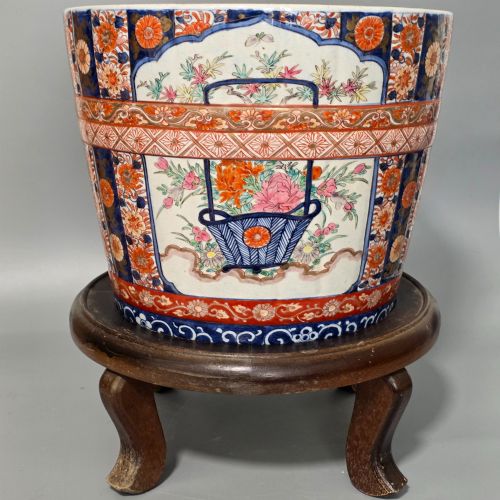
The dominant forms are jardinières and large decorative bowls, alongside occasional vases and hexagonal planters. These pots frequently display traditional motifs executed in cobalt pigment, enamel, or relief figures.
Most examples date from the late nineteenth century through to the 1930s, reflecting both export production and domestic decorative arts. A buyer is most likely to meet blue and white vessels, Imari wares, and stoneware bodies signed by notable makers.
How they were made
Potters shaped stoneware, terracotta, and porcelain bodies by hand or on the wheel before applying glaze and mineral pigments. Cobalt pigment underglaze and polychrome enamel paint dominate the surface decoration across these listings.
Firing took place in traditional kilns where temperature control produced the characteristic crackle, gloss, or matte finishes seen on stoneware and porcelain. Relief elements, such as figures modelled in clay, were applied to the surface prior to the final glaze firing.
Asian Ceramic Planter Retail Price Guide 2026
Typical asking prices for asian ceramic planter among the pieces listed under this phrase on Sellingantiques today, from the lower quarter to the upper quarter. They describe what is for sale here now, not the wider market.
Some nineteenth-century planters feature amusing figures in high relief peering out at the room.
What varies in quality
Quality rests in the crispness of the hand-painted brushwork and the complexity of the glaze chemistry. Pieces featuring finely delineated peonies, birds, or relief figures show a higher level of artisan skill than mass-produced export ware.
The presence of artist signatures, studio marks, or associated hardwood stands elevates an example. Structural integrity, such as a clean rim and a stable base designed to hold heavy damp earth, marks the better pots.
Inoue Ryōsai·Makuzu Kozan II
The Asian Ceramic Planter Glossary
- Jardiniere
- A large decorative pot or planter, usually ceramic, designed to hold a growing plant. They often sit on low tables or associated hardwood stands.
- Imari
- A style of Japanese export porcelain characterised by a palette of underglaze blue, iron red, and gilt. It gained popularity in Europe during the late nineteenth century.
- Famille Rose
- A Chinese ceramic palette distinguished by opaque pink enamel, introduced during the Qing dynasty. The style depicts floral and avian scenes with soft tonal gradations.
- Stoneware
- A dense, hard ceramic fired at high temperatures until vitrified. It is impermeable to water without a glaze, though glazes are typically applied for decoration.
- Cobalt Pigment
- A blue mineral colour used underglaze on ceramics for durable decoration. It withstands high kiln temperatures without fading.
Asian Ceramic Planter: Frequently Asked Questions
Can I plant directly inside these pots?
Many historic planters lack drainage holes at the base, meaning they were originally designed to hold potted plants placed inside them.
Using a plastic nursery pot inside your planter protects the ceramic interior from moisture and mineral damage over time.
How do I clean an antique jardiniere?
Dust the exterior gently with a dry, soft cloth to remove surface dirt without disturbing the glaze or enamel.
Avoid harsh chemical cleaners and do not submerge pots with associated wooden stands in water.
How do I identify Meiji period ceramics?
Meiji period pieces date from 1868 to 1912, a time of significant Japanese export growth. Look for detailed relief modelling, signature cartouches, and rich polychrome enamels.
Potters during this era combined traditional techniques with Western aesthetic influences.