







Oriental Porcelain Jardiniere
An oriental porcelain jardiniere brings vivid enamels and deep cobalt underglaze into a room, holding large plants with substantial weight and presence.
Oriental Porcelain Jardiniere
An oriental porcelain jardiniere is a sturdy vessel designed to hold potted plants or serve as a fish bowl. Buyers searching this phrase encounter heavy ceramic planters originating from Japan and China across the nineteenth and eighteenth centuries.
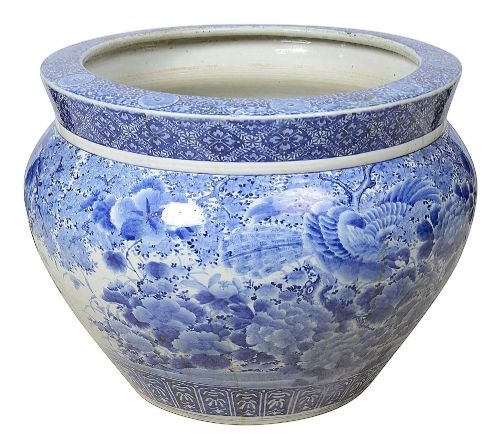
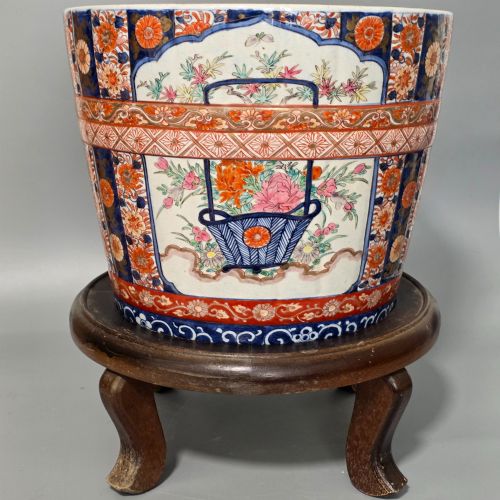
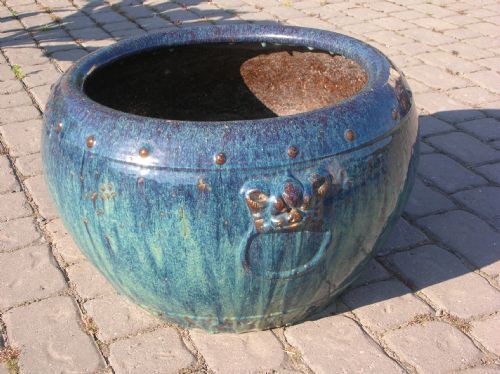
The pieces on this page appear in various forms, including hexagonal planters with drip trays, large fish bowls, and vessels resting on associated hardwood stands. Japanese Arita Imari and Chinese Canton Famille Rose dominate the selection, showing distinct regional palettes and motifs.
How they were made
Potters shaped thick ceramic bodies to support heavy earth and water, applying cobalt underglaze before the initial firing. This blue pigment sinks deep into the body, creating durable designs that withstand moisture and handling.
Painters added polychrome enamel and gold leaf over the glaze in subsequent low-temperature firings, building up intricate patterns of peonies and songbirds. Associated hardwood stands were often carved separately to elevate the heavy porcelain vessels.
Oriental Porcelain Jardiniere Retail Price Guide 2026
Typical asking prices for oriental porcelain jardiniere among the pieces listed under this phrase on Sellingantiques today, from the lower quarter to the upper quarter. They describe what is for sale here now, not the wider market.
Periods represented across the available pieces span from the 1700s through the nineteenth century and into the 1930s.
What varies in quality
The distinction between standard vessels and exceptional pieces lies in the crispness of the underglaze painting and the density of the enamel work. Superior examples exhibit precise brushwork and balanced compositions that hold the eye across a room.
The integration of form and decoration also determines distinction, particularly where hexagonal panels or seal marks are rendered with absolute clarity. Associated stands that complement the scale of the porcelain without overshadowing it add further merit.
The Oriental Porcelain Jardiniere Glossary
- Jardiniere
- A large ornamental pot or bowl designed to hold a plant or flowers. These vessels often sit directly on the floor or upon a low stand.
- Imari
- A style of Japanese export porcelain featuring deep cobalt blue, iron red, and gold leaf highlights. The palette creates a rich, decorative surface that proved highly popular in European interiors.
- Famille Rose
- A major palette of Chinese ceramic glazes introduced in the eighteenth century, distinguished by opaque pink enamel. The name derives from the French classification for these pink-dominated decorative schemes.
- Underglaze
- Pigment applied directly to the raw ceramic body before the application of a clear glaze and subsequent firing. This technique protects the painted design from wear and fading over centuries.
- Hardwood stand
- A separate wooden support carved to fit the base of a heavy oriental vessel. These stands lift the ceramic piece off the floor and protect delicate surfaces.
Oriental Porcelain Jardiniere: Frequently Asked Questions
How do I clean an antique jardiniere?
Wash the ceramic surface gently with warm water and a soft cloth to remove accumulated dust and soil.
Avoid harsh chemical cleaners that can damage delicate gold leaf or overglaze enamels.
Can these pots hold live plants?
These vessels were built to accommodate large plants and soil, though many owners place a nursery pot inside to protect the interior.
Using a liner prevents moisture from sitting against unglazed base areas for extended periods.
What is the difference between an Imari and Famille Rose piece?
Imari pieces rely on a strong contrast of dark cobalt blue, iron red, and gold, originating primarily in Japan.
Famille Rose ceramics feature a softer palette dominated by opaque pink enamels and detailed floral scenes from China.
Are hardwood stands always original?
Many surviving vessels are paired with associated stands carved at later dates to match the dimensions of the porcelain.
Such stands are typical for heavy fish bowls and large planters that required stable elevation.