


Antique Porcelain Urn Bowl
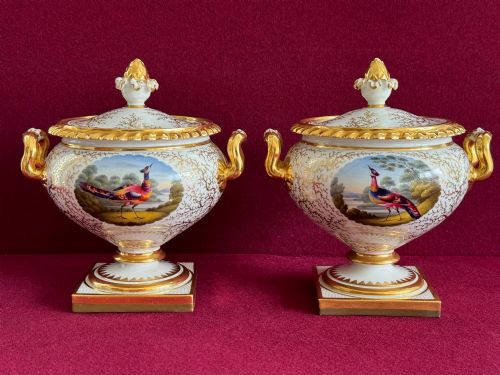
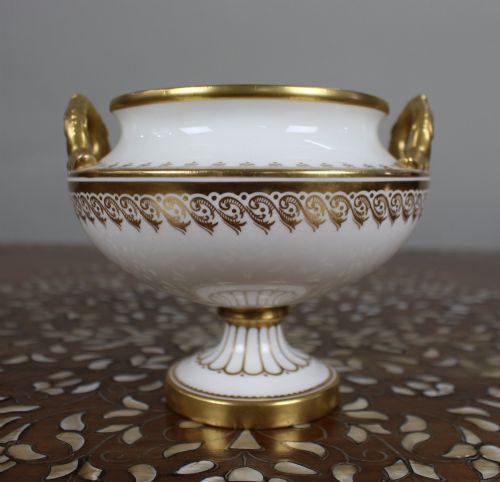
These antique porcelain urn bowls combine refined ceramic form with ornate metal mounts, offering a striking display piece for any surface.
Antique Porcelain Urn Bowl
When you search for an antique porcelain urn bowl, you are looking at decorative vessels shaped with classical grace, often featuring handles, lids, and distinct pedestals. These pieces draw from a variety of historical periods including the nineteenth century and the early twentieth century, spanning English, French, and Japanese origins.
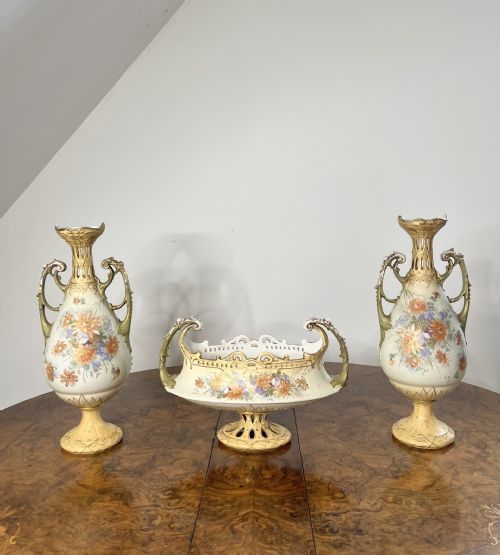
You are most likely to meet pieces finished with rich gilding, cobalt pigment, or delicate enamel work, taking the form of centrepieces, garniture sets, or lidded dishes on stands. Styles range from French Rococo Revival and Neoclassical to Victorian and Edwardian interpretations, reflecting the diverse decorative tastes of their eras.
The assortment on this page includes specific historic manufactures such as Royal Vienna, Royal Worcester, and Coalport alongside Paris porcelain and Sevres style works. Each object serves primarily as a decorative focal point, whether presented as a standalone vase or part of a matched garniture set.
Materials and construction methods
The foundation of every piece is fired ceramic, frequently decorated with cobalt pigment underglaze or detailed enamel painting by hand. Artisans applied gold leaf, gilding, and gilt metal mounts to accent the porcelain bodies, adding substantial visual and physical weight to the finished vessels.
Ormolu and gilt bronze components were cast and chased to frame the porcelain, securing handles and bases with mechanical precision. These mixed-media objects required collaboration between ceramicists, metalworkers, and gilders, particularly in French and English workshops.
Listings feature periods from the early nineteenth century through to the Edwardian era, spanning English, French, and Japanese origins.
Assessing quality in ceramic urns
Quality rests in the crispness of the porcelain throwing, the refinement of the painted details, and the weight of the metal mounts. Superior pieces display finely articulated handles, secure ormolu fittings without excessive gaps, and hand-painted scenes or patterns executed with sharp control.
The depth of the gilding and the purity of the cobalt pigment signal the care taken during firing and decoration. Lesser examples rely on heavier, simpler moulds and machine-applied transfers rather than meticulous hand painting and chased bronze.
Royal Vienna·Royal Worcester·Flight Barr And Barr·Coalport
The Antique Porcelain Urn Bowl Glossary
- Garniture set
- A matched group of three or more decorative vessels designed to be displayed together on a mantelpiece or sideboard.
- Ormolu
- Finely chopped high-karat gold applied to a bronze base, creating a rich golden finish often seen on nineteenth-century mounts.
- Comport
- A shallow decorative dish raised on a stem and foot, used historically for fruit or sweetmeats as part of table service.
- Imari
- A style of ceramic decoration featuring deep cobalt blue, iron red, and gold, inspired by Japanese export wares.
- Cachepot
- An ornamental flowerpot container designed to hold a simpler potted plant without a drainage saucer.
Antique Porcelain Urn Bowl: Frequently Asked Questions
What is an antique porcelain urn bowl used for?
These vessels were primarily created for display on tables, mantelpieces, or sideboards, functioning as focal points in nineteenth-century interiors. Some forms, such as cachepots and comports, served practical roles for plants or table service, but most acted as pure ornament.
Over time, their role shifted entirely to decorative collection. Owners place them in living spaces and cabinets to appreciate their painted surfaces and gilded mounts.
How can I tell the period of a porcelain urn?
Stylistic clues such as the boldness of Rococo Revival curves or the strict symmetry of Neoclassical design offer initial date ranges. The combination of ceramic paste, pigment tones, and the style of metal mounts further narrows the era of production.
Examining the base for maker marks, factory stamps, or inscribed titles provides definitive evidence. Comparing these marks against historical factory records confirms the exact decade of manufacture.
Why are some urn bowls mounted in metal?
Metal mounts in ormolu, gilt bronze, or gilt metal provided structural support to fragile ceramic sections while enhancing the visual splendour of the piece. Makers added these mounts to elevate the status of the vessel for wealthy interiors.
French workshops in particular utilised chased bronze mounts to frame porcelain bodies. This technique bridged ceramic artistry with fine metalwork during the nineteenth century.