
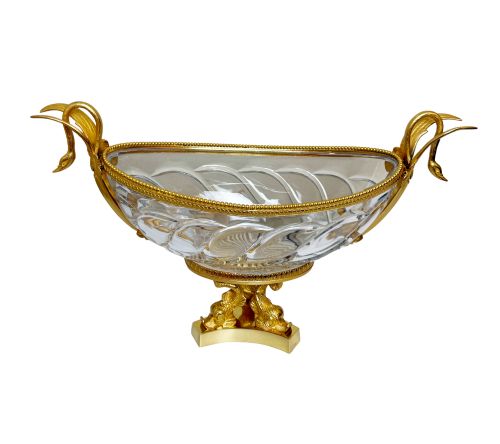
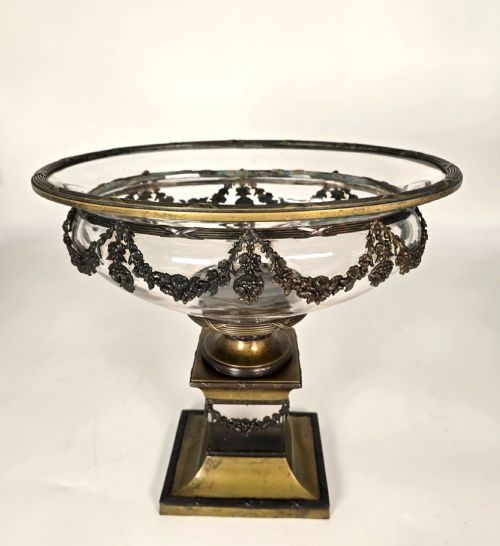
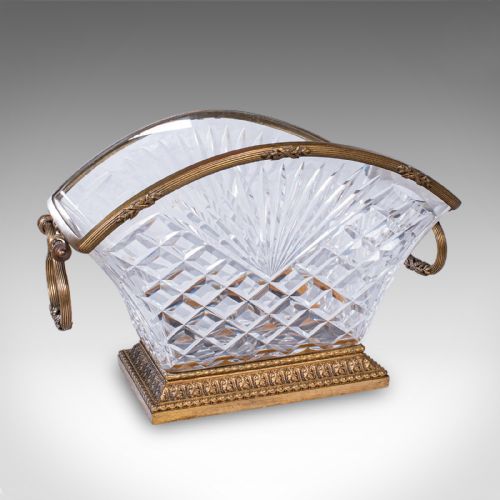
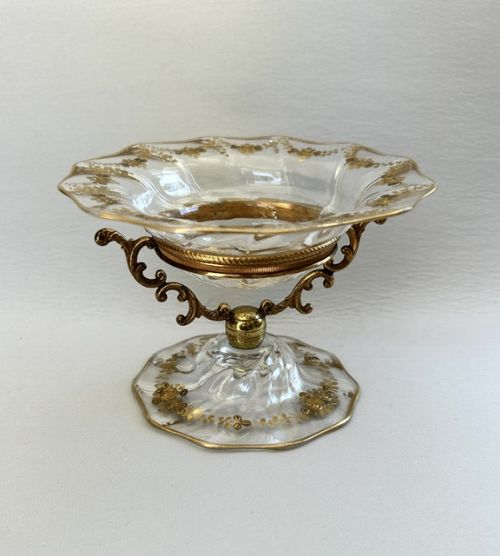
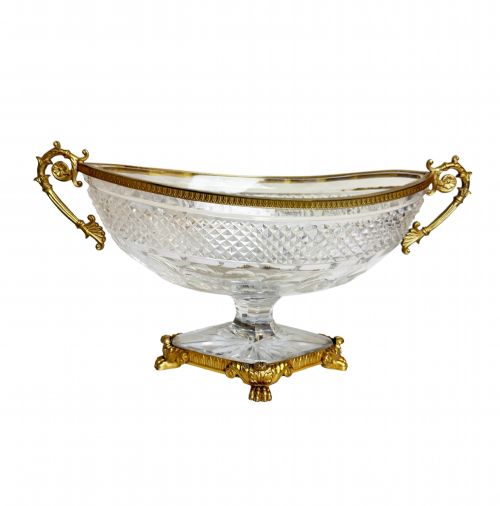
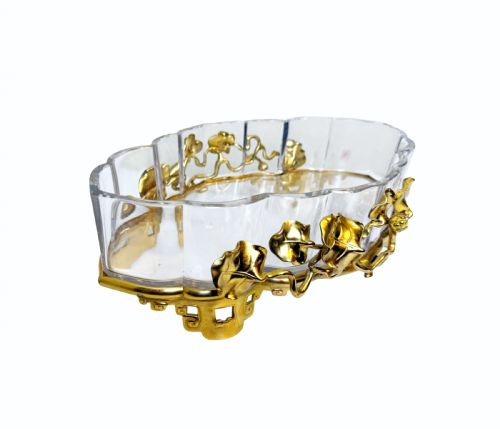


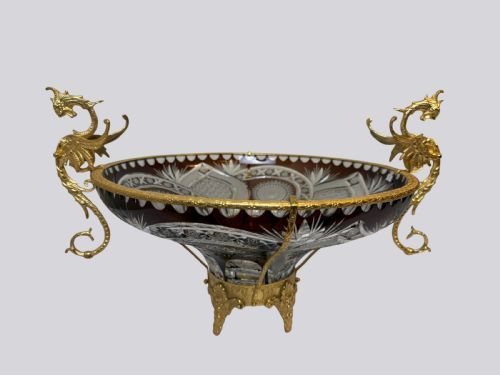


Ormolu Mounted French Bowl
An ormolu mounted french bowl brings heavy metal mounts and fine porcelain or crystal together on the table.
Ormolu Mounted French Bowl
An ormolu mounted french bowl is a decorative vessel designed to sit as a centrepiece on a dining table or console. The form usually combines a glass, crystal, porcelain or stone body with cast bronze metalwork.
Most examples found here date from the nineteenth century, spanning Victorian decades up to the turn of the twentieth century. Makers drew upon French Rococo Revival, Empire and Chinoiserie styles for their decorative vocabulary.
Vessels range from open centrepiece bowls and comports to jardinieres and pedestal dishes. Many sit upon dedicated stands or feet formed from gilt bronze.
How they were made
The manufacture of an ormolu mounted french bowl relies on the combination of fired ceramic, cut glass or stone with cast metal. Artisans shaped porcelain bodies or cut crystal vessels before applying cast and gilded bronze mounts.
Gilt bronze, or ormolu, required precision casting followed by mercury gilding or electroplating to achieve a bright golden surface. Enamel work, such as champlevé or cloisonné, often added coloured detail to the metal frames.
Porcelain elements frequently featured hand-painted scenes or floral motifs in the Sevres style, sometimes paired with green onyx, marble or coloured glass.
Some nineteenth-century artisans hid tiny bronze beetles among the leafy scrollwork of their mounts just to surprise observant guests.
What varies in quality
The crispness of the bronze casting marks the distinction between standard and superior pieces. Finer mounts display sharp chasing and deep relief, whereas lesser examples appear soft and flat.
The quality of the central bowl also dictates overall merit, particularly in hand-painted porcelain detail or the weight and clarity of cut crystal. Harmony between the metal mounts and the vessel body determines the visual success of the piece.
Louis Pierre Malpass·Samson Porcelain
The Ormolu Mounted French Bowl Glossary
- Ormolu
- Gilded bronze used for decorative mounts and decorative hardware. The technique involves applying a gold amalgam to cast bronze before heating.
- Comport
- A shallow dish raised on a stem and foot, used for serving fruit or displaying sweets on a table. These often feature elaborate metal stands.
- Champlevé
- An enamelling technique where troughs are dug into a metal surface and filled with vitreous enamel before firing. It frequently appears on nineteenth-century metal mounts.
- Jardiniere
- A large ornamental pot or bowl designed to hold plants or floral arrangements. They often incorporate heavy bronze or ormolu feet.
- Garniture
- A set of three or more matching decorative objects, such as vases or bowls, designed to be displayed together on a mantelpiece or sideboard.
Ormolu Mounted French Bowl: Frequently Asked Questions
What were these bowls used for?
These vessels served primarily as decorative centrepieces on dining tables, sideboards or parlour consoles during the nineteenth century. They held fruit, flowers or simply displayed the wealth and taste of the household.
Over time, their function shifted from functional tableware to purely ornamental display objects within grand interiors.
How do I date an ormolu mounted french bowl?
Dating relies on observing the stylistic markers of the metal mounts and the manufacturing techniques of the porcelain or glass body. Nineteenth-century pieces frequently display Rococo Revival or Empire motifs that reflect specific revival periods.
Examining the cast bronze for signs of hand-chasing and the ceramic body for factory marks helps narrow the decade of production.
Are these pieces fragile?
The combination of heavy bronze mounts with glass, crystal or porcelain requires careful handling during cleaning and relocation. The mounts are typically secured with pins or screws through the body, which can loosen with heavy movement.
Regular dusting with a soft brush preserves the gilt surface without wearing the delicate metal finish.
What is the difference between ormolu and gilt bronze?
Ormolu is the historical term specifically denoting gilded bronze created through a mercury gilding process popular in eighteenth and nineteenth-century France. Gilt bronze is a broader descriptive term for any bronze object coated in a layer of gold.
Both terms describe the same golden metalwork found framing the porcelain and glass bowls on this page.