



Decorative Crystal Centrepiece
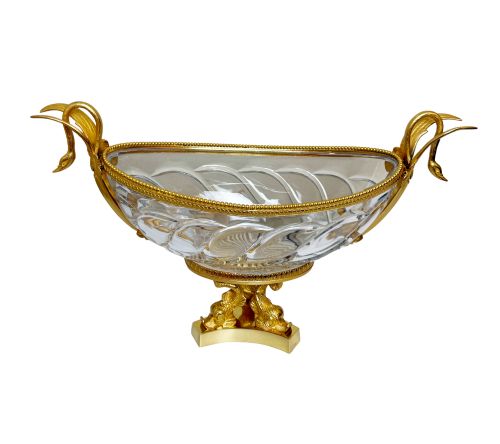
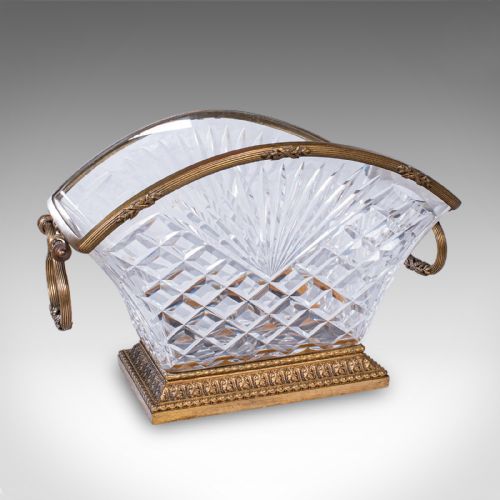
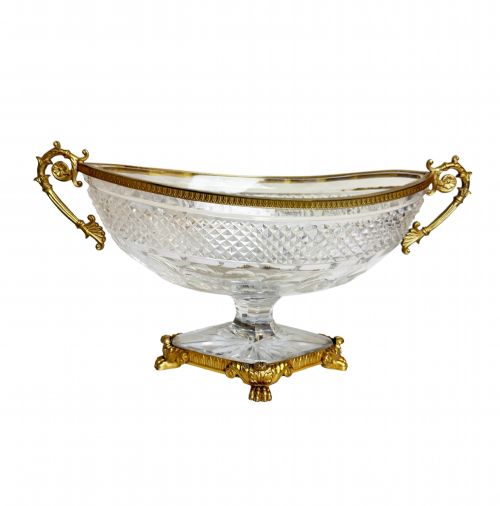
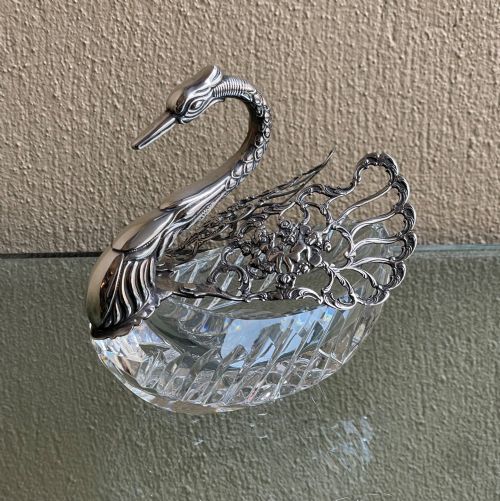
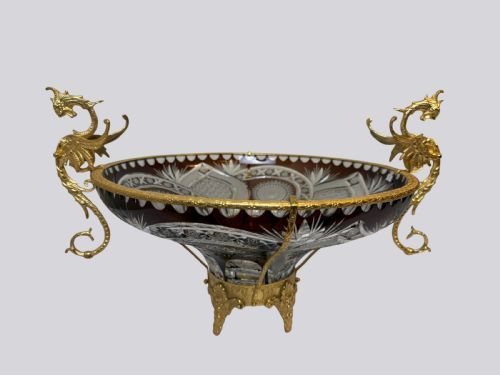
A decorative crystal centrepiece commands the table, drawing the eye with cut glass and mounted bronze.
Decorative Crystal Centrepiece
A decorative crystal centrepiece brings presence to a dining table or sideboard, functioning as the focal point of a room. When you search for a decorative crystal centrepiece, you encounter grand table vessels designed to hold fruit, flowers, or simply to reflect the light.
The selections span from the late nineteenth century into the mid-twentieth century, encompassing Victorian and Edwardian examples alongside continental works. French Empire and Art Deco styles dominate the physical forms, pairing heavy glass with elaborate metal mounts.
Most pieces combine a glass or crystal bowl with a structural base in ormolu, gilt bronze, or silver plate. You also find candelabras and specialised serving dishes serving the same decorative function on the table.
How they were made
The glass elements rely on traditional techniques of blowing, moulding, and heavy cutting to achieve sharp facets and deep refraction. Lead crystal provides the weight and clarity required for deep wheel-cut decoration.
Metal components, such as ormolu and gilt bronze, are cast and chased to create intricate mounts that secure or elevate the glass vessel. Silver plate and gilt brass also appear, providing structural support and decorative contrast to the clear or coloured material.
Listings feature pieces from the Victorian era up to the mid-twentieth century, incorporating cut glass, gilt bronze, and silver plate.
What varies in quality
Quality rests in the crispness of the glass cutting and the weight of the metal mounts. Superior pieces display deep, hand-polished facets and precise casting in the bronze or ormolu elements.
The integration between the glass bowl and its metal stand distinguishes standard production from finer studio or factory work. Maker attribution and signed works by notable glasshouses elevate the standing of an individual piece.
Lalique·Daum France·Val St. Lambert·Stuart·François-Eugène Rousseau·Baccarat
The Decorative Crystal Centrepiece Glossary
- Ormolu
- A gilded bronze finish applied to decorative metal mounts. It provides a rich, gold-coloured surface popular in French furniture and centrepieces.
- Cut glass
- Glass decorated by grinding facets or patterns into the surface using a rotating wheel. This technique enhances the sparkle and weight of the material.
- Pâte de verre
- A glass-making method where finely crushed glass is packed into a mould and fused in a kiln. It creates a dense, translucent material with mottled colour.
- Table lustre
- A candelabra or candle holder hung with cut glass drops or prisms. The pendants catch and refract candlelight across the room.
Decorative Crystal Centrepiece: Frequently Asked Questions
How were centrepieces used?
These pieces sat at the middle of dining tables during formal meals, often holding fruit, flowers, or sweetmeats to impress guests. They functioned as conversation starters and indicators of household taste.
Over time, their role shifted from dining service to purely decorative display on sideboards and consoles.
How do I clean my centrepiece?
Wash glass and crystal components gently in warm water with mild detergent, avoiding sudden temperature changes to prevent cracking. Dry them promptly with a lint-free cloth to maintain clarity.
Keep metal polish away from the glass surfaces, as chemical residues can damage both the mount and the glass.
Can I use it for flowers?
Many of these bowls and vases accommodate floral arrangements, provided you place stems carefully without scratching the interior. Using a flower frog helps secure stems in wide, shallow dishes.
Check for any internal metal fittings or delicate gilding before filling the vessel with water.
How do I date a piece?
Examine the style of the cutting, the weight of the metal mounts, and any factory marks or signatures present on the base. Victorian and Edwardian pieces often feature heavier cast mounts and distinct cut-glass patterns.
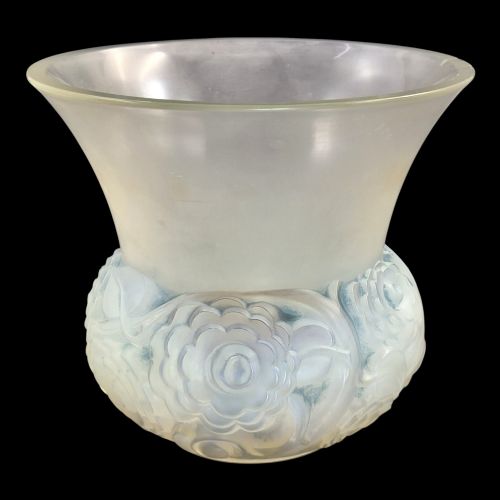
Art Deco and mid-century items display simplified geometries, opalescent finishes, or characteristic acid-etched signatures.