



Antique Crystal Coupes
These antique crystal coupes combine weight and brilliance, bringing historic craftsmanship to any table.
Antique Crystal Coupes
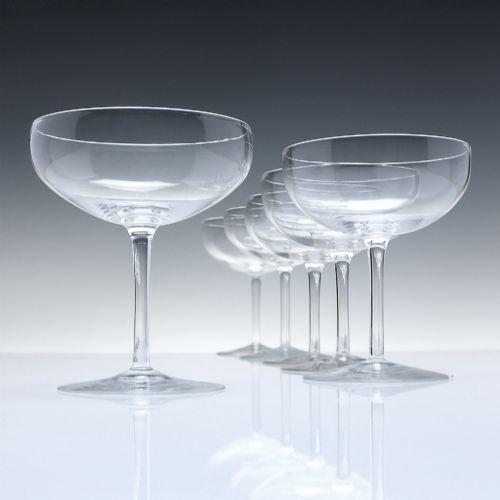
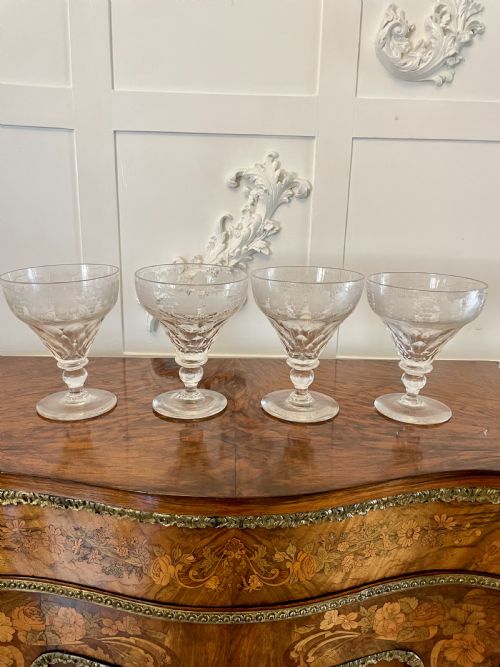
When you search for antique crystal coupes, you find vessels designed for serving champagne, wine, and other beverages during formal gatherings. These pieces range from small bowls to large glasses, often featuring shallow profiles typical of historic champagne service.
The versions most frequently met on this page date from the Victorian, Edwardian, and Georgian periods, alongside pieces from the 1920s and the nineteenth century. They appear singly, in pairs, or in larger sets of four, six, or sixteen items.
How they were made
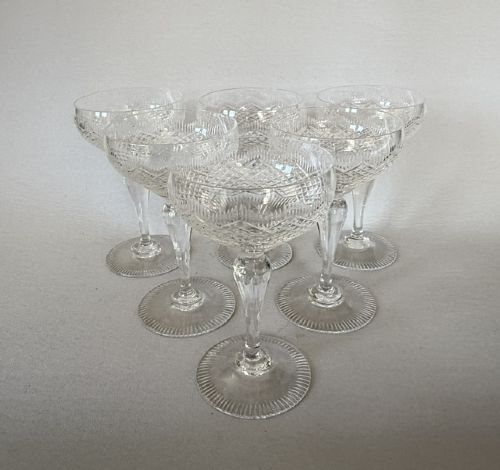
Makers utilised lead crystal, lead glass, and cut glass to achieve clarity and weight in these champagne coupes and centrepieces. Artisans shaped the molten material before applying decorative cuts to the surface.
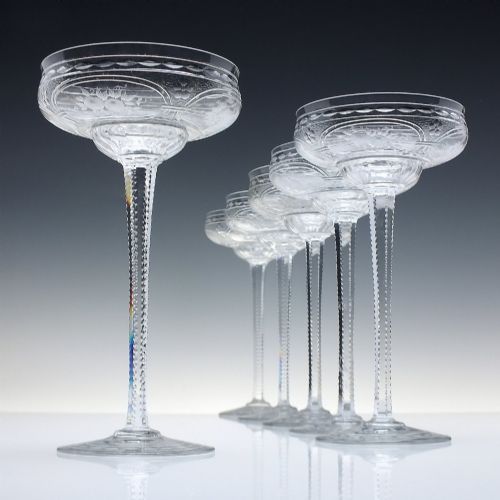
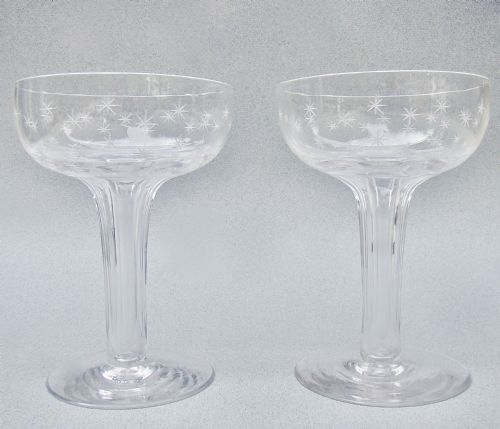
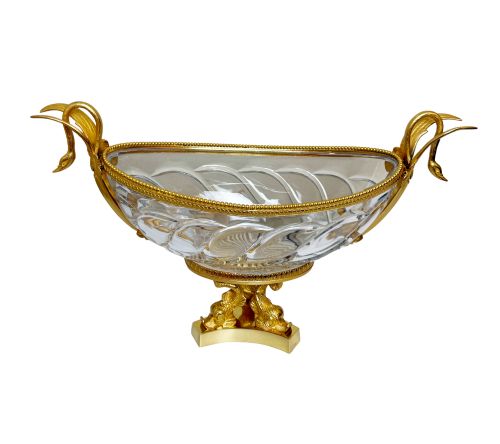
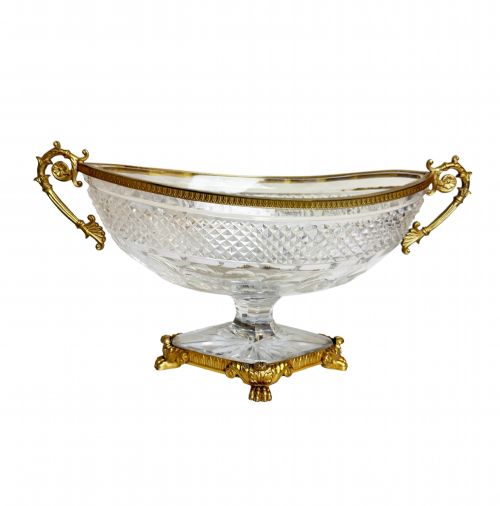
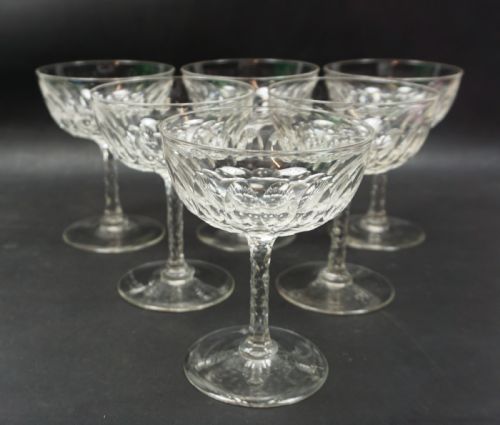
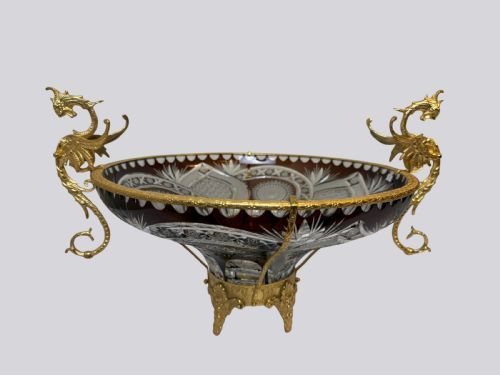
Surface ornamentation involved star-etching, facet cutting on stems, and intricate engraving depicting motifs such as convolvulus and fruiting vines. Selected items also incorporate gilt bronze and ormolu mounts paired with coloured glass layers.
The pairing of clear crystal with cranberry, green, or red glass overlays required specialised cased glass techniques. Workers cut through the outer coloured layer to reveal the clear crystal underneath.
Listings feature lead crystal, cut glass, and gilt bronze, spanning Georgian, Victorian, Edwardian, and 1920s periods.
What varies in quality
The crispness of the wheel-cut facets and the depth of the hand engraving distinguish finer champagne coupes from simpler tableware. Precision in star-etching and the smoothness of the hollow stem indicate higher artisan skill.
Weight and clarity of the crystal components demonstrate the purity of the lead glass utilised during production. Heavier metal content and unclouded material elevate the presence of the piece.
The integration of secondary materials, such as gilt bronze or ormolu mounts on centrepieces, affects the overall sophistication. Secure fitting and fine detail in metalwork complement the quality of the crystal bowls.
The Antique Crystal Coupes Glossary
- Cut glass
- Glass decorated by holding it against a rotating wheel to cut geometric or floral patterns into the surface. This technique creates sharp facets that reflect light.
- Lead crystal
- Glass containing a high proportion of lead oxide, which increases the weight, refractive index, and ringing sound of the material. It allows for deeper and sharper cutting than standard glass.
- Centrepiece
- A large decorative bowl or stand placed in the middle of a dining table. These objects often combine crystal glassware with gilt bronze or ormolu supports.
- Cased glass
- An object made from two or more layers of different coloured glass fused together. Artisans cut through the outer layer to expose the contrasting colour beneath.
- Hollow stem
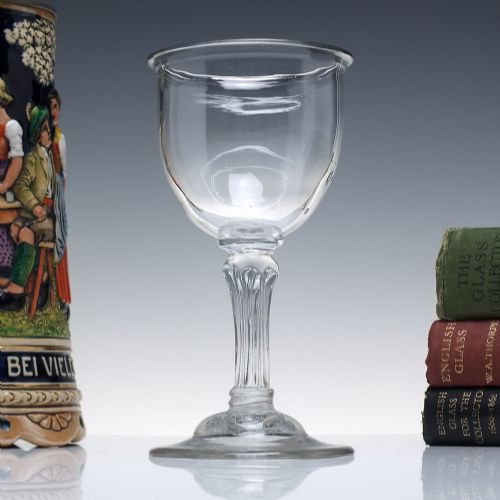
- A stem that is completely open down the centre, connecting the bowl of the glass to the foot. This traditional form appears on selected nineteenth-century champagne glasses.
- Facet cut
- A surface finish composed of multiple flat polished planes meeting at sharp angles. This method enhances the sparkle of antique crystal coupes.
Antique Crystal Coupes: Frequently Asked Questions
How were antique crystal coupes used?
These vessels served champagne and sparkling wines during formal nineteenth-century and early twentieth-century dining occasions. Their shallow bowls allowed the bubbles to dissipate quickly compared to modern flutes.
Beyond beverages, larger examples functioned as centrepieces or fruit bowls on dining tables. Collectors today often utilise them for serving desserts or as decorative display items.
How do I care for antique crystal?
Hand washing in lukewarm water with mild detergent protects the surface and preserves the clarity of the material. Sudden temperature changes can crack historic glass.
Avoid placing these items in modern dishwashers, as harsh detergents and heat cause clouding and damage. Storing them upright on stable surfaces prevents rim chips.
How do I identify a Victorian coupe?
Victorian pieces frequently display deep wheel-cut decoration, star-etched patterns, or hollow stems. These characteristics reflect the popular manufacturing styles of the nineteenth century.
Items from this era also tend to feel heavier due to high lead content in the crystal. Examination of the pontil mark on the underside helps confirm age.
Are coloured glass coupes older?
Coloured glass items, such as cranberry or green over crystal, span several nineteenth-century and early twentieth-century decades. The presence of colour does not automatically determine the exact age.
Cased and overlaid glass techniques appeared across Victorian and Edwardian production periods. Stylistic details and cutting techniques provide more reliable dating clues.