
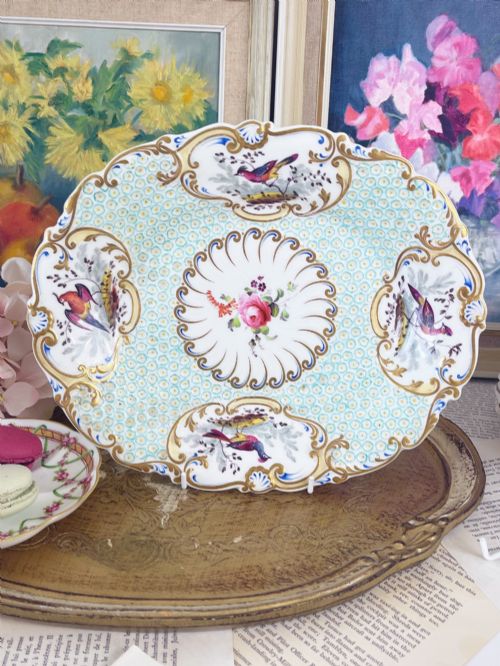
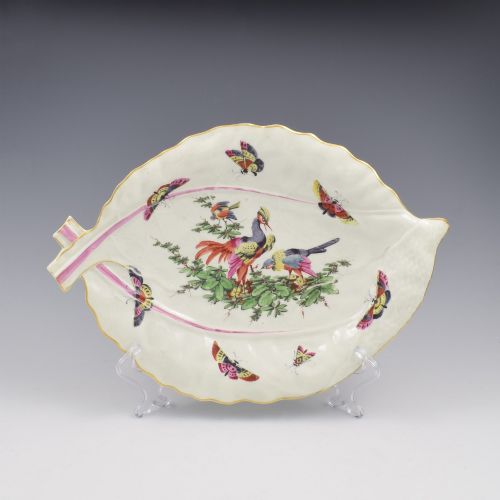
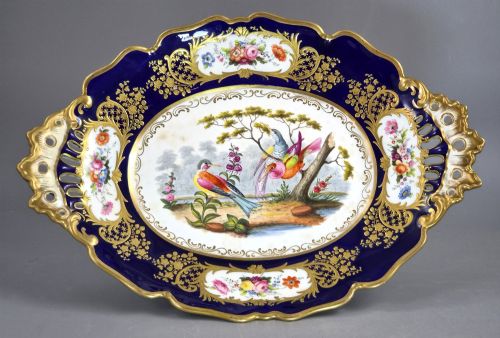
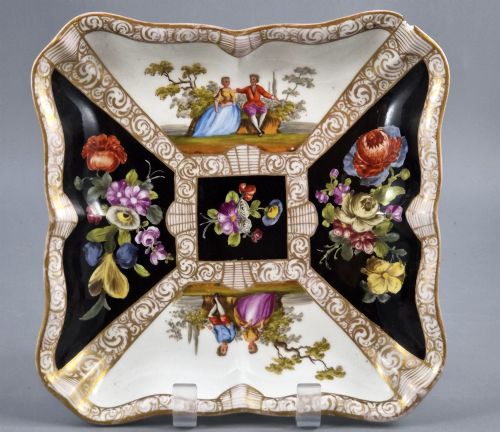
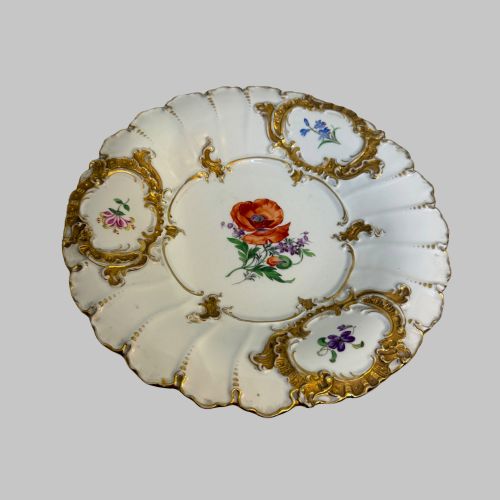


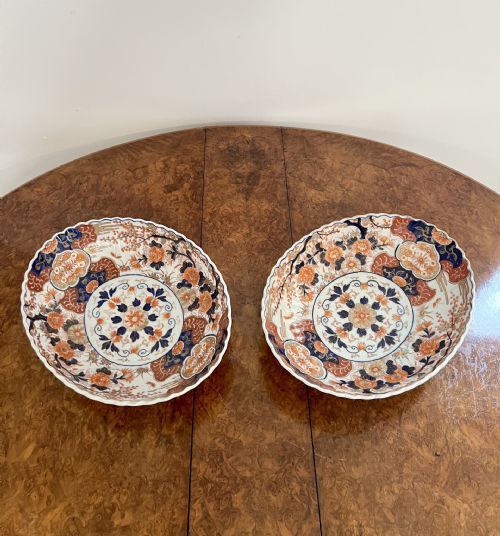
Gilded Porcelain Serving Dish
A gilded porcelain serving dish brings weight and gold to the table, and these eighteenth-century and nineteenth-century examples reward careful handling.
What these pieces are
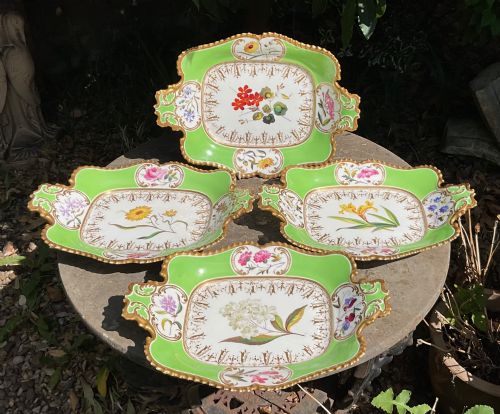
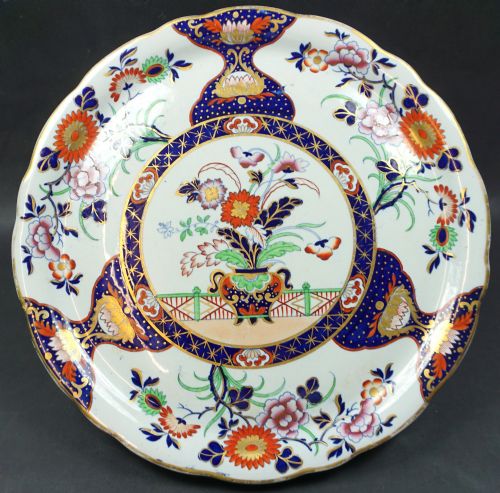
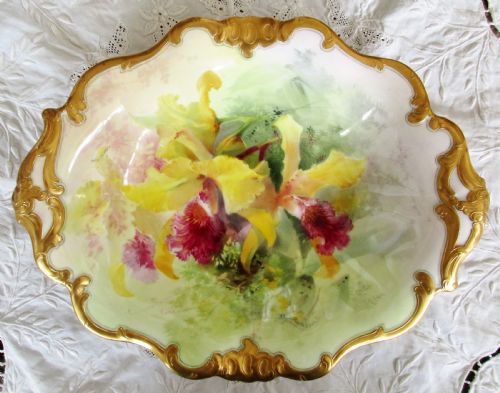
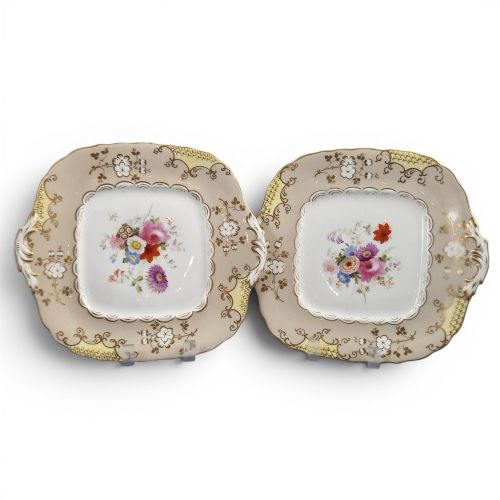
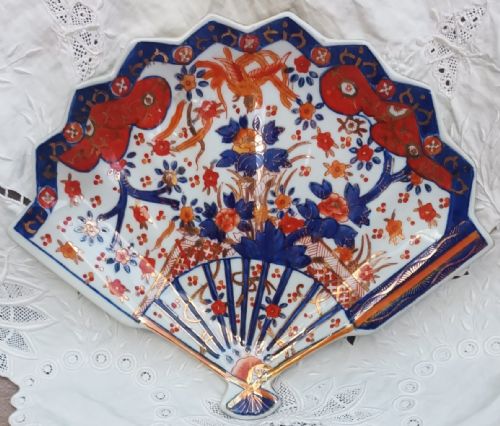
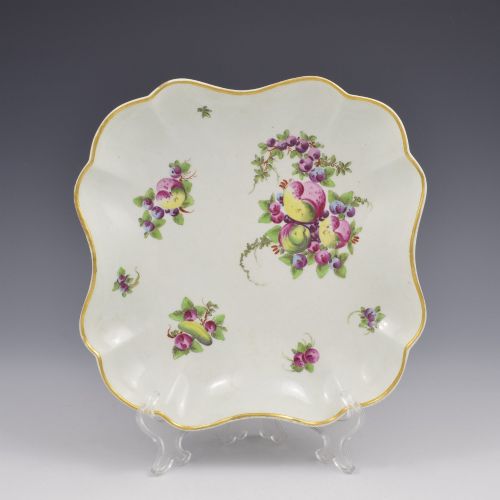
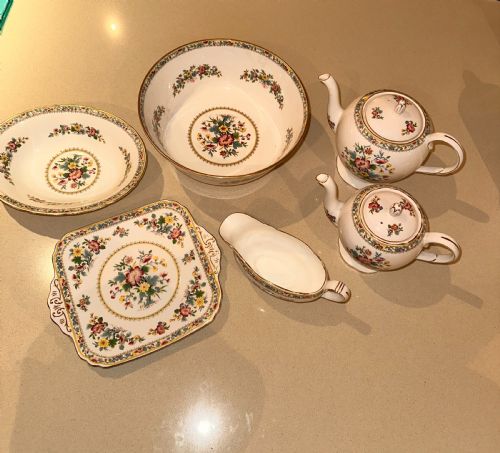
A gilded porcelain serving dish is an ornate tableware piece designed for formal presentation, frequently taking the form of leaf dishes, platters, or armorial plates. The pieces available span the eighteenth century and the year 1850, representing Georgian, German Rococo, and Regency styles.
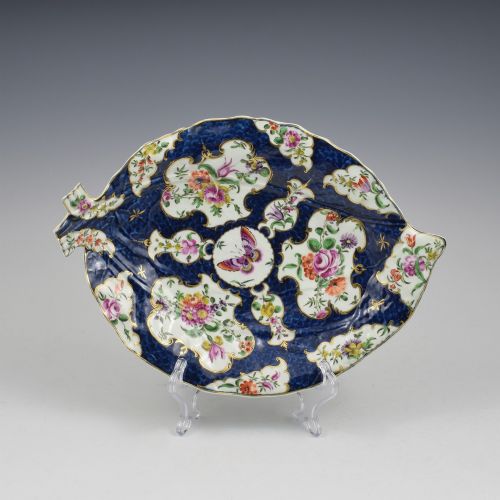
The buyer meets soft-paste porcelain and hard-paste porcelain forms, often decorated with elaborate overglaze enamels, scale blue grounds, and fancy birds or butterfly motifs. Serving dishes from this selection include large Worcester leaf dishes and Meissen platters.
How they were made
Potters shaped soft-paste porcelain and hard-paste porcelain before applying hand-painted overglaze enamels and detailed motifs such as butterfly and scale blue designs. Artisans then added gold leaf and gilding to accentuate the moulded edges and surfaces.
Kiln firing fixed the mineral colours and the gold layer to the ceramic body, creating the polished finish seen on eighteenth-century leaf dishes and later platters.
Retail Price Guide 2026
Typical UK retail prices for gilded porcelain serving dish, calculated from the Sellingantiques database of over a million retail prices indexed since 2003. This retail price guide relies exclusively on Sellingantiques data; no external sources or auction records are used, so the figures do not describe the wider market.
What varies in quality
Quality rests upon the precision of the hand-painted enamel work and the crispness of the moulded porcelain form, particularly in botanical leaf shapes and armorial crests. Superior examples display intricate bird or butterfly subjects set against rich scale blue grounds.
The depth and application of the gilding and gold leaf distinguish standard production from exceptional factory output, as does the translucency and condition of the soft-paste or hard-paste body.
Meissen·Chamberlains
The Gilded Porcelain Serving Dish Glossary
- Soft-Paste Porcelain
- An early ceramic composition fired at lower temperatures, producing a warm body often found in eighteenth-century pieces. It tends to show a softer translucency than hard-paste porcelain.
- Hard-Paste Porcelain
- A dense, durable ceramic material fired at high temperatures, offering high resistance to thermal shock. Meissen utilised this body for robust platters.
- Overglaze Enamels
- Mineral pigments applied over the fired glaze and subjected to a subsequent low-temperature firing. This technique allows for vivid polychrome decoration on decorative dishes.
- Gilding
- The application of gold leaf or powdered gold to ceramic surfaces to highlight decorative borders and handles. It provides the characteristic metallic sheen on Regency and Georgian serving vessels.
- Scale Blue
- A dark blue patterned ground resembling fish scales, painted by hand in overlapping semicircles. Worcester factories popularised this decorative technique on eighteenth-century leaf dishes.
Frequently Asked Questions
How do I use a gilded porcelain serving dish?
These pieces serve as decorative centrepieces or display platters for formal dining tables. They suit dry foodstuffs rather than acidic liquids.
Hand washing in warm soapy water without abrasive sponges preserves the delicate enamel and gold leaf.
How do I date a gilded porcelain serving dish?
Dating relies on identifying factory marks, paste compositions, and stylistic traits such as German Rococo moulding or Regency forms. Eighteenth-century pieces often feature soft-paste bodies.
Comparing painted motifs like butterfly and scale blue patterns against documented factory periods confirms the decade of manufacture.
What is an armorial plate?
An armorial plate displays a specific family crest or coat of arms painted directly onto the porcelain surface. Commissioned by wealthy patrons, these pieces recorded lineage and status.
Examples like the Carnatic service connect directly to historical figures and specific households.
Are these dishes safe for food?
Historical porcelain with overglaze enamels and surface gilding requires gentle treatment to prevent wear. Modern dishwashers and metal utensils will damage the decorative surface.
Most collectors prefer to display these items or use them exclusively for dry presentation.