
Gilded Floral Urns
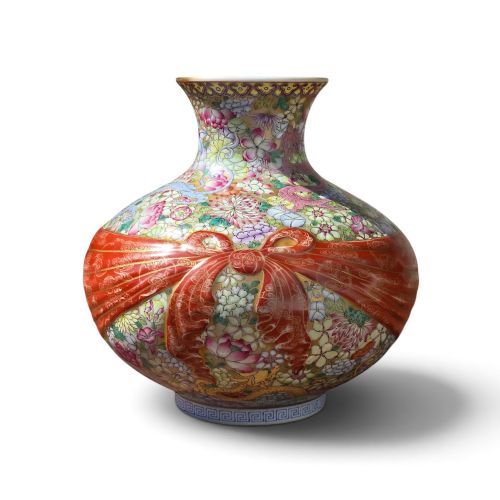
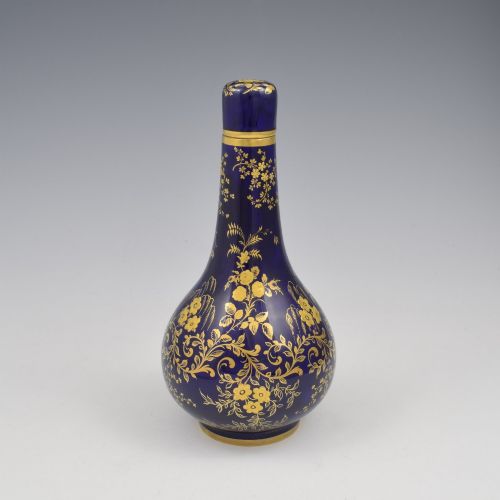
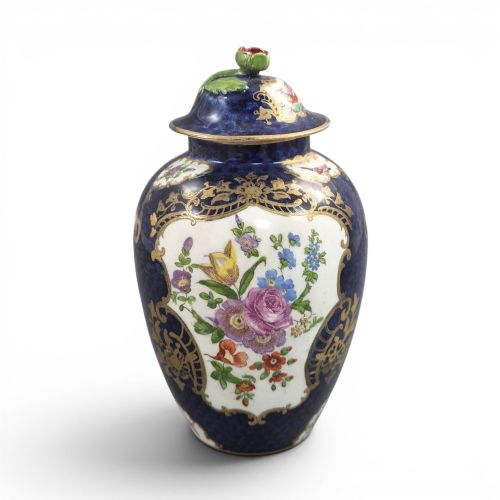
When you search for gilded floral urns, you are looking at ornamental ceramic and porcelain vessels finished with gold leaf or gilding and decorated with botanical painting.
Gilded Floral Urns
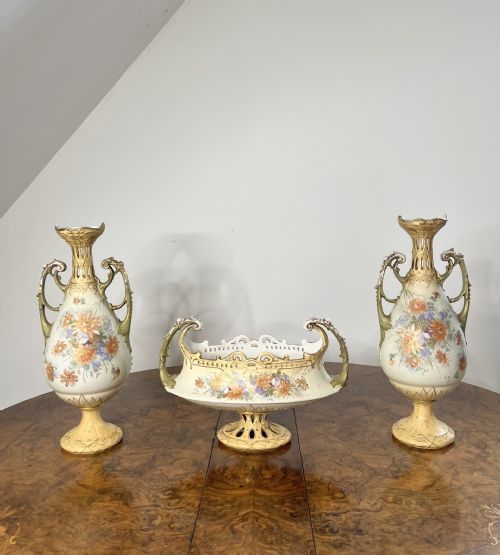
Gilded floral urns encompass decorative vases, lidded potpourri jars, and centrepieces produced across the nineteenth and early twentieth centuries. You will most frequently encounter nineteenth-century porcelain examples featuring hand-painted floral decoration alongside gilt accents, spanning English, French, and German manufactories.
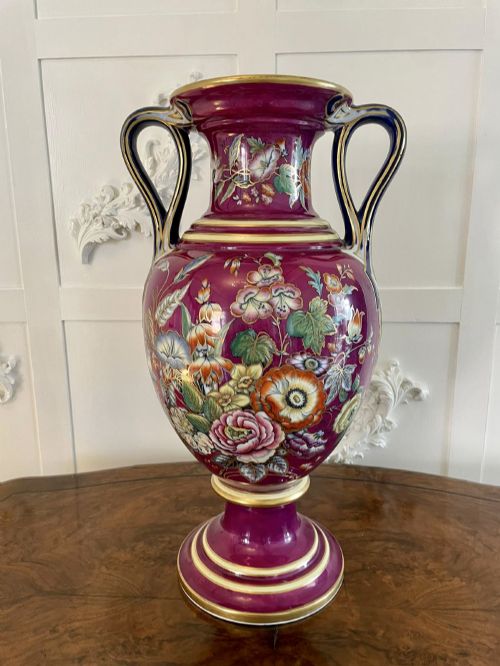
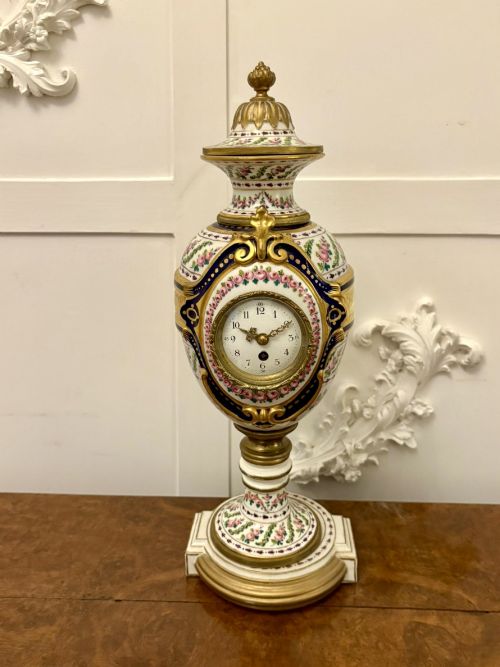
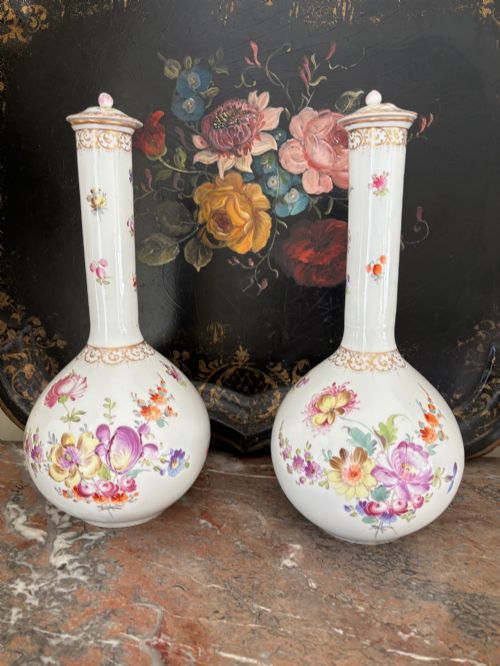
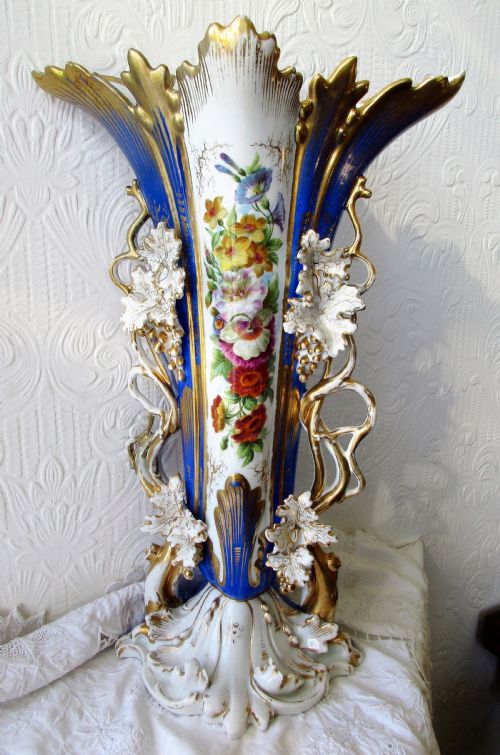
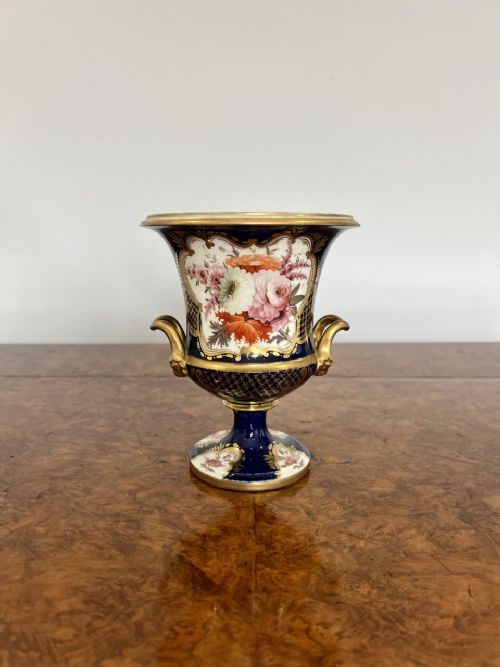
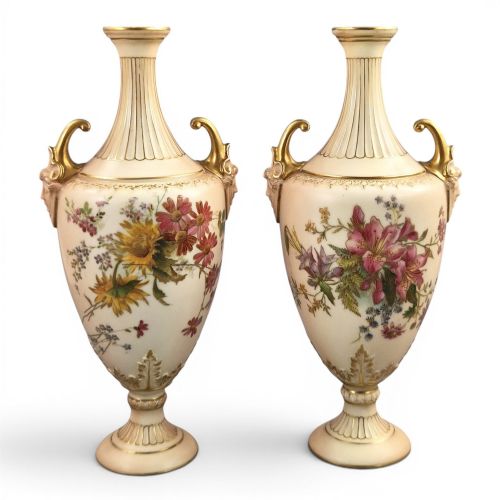
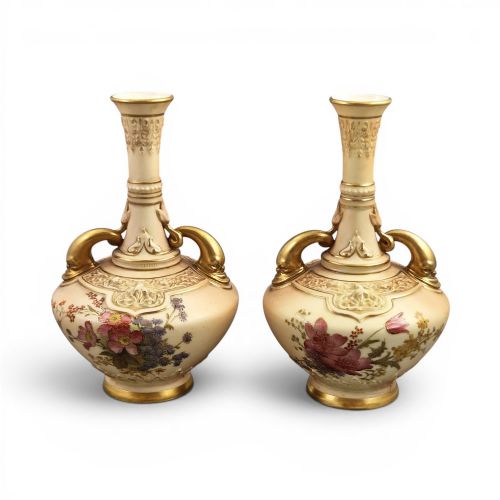
The selection ranges from large twin-handled Staffordshire and French mantel vessels to delicate Edwardian blush ivory pieces and Japanese export ware. Forms vary from classical campana urns and bulbous covered pots to slender bottle vases and floor-standing displays.
Makers represented on this page include established English potteries like Royal Worcester, Spode, and Doulton, alongside continental porcelain houses such as Meissen, Sitzendorf, and Samson of Paris. Styles drift from Regency formality through Victorian rococo revival and Edwardian floral designs to Japanese Imari and Satsuma output.
How they were made
Potters shaped porcelain, earthenware, and ceramic bodies either by throwing on a wheel or by slip-casting in moulds to achieve classical urn and bulbous vase forms. Artisans then applied colourful ceramic glazes and hand-painted botanical subjects directly onto the fired body before secondary firing.
Gilding was executed using gold leaf, liquid gold, or gilt highlights applied to rims, handles, and framing panels to accentuate the painted floral motifs. Enamel, cloisonné, and paste gilt techniques were also utilised on specific glass and ceramic bodies to build layered surface decoration.
Object forms documented here include campana urns, mantel clocks, jardinières, potpourri jars, and floor-standing vases with hand-painted floral schemes.
What varies in quality
Quality rests primarily on the crispness and artistic skill of the hand-painted floral decoration, distinguishing factory-standard transfer prints from superior individual brushwork. The refinement of the porcelain body, the weight and proportion of the handles and covers, and the depth of the gold gilding further elevate a piece.
Provenance and maker attribution heavily influence standing, where established houses like Royal Worcester, Spode, or Meissen demonstrate superior ceramic paste formulas and more confident sculptural modelling. Preservation of the original gilt surface and any matching covers without restoration represents the upper tier of the range.
Royal Worcester·Spode·Royal Doulton·Meissen·Samson of Paris·Sitzendorf·Royal Crown Derby·Flight Barr and Barr·H and R Daniel·Coalport·Crown Staffordshire·Manpei Kobe
The Gilded Floral Urns Glossary
- Campana urn
- A classical bell-shaped vessel with a flaring rim and a footed base, frequently utilised for nineteenth-century floral display. These pieces often feature twin side handles and elaborate painted panels.
- Blush ivory
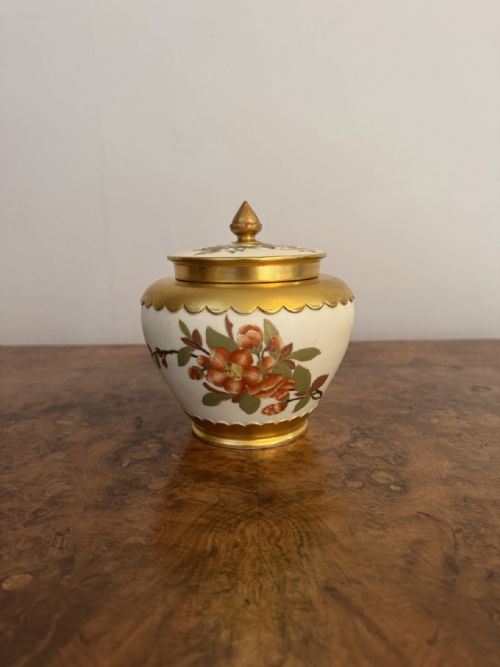
- A matte cream-coloured ceramic glaze pioneered by Royal Worcester during the late nineteenth century. It provides a soft background specifically suited for delicate hand-painted floral decoration.
- Potpourri jar
- A lidded vessel perforated to release the scent of dried flowers and spices kept within. They often incorporate decorative handles and intricate gilding suitable for prominent mantel placement.
- Imari
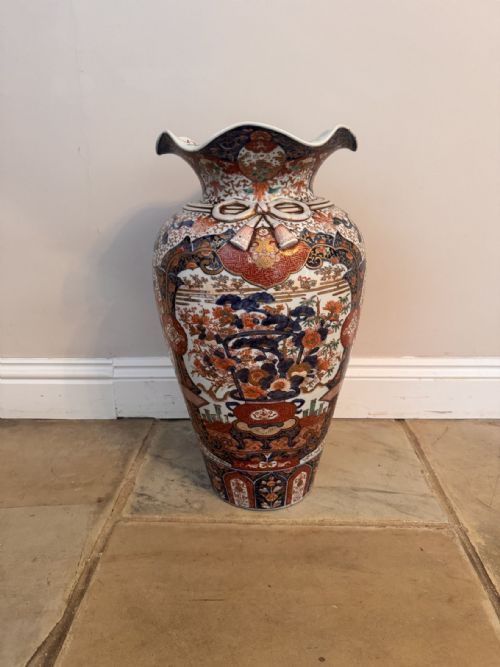
- A traditional Japanese export ceramic style characterised by a palette of underglaze blue, iron red, and abundant gold highlights. Pieces feature dense floral and panelled designs.
- Gilding
- The application of gold leaf or gold dust to the surface of porcelain, ceramic, or glass. It serves to highlight rims, handles, and pictorial borders.
Gilded Floral Urns: Frequently Asked Questions
What were gilded floral urns used for?
These vessels functioned primarily as decorative indoor ornaments for mantelpieces, sideboards, and large reception rooms during the nineteenth and early twentieth centuries.
Some lidded variations also held scented dried plant material like potpourri, while others served purely as centrepieces or paired display urns.
How do I identify the period of an urn?
Dating relies on observing factory backstamps, ceramic body types, and stylistic shifts spanning the Regency, Victorian, and Edwardian eras.
Hand-painted floral subjects and gilt techniques often reflect the prevailing aesthetic tastes of their specific decade of manufacture.
How should I display them at home?
Position these vessels on stable surfaces away from direct sunlight and heavy foot traffic to protect delicate painted details and gold leaf.
Paired urns look balanced on matching console tables or mantel ends, while single large pieces act as focal centrepieces.
Are covers usually original to the urn?
Many lidded pots and urns retain their matching original covers, which is important for overall completeness and visual proportion.
When examining a piece, check that the glaze, paste, and gilding on the lid match the body exactly.