




Pair Green Ceramic Urns
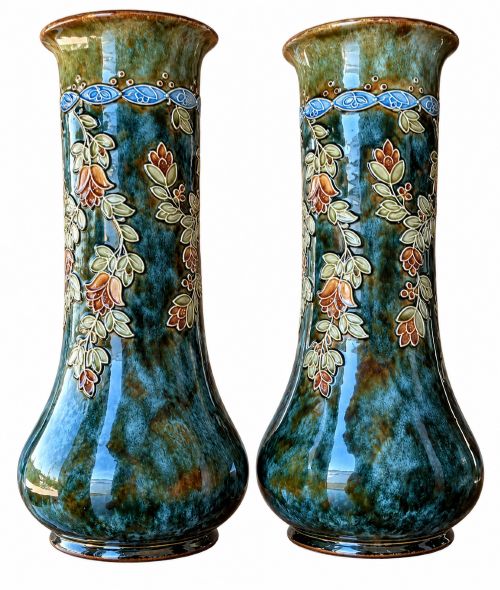
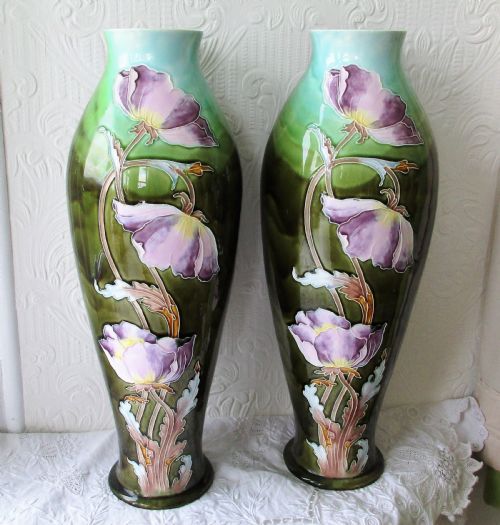
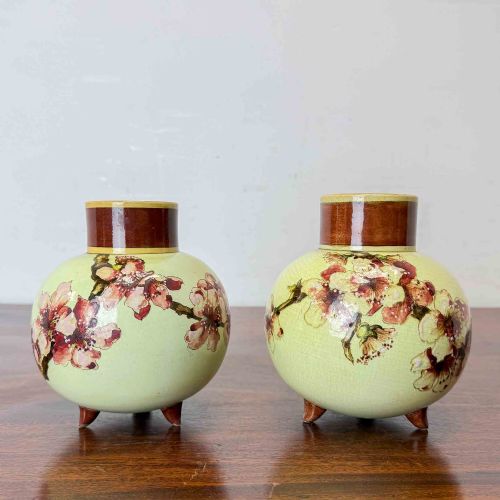
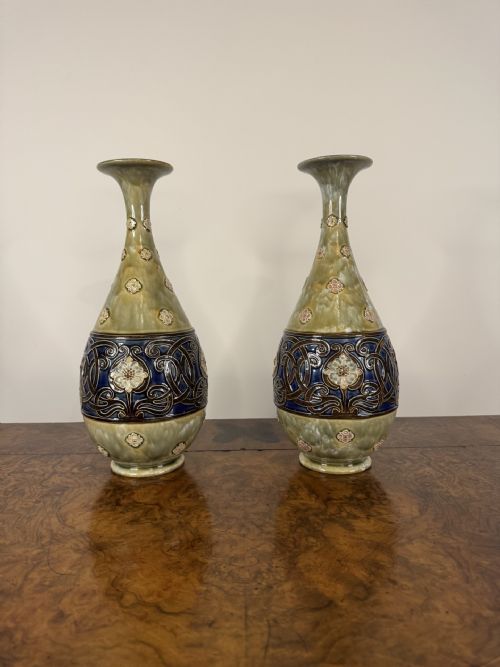
Pair green ceramic urns bring garden classical form indoors through rich coloured glazes spanning the nineteenth and twentieth centuries.
Pair Green Ceramic Urns
When you search for pair green ceramic urns, you encounter vessels designed for display rather than utility, including baluster vases, planters, and pedestals. The selection spans the nineteenth century up to the mid-twentieth century, drawing on diverse aesthetics from Victorian Britain and Qing Dynasty China.
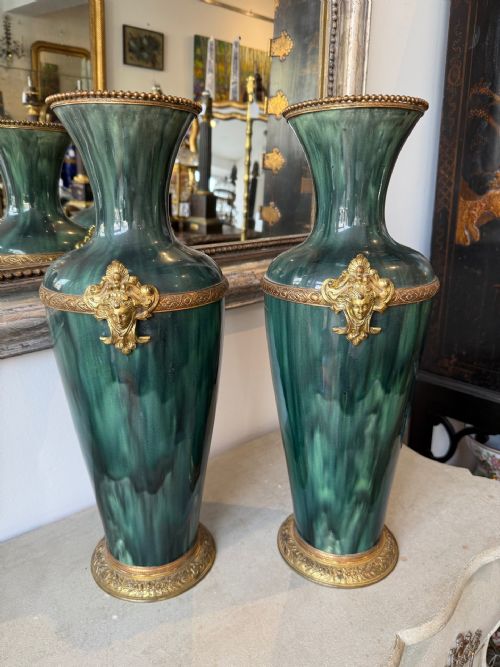
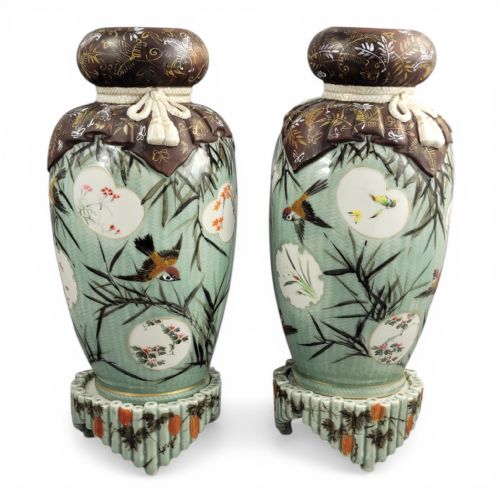
The version you most frequently meet on this page is the glazed stoneware or porcelain vase produced in matched pairs during the late nineteenth and early twentieth centuries. These objects incorporate fluid forms and botanical motifs typical of the Art Nouveau period alongside traditional Chinese celadon and famille rose colourways.
How they were made
Potters shaped these vessels using ceramic bodies such as stoneware, earthenware, and porcelain, frequently finishing surfaces with coloured glaze, enamel, or gold leaf. Techniques range from wheel-throwing to mould-casting, allowing makers to achieve balanced baluster profiles and sculptural details.
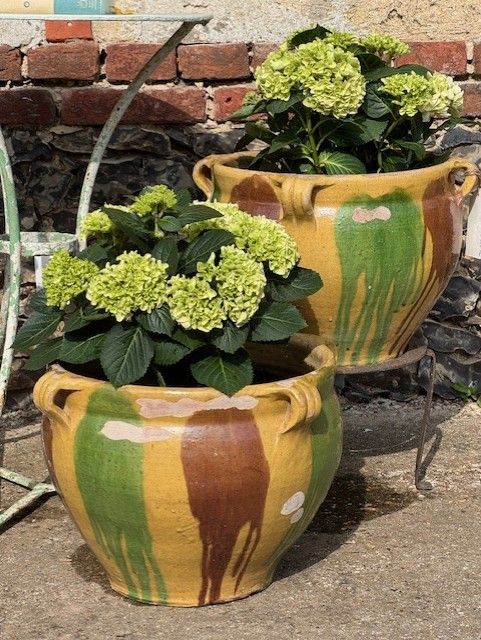
Glazing methods determine the surface character, varying from smooth celadon and hand-painted famille rose details to mottled dripped finishes and tactile stoneware textures.
Materials across the selection include porcelain, stoneware, earthenware, and applied gold leaf.
What varies in quality
Quality rests upon the precision of the form, the depth of the glaze, and the execution of hand-painted or slip-trailed decoration. Superior examples demonstrate careful control during firing, resulting in rich colour saturation and well-defined contours without surface distortion.
The distinction between standard production and exceptional work lies in the artistry of the hand-applied decoration, whether through delicate floral brushwork or complex crystalline and dripped glaze effects.
Royal Doulton Lambeth·TG Green·Kato Sanhei·Royal Dux Bohemia·Alexandra Porcelain Works Ernst Wahliss·Royal Worcester
The Pair Green Ceramic Urns Glossary
- Baluster
- A tall vase form with a rounded lower body tapering to a narrow neck. This shape provides a stable base for rich glaze applications and decorative motifs.
- Celadon
- A pale green jade-like glaze originating in China. It relies on iron oxide in the glaze mixture fired in a reduction atmosphere to achieve its characteristic hue.
- Famille Rose
- A palette of opaque enamels introduced in Chinese ceramics during the Qing Dynasty. Pink enamel dominates the colour scheme, often combined with greens and yellows.
- Stoneware
- A robust ceramic fired at high temperatures until vitrified and impermeable to liquids. It accepts dense salt or coloured glazes effectively.
- Faience
- Tin-glazed earthenware popular in European pottery production. It offers an absorbent white surface ideal for painted decorative designs.
Pair Green Ceramic Urns: Frequently Asked Questions
How do I style pair green ceramic urns at home?
Place them symmetrically on console tables, mantelpieces, or pedestals where their colour complements natural light and surrounding furnishings. Their decorative presence suits both traditional and eclectic interiors without requiring floral arrangements.
Allow sufficient clearance around each vessel to appreciate the form and glaze variations individually. Keeping them away from high-traffic zones protects delicate rims and hand-painted surfaces from accidental impact.
Were these urns originally used outdoors?
Most pieces listed are domestic display objects intended for interior decoration rather than permanent garden use. Stoneware and heavy planters could accommodate greenery, but many porcelain and earthenware versions remain purely ornamental.
Check the base construction and interior glaze before introducing moisture or soil. Porous historical bodies require protective liners to prevent water damage to the antique fabric.
How can I tell nineteenth century pieces apart?
Examine the base for manufacturer stamps, impressed registry marks, or hand-painted signatures that indicate specific potteries and production eras. Victorian and Meiji period pieces often display distinct weight, glaze thickness, and stylistic clues corresponding to their origin.
Compare the potting technique and glaze pooling around the footring, as older methods leave subtle irregularities. Stylistic markers like Art Nouveau tendril designs or Chinese export motifs help narrow down the decade of manufacture.
What is the difference between porcelain and stoneware?
Porcelain is a fine-grained, vitrified ceramic fired at very high temperatures until white and translucent. Stoneware is likewise vitrified and durable, but typically heavier with an opaque, denser body.
Both materials support vibrant green glazes, yet porcelain frequently showcases refined painted enamels like famille rose. Stoneware leans towards tactile textures and rich surface runs developed during kiln firing.