




Green Ceramic Baluster Vase
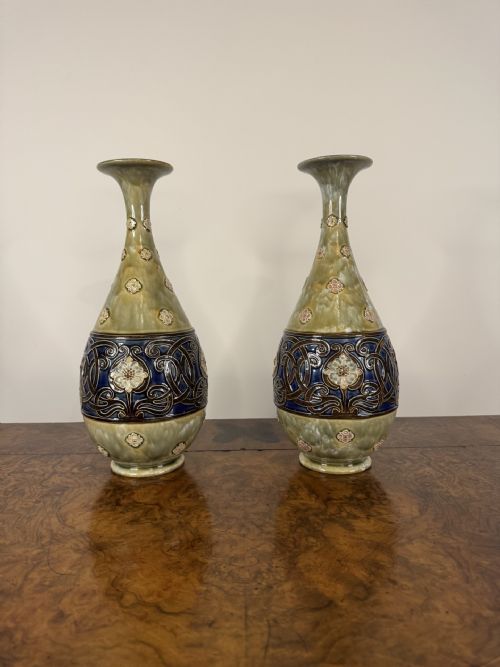
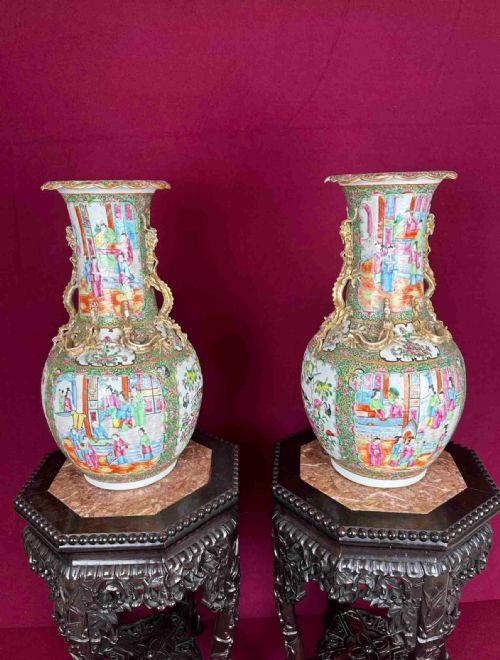
These green ceramic baluster vase examples bring together rich monochrome glazes and stately curves, offering an instant focal point for a traditional room.
Green Ceramic Baluster Vase
A green ceramic baluster vase takes its name from the traditional architectural baluster shape, swelling gently near the base before tapering upward to a narrower neck. When you search for this phrase, you encounter pieces spanning the eighteenth, nineteenth, and early twentieth centuries, originating from diverse global traditions including Chinese export kilns and European potteries. These vessels range from domestic table lamps to monumental decorative pairs standing over ninety centimetres tall.
The objects on this page predominantly reflect nineteenth-century production alongside earlier eighteenth-century examples and turn-of-the-century European studio pottery. Forms frequently alternate between purely decorative vases and those adapted into functional table lamps fitted with fabric shades and brass mounts. You will find that Chinese ceramic traditions dominate the selection, sitting alongside distinct English stoneware interpretations from the Victorian era and Art Nouveau periods.
Materials and methods
Makers shaped these vessels from heavy stoneware, earthenware, and fine porcelain, applying dense coloured glazes such as celadon and monochrome green grounds. Potters frequently enriched the surfaces using hand-painted enamel decoration, depicting floral motifs or traditional scenes directly over or beneath the glaze.
European potteries utilised sturdy stoneware bodies finished with specialised reactive glazes, while Asian kilns relied on precise high-firing techniques to achieve consistent green grounds and Famille Verte palettes. Many surviving examples show subsequent adaptation into lamps, integrating brass hardware alongside the original ceramic bodies.
Several towering green vessels wear clever disguise as modern reading lamps, secretly harbouring centuries of kiln dust beneath their brass caps.
Judgements of quality
The distinction between ordinary and superior pieces rests on the crispness of the glaze application and the precision of the hand-painted enamel details. Finer examples display an even, controlled depth of colour across the curved body without pooling or running in the kiln.
Proportion and scale dictate the visual impact of a baluster silhouette, with better examples achieving a harmonious balance between the swelling lower section and the narrow neck. Signed studio pieces and identifiable historical marks on the base elevate the standing of a ceramic vessel above unsigned utilitarian counterparts.
Royal Doulton·Louisa Wakely·Makuzu Kozan
The Green Ceramic Baluster Vase Glossary
- Baluster
- A vertical architectural form resembling a classical stair baluster, characterised by a swelling lower body tapering to a narrow neck. This profile defines the primary silhouette of the vases found across these listings.
- Celadon
- A pale green jade-like glaze originating in East Asia, valued for its subtle translucent quality. It is achieved through iron oxides fired in a reducing atmosphere.
- Famille Verte
- A Chinese porcelain palette dominated by green enamel overglaze colours, introduced during the Qing Dynasty. The term translates from French as green family.
- Stoneware
- A dense, hard ceramic fired at high temperatures until vitrified and rendered completely impermeable to liquids. It forms the robust body of many nineteenth-century studio vases.
Green Ceramic Baluster Vase: Frequently Asked Questions
How do I clean a green ceramic baluster vase?
Dust the glazed surface gently with a soft, dry cloth to prevent the accumulation of grit in recessed painted details. Avoid harsh chemical cleaners or submersion in water, particularly if the piece incorporates added brass mounts or delicate overglaze enamel.
If the vessel has been converted into a table lamp, ensure it remains unplugged during maintenance and keep moisture away from any electrical wiring or fabric components.
Where should I place a large baluster vase?
Position these substantial vessels on sturdy low furniture such as sideboards, console tables, or pedestals where their curved profiles can be viewed without obstruction. Their height makes them particularly effective as floor-standing decor or balanced pairs flanking a fireplace.
Ensure the chosen surface supports the considerable weight of dense stoneware or porcelain, especially if the piece has been adapted into a heavy lamp base.
How can I tell a nineteenth-century piece apart?
Examine the base and footrim for signs of historical wear, glaze characteristics, and any reign marks or maker stamps indicative of the period. Nineteenth-century Chinese and European pieces often display specific potting techniques and hand-mixed enamel colours distinct from later modern reproductions.
Look closely at the consistency of the green ground and the style of hand-painting, which frequently reflects Victorian or late Qing Dynasty aesthetic preferences.
Were these vases originally made as lamps?
Most baluster vases began life purely as decorative display vessels before receiving electrical fittings during subsequent twentieth-century conversions. The delicate drilling required for wiring is usually a later addition rather than an original feature of the ceramic body.
When evaluating a lamp conversion, consider whether the mounting hardware respects the original form and glaze of the antique vessel.