


Gold Decorated Ceramic Vase
These gold decorated ceramic vase selections bring together 19th century earthenware and porcelain shaped by Victorian, Meiji, and Art Nouveau hands.
Gold Decorated Ceramic Vase
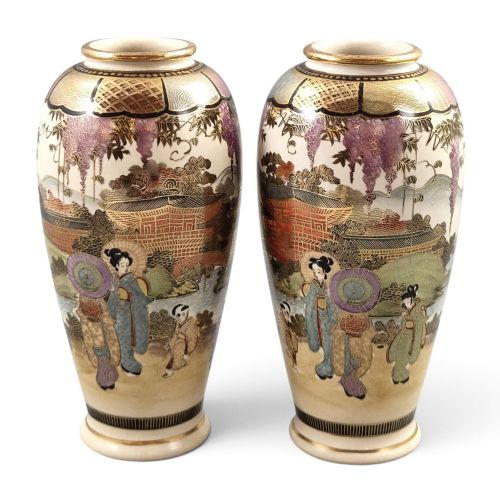
When you search for a gold decorated ceramic vase, you enter a field populated by Japanese Satsuma wares and prominent European potteries. The pieces range from small miniature vessels to large baluster and beaker forms made during the Victorian and Edwardian eras.
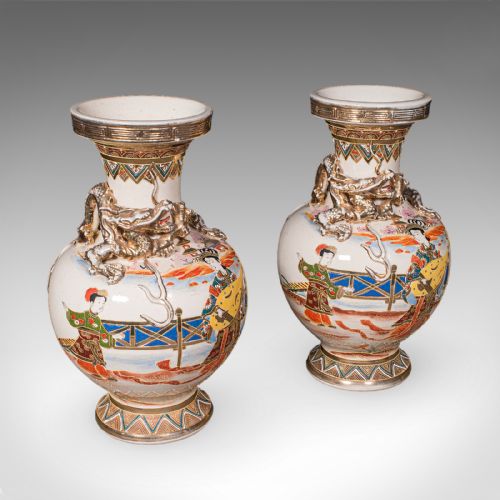
The Japanese examples, often bearing marks from makers like Shozan, Nanzan, and Kinkozan, showcase intricate enamel and gilt moriage work upon earthenware. Meanwhile, European output from Minton, Royal Doulton, Wedgwood, and Royal Worcester translates classical, Persian, and Art Nouveau impulses into porcelain and earthenware.
Pairs of decorative vases and urns dominate the selection, frequently utilising handles shaped like bamboo or bases supported by dolphins. Buyers meet both tall bulbous shapes and intimate cabinet pieces, each carrying distinct regional ornament from the late 19th century into the early 20th century.
How they were made
Potters shaped these vessels from earthenware or porcelain before applying ground glazes and detailed enamel painting. Kiln firing fixed the body and underglaze colours prior to the final addition of metallic surface treatments.
Gilding, gold leaf, and gilt applications provide the defining metallic enrichment across both Japanese and European pieces. Skilled hands added raised moriage details or delicate brushwork over cobalt grounds to achieve rich tactile and visual contrast.
Dolphins actively support the bases of certain beaker-form vases, proving that Victorian marine life could moonlight as structural engineering.
What varies in quality
The standard of a gold decorated ceramic vase rests upon the precision of its painting and the crispness of its gilt application. Master decorators executed figures, foliage, and geometric panels with controlled restraint, avoiding muddy lines or overworked surfaces.
The ambition of the form distinguishes exceptional output from standard commercial production. Handles shaped as bamboo or bases formed as dolphins demonstrate greater sculptural risk than straightforward cylindrical or baluster profiles.
Shozan·Nanzan·Kinkozan·Minton·Doulton Burslem·Ernst Wahliss·Wedgwood·Royal Doulton·Royal Worcester
The Gold Decorated Ceramic Vase Glossary
- Satsuma
- A type of Japanese earthenware featuring a crackle glaze and elaborate enamel and gilt decoration. It became widely exported to Europe during the Meiji period.
- Moriage
- A Japanese ceramic technique using piped clay to create raised relief patterns beneath glazes and gilding. This builds tangible texture across the surface of the vessel.
- Gilt
- A thin layer of gold or gold-like material applied to the ceramic surface. It highlights handles, rims, and painted motifs.
- Baluster
- A vertical architectural form resembling a pillar, swelling in the lower portion. Many ceramic vases adopt this traditional silhouette.
- Earthenware
- Porous pottery fired at relatively low temperatures. It requires a glaze to render it impermeable to liquids.
Gold Decorated Ceramic Vase: Frequently Asked Questions
What is a gold decorated ceramic vase?
These objects are decorative vessels shaped from earthenware or porcelain, embellished with metallic leaf, gilding, or enamel paints. They reflect global design movements from the late 19th and early 20th centuries.
Makers in both Japan and Europe utilised these techniques to create ornate display pieces, ranging from classical urns to intricate miniature bottles.
How were Satsuma vases made?
Craftspeople formed an earthenware body characterised by a fine crackle glaze, then hand-painted intricate figural or geometric scenes. Artisans added enamel colours and raised gilt details to complete the surface ornamentation.
These pieces were produced extensively during the Meiji period, often bearing specific artist or workshop signatures on the base.
Where were European gilt vases produced?
Prominent factories in England and Austria, including Minton, Royal Worcester, and the Doulton works, manufactured ornate porcelain and earthenware vessels. Designers like Christopher Dresser and Thomas Allen introduced avant-garde and Persian-inspired aesthetics to British production.
These European works applied industrial ceramic techniques alongside meticulous hand-gilding to satisfy Victorian taste.
How do I display these vases?
Place these decorative pieces on stable surfaces away from direct sunlight to protect delicate enamel colours and gold leaf. Tall baluster forms and urns function well as focal points on sideboards or mantelpieces.
Miniature vessels and cabinet pieces require secure placement where their fine painted details and raised moriage can be closely observed.
How do I identify the period?
Examine the stylistic cues, such as the naturalistic fruit painting typical of early 20th-century Royal Worcester or the distinct Japonisme of Meiji period Satsuma wares. Factory marks and artist signatures stamped or painted on the underside provide reliable chronological anchors.
Aesthetic Movement and Art Nouveau shapes also point towards the precise decades of the late 19th century when they were conceived.