




Baluster Pottery Vases
Baluster pottery vases bring distinct silhouettes and historic decoration into a room, drawing collectors through centuries of craft.
Baluster Pottery Vases
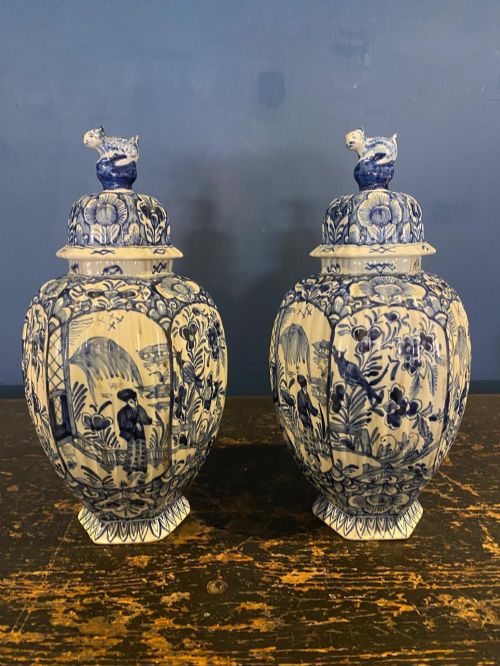
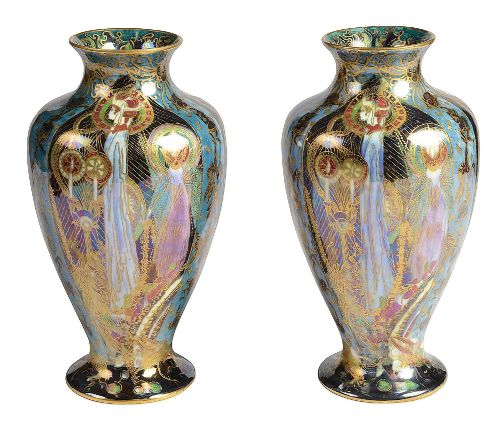
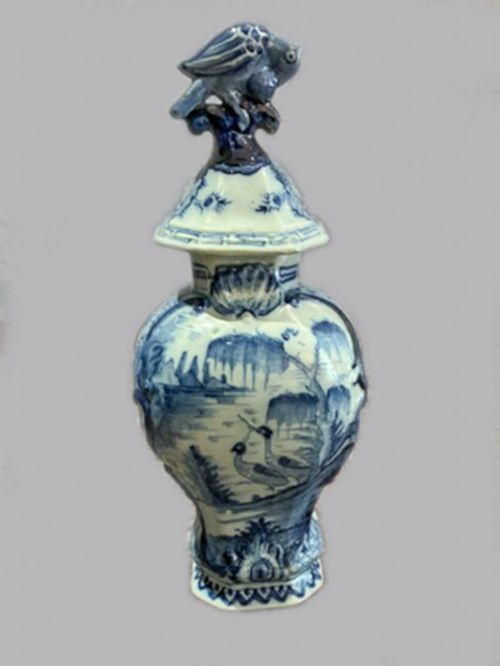
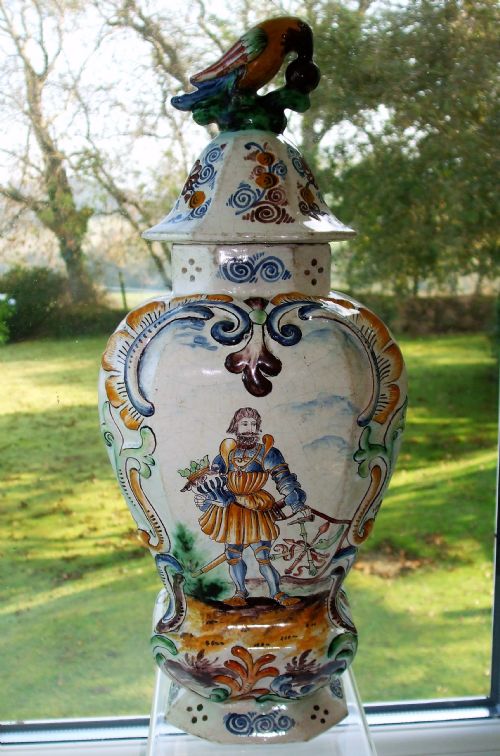
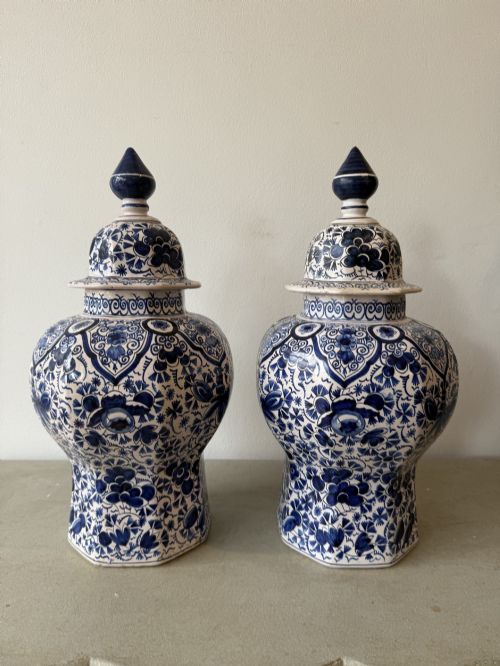
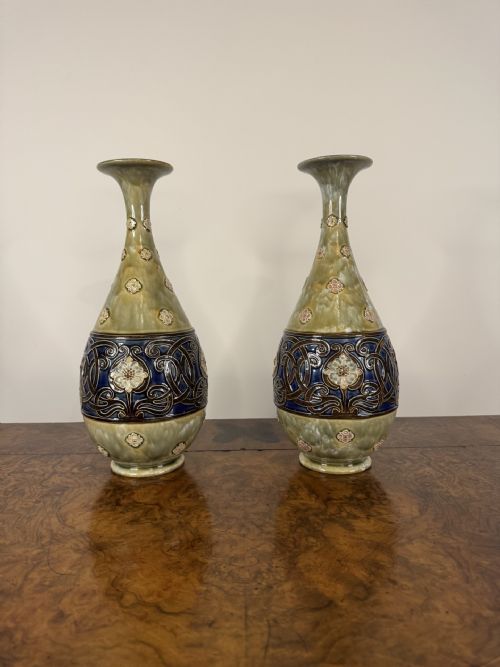
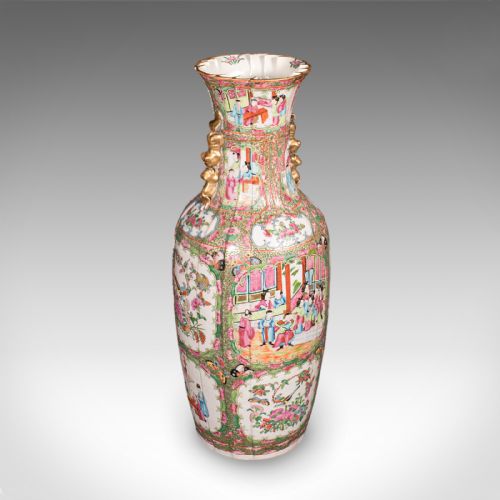
Baluster pottery vases emerge in various forms across multiple centuries, presenting the characteristic swollen lower body tapering towards the neck that defines the shape. Pieces on this page span from eighteenth century examples to twentieth century works, originating from English potteries, Dutch workshops, and Japanese kilns.
Makers utilised ceramic, porcelain, earthenware, and stoneware to shape these vessels, often employing tin glaze, enamel, or gold leaf for surface decoration. The selection ranges from lidded jars and table lamps to grand floor-standing containers.
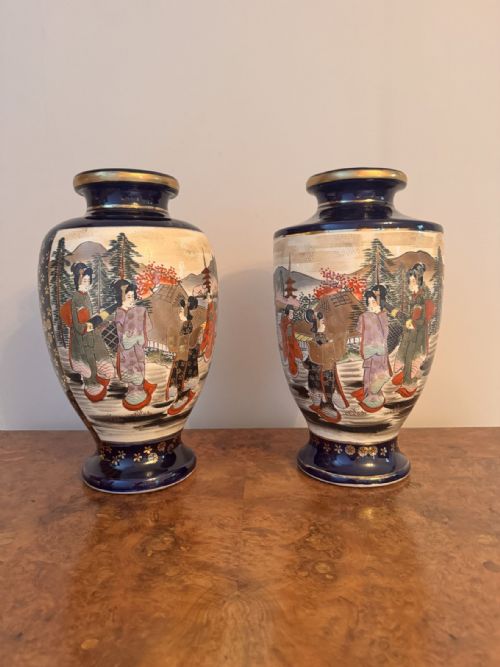
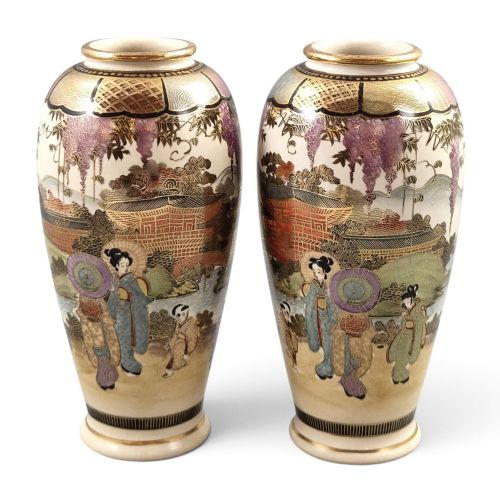
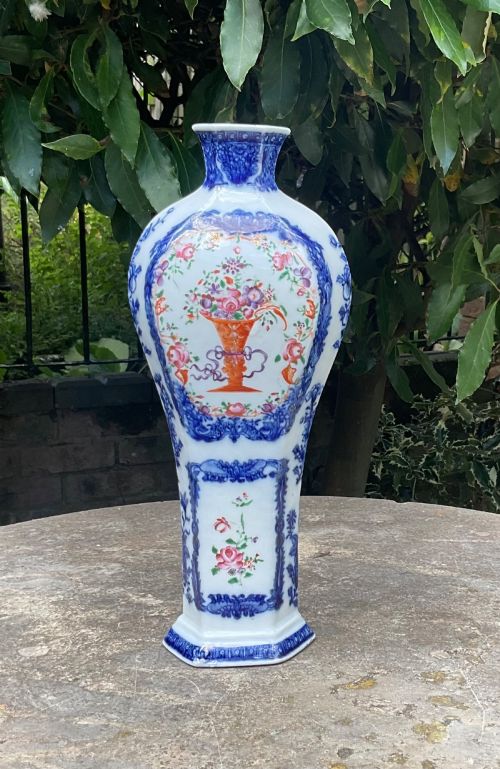
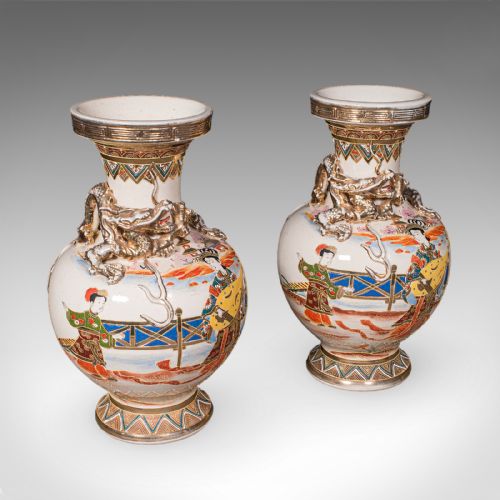
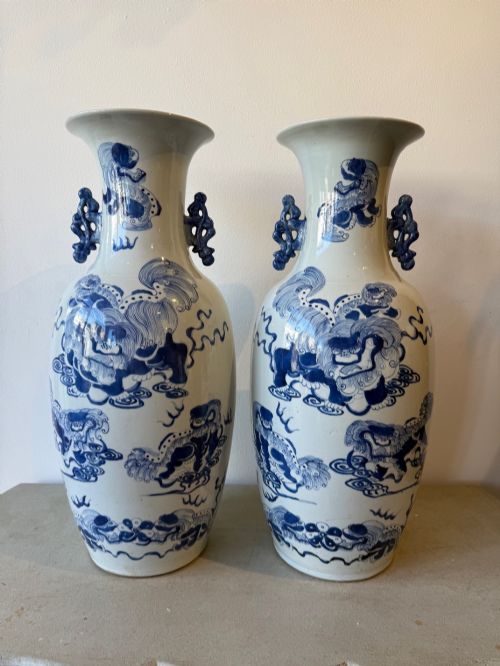
Japanese Satsuma and Imari pieces appear frequently, alongside Chinese Famille Rose and Dutch Delftware. English makers like Royal Doulton and Mason's Ironstone represent domestic output within the selection.
Materials and Technique
Potters shaped clay on the wheel or cast ceramic bodies into moulds to achieve the characteristic swelling profile. Artisans then applied tin glazes or porcelain slips to provide a smooth ground for subsequent decoration.
Painters executed intricate designs using underglaze blue, polychrome enamels, and gilding, sometimes incorporating raised applied figures or pierced elements. Firing in kilns set the pigments and vitrified the bodies, occasionally yielding specialised drip glazes or lustres.
Listings feature earthenware, porcelain, and stoneware bodies decorated with tin glaze, enamel, and gold leaf.
Evaluating the Pieces
The precision of the painted hand-decoration separates standard production from superior examples, with finer brushwork and richer enamel palettes indicating skilled workshop output. The crispness of moulded relief details and the balance of the vase silhouette also determine distinction.
Provenance and documented designer attribution elevate certain items, particularly signed Japanese pieces or marked English art pottery. The preservation of original covers on lidded vases influences completeness.
Daisy Makeig Jones·Louisa Wakely·Makuzu Kozan·Kinkozan·Thomas Allen·William Moorcroft
The Baluster Pottery Vases Glossary
- Baluster
- A architectural form featuring a rounded lower body and narrow neck, adapted by potters for upright vessels.
- Delftware
- Tin-glazed earthenware produced in the Netherlands and England, traditionally decorated in blue and white or polychrome.
- Imari
- A style of Japanese export porcelain characterised by underglaze blue, iron red, and gold ornamentation.
- Famille Rose
- A Chinese porcelain palette dominated by opaque pink enamel, introduced during the Qing dynasty.
- Stoneware
- A heavy, durable ceramic fired at high temperatures until vitrified and impervious to liquids.
Baluster Pottery Vases: Frequently Asked Questions
How do I identify a baluster shape?
The silhouette relies on a bulbous lower section that tapers inward toward a narrower neck and flared rim. This architectural profile provides stability while offering a broad canvas for painted decoration.
Potters varied the proportions across different centuries, sometimes adding handles, covers, or octagonal facets to the basic form.
What is Japanese Satsuma pottery?
Satsuma ware consists of earthenware with a crackled ivory glaze, typically decorated with elaborate polychrome enamels and gilding. Production expanded significantly during the Meiji period for international export markets.
Many pieces feature figural scenes, flora, or fauna executed by specific artistic studios and named makers.
How were lidded jars used historically?
Lidded vases and jars served primarily as decorative garnitures on mantelpieces and cabinets, often arranged in sets of three or five. Some vessels functioned to store dry goods or potpourri in domestic interiors.
The presence of an original matching cover adds significantly to the completeness of eighteenth and nineteenth century pieces.
Where should I display large floor vases?
Large baluster vessels require stable placement on floor surfaces away from high traffic areas to prevent accidental impact. Hallways, corners of reception rooms, and hearths provide suitable settings for substantial pairs or floor-standing examples.
Natural light helps reveal the detailed brushwork on hand-painted surfaces.