




German Porcelain Cabinet Plates
German porcelain cabinet plates are decorative ceramics designed for display rather than dining, bringing intricate hand-painted scenes and gilding into interiors.
German Porcelain Cabinet Plates
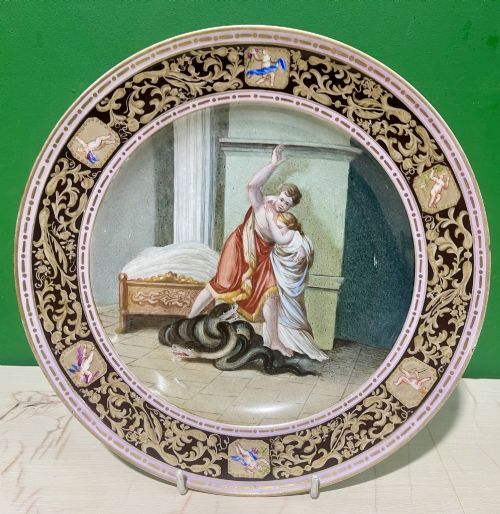
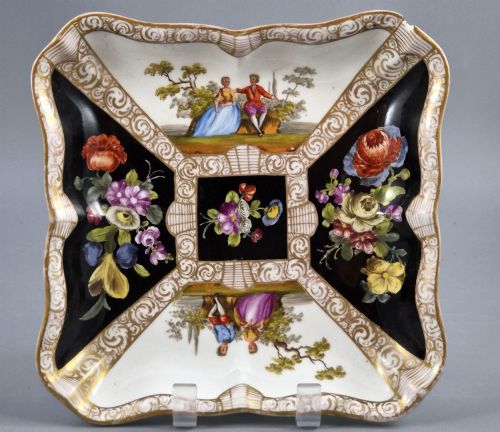
German porcelain cabinet plates are decorative ceramic items produced primarily during the eighteenth and nineteenth centuries, taking the form of plates, dishes, and square bowls intended for display in cabinets or on walls rather than for practical table use. When searching for german porcelain cabinet plates, collectors encounter varied decorative formats ranging from square dishes to reticulated plates and dessert dishes.
The objects appearing on this page span several stylistic periods, with nineteenth-century examples forming the majority, alongside eighteenth-century pieces. Makers such as Meissen, Furstenberg, and Dresden workshop productions like those associated with Helena Wolfsohn dominate the selection, frequently employing historical revival styles.
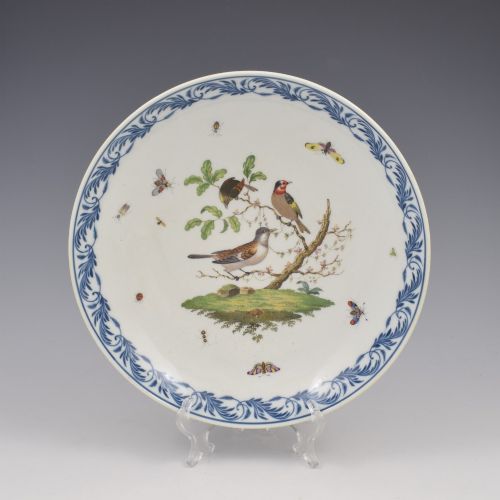
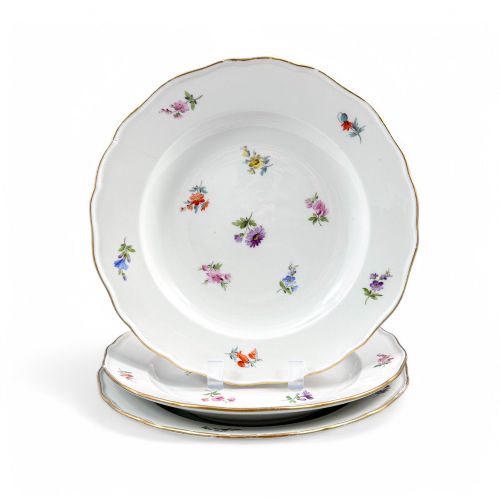
The visual vocabulary of these pieces draws heavily upon classical and pastoral motifs, including hand-painted ornithological bird studies, exotic birds, Kakiemon patterns, Watteau scenes, and Boucher compositions. Floral arrangements, specifically Streublumen decoration and gilt flowers, appear frequently alongside shaped rims and pierced reticulation.
What varies in quality
The refinement of the hand-painted brushwork dictates the visual success of each piece, distinguishing finely executed ornithological studies and figural scenes from simpler floral motifs. Precision in the application of overglaze enamels and the crispness of moulded or reticulated borders reflect the skill of the manufactory.
The preservation of the original gilding and enamel colours without excessive rubbing or fading influences the desirability of a plate. Factory marks, such as the Meissen crossed swords, provide an indication of authenticity and origin that guides valuation among collectors.
German Porcelain Cabinet Plates Retail Price Guide 2026
Typical asking prices for german porcelain cabinet plates among the pieces listed under this phrase on Sellingantiques today, from the lower quarter to the upper quarter. They describe what is for sale here now, not the wider market.
Listings feature hard-paste porcelain and enamel materials applied across nineteenth-century and eighteenth-century periods.
Meissen·Furstenberg·Helena Wolfsohn·Dresden
The German Porcelain Cabinet Plates Glossary
- Hard-paste porcelain
- A durable ceramic composition of kaolin and petuntse fired at high temperatures. It produces a hard, bright white body that resists scratching and absorbs very little moisture.
- Overglaze enamel
- Coloured glass powders mixed with an oily medium and painted onto already-fired and glazed porcelain. A subsequent firing fuses these pigments to the surface.
- Reticulated plate
- A ceramic plate featuring pierced or openwork borders created by cutting patterns into the clay before firing. This technique requires considerable skill to prevent warping in the kiln.
- Streublumen
- A scattered floral motif featuring small, isolated sprigs of hand-painted flowers across the white porcelain surface. It was widely utilised by eighteenth and nineteenth-century European manufactories.
- Gilt
- A thin layer of gold applied to the surface of the porcelain as leaf or liquid preparation. Burnishing after firing enhances its reflective metallic lustre.
German Porcelain Cabinet Plates: Frequently Asked Questions
What are german porcelain cabinet plates?
These are decorative ceramic plates and dishes produced primarily by European factories for visual display rather than dining. They often feature hand-painted scenes, floral motifs, or birds.
Cabinet plates were typically exhibited in dedicated display furniture or mounted on walls. Their forms include round plates, square dishes, and reticulated pierced borders.
How do I identify Meissen porcelain plates?
Meissen pieces often bear the crossed swords mark painted under the glaze on the reverse. The quality of the hand-painted imagery provides another indicator.
Look for fine brushwork in subjects such as birds, Watteau scenes, or Kakiemon patterns. Eighteenth and nineteenth-century examples also display specific paste characteristics and distinct moulding styles.
What is Helena Wolfsohn porcelain?
Helena Wolfsohn was a Dresden decorator and merchant who operated a workshop in the nineteenth century. Her pieces often utilised Meissen-style blanks and decorative vocabulary.
Dishes bearing this association frequently feature elaborate gilt decoration and painted figural scenes after Watteau. They represent a distinct segment of nineteenth-century German porcelain production.
How should I display cabinet plates?
Cabinet plates should be exhibited using secure plate hangers or dedicated display stands that support the weight safely. Protection from direct sunlight helps preserve the overglaze enamels.
Keeping them in enclosed cabinets minimises dust accumulation and reduces the risk of accidental knocks. Wall mounting requires fixings rated for the weight of hard-paste porcelain.
What does reticulated mean on a plate?
Reticulated refers to a pierced or lattice-like openwork pattern cut into the rim of a ceramic plate before firing. This decorative technique creates intricate geometric or floral openings.
Such plates required advanced manufacturing skill to prevent distortion during high-temperature kiln firings. They are frequently found on nineteenth-century decorative dessert and cabinet dishes.