


Georgian Writing Slope Desk
A georgian writing slope desk offers portable or fitted writing storage built from solid mahogany and walnut.
What these desks are
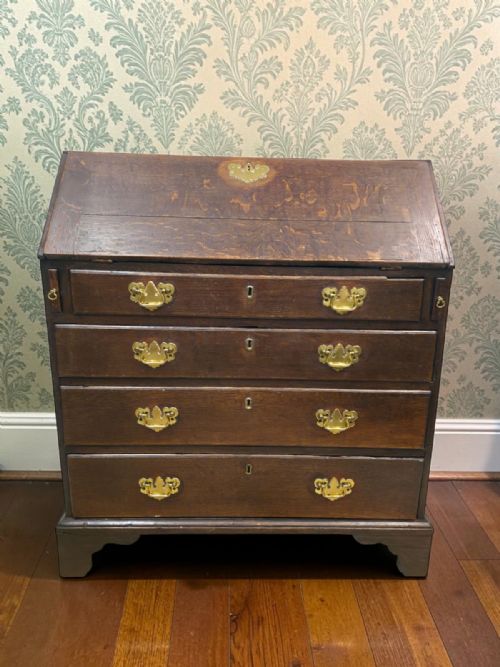
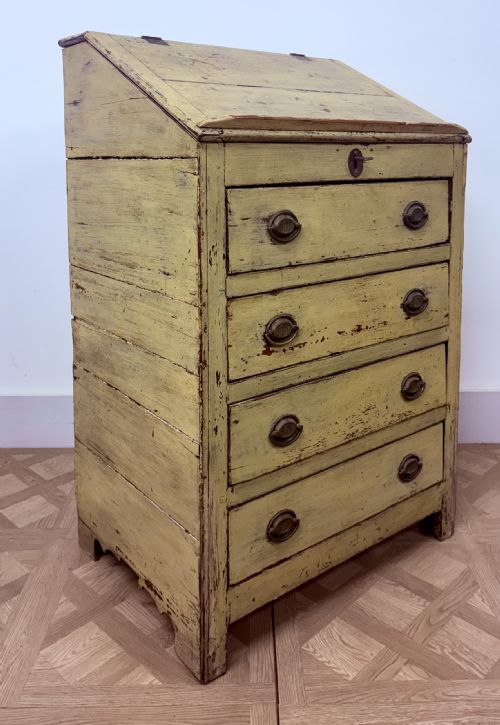
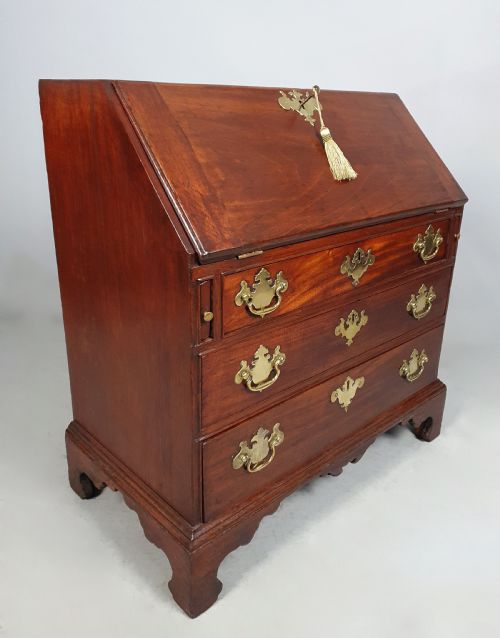
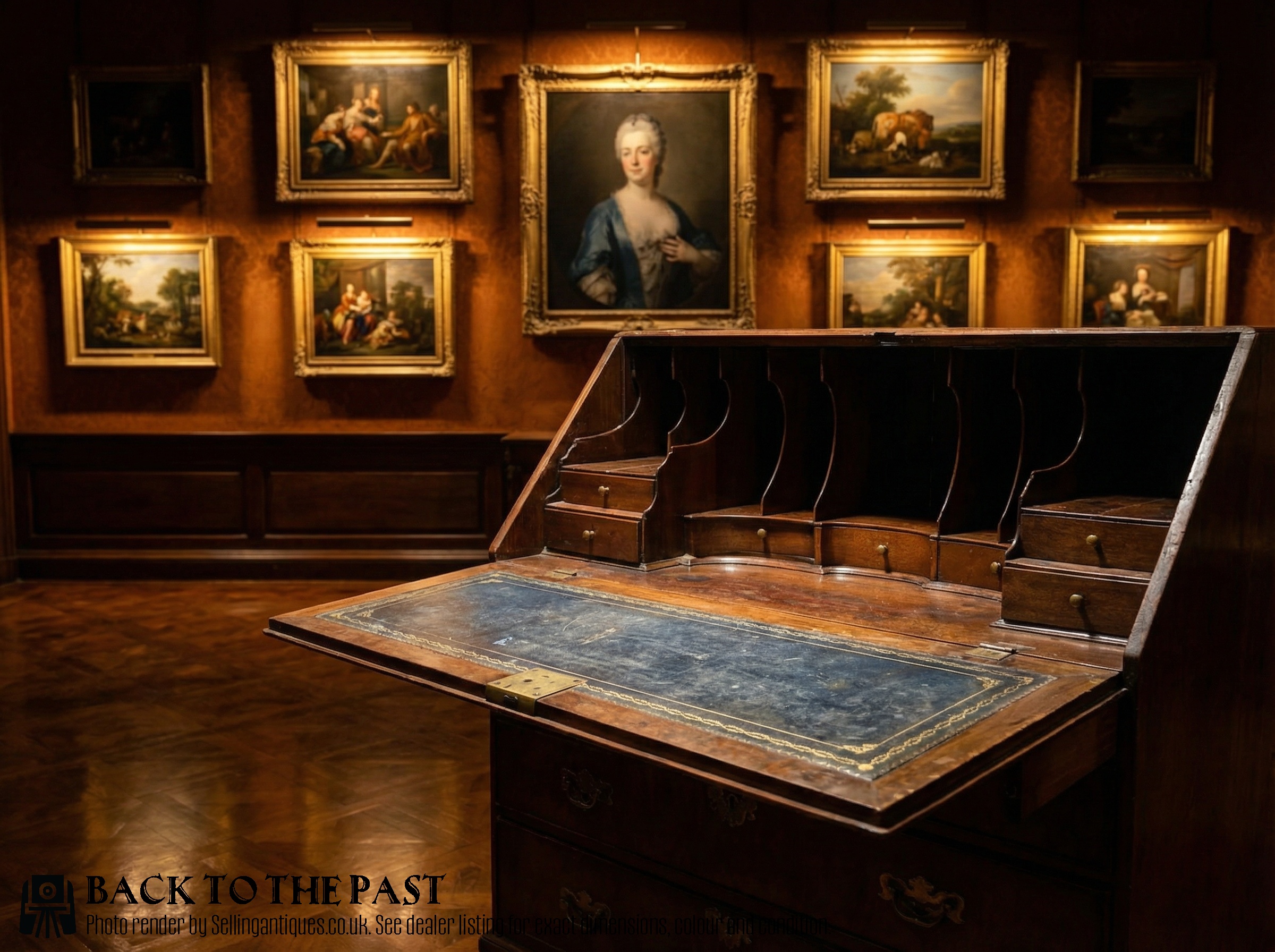
A georgian writing slope desk encompasses slope-front bureaux and portable campaign writing desks from the eighteenth and nineteenth centuries. These pieces provide a sloping surface for correspondence alongside internal compartments and drawers for stationery.
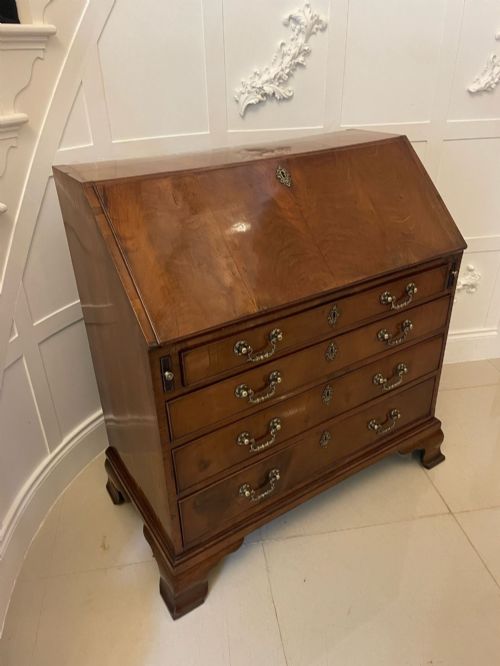
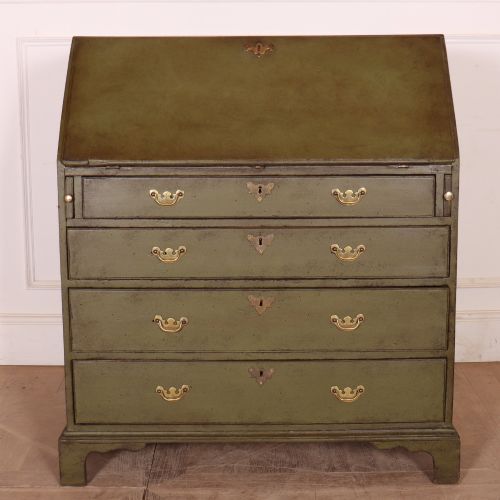
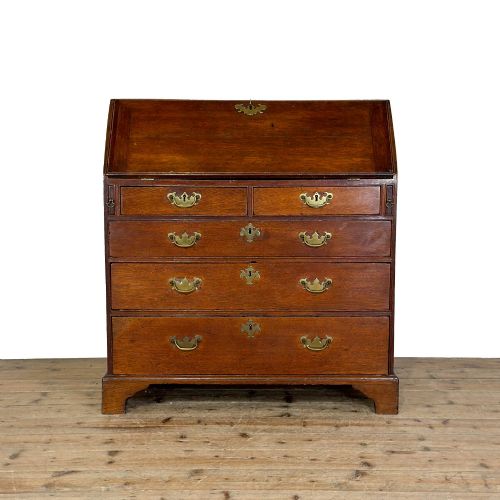
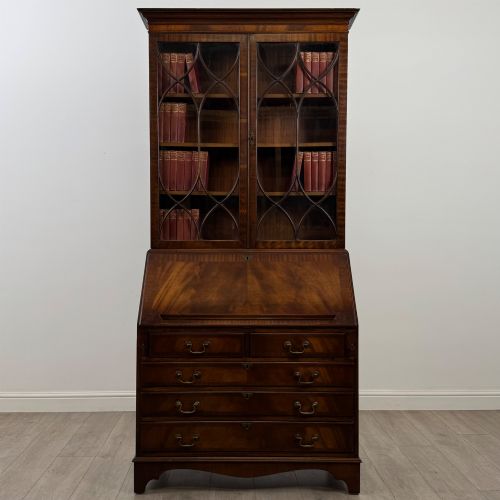
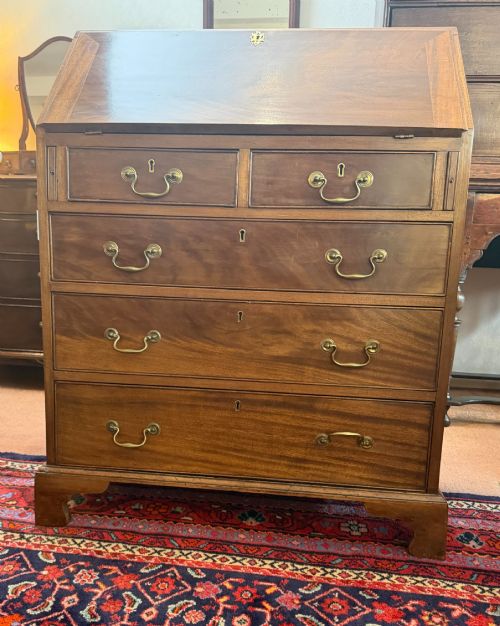
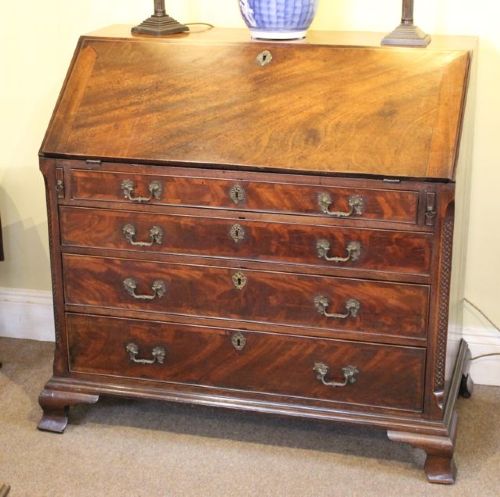
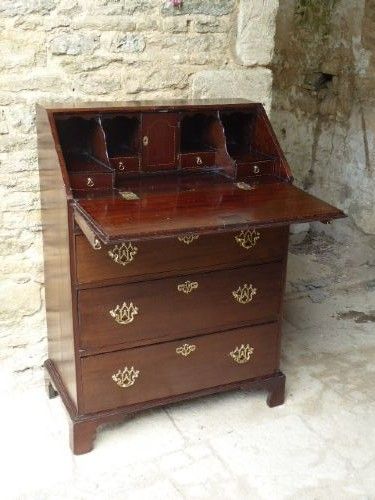
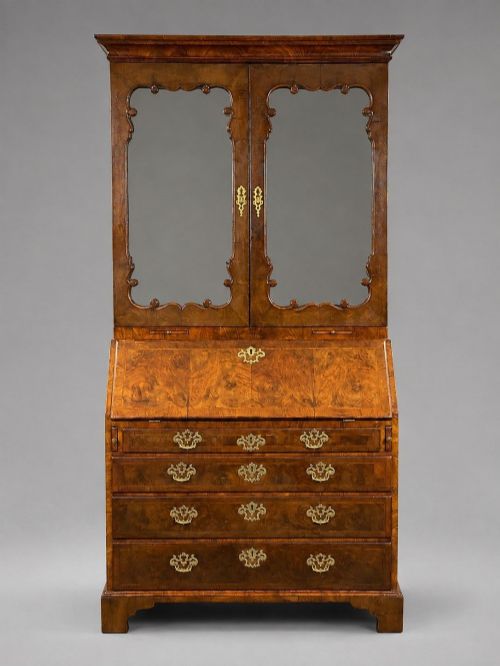
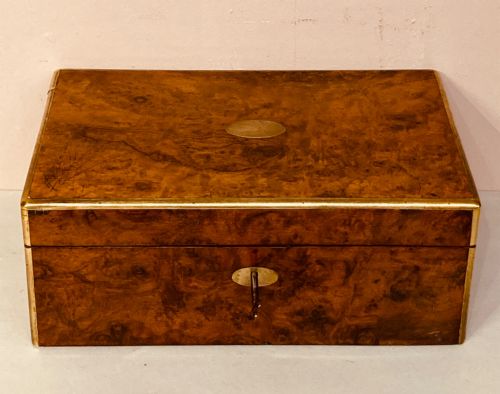
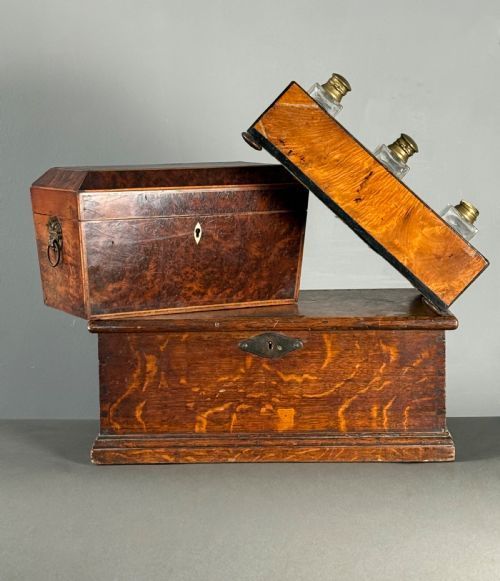
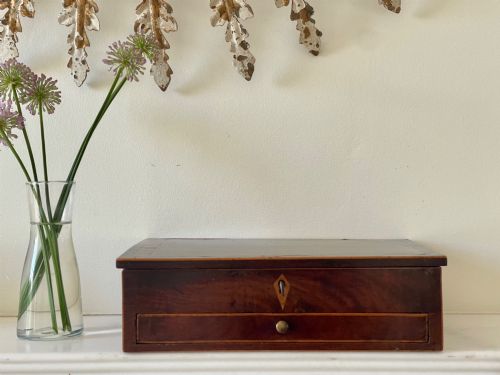
The versions most commonly met on this page are eighteenth-century walnut and mahogany bureaux, often featuring fitted interiors and bun feet. Portable military campaign writing slopes bound in brass also appear, originating from the same period.
Makers designed these objects for domestic writing or travel, combining cabinetry with functional storage. They reflect the stylistic shifts from George I and Queen Anne designs through to the broader Georgian era.
How they were made
Cabinetmakers constructed these pieces primarily using solid mahogany, walnut, and burr walnut veneers over secondary timbers. Surfaces relied on natural timber figures and warm tones rather than heavy ornamentation.
Joinery techniques included dovetailed drawer construction and framed interiors. Brass featured heavily as a structural and decorative material, appearing as corner mounts and hinges on portable campaign slopes.
Retail Price Guide 2026
Typical UK retail prices for georgian writing slope desk, calculated from the Sellingantiques database of over a million retail prices indexed since 2003. This retail price guide relies exclusively on Sellingantiques data; no external sources or auction records are used, so the figures do not describe the wider market.
Some portable campaign desks included clever secret compartments hidden behind dummy drawers for carrying private letters and valuables.
What varies in quality
The calibre of a georgian writing slope desk rests on the choice of timber figure, such as the richness of burr walnut or the depth of mahogany grain. Superior examples exhibit precise internal arrangement and refined cabinet proportions.
Original hardware, including brass feet, escutcheons, and candle sconces on portable desks, elevates a piece. Subtle details in the joinery and interior pigeonhole configuration separate standard production from finer workshop output.
The Georgian Writing Slope Desk Glossary
- Bureau
- A desk featuring a sloping lid that opens to reveal a fitted interior of drawers and pigeonholes. These items sit on bracket feet, bun feet, or a chest base.
- Fall front
- A hinged writing flap that drops down to form a horizontal surface for writing. This panel conceals the internal stationery compartments when closed.
- Campaign slope
- A portable desk designed for military use during travel. These compact boxes are typically bound in brass for durability.
- Burr walnut
- A prized timber veneer showing swirling, knotty grain patterns. Cabinetmakers selected it for decorative emphasis on drawer fronts and slopes.
- Bun feet
- Rounded, compressed spherical feet found on early eighteenth-century case furniture. They lift the cabinet slightly off the floor.
Frequently Asked Questions
What is a georgian writing slope desk?
A georgian writing slope desk is a wooden writing cabinet or portable box featuring a slanted lid. These pieces date from the eighteenth and nineteenth centuries and include interior compartments.
They served as functional writing furniture in homes or military camps, utilising timbers such as mahogany and walnut.
How do I identify an eighteenth century bureau?
Eighteenth century bureaux typically display period timber choices like walnut, burr walnut, and mahogany. They often rest on bun or bracket feet and house fitted internal stationery drawers.
Construction methods involve hand-cut dovetails and traditional cabinet joinery characteristic of the Georgian era.
Where were campaign writing slopes used?
Campaign writing slopes were built for officers and travellers on the move. Their portable box design allowed individuals to write correspondence away from a fixed household.
Robust brass binding protected the corners and edges from the rigours of transit.
How do I care for a walnut writing desk?
Walnut furniture requires a stable indoor environment away from direct sunlight and extreme temperature shifts. Gentle dusting with a dry cloth maintains the polished surface.
Avoid placing damp items directly onto the timber to protect the historic polish and veneer.