
Georgian Wine Glass Stemware
These georgian wine glass stemware examples are tactile pieces of drinking history, offering a direct connection to eighteenth-century gatherings through their hand-formed glass.
Georgian Wine Glass Stemware
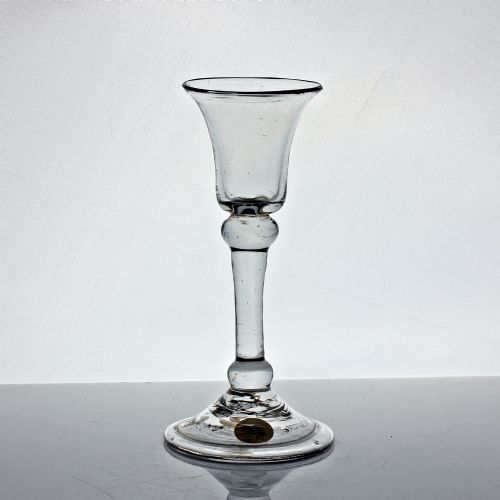
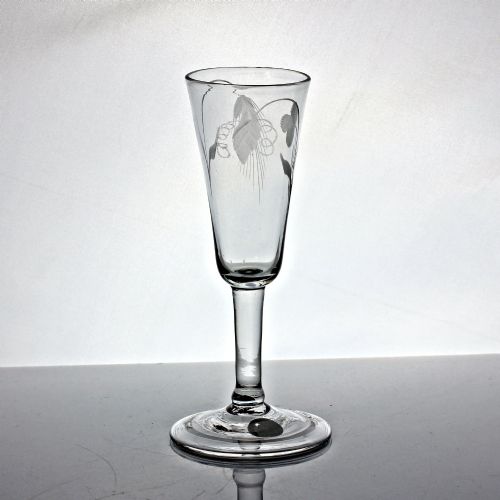
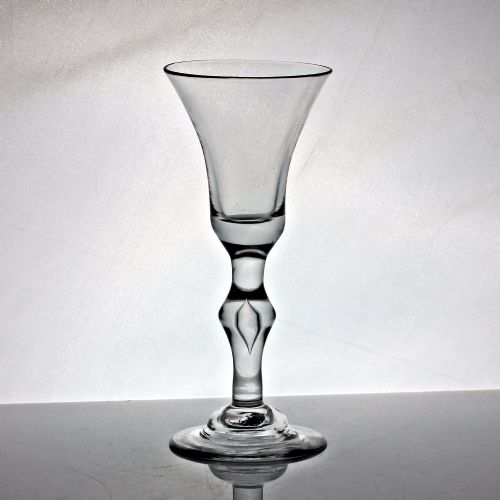
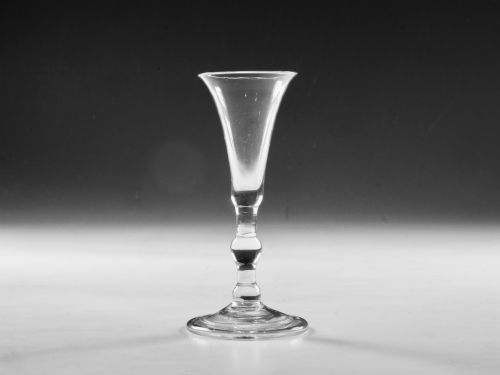
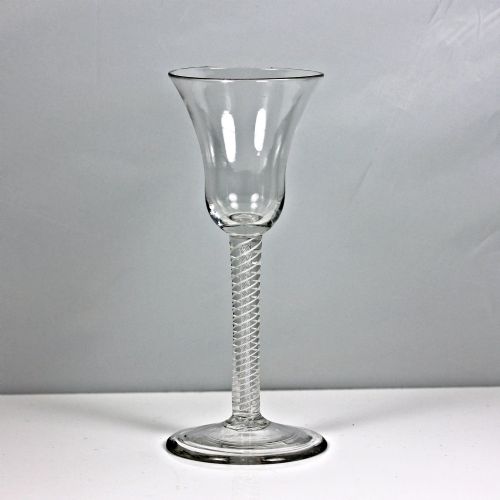
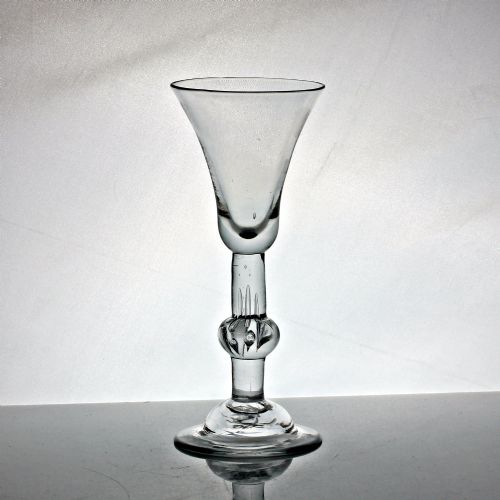
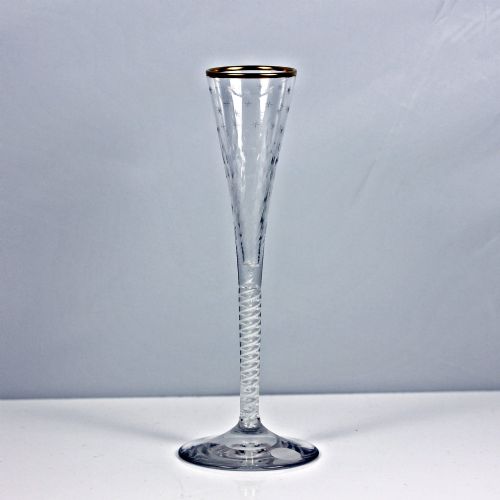
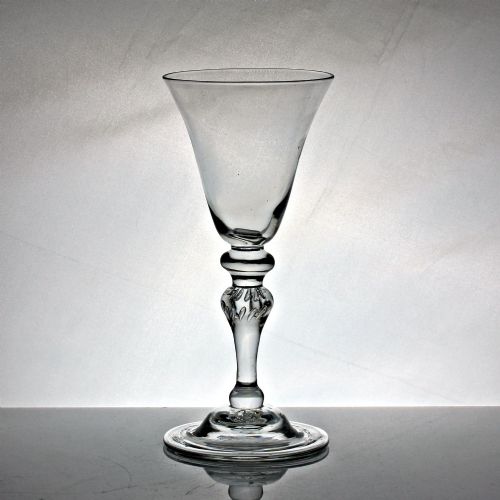
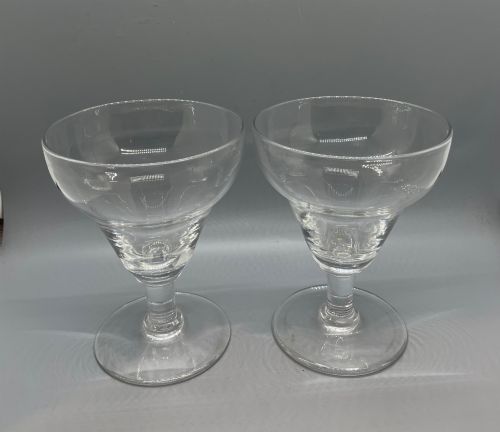
When you search for georgian wine glass stemware, you encounter vessels designed for wine, ale, drams, and rum, spanning the eighteenth century into the early nineteenth century. The typical pieces on this page are English drinking glasses featuring distinct bowl shapes like trumpet, ogee, and bell forms set atop various decorative stems.
You will also find related forms such as rummers, flutes, and sweetmeat glasses alongside standard wine glasses. Most examples date from the mid-eighteenth century onwards, reflecting the period's evolving social drinking customs and glass manufacturing techniques.
Materials and construction
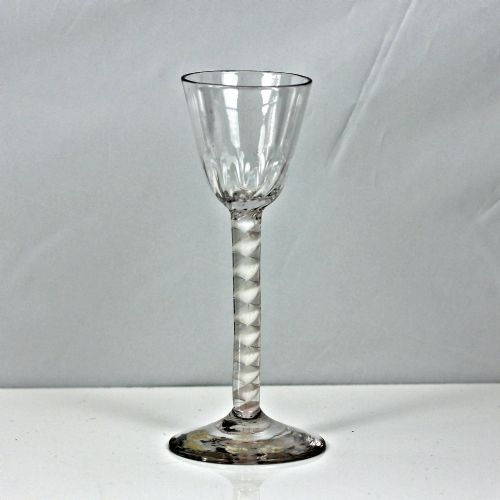
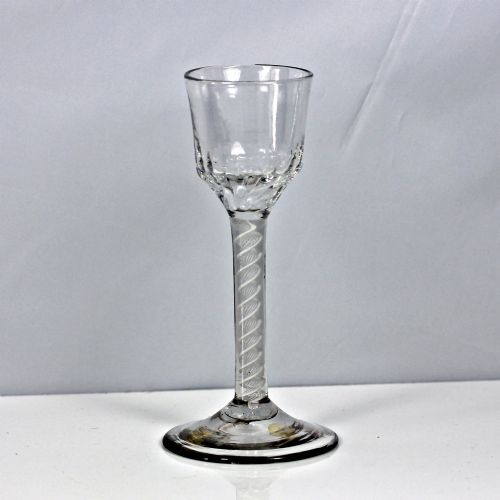
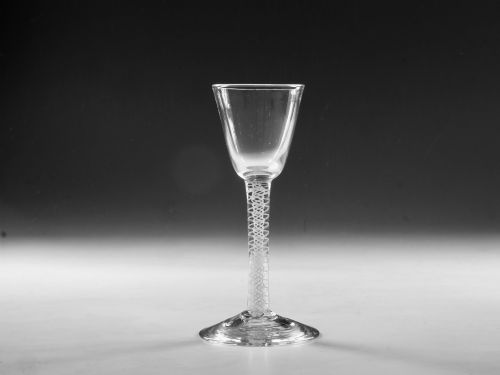
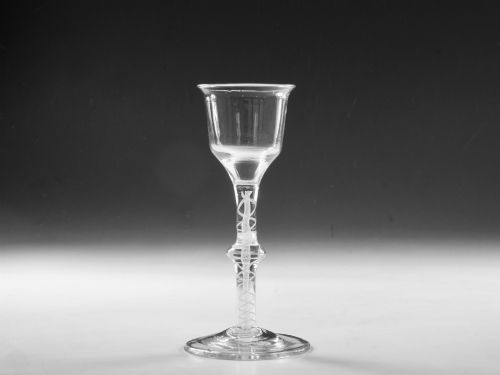
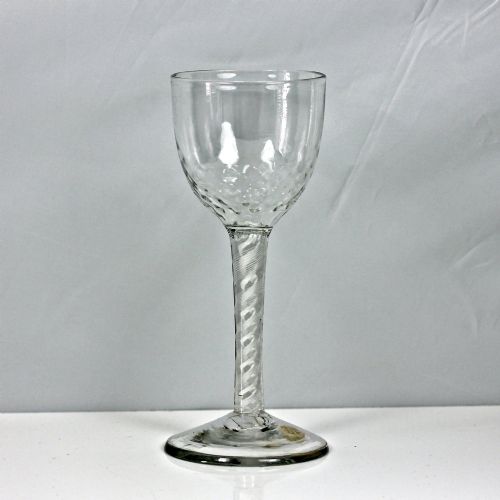
These glasses are formed primarily from lead glass, lead crystal, and flint glass, often shaped by hand-blowing into moulds or free-blown to create the bowl and foot. Makers introduced air bubbles, called tear drops, into the metal during the process, or worked internal threads of air and white enamel through the stems.
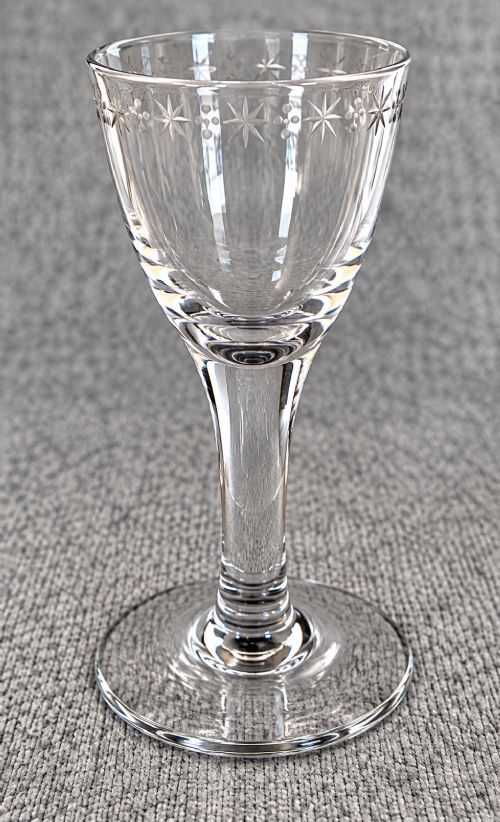
The stems themselves combine components like plain sections, baluster profiles, knops, and faceted cuts. Foot bases are frequently folded for stability, and bowls show surface engraving, petal moulding, or enamel decoration applied after initial formation.
One recorded rummer bears the cheerful historic engraving 'Women & Wine', capturing eighteenth-century social sentiments on a drinking vessel.
Distinctions in quality
Quality in these drinking vessels rests upon the clarity of the metal, the balance of the proportions, and the complexity of the stem formation. A piece with crisp twist threads, a well-balanced bowl, and a neatly finished pontil mark on an undisturbed foot demonstrates superior execution by the glasshouse.
Engraving depth and precision further separate standard domestic glassware from exhibition or commemorative pieces. Examples retaining original surface wear and undisturbed proportions hold greater integrity for collectors.
The Georgian Wine Glass Stemware Glossary
- Air twist
- A stem containing spiral threads of elongated air bubbles trapped within the glass. This technique was achieved by drawing and twisting heated metal before cooling.
- Opaque twist
- A stem featuring white or coloured enamel threads enclosed within clear glass. These twists run in single or double series patterns.
- Baluster
- A heavy, thick stem form inspired by seventeenth-century architecture, often featuring knops or swelling sections. Early examples display prominent bulbous profiles.
- Ogee
- A bell-shaped bowl with an S-shaped profile curving outward at the rim. This form was widely utilised across eighteenth-century drinking vessels.
- Pontil mark
- A rough scar left on the underside of the foot where the iron rod was detached after blowing. Finished pieces often show this area ground down or polished smooth.
Georgian Wine Glass Stemware: Frequently Asked Questions
How do I spot an air twist stem?
Look closely at the interior of the stem under good lighting to locate fine, spiralling threads of air running from top to bottom. These threads appear as distinct glassy filaments trapped inside the solid stem.
Air twists were formed while the glass was hot and pliable by manipulating internal bubbles into helical patterns before shaping the complete glass.
What is the difference between an opaque twist and an air twist?
An air twist contains only trapped air channels within the clear metal of the stem, creating a subtle refractive effect. An opaque twist incorporates solid white or coloured enamel rods twisted into networks inside the glass.
Opaque twists show solid, opaque white lines that stand out sharply against the clear body, whereas air twists rely entirely on light passing through empty channels.
Were these glasses used for daily drinking?
Many eighteenth-century drinking vessels served during formal dining, tavern gatherings, and social clubs, handling ale, wine, and spirits. Their sturdy lead glass composition made them practical for regular use despite delicate appearances.
Over decades of handling, genuine period examples often accumulate fine surface wear and scratches around the foot rim and bowl from use and washing.
How can I tell a rummer from a wine glass?
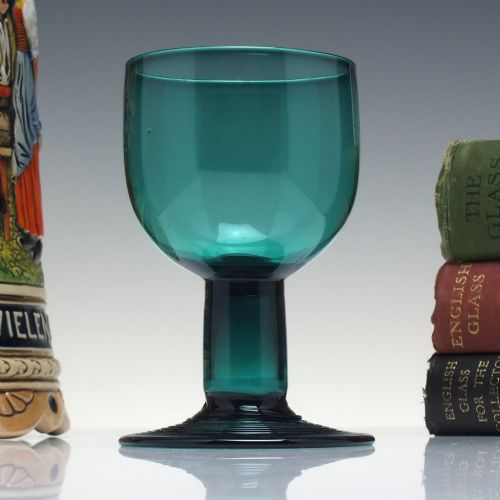
Rummers are typically larger, heavier drinking vessels with thicker bowls and shorter stems, designed for punch, ale, or rum in the late eighteenth and early nineteenth centuries. Wine glasses feature smaller bowls and taller, more slender stems proportioned for lesser quantities of wine.
You will notice rummers possess wider, deeper bowls suited to larger volumes, while wine glasses maintain refined proportions intended for slow sipping.