
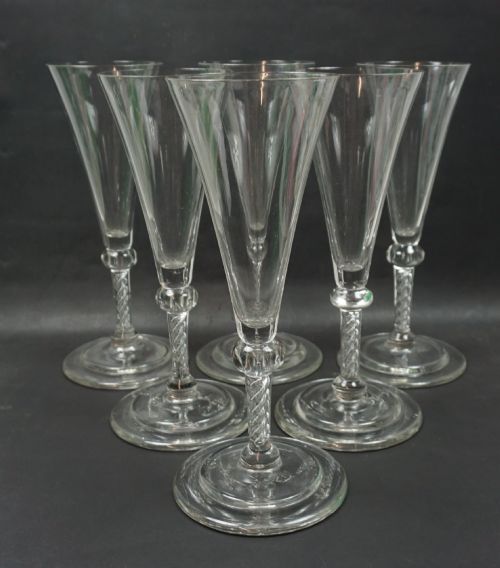
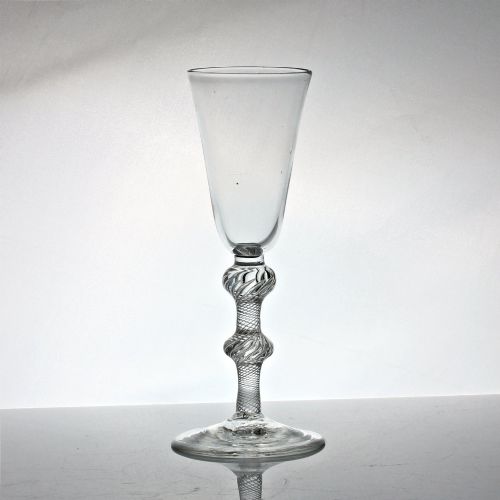


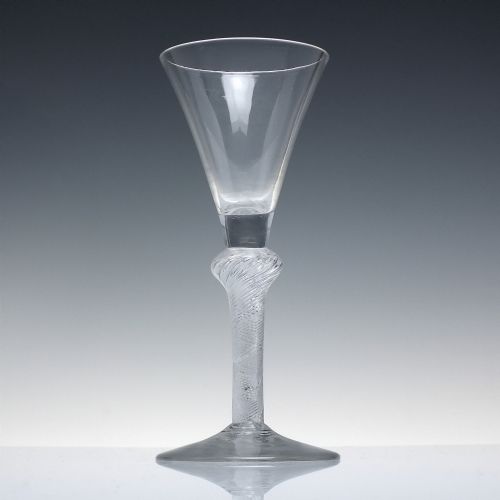


Knopped Air Twist Glass
These knopped air twist glass pieces combine delicate optical threads with tactile nodes, offering a tangible connection to eighteenth-century drinking culture.
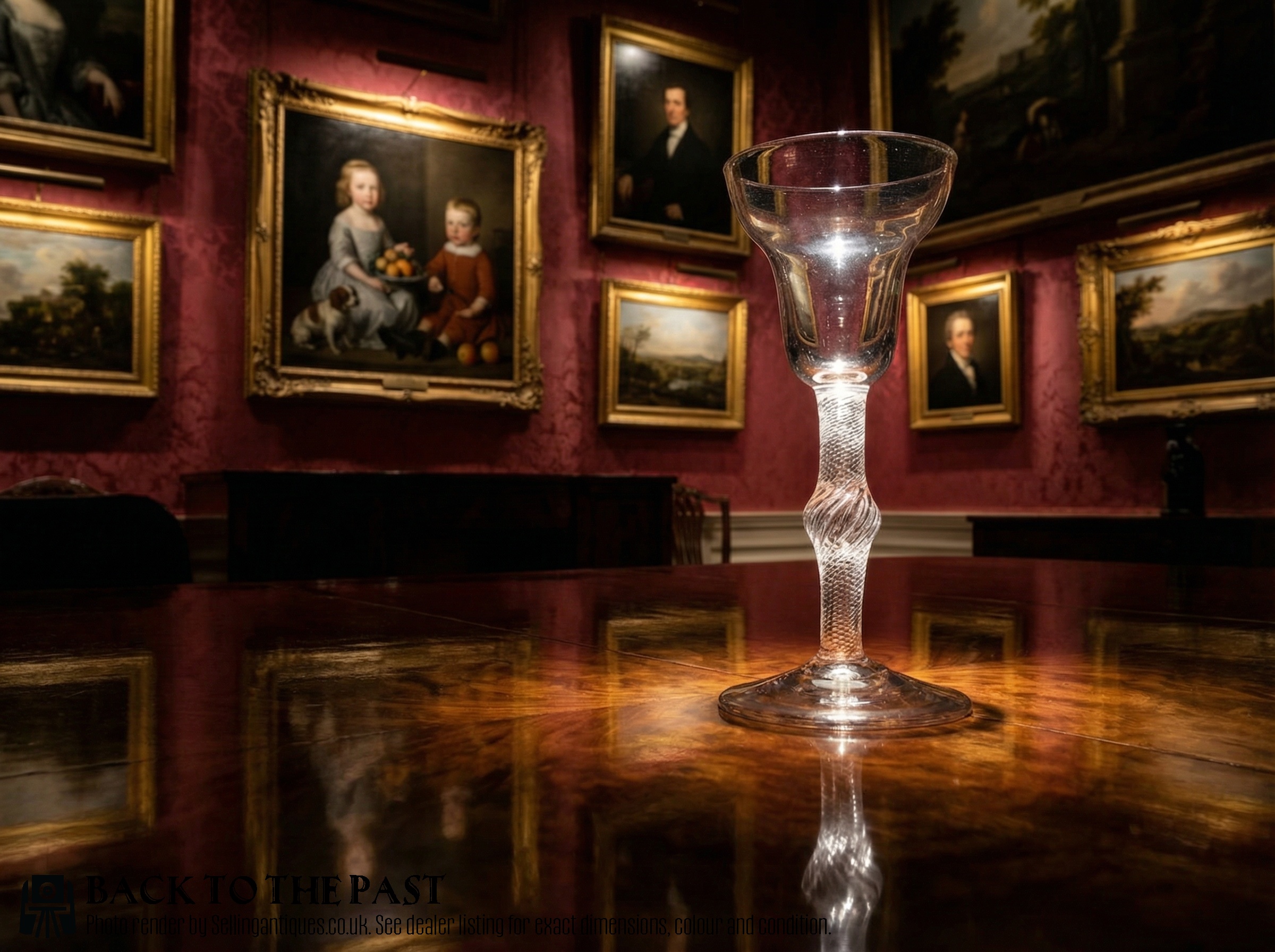
Knopped Air Twist Glass
When searching for knopped air twist glass, a buyer encounters drinking vessels defined by elongated stems enclosing spiralling air channels and punctuated by raised swellings. The pieces listed here span the Georgian era and the twentieth century, capturing both original eighteenth-century glassware and later Georgian Revival interpretations.
The dominant forms are wine glasses, wine flutes, goblets and ale glasses featuring various configurations of stems. Most examples emerge from the eighteenth century, showcasing forms like bell bowls and pan top bowls supported by single, double or triple knops.
How they were made
These lead glass and lead crystal objects rely on the manipulation of molten metal to trap air bubbles within the stem. Artisans then drew and twisted the glass to form multi-spiral threads running down the shaft.
Makers shaped bowls separately before joining them to the air twist stems and finishing the bases, occasionally incorporating folded feet for stability. Some pieces feature white enamel decoration applied to the glass surface.
Object forms span wine glasses, wine flutes, goblets and ale glasses.
What varies in quality
Quality rests upon the clarity of the clear glass and the precision of the internal air threads. Tighter, more uniform spirals demonstrate superior craftsmanship from the glasshouse.
The complexity of the stem structure also dictates distinction, with multiple knops and folded feet adding sculptural weight to the vessel. The proportions between bowl, knopped stem and foot determine the visual balance of the piece.
The Knopped Air Twist Glass Glossary
- Air twist
- A stem containing elongated spiral bubbles of air trapped within the glass. This optical effect is achieved by drawing and twisting heated metal before it cools.
- Knop
- A prominent raised swelling or knob on the stem of a glass. They can be single, double or triple depending on the design.
- Lead glass
- A heavy, brilliant type of glass containing lead oxide. It offers superior clarity and refraction compared to standard soda glass.
- Folded foot
- A base edge turned under to create a thicker, more robust rim. This technique strengthens the extremity of the vessel.
- Ale glass
- A tall, narrow drinking vessel specifically intended for serving ale. These often feature multi-spiral air twist stems.
Knopped Air Twist Glass: Frequently Asked Questions
What is an air twist stem?
An air twist stem contains spiralling threads of trapped air running through the glass shaft. This decorative technique creates internal patterns that refract light as the vessel moves.
Craftsmen produced these effects by manipulating bubbles within molten lead glass before drawing and twisting the material.
How do knops affect the glass?
Knops provide tactile nodes along the stem, breaking up the vertical line of the piece. They range from simple swellings to complex multiple formations.
These raised sections add physical weight and structural variety to eighteenth-century drinking vessels.
Are these glasses from the Georgian period?
Many examples date from the eighteenth century during the Georgian era, while others originate from later revival periods like nineteen thirty.
Original eighteenth-century pieces display the hand-formed characteristics and lead crystal composition typical of early British glasshouses.
What bowl shapes are common?
The listings feature bell bowls and pan top bowls mounted on slender stems. Each shape serves a different drinking function within historical dining traditions.
These forms are paired with folded feet and multi-spiral stems to create balanced drinking vessels.