
Georgian Wine Cooler Chest
A georgian wine cooler chest holds bottles at table height, bringing functional timber architecture and refined dining history into the room.
Georgian Wine Cooler Chest
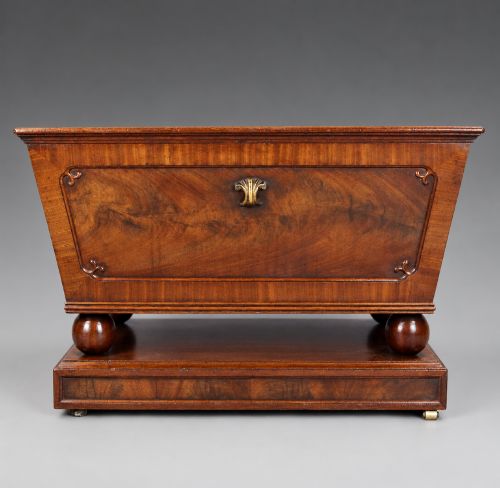
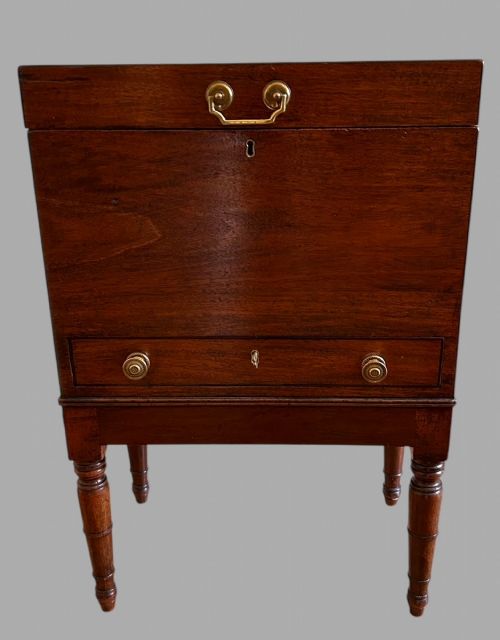
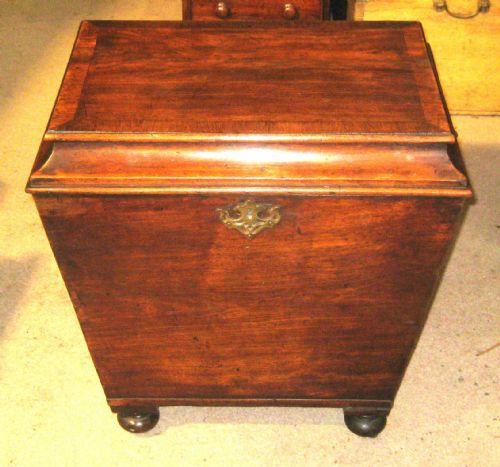
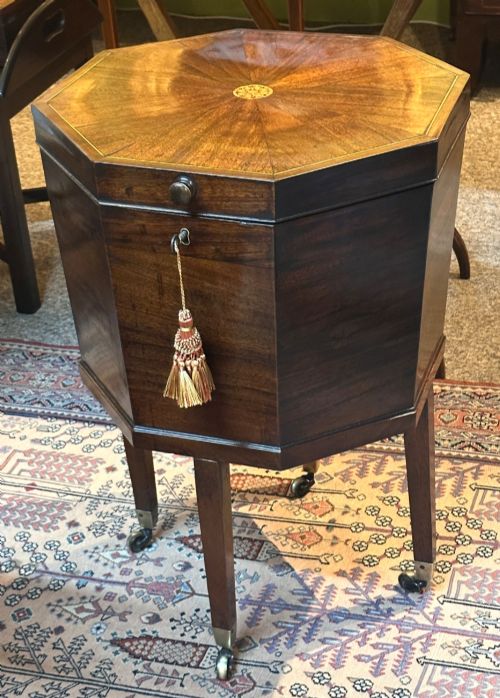
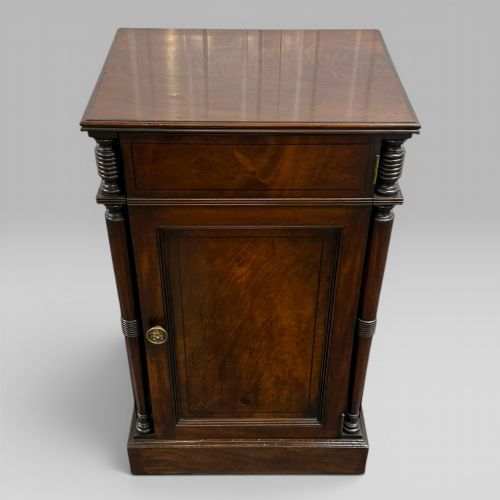
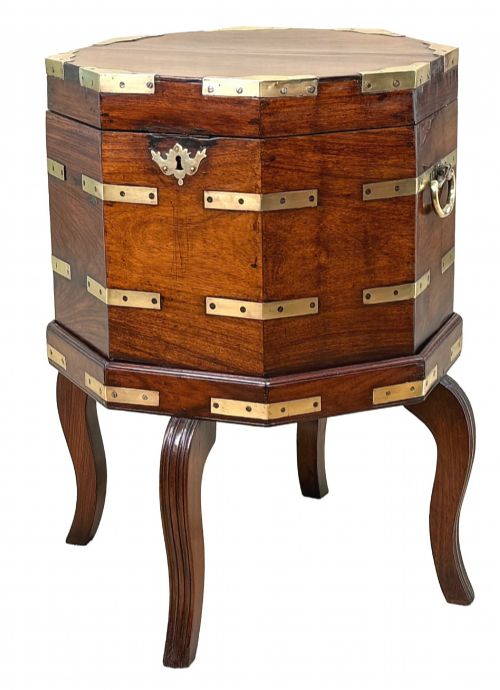
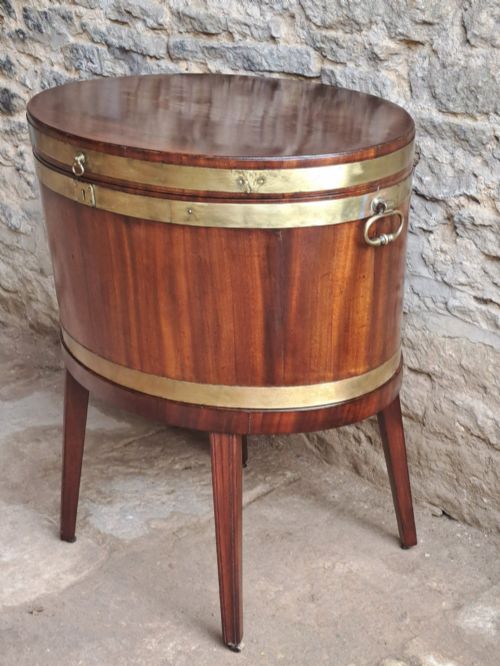
These pieces are designated variously as cellarettes, wine coolers, or wine box chests, built to store and chill bottles before refrigeration existed. You are looking at solid timber containers designed for dining rooms of the eighteenth and nineteenth centuries.
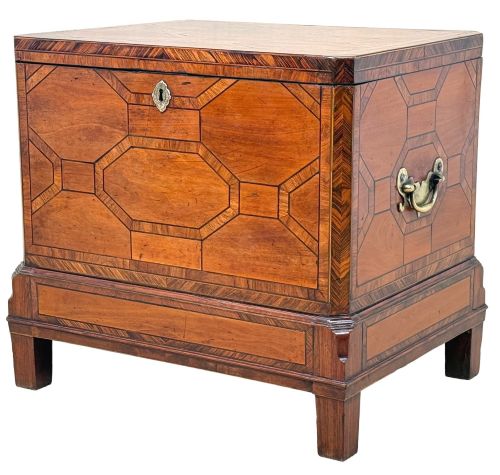
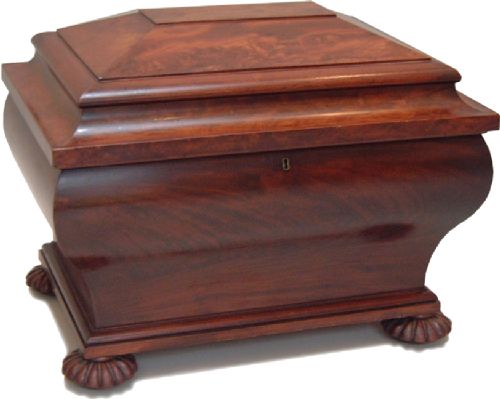
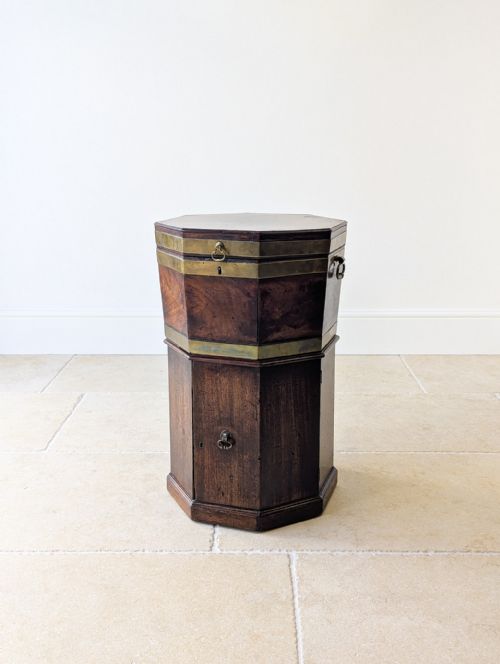
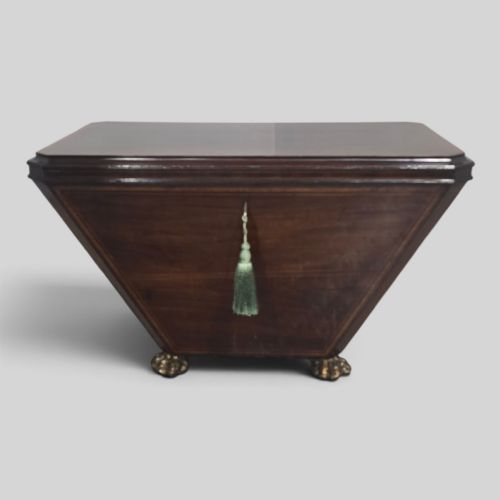
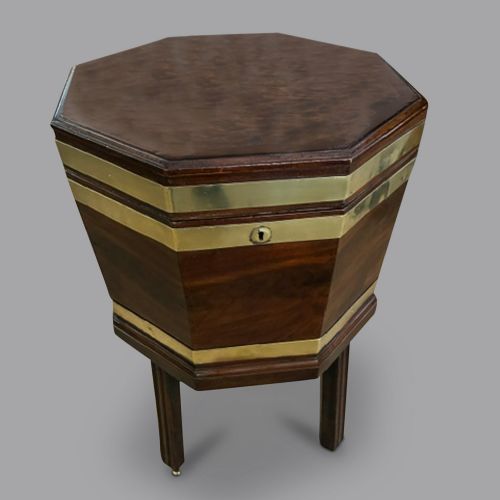
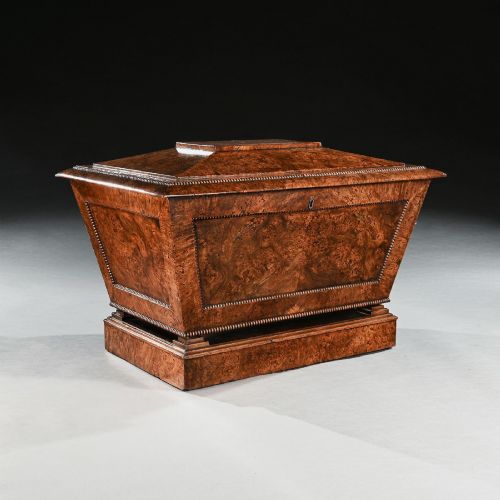
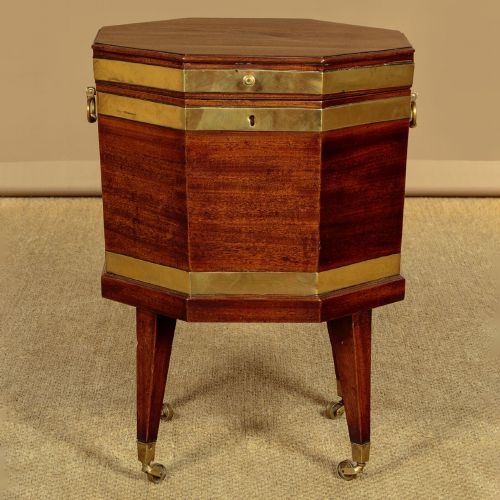
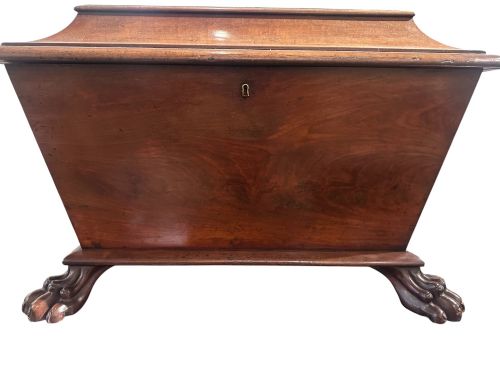
The version you are most likely to meet on this page is the mahogany chest, often formed in an octagonal or sarcophagus shape and resting either on its own bracket feet or a dedicated stand.
Originating predominantly from English workshops of the Georgian and Regency periods, these chests combine heavy joinery with internal lead linings designed to hold melting ice alongside wine bottles.
How they were made
Cabinetmakers constructed these chests primarily from solid and veneered mahogany, frequently selecting flame mahogany or pollard oak to present striking grain patterns across the exterior panels.
Metal components played a structural and decorative role, with heavy brass bands securing octagonal staves, and internal lead linings soldered together to retain water without rotting the surrounding wood.
Inlaid details involving boxwood, satinwood, and kingwood added geometric contrast, while structural brass carrying handles allowed servants to manoeuvre the heavy chests when fully loaded.
Many chests still smell faintly of old wine and damp cellar ice after two centuries.
What varies in quality
The standard of a georgian wine cooler chest depends heavily on the integrity of its timber selection and the crispness of its brass mounts, where figured veneers and heavy cast fittings indicate higher workshop output.
Survival of internal elements also governs desirability, distinguishing pieces that retain their original lead-lined compartments and fitted bottle dividers from those stripped or altered for modern domestic use.
Proportion and form dictate the visual balance, separating elegantly tapered octagonal or sarcophagus shapes from heavier, less harmonious designs produced later in the nineteenth century.
Edwards and Roberts·Gillows
The Georgian Wine Cooler Chest Glossary
- Cellarette
- A lockable container used for storing wine bottles near the dining table. They frequently feature internal divisions and lead linings.
- Sarcophagus form
- A monumental chest shape tapering towards the base with a domed lid, popular during the Regency period. This profile emulates classical stone tombs.
- Flame mahogany
- Timber cut across the fork of a mahogany branch to produce a flickering, three-dimensional grain pattern. Cabinetmakers reserved this veneer for principal exterior surfaces.
- Lead liner
- The protective internal trough soldered from sheet lead to hold ice and water safely. Original linings are a key indicator of uncompromised utility.
Georgian Wine Cooler Chest: Frequently Asked Questions
What is a georgian wine cooler chest?
A georgian wine cooler chest is a lidded timber box designed to hold wine bottles and ice in the dining room during the eighteenth and nineteenth centuries.
These pieces were kept beneath sideboards or beside dining tables, allowing hosts to serve chilled wine without repeatedly journeying to the cellars.
How were these wine chests used?
Servants filled the internal lead-lined compartments with ice and water to cool bottles before and during formal meals.
The robust timber walls and fitted lids helped maintain low internal temperatures while containing any condensation from the melting ice.
How do I style a wine chest today?
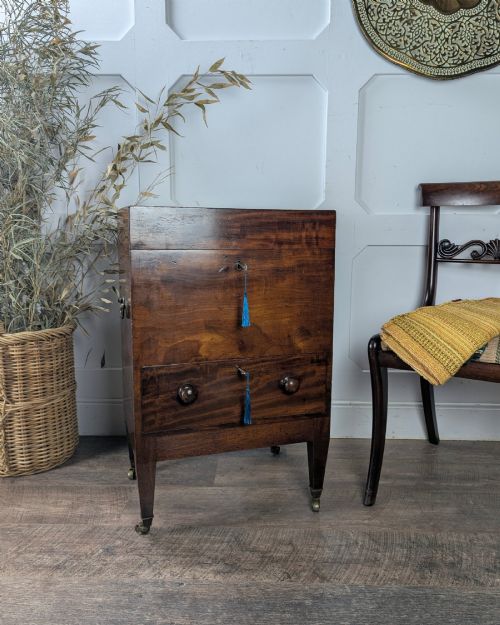
These chests function effectively as lamp tables, occasional storage units, or sculptural focal points in a sitting room or hallway.
Their rich timber surfaces pair naturally with other period furniture, while the deep lids provide concealed storage for household items.
How do I tell Regency from Georgian chests?
Georgian examples often favour restrained octagonal forms with bracket feet and brass strapping, reflecting classical proportions.
Regency pieces frequently adopt bolder sarcophagus shapes with carved paw feet, heavy ring handles, and prominent flame mahogany veneers.