

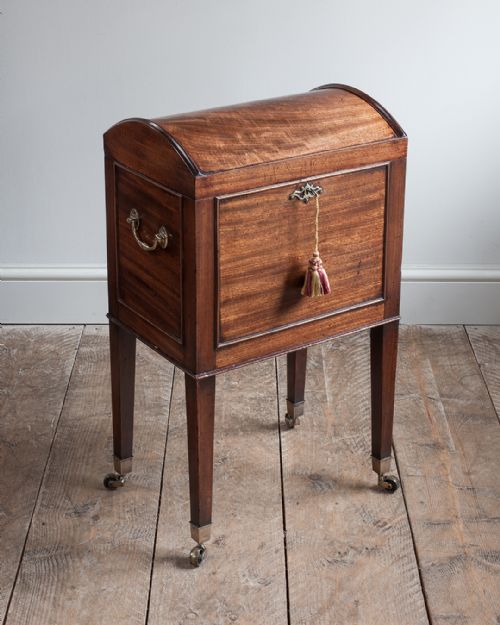


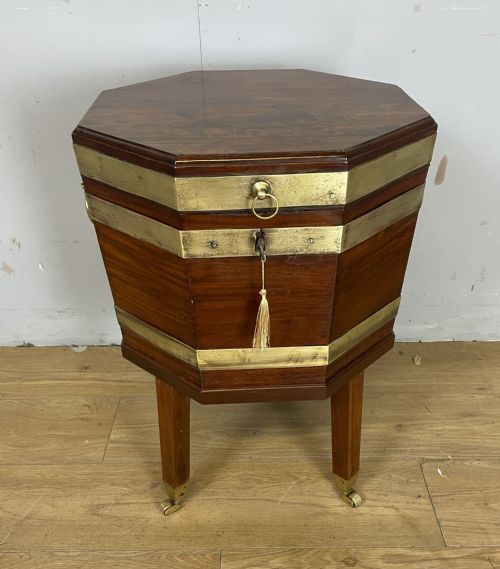


Georgian Spirit Chest
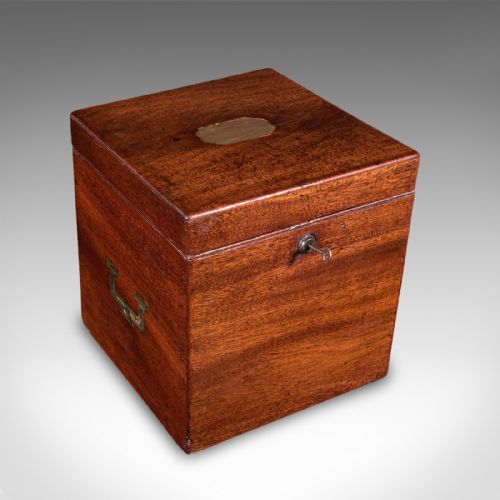
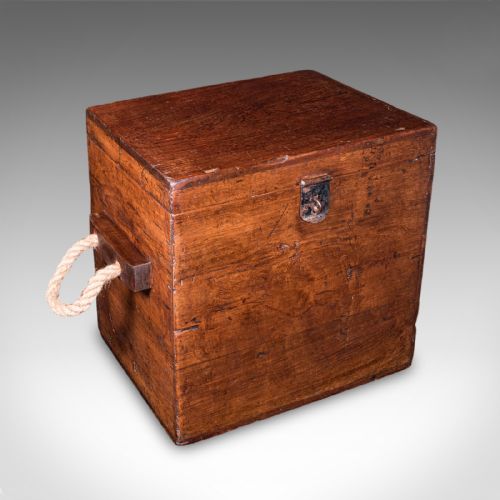
A Georgian spirit chest is a timber cellarette or decanter box designed to hold bottles securely for dining, combining polished mahogany with brass fittings.
Georgian Spirit Chest
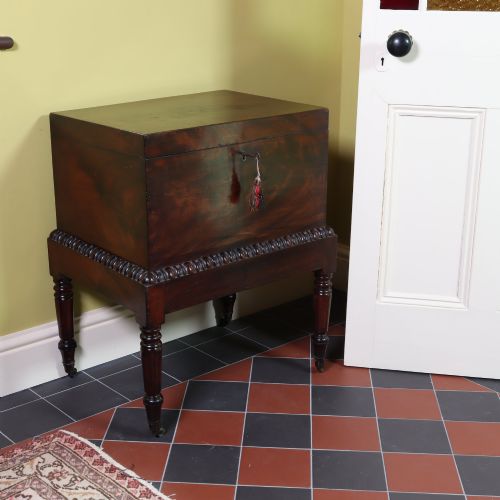
When you search for a Georgian spirit chest, you encounter cellarettes, wine coolers, and decanter boxes from the Georgian, George III, and Regency periods. These pieces functioned as portable or stationary storage for wine and spirits in the dining room.
Makers such as Gillingtons appear in the evidence alongside campaign decanter sets featuring glass and gold decoration. The forms span simple wine boxes to large brass-bound vessels designed to keep bottles cool or secure.
Construction and materials
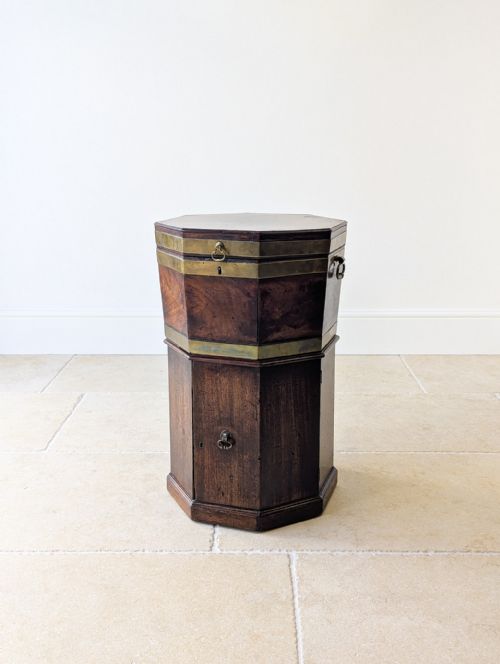
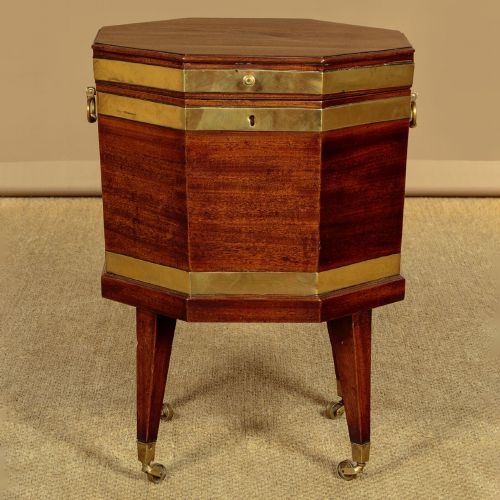
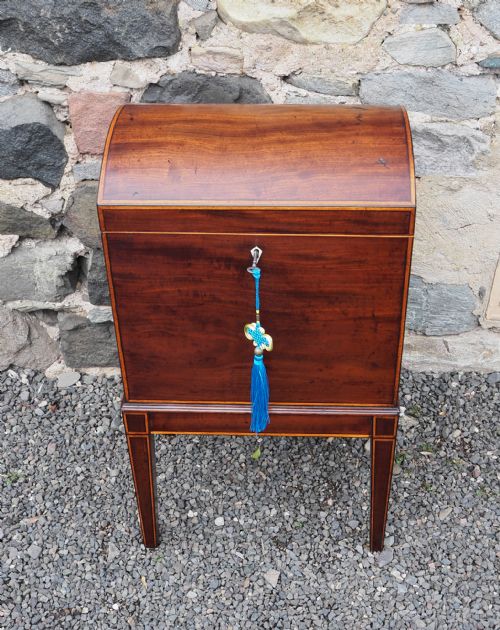
Metalwork played a structural and decorative role, with heavy brass bands securing the staves and brass handles fitted to the sides for lifting. Boxwood inlay adds linear contrast to select Sheraton-style surfaces, while internal baize or fabric lining protected the bottles.
Assessing quality and character
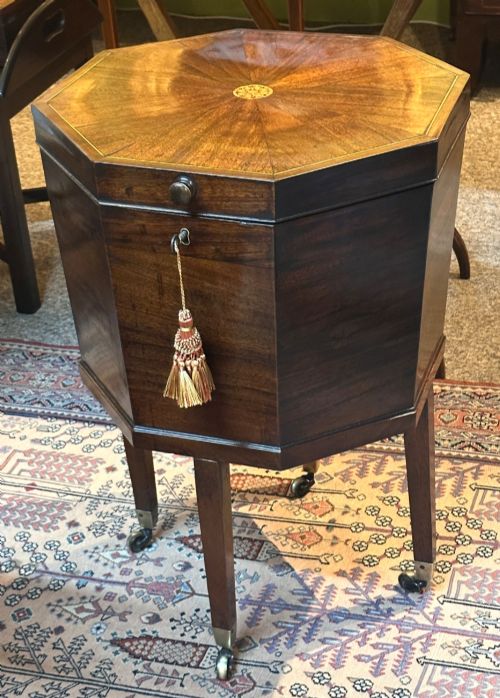
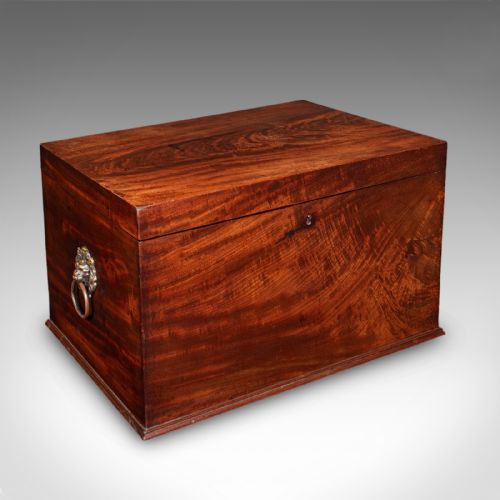
Quality rests in the selection of the timber grain, such as figured flame mahogany, and the precision of the boxwood inlay. Finer examples display heavier, well-cast brass mounts and tightly joined staves rather than plain secondary woods.
The interior arrangement separates standard wine boxes from elaborate spirit chests fitted for specific decanters and glassware. Original brass hardware, working locks, and intact internal dividers elevate a piece above altered or heavily restored equivalents.
Gillingtons
The Georgian Spirit Chest Glossary
- Cellarette
- A lockable container used for holding bottles of wine or spirits beneath the dining table or sideboard. They appear in octagonal and rectangular forms.
- Flame mahogany
- A figured wood veneer showing a distinct flame-like grain pattern prized by cabinetmakers. It gives the surface optical depth.
- Brass banding
- Metal strips fitted around the exterior of timber chests to provide structural reinforcement and visual contrast. These bands are secured with numerous small brass pins.
- Boxwood inlay
- Contrasting pale wood inserted into recesses cut into the darker mahogany surface. It creates geometric or linear decorative borders.
- Baize
- A coarse woollen material used to line the interior compartments of wine boxes and decanter sets. It cushions glass bottles during transport.
Georgian Spirit Chest: Frequently Asked Questions
What is a Georgian spirit chest?
A Georgian spirit chest is a timber box or cellarette designed to hold wine bottles and decanters in the dining room. These pieces protected valuable spirits and kept them close at hand during meals.
They appear in various forms, including octagonal brass-bound boxes, campaign decanter sets, and inlaid wine coolers. Most examples utilise mahogany as their primary wood.
How were cellarettes used?
Cellarettes sat beneath sideboards or beside the dining table to store bottles before they were served. Servants retrieved wine from them as needed throughout the meal.
Some pieces served as portable wine storage for travel, such as Irish hunting day cellarettes or officer campaign sets. Their secure locks kept expensive spirits under the control of the host.
How do I date a wine box?
Dating relies on stylistic markers, timber types, and construction methods associated with periods like George III, Regency, or Edwardian revivals. Details like flame mahogany veneer and boxwood inlay point to specific decades.
Brass banding and octagonal shapes are particularly common in late eighteenth and early nineteenth-century examples. Later pieces from the twentieth century often adopt earlier Sheraton design motifs.
How do I care for mahogany?
Keep mahogany furniture away from direct sunlight and sudden temperature shifts to prevent the wood veneer from drying out. Maintain a stable indoor climate to protect the polish and structural joints.
Apply a microcrystalline wax periodically to clean and feed the surface. Avoid using harsh chemical sprays that can strip the historic finish.