
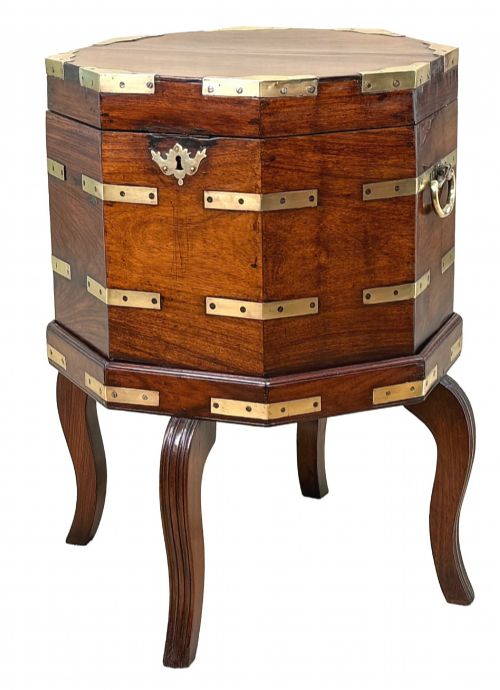
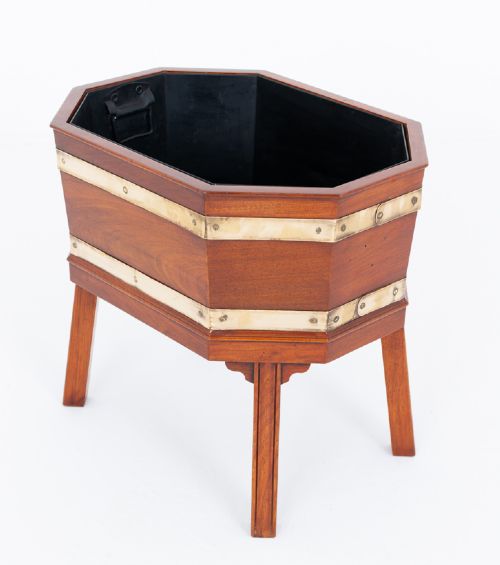
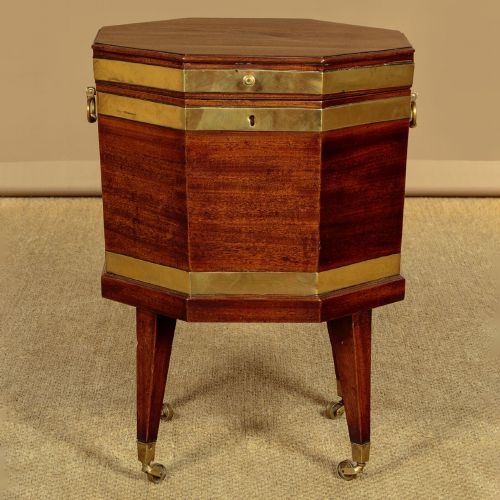
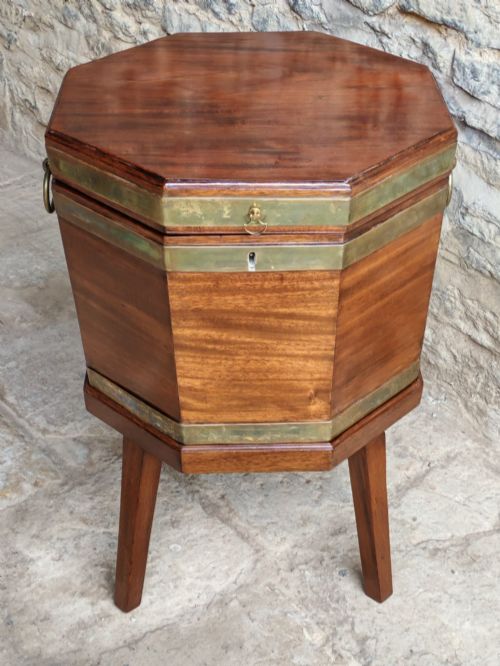


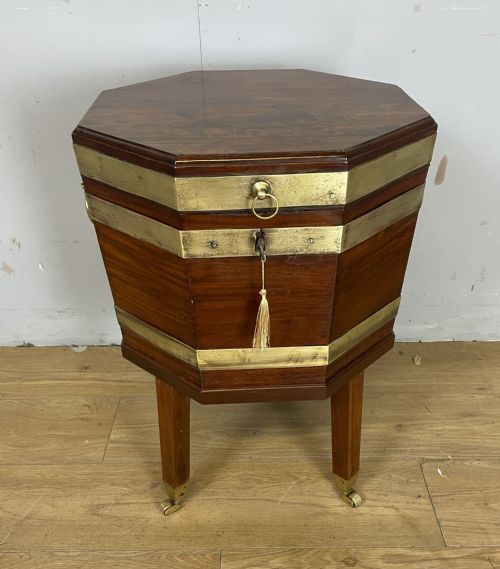


Octagonal Mahogany Cooler
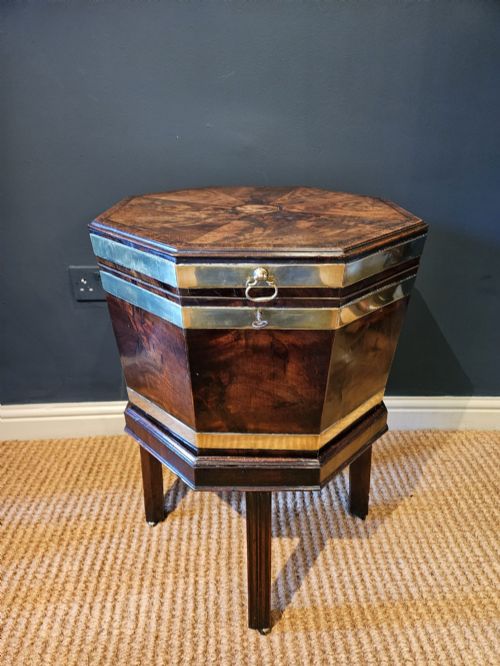
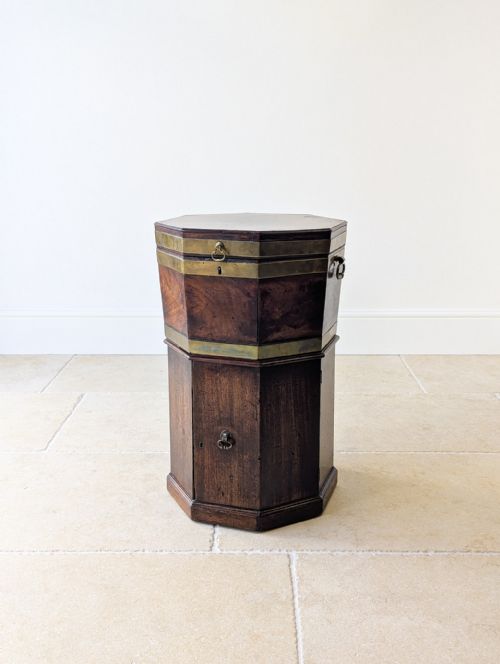
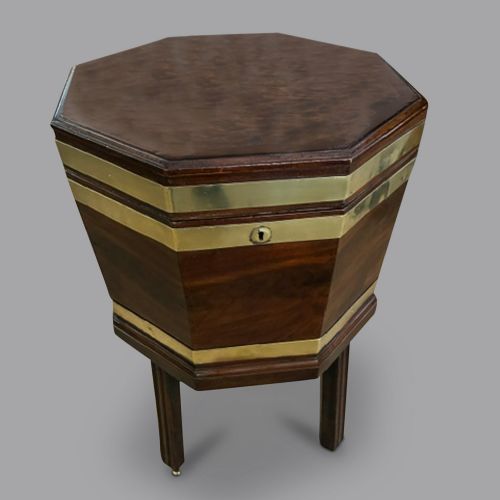
An octagonal mahogany cooler is a sturdy period drinking vessel container designed to hold wine bottles and ice in style.
Octagonal Mahogany Cooler
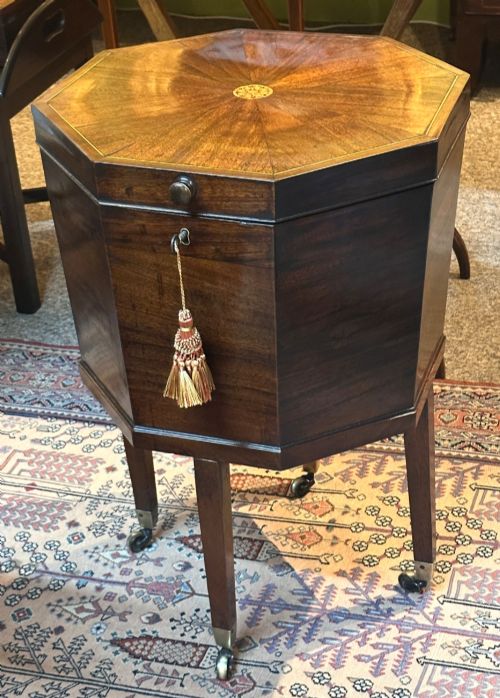
Forms span from freestanding vessels resting directly on the floor to examples mounted upon dedicated stands, sometimes featuring fitted interiors designed to cradle bottles securely. The prevailing aesthetic across the selection draws heavily from the George III period, favouring symmetry and practical utility in the dining room.
Origin variations include standard British cabinet-making traditions as well as Anglo-Indian colonial productions utilising padouk alongside traditional timbers. Whether dating from seventeen-fifty or nineteen-twenty, each specimen maintains the characteristic geometric eight-sided plan that defines the group.
Materials and construction methods
Makers constructed these vessels primarily using solid mahogany and wood veneer, frequently enhancing the exterior surfaces with contrasting satinwood inlay or decorative wood inlay. Carpenters shaped the distinctive eight-sided bodies through careful stave construction or panel joining to ensure stability under heavy loads of ice and liquid.
Metal components play a crucial structural and decorative role, featuring prominently in the form of heavy brass banding that encircles the wooden bodies. This metalwork often includes carrying handles and occasionally fitted interior liners designed to contain melting ice.
The listings show materials spanning brass, mahogany, wood veneer, padouk, metal, satinwood, and wood inlay across multiple periods.
Distinctions in craftsmanship
The standard of timber selection largely dictates the visual merit of each piece, distinguishing richly figured mahogany and delicate satinwood stringing from plain utility surfaces. Superior examples display precise joinery and well-integrated brass work that follows the eight-sided contours without awkward gaps.
Age and provenance further separate standard production items from masterworks, with authentic eighteenth-century Georgian specimens commanding greater appreciation than later nineteen-twenty revival interpretations. The presence of original stands, intact metal bands, and sophisticated interior fittings elevates the stature of any individual cooler.
The Octagonal Mahogany Cooler Glossary
- Cellarette
- A lockable container used for storing wine and spirits within the dining room. These vessels typically sat beneath the sideboard until needed for service.
- Brass Bound
- A method of reinforcing wooden tubs using metal strips secured around the circumference. This technique prevents the wood from splitting under the pressure of ice and wet contents.
- Padouk
- A dense tropical hardwood displaying reddish hues, utilised in colonial cabinet-making. It offers high durability and a distinctive deep colouration.
- Satinwood Inlay
- Decorative contrasting wood veneer inserted into the primary mahogany surface to create geometric borders or patterns. This ornamental detail appears frequently on finer eighteenth-century pieces.
- Regency Style
- A design aesthetic reflecting the early nineteenth-century British taste for classical motifs and clean architectural lines. Pieces in this manner were also reproduced during the twentieth century.
Octagonal Mahogany Cooler: Frequently Asked Questions
What is a cellarette used for?
A cellarette served as a secure mobile cellar container placed near the dining table to keep wine bottles chilled and accessible during meals.
Servants filled the interior with ice and water, allowing diners to enjoy properly temperature-controlled beverages without leaving the room.
How do I date an octagonal mahogany cooler?
Dating relies upon examining the timber grain, the style of the brass bindings, and the overall construction methods employed by the maker. Eighteenth-century pieces generally show hand-cut joinery and aged patination, whereas twentieth-century revivals display different interior fittings and machine-tooled elements.
Comparing the specific wood types, such as padouk or satinwood inlay, helps narrow down the period of origin.
Did these coolers come with stands?
Certain examples were manufactured with integrated or matching stands that elevated the container off the floor for easier access.
Other versions sat directly on the ground or rested on short bracket feet depending on the specific Georgian or Regency design.
How do I care for mahogany and brass?
Maintain the timber by applying appropriate furniture wax sparingly to preserve the natural moisture and rich grain of the wood. Avoid placing the vessel in direct sunlight or near heat sources to prevent the mahogany from splitting.
Polish the brass bindings gently with a suitable cloth to prevent tarnish without damaging the surrounding wooden surface.