




Octagonal Wine Chest
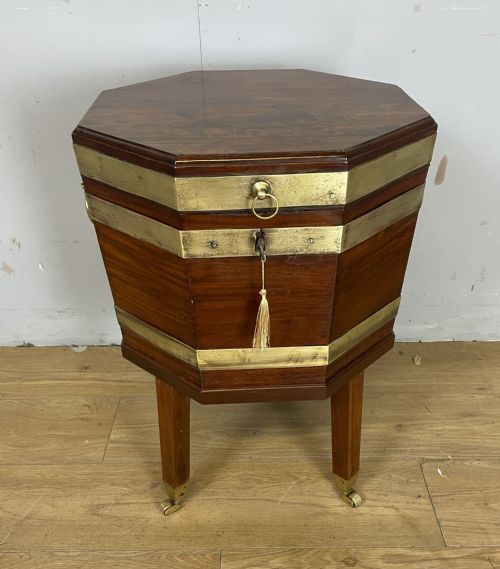
An octagonal wine chest is a substantial, multi-sided timber vessel designed to store and cool bottles, bringing classical proportion and rich dark grain to a dining room.
Octagonal Wine Chest
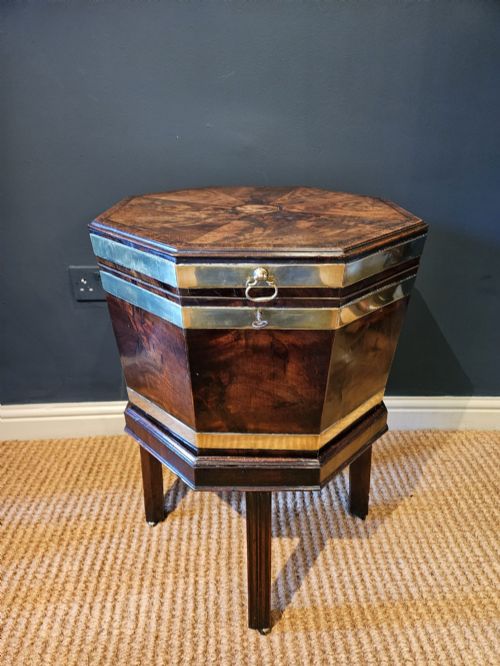
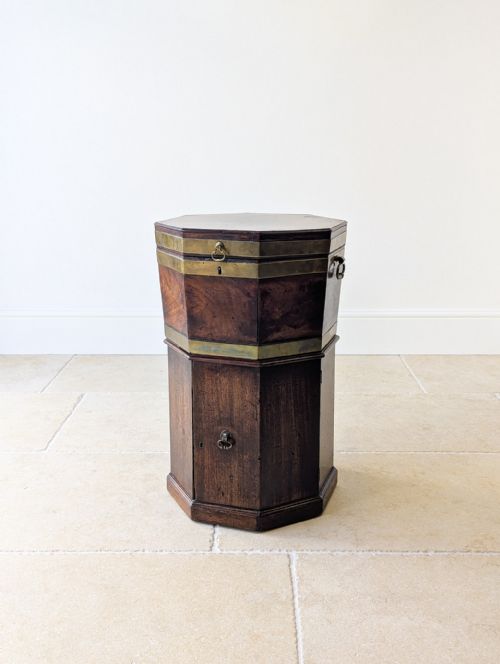
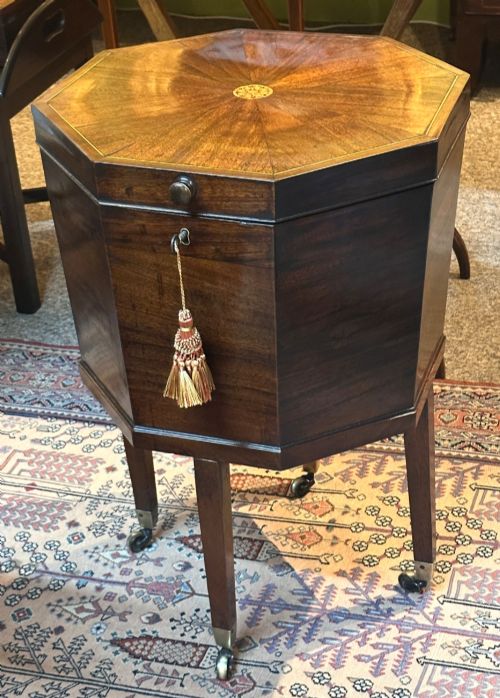
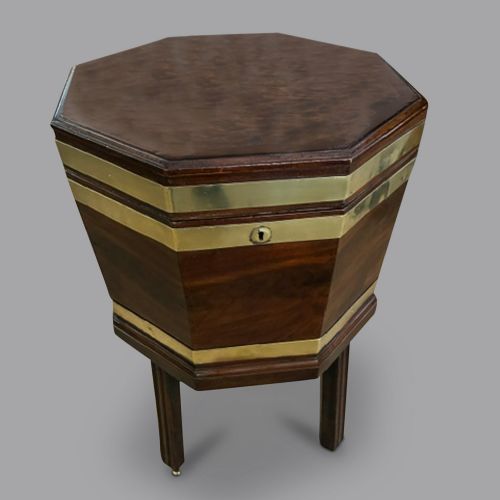
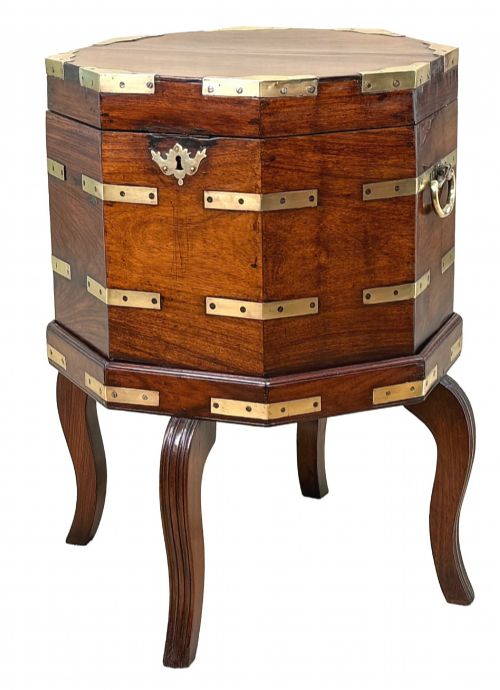
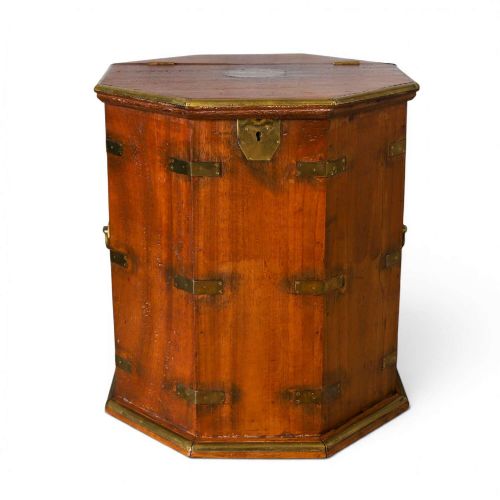
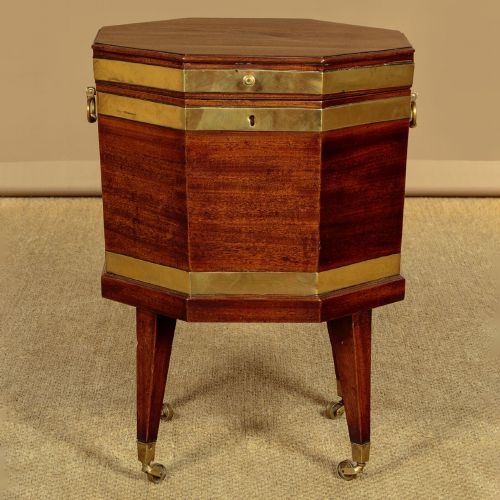
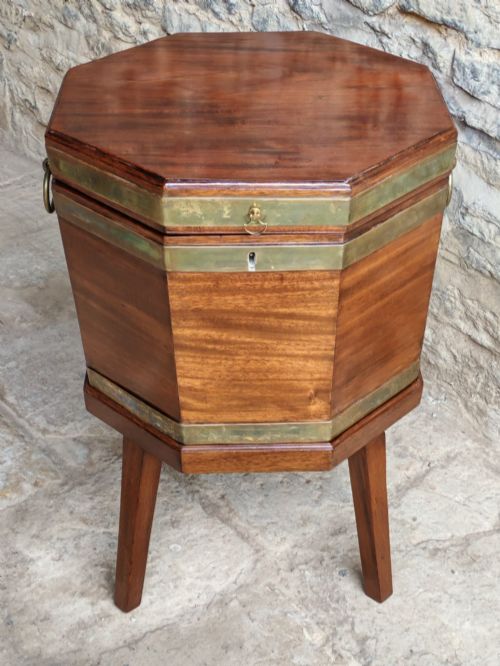
An octagonal wine chest, often catalogued as a cellaret or wine cooler, is a period storage piece shaped with eight distinct sides to hold wine bottles securely. These vessels emerge predominantly across the Georgian and Regency eras, spanning the eighteenth and early nineteenth centuries.
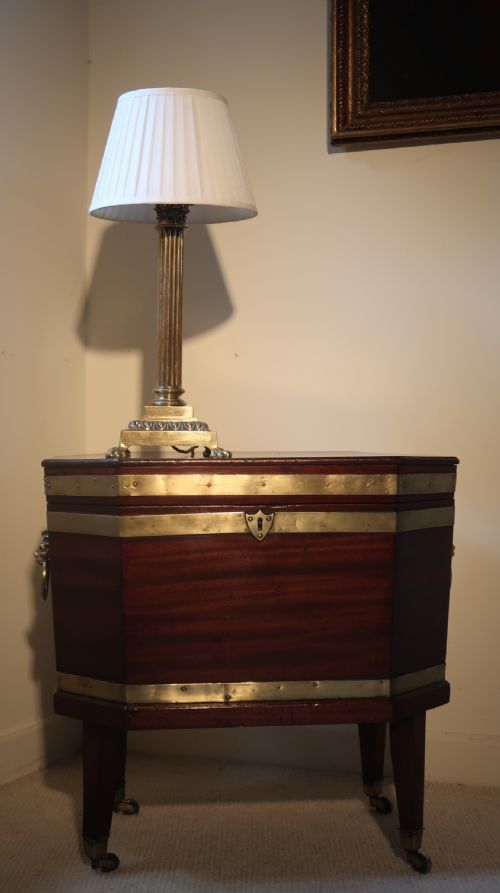
The versions met most frequently on this page are constructed from mahogany and formed with eight symmetrical panels. They reflect styles ranging from classical George III designs to Anglo-Indian colonial interpretations and later Regency revivals.
Makers designed these pieces to sit quietly beneath a sideboard or beside a dining table during formal meals. Their faceted bodies combine architectural presence with practical utility for holding multiple glass bottles.
How they were made
Cabinetmakers built these vessels using dense hardwoods like mahogany and padouk, often selecting stock for rich grain movement and deep natural colour. They shaped the eight distinct sides to meet tightly at precise angles, creating a rigid multi-panel body.
Metalwork played a structural and decorative role, with heavy brass bands securing the staves and brass handles mounted to the sides for lifting. Wood veneer and fine inlay were also applied to add linear detail and surface contrast.
These sturdy eight-sided chests were built to hold heavy bottles safely, yet many spent their retirement quietly storing household clutter.
What varies in quality
Quality rests in the selection of the timber and the precision of the eight-sided joinery, where finer pieces display continuous grain alignment and tight corner fits. The weight and finish of the brass mounts also separate standard examples from superior ones.
Proportion and decorative restraint dictate the visual success of the piece, with better examples maintaining clean lines and balanced proportions without heavy-handed restoration. The integrity of the internal fittings and the original timber patination further distinguish higher tiers.
The Octagonal Wine Chest Glossary
- Cellaret
- A lockable container used for storing wine bottles in the dining room before serving. It typically sits on the floor or on its own stand.
- Brass-Bound
- Having structural or decorative bands of brass fitted around the body of a wooden chest. This technique reinforces the multi-sided construction.
- Padouk
- A heavy, durable tropical hardwood with a reddish hue used in cabinetmaking. It is frequently seen in Anglo-Indian colonial pieces.
- George III
- The period spanning the reign of George the Third from seventeen sixty to eighteen twenty. Furniture from this era is noted for classical restraint and fine mahogany work.
- Regency
- The stylistic period covering the early nineteenth century and the preceding regency years. Pieces from this era draw inspiration from classical antiquity.
Octagonal Wine Chest: Frequently Asked Questions
Where were octagonal wine chests placed?
These chests stood on the floor in the dining room, usually tucked beneath a sideboard or placed near the dining table. Servants accessed them during meals to retrieve bottles for the guests.
Their compact, multi-sided shape allowed them to occupy corners or wall spaces without obstructing movement in busy rooms.
How do I care for mahogany timber?
Mahogany benefits from occasional application of traditional beeswax to nourish the wood and maintain its deep lustre. Keep the chest away from direct heat sources and strong sunlight to prevent the timber from drying out.
Dust the faceted surfaces regularly with a soft, dry cloth to protect the antique polish.
What is the difference between a cellaret and a wine cooler?
The terms are often used interchangeably in antique descriptions to denote vessels that held wine bottles near the dining table. Historically, some cellarets included fitted metal linings designed to hold melting ice.
Both forms share the characteristic eight-sided shape and robust timber construction seen across the Georgian period.
How do I identify a George III piece?
George III furniture is identified by classical proportions, high-quality mahogany timbers, and restrained decorative details like brass banding. Cabinetmakers in this era focused on architectural symmetry and honest structural joinery.
Pieces from this time often exhibit a deep, warm patination developed over centuries of handling.