
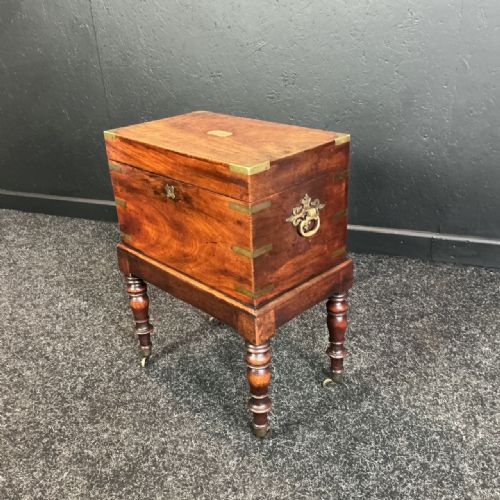


Brass Bound Wine Chest
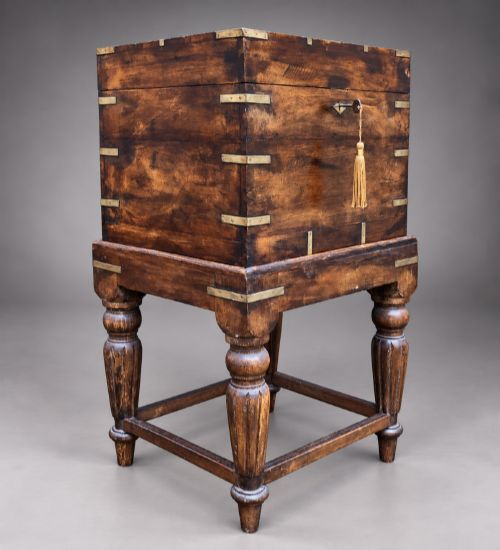
A brass bound wine chest sits ready to anchor a room, offering robust timber and gleaming metal built to hold bottles securely.
Brass Bound Wine Chest
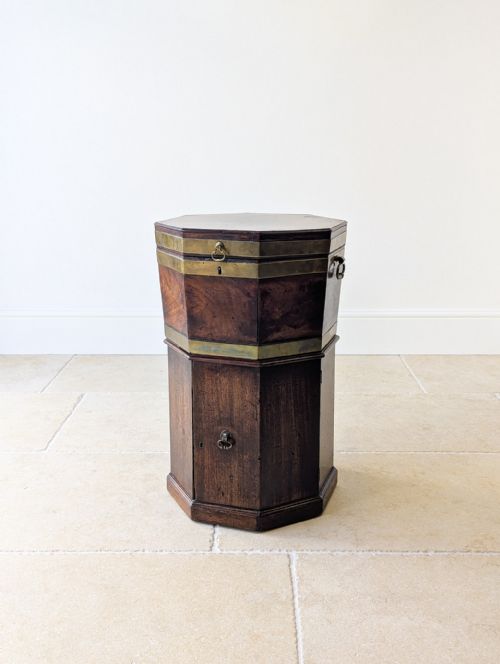
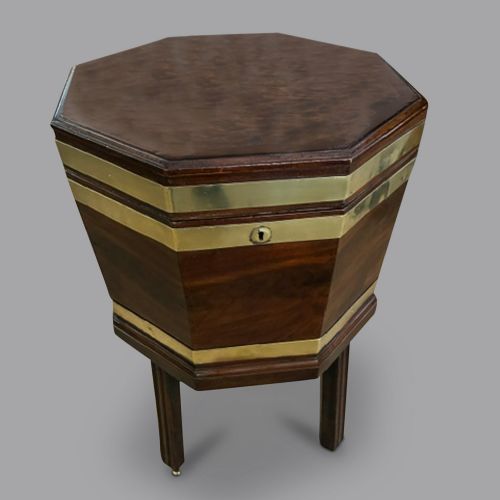
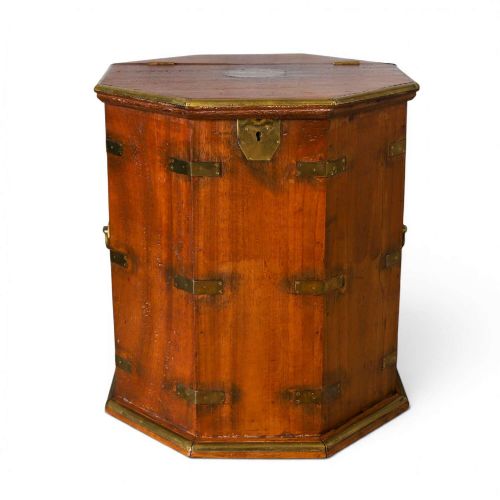
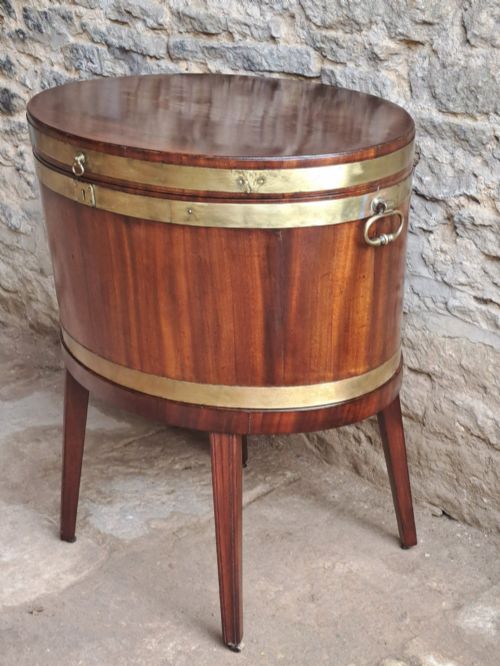
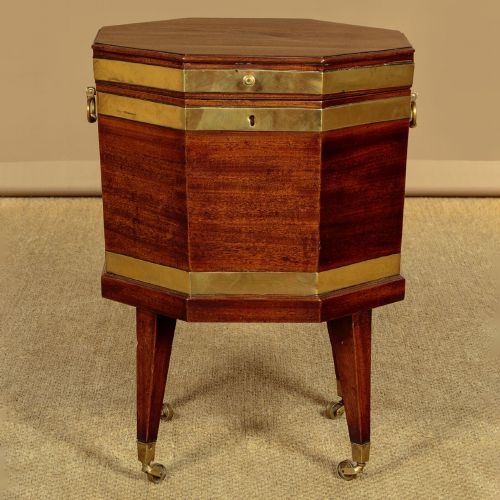
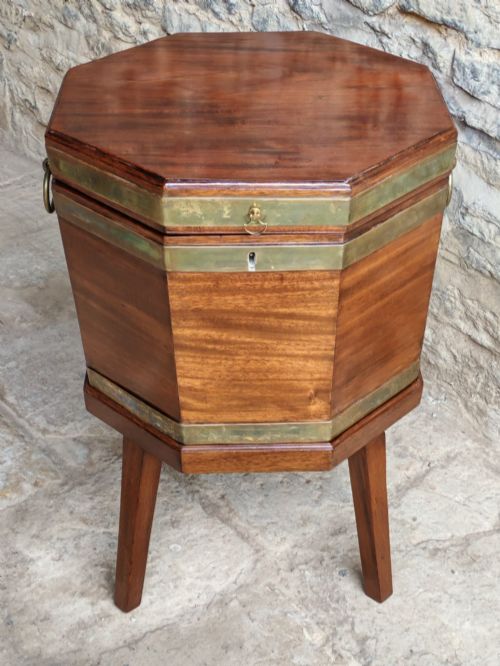
When you search for a brass bound wine chest, you are looking at substantial storage built to keep wine and spirits at hand during the Georgian, Regency, and Victorian eras. These pieces take forms such as octagonal and oval cellarettes, sarcophagus wine coolers, and campaign chests.
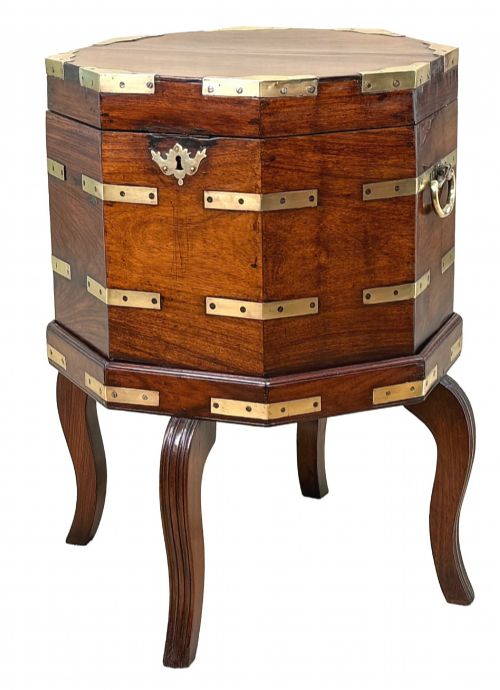
The version you are most likely to meet on this page is a mahogany vessel from the eighteenth or nineteenth century, reinforced with heavy brass straps and corner brackets to endure travel and heavy use. Many sit upon dedicated stands or feet, designed to hold ice and bottles within lined interiors.
How they were made
Cabinetmakers constructed these chests predominantly using dense timbers like mahogany, padouk, and teak, which offered stability and rich grain. Selected woods were shaped into octagonal, oval, or rectangular bodies with tight joints suited to holding liquids and ice.
Heavy brass bands, corner plates, and carrying handles were hand-fitted and secured with screws to reinforce the carcass. Linings of zinc or lead were often added internally to contain moisture, while hinged lift-up tops provided access to the bottles within.
Brass Bound Wine Chest Retail Price Guide 2026
Typical asking prices for brass bound wine chest among the pieces listed under this phrase on Sellingantiques today, from the lower quarter to the upper quarter. They describe what is for sale here now, not the wider market.
Several chests double as storage for bottled Guinness rather than traditional claret or port.
What varies in quality
Quality rests in the choice of timber and the precision of the brass work, where thick, well-figured mahogany and heavy, hand-cast brass mounts elevate a piece above simpler utility items. The integration of original stands and internal lead or zinc linings also distinguishes finer examples.
Proportion and form dictate the visual weight of the chest, with crisp octagonal or oval geometries showing superior craftsmanship compared to plain or heavy-handed shapes. The depth of the timber's patina and the integrity of the original hinges and handles reflect the standard of the workshop.
Gillows of Lancaster and London
The Brass Bound Wine Chest Glossary
- Cellarette
- A lockable container used for storing wine and spirits near the dining table. They frequently feature internal divisions and metal linings.
- Sarcophagus
- A monumental cabinet form with a domed or peaked lid popular during the Regency period. These pieces often rest on paw feet or platform bases.
- Padouk
- A heavy tropical hardwood with a reddish hue used in Anglo-Indian furniture production. It provides exceptional durability for transport.
- Campaign chest
- Portable furniture made in sections with recessed brass hardware for military officers on the move. They are built for strength and disassembly.
- Zinc lining
- A protective metal sheet fitted inside the chest to hold ice and water without damaging the surrounding timber. It preserves the structural integrity of the base.
Brass Bound Wine Chest: Frequently Asked Questions
What is a brass bound wine chest?
A brass bound wine chest is a heavy wooden container reinforced with metal bands, designed in the eighteenth and nineteenth centuries to store bottles and ice near the dining table.
These pieces combine functional timber construction with decorative brass straps, mounts, and handles that protected the corners during travel and domestic use.
How were these wine chests used?
They were kept in dining rooms to chill and dispense wine during long meals, often lined with zinc or lead to hold melting ice.
Servants would draw bottles from the interior compartments as needed, keeping the dining space orderly and the beverages at the correct temperature.
How do I tell a Georgian chest from a Regency one?
Georgian examples often favour clean octagonal or oval shapes in solid mahogany with delicate bracket feet or independent stands.
Regency pieces tend toward bolder sarcophagus forms with classical motifs, lion paw feet, and heavier architectural presence.
Where should I place a wine chest today?
A wine chest works well as a standalone focal point in a dining room, hallway, or living space, providing generous surface area and internal storage.
Keep them away from direct heat sources and strong sunlight to protect the aged timber and rich grain of the mahogany or teak.