


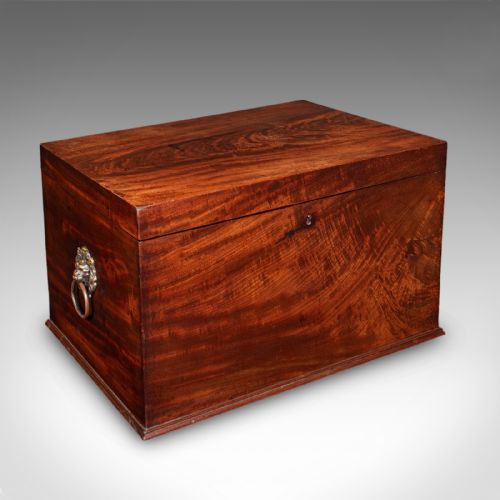
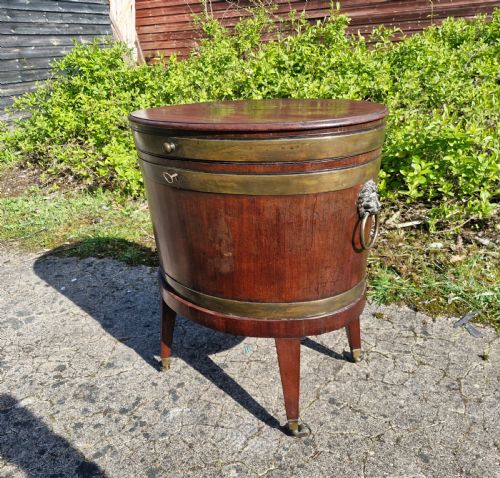
Regency Mahogany Wine Cooler
When you select a regency mahogany wine cooler, you are choosing a substantial piece of dining room history designed to hold bottles at the table.
Regency Mahogany Wine Cooler
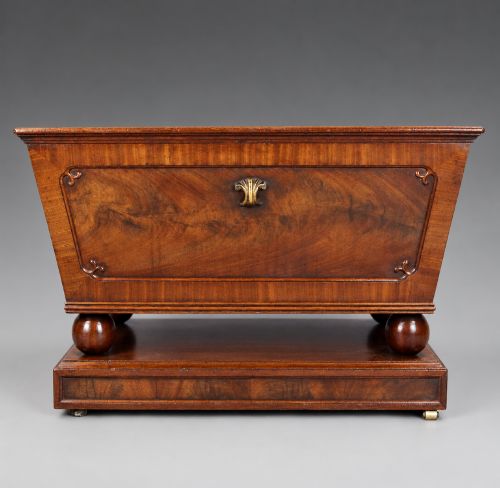
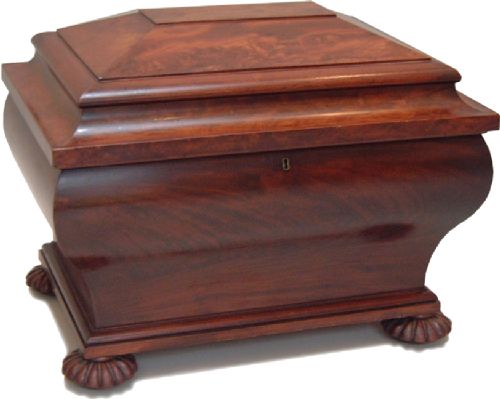
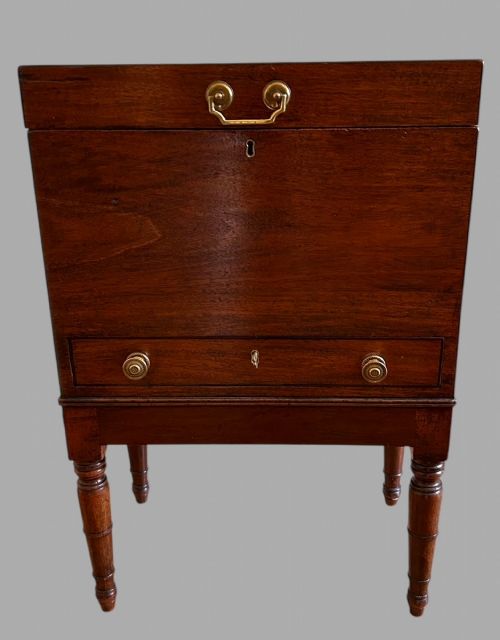
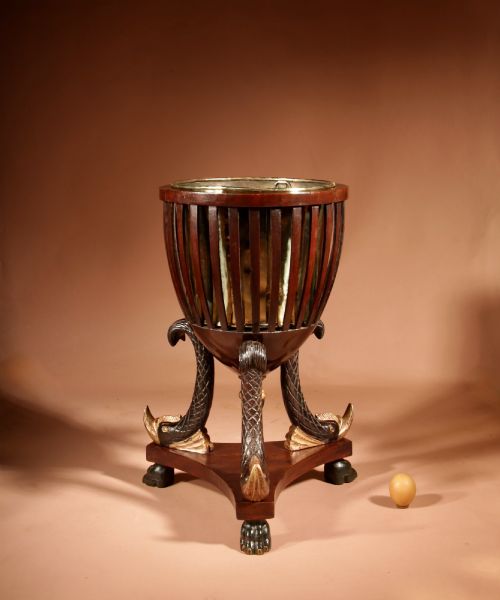
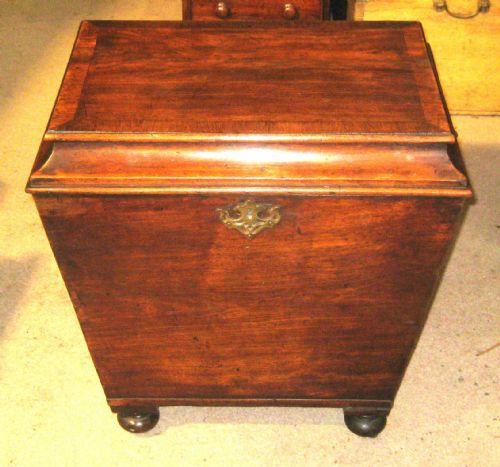
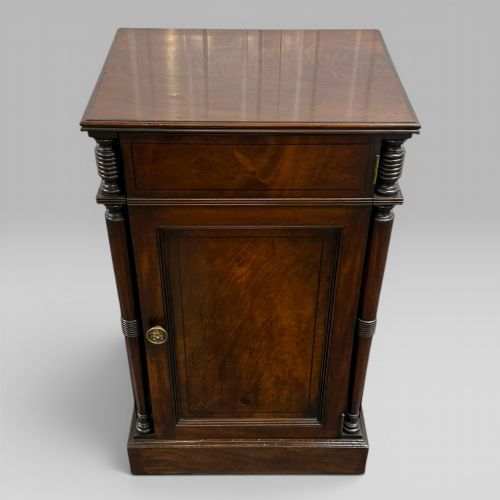
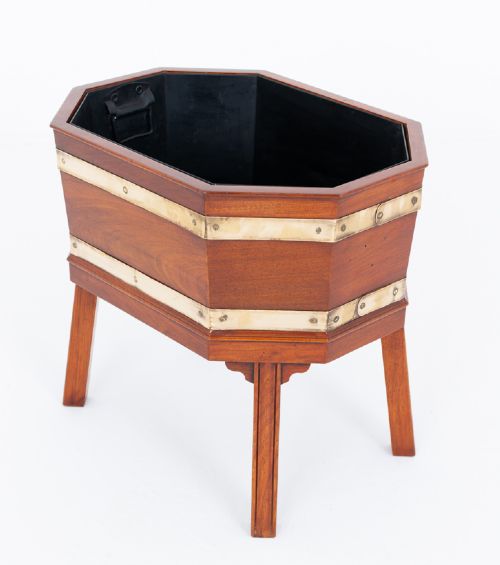
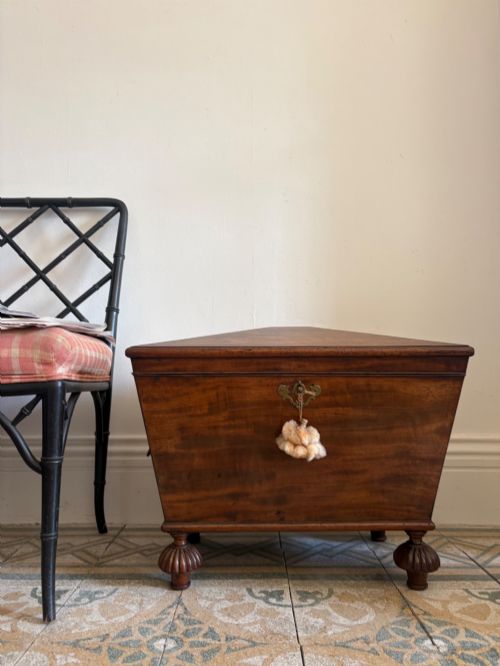
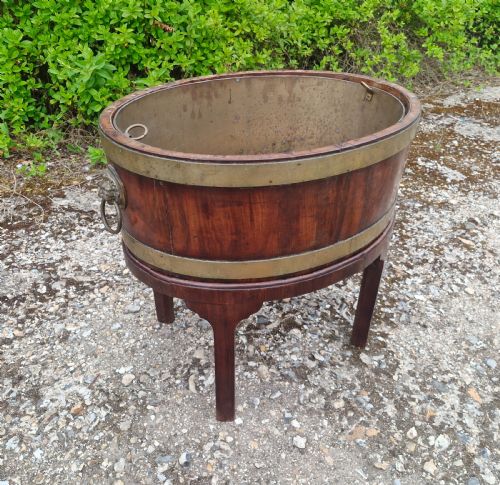
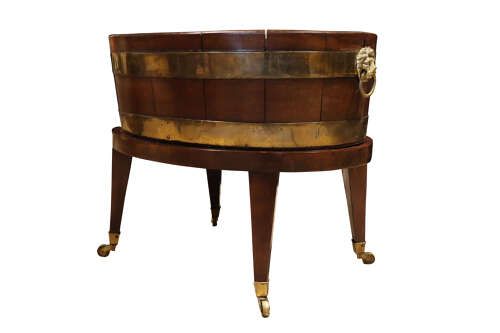
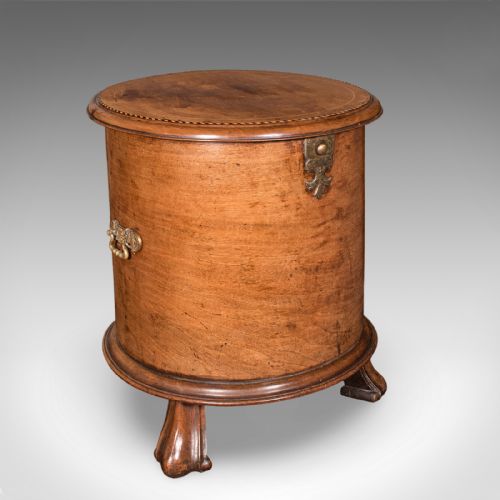
A regency mahogany wine cooler typically takes the form of a classical sarcophagus, a pedestal, or a coopered bucket designed for chilling and storing wine bottles in the dining room. These pieces originate primarily from the Georgian, Regency, and William IV periods, spanning the late eighteenth through the early nineteenth century, with occasional later revivals.
The most common form encountered on this page is the sarcophagus shaped cooler, often featuring carved paw feet, bold mouldings, and recessed carrying handles. Examples frequently incorporate internal compartments or metal linings designed to hold ice and bottles safely during grand dinners.
How they were made
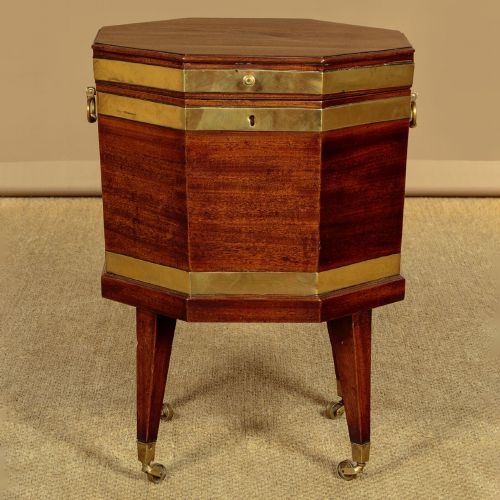
Cabinet makers built these vessels using dense timber, frequently selecting figured flame mahogany for its striking grain patterns, which was sometimes accented with brass bands or ormolu mounts. The internal construction often relied on coopered staves similar to barrel making, secured with lead or zinc linings to contain water and ice without damaging the outer wood.
Joinery techniques combined robust structural framing with decorative veneers, allowing makers to shape elaborate curves and serpentine outlines. Details such as carved paw feet, brass lion mask ring handles, and intricate mouldings required skilled hand carving and meticulous metal fitting.
Regency Mahogany Wine Cooler Retail Price Guide 2026
Typical asking prices for regency mahogany wine cooler among the pieces listed under this phrase on Sellingantiques today, from the lower quarter to the upper quarter. They describe what is for sale here now, not the wider market.
Listings feature mahogany, brass, zinc, and ebonised wood across nineteenth century forms.
What varies in quality
The degree of refinement in the timber selection and the crispness of the carved details separate standard examples from the finest items. Superior pieces display matched flame mahogany veneers with rich, deep patination, alongside heavy original brass hardware and well preserved internal lead or zinc linings.
Proportion and architectural balance dictate the overall standing of a piece, with master cabinet makers achieving harmonious lines in sarcophagus and pedestal forms. Inferior examples often exhibit coarser secondary timbers, simpler joinery, and replacement hardware that lacks the historical integration of original mounts.
Gillows·Wilkinson·T Feetham·Gillingtons
The Regency Mahogany Wine Cooler Glossary
- Cellarette
- A lockable container or cabinet used for storing wine bottles in the dining room before they were served at the table.
- Sarcophagus
- A monumental architectural box shape with a sloping lid and a wider top than base, popular for classical wine coolers.
- Coopered
- Made with curved wooden staves joined together side by side and bound with metal hoops, much like a traditional drinking cask.
- Patina
- The deep surface sheen and warm colour developed on antique wood through decades of handling, polishing, and natural ageing.
Regency Mahogany Wine Cooler: Frequently Asked Questions
How do I use a wine cooler today?
These pieces function exceptionally well as low side tables, storage boxes, or plant stands in a modern living space. Their deep interiors make them useful for holding logs near a fireplace or storing magazines.
Placing potted plants inside allows the historic metal or lead linings to protect surrounding surfaces from moisture while displaying greenery.
How do I tell Regency from Georgian?
Georgian pieces often display simpler, straight lined cabinetry with restrained classical proportions typical of the late eighteenth century. Regency examples lean towards heavier architectural forms inspired by ancient Rome, featuring bold curves, lion paw feet, and elaborate brass mounts.
Overlaps frequently occur because the Regency period falls within the broader Georgian era, making decorative motifs the clearest indicator of specific design influence.
Are original linings common?
Original lead or zinc liners appear in select surviving examples, though many have been removed or replaced over centuries of practical use. Their presence adds significant authenticity and tells the story of how the vessel was deployed in historical dining rooms.
Absence of an original liner does not diminish the external cabinet work, but finding one intact remains a distinct bonus for collectors.