




Antique Wine Casket
An antique wine casket is a stout wooden box built to hold bottles safely near the dining table, combining fine cabinet-making with practical storage.
Antique Wine Casket
When buyers search for an antique wine casket, they are typically examining Georgian and Regency cellarettes, wine coolers, and heavy mahogany boxes. These pieces span from the mid-eighteenth century into the nineteenth century, reflecting formal dining habits of the period.
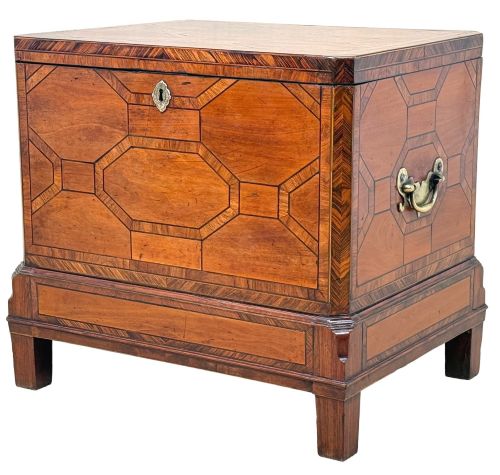
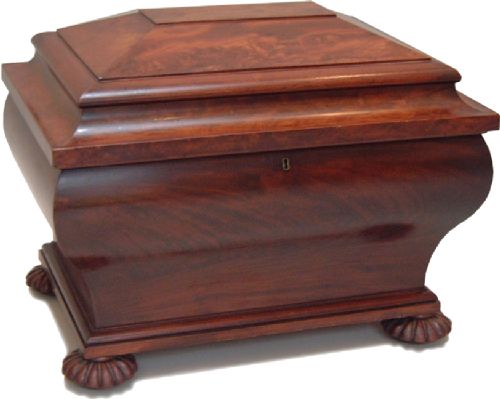
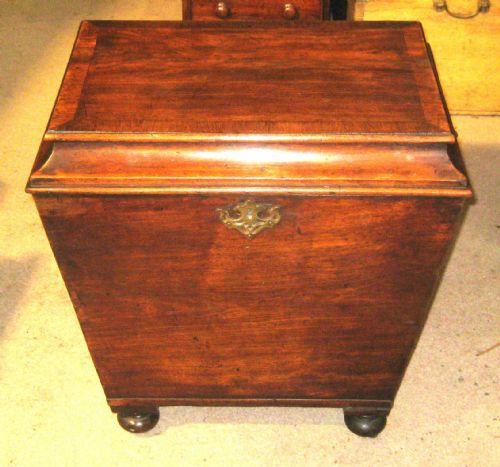
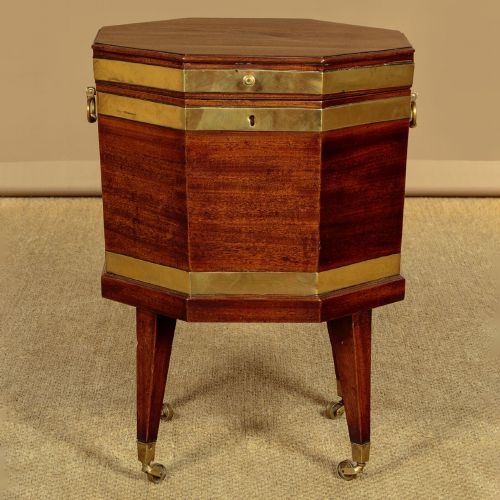
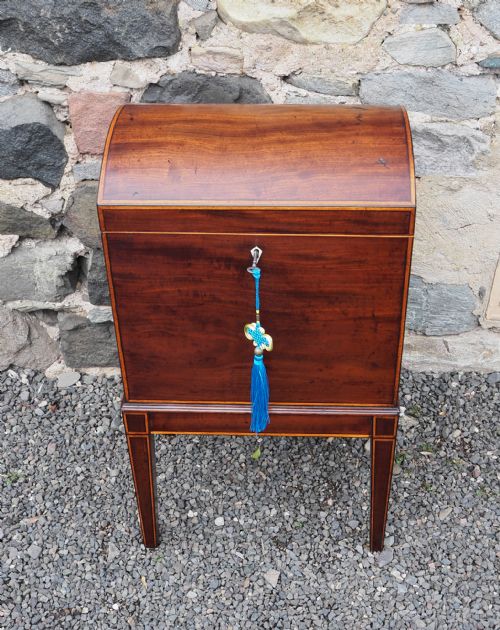
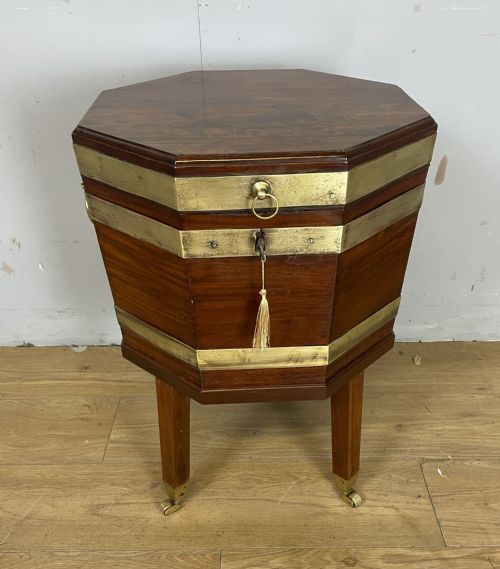
The versions most commonly met on this page are constructed from rich timbers like mahogany, often reinforced with brass bands, or finished in sophisticated veneers such as satinwood and kingwood. They appear in octagonal shapes or low sarcophagus forms designed to sit beneath sideboards or beside dining tables.
Makers drew on Georgian, Regency Neoclassical, and Anglo-Indian styles to shape these receptacles. Some adopt architectural proportions with classical ornament, while others rely on the strict grain of solid timber and precise joinery to establish their presence.
Materials and construction
Cabinet-makers relied heavily on dense tropical hardwoods, choosing solid mahogany and oak for structural strength and durability. These timbers were selected to withstand the heavy weight of glass bottles and liquid contents during daily use in grand dining rooms.
Surface decoration involved sophisticated contrasting veneers such as satinwood and kingwood, alongside precise boxwood inlay and intricate marquetry. Metalwork played a crucial structural role, with heavy brass bands securing the staves of octagonal and oval coolers.
Joinery was executed by hand, uniting heavy timber carcases with dovetailed corners and fitted interior partitions. Makers occasionally employed neoclassical motifs or turned supports to elevate the functional box into a piece of fine furniture.
Antique Wine Casket Retail Price Guide 2026
Typical asking prices for wine casket among the pieces listed under this phrase on Sellingantiques today, from the lower quarter to the upper quarter. They describe what is for sale here now, not the wider market.
Listings feature pieces spanning the Georgian and Regency periods, utilising mahogany, oak, satinwood, kingwood, and brass.
Distinctions in craftsmanship
Quality rests upon the selection of the timber and the precision of the cabinet-making rather than mere ornamentation. Superior examples display dense, well-figured mahogany or perfectly matched exotic veneers that wrap continuously around the form.
The integration of metal hardware marks the division between standard utility and high-status design. Heavy cast brass mounts, tight-fitting joints, and well-executed boxwood stringing elevate the construction of a cellarette.
Proportion and form dictate the visual success of the piece, whether it follows strict neoclassical lines or simple octagonal geometry. The most accomplished pieces maintain clean architectural balance without relying on excessive surface carving.
Gillows of Lancaster
The Antique Wine Casket Glossary
- Cellarette
- A secure box or cabinet designed to hold wine bottles near the dining table. They frequently feature internal divisions and sturdy carrying handles.
- Sarcophagus
- A low, heavy box form with a sloping lid, popular during the Regency period. This classical shape mimics ancient stone burial chests.
- Inlay
- The technique of inserting contrasting pieces of wood or metal into a prepared recess to create a decorative surface pattern. Boxwood is frequently used for this linear detail.
- Marquetry
- Elaborate veneer work forming pictorial or geometric patterns using various coloured woods. It requires immense skill to cut and fit the thin wooden elements together.
- Brass band
- A metal strip fastened tightly around the circumference of a wooden wine cooler. This provides structural reinforcement and guards against splitting.
Antique Wine Casket: Frequently Asked Questions
What is an antique wine casket?
An antique wine casket is a specialised wooden box or cooler built during the Georgian or Regency eras to store wine bottles near the dining table. They were designed to keep bottles secure and accessible during long meals.
These pieces often feature sturdy internal divisions and heavy brass mountings to manage the weight of glass and liquid. Cabinet-makers used fine timbers like mahogany and exotic veneers to match the surrounding dining room furniture.
How were these boxes used?
They sat on the floor beneath a sideboard or beside the dining table, holding a supply of wine ready for service. Servants would lift bottles directly from the fitted interior compartments.
Many examples included lead linings or metal containers to hold ice, chilling the wine before it was poured. This kept beverages at the correct temperature throughout lengthy dining occasions.
How do I date a wine casket?
Dating relies on observing the timber species, construction methods, and prevailing decorative styles of the period. Georgian pieces often show straightforward mahogany construction, sometimes with brass banding or boxwood inlay.
Later Regency examples frequently adopt heavier sarcophagus forms with neoclassical details. The transition of styles from mid-eighteenth-century work to nineteenth-century production provides clear chronological markers.
How do I care for mahogany?
Keep the timber away from direct heat sources and sudden temperature fluctuations to prevent the wood from splitting. Maintain a stable room environment to protect the original finish and structure.
Apply a traditional wax polish occasionally to nourish the grain and preserve the surface sheen. Avoid modern silicone sprays, which can damage historic wooden finishes over time.