




Georgian Walnut Study Desk
A georgian walnut study desk brings warmth and architectural presence to a room, offering tactile grain and enduring joinery that rewards daily use.
Georgian Walnut Study Desk
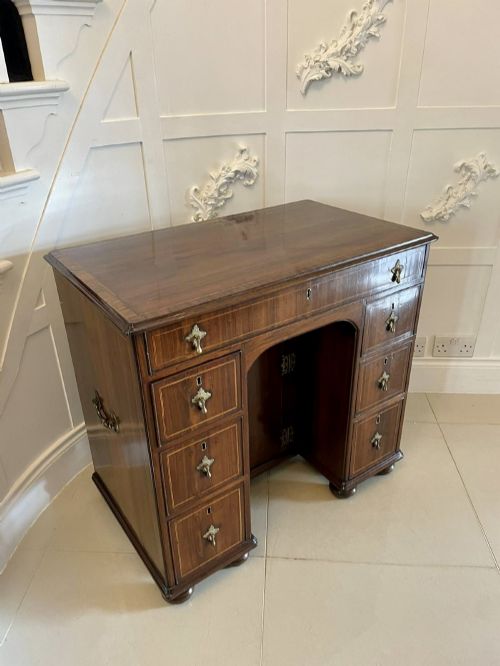
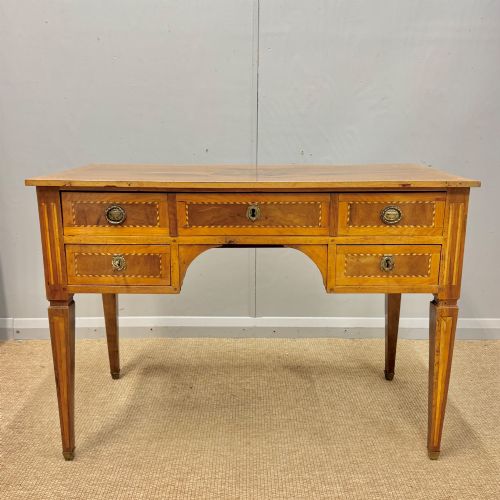
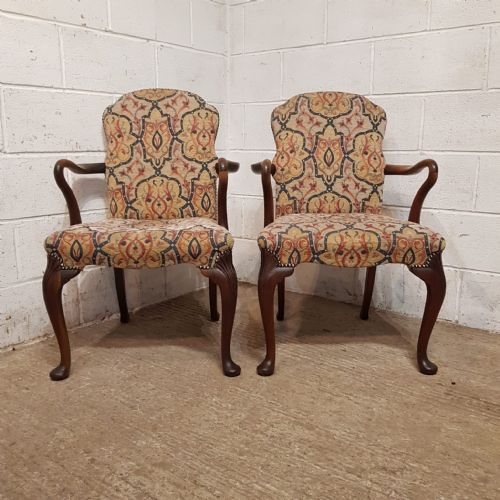
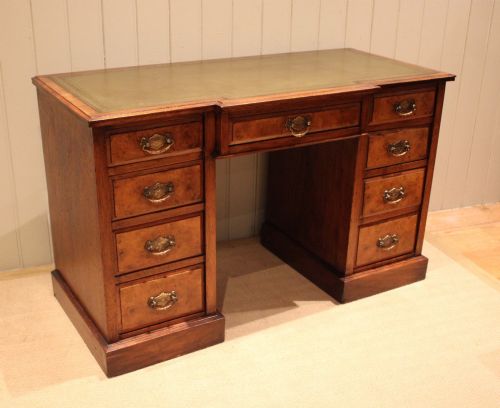
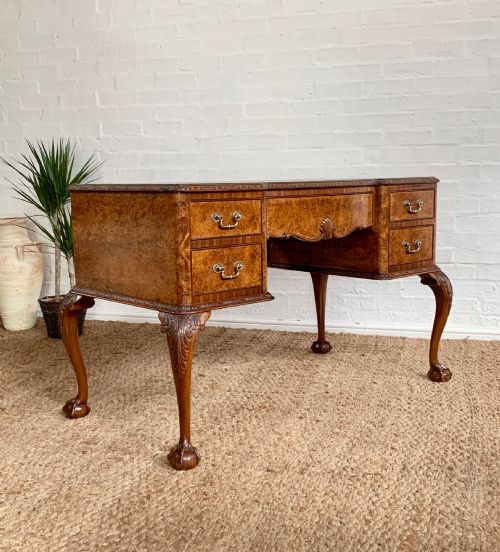
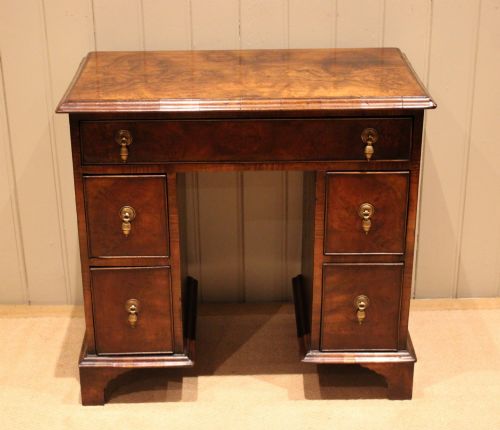
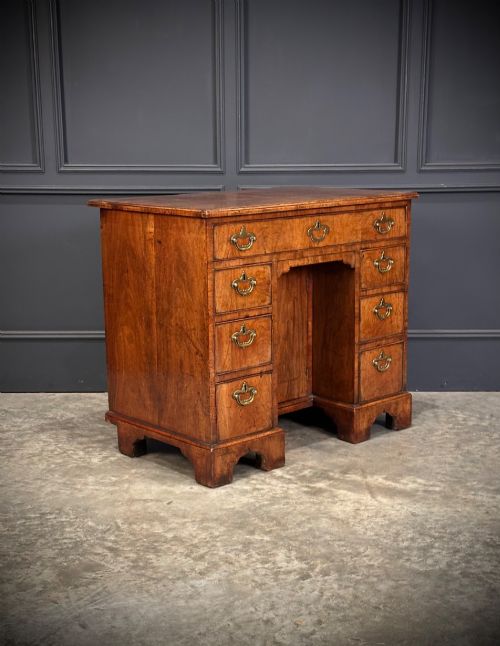
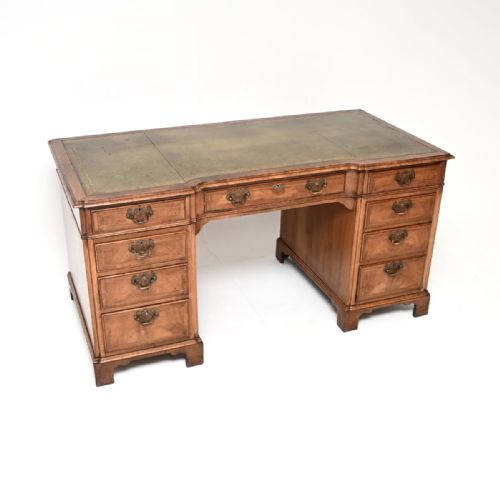
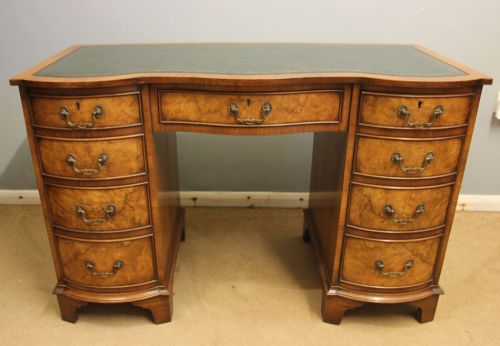
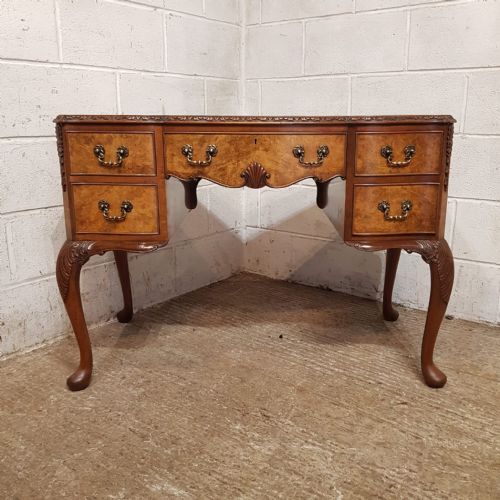
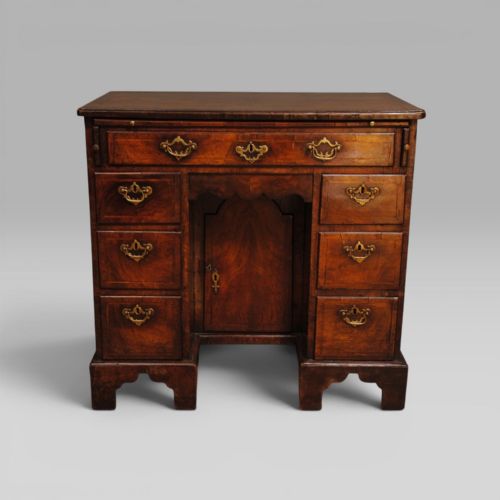
The version most commonly encountered on this page is the pedestal or kneehole desk, often surfaced in rich burr walnut veneer and inset with tooled leather. Alongside these formal desks, buyers frequently find accompanying library armchairs and bureau bookcases sharing the same timber vocabulary.
Materials and construction
Cabinetmakers utilised dense walnut and highly figured burr walnut veneers applied over secondary timbers such as oak, pine, and fruitwood to create stable structural carcases. Selected sections of timber were book-matched to produce symmetrical geometric patterns across drawer fronts and top surfaces.
Fine brass drop handles, escutcheons, and bracket feet complete the construction, while writing surfaces are traditionally inset with supple leather panels. Traditional dovetail joinery secures the drawer boxes, ensuring structural longevity through centuries of opening and closing.
What separates the finest examples
Quality rests in the depth of figure within the walnut veneer and the crispness of the secondary wood framing. Superior examples display undisturbed grain continuity across multiple drawers and retain their original brass hardware and polish.
Proportion and scale dictate the upper tier of the market, where smaller kneeholes and bureau formats exhibit harmonious architectural balance without clumsy later alterations or replaced bracket feet.
maples of London·Whytock & Reid of Edinburgh
The Georgian Walnut Study Desk Glossary
- Kneehole desk
- A compact desk featuring a central recessed recess for the sitter's legs, flanked by two banks of small drawers. This form became popular during the late seventeenth and eighteenth centuries.
- Burr walnut
- Timber harvested from the gnarled growths on walnut trees, yielding intricate swirling grain patterns. Cabinetmakers sliced this wood into thin veneers for decorative surfaces.
- Bureau
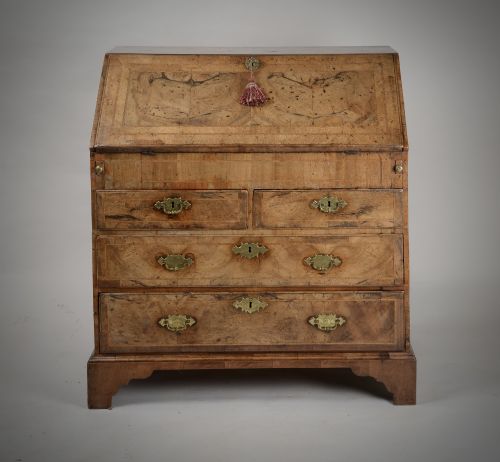
- A sloping front desk that opens to reveal a fitted interior of small pigeonholes and secret compartments. It rests upon a chest of drawers or a frame.
- Bracket foot
- A foot supporting case furniture, shaped like a small architectural bracket or corner foot. It provides a stable base while lifting the carcase slightly off the floor.
- Secretaire
- A desk or cabinet containing a pull-down writing drawer fitted with compartments for stationery. This term often describes pieces that conceal their writing function behind formal drawer facades.
Georgian Walnut Study Desk: Frequently Asked Questions
How do I identify an 18th-century desk?
Examine the secondary timbers inside the drawer linings, such as oak or pine, alongside hand-cut dovetails that show slight irregular spacing.
Original hardware impressions and patination across the walnut timber further confirm genuine period manufacture as opposed to later twentieth-century revival pieces.
What is a kneehole desk?
A kneehole desk is a pedestal form featuring a central recess beneath the writing surface, flanked by vertical banks of small drawers.
This layout provides compact storage and a comfortable seating position for writing letters or managing household accounts.
How do I care for walnut veneer?
Protect antique walnut from direct sunlight and dramatic humidity shifts to prevent the thin burr veneers from lifting or splitting.
Apply traditional beeswax sparingly and buff gently with a soft cloth to nourish the timber without building up heavy chemical residues.
Are pedestal desks and bureaux different?
Pedestal desks feature a flat top surface, often inset with leather, resting on two independent drawer columns or pedestals.
Bureaux rely on a sloping hinged flap that drops forward to create a writing slope and expose internal compartments.