

Antique Style Pedestal Desk
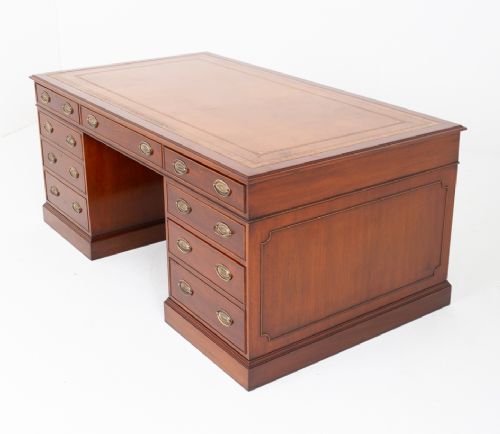
An antique style pedestal desk provides a commanding workspace anchored by banks of drawers, uniting practical storage with period presence.
Antique Style Pedestal Desk
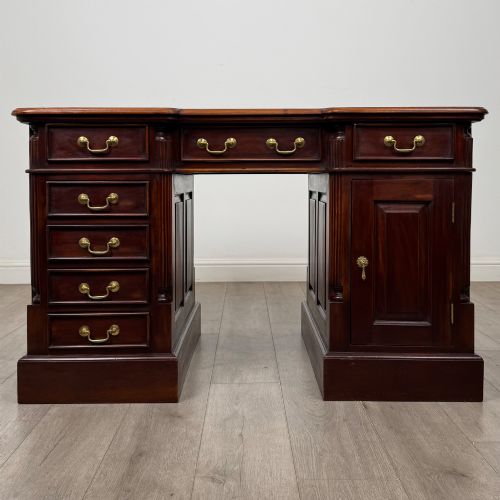
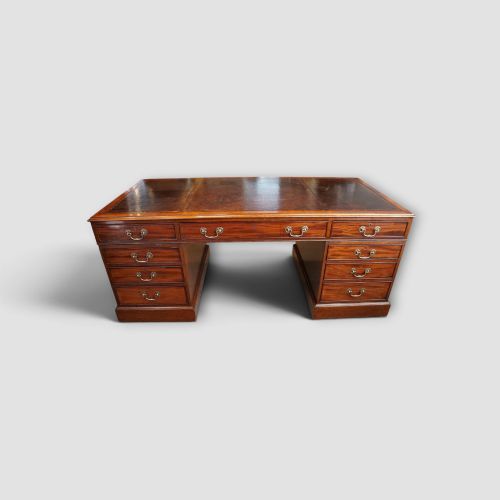
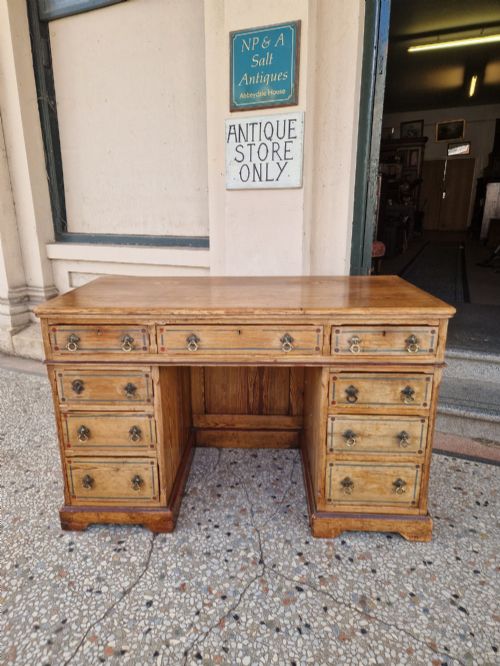
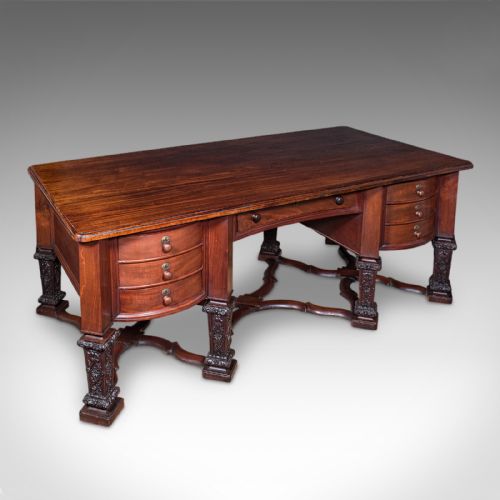
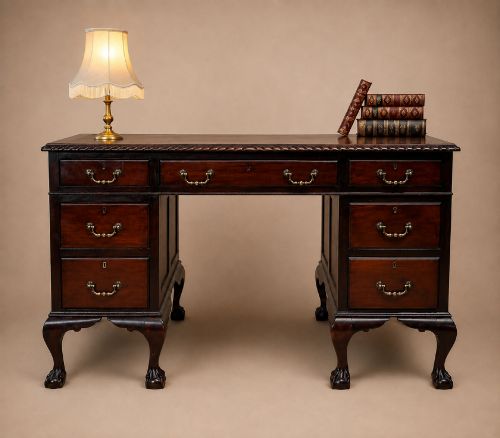
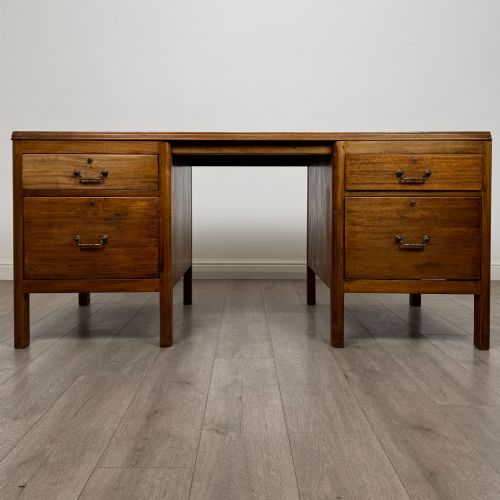
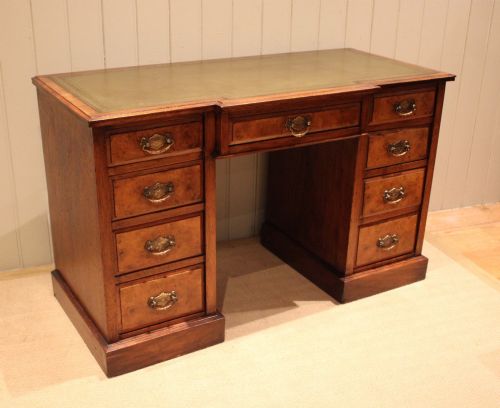
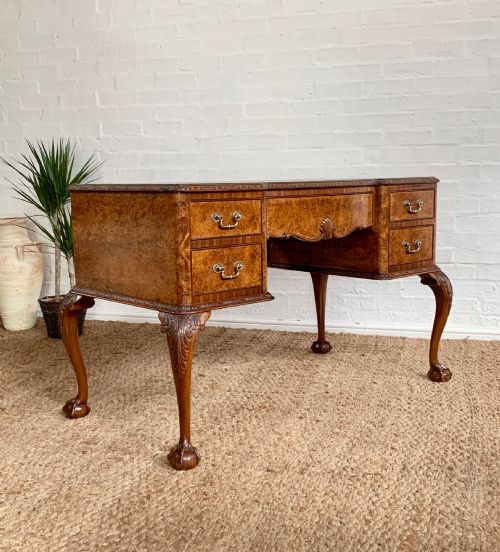
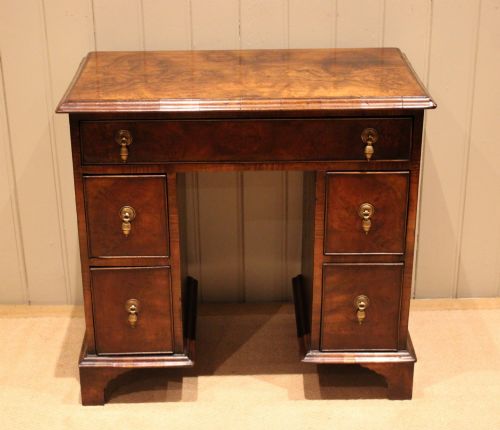
An antique style pedestal desk is a substantial workspace formed of two freestanding drawer columns supporting a wide writing surface, designed to sit proudly in the centre of a room or against a wall. When searching this phrase, you encounter heavy timber constructions spanning from the Victorian and Edwardian eras up to the 1930s, alongside thoughtful revivals of earlier Georgian and Queen Anne forms.
How they were made
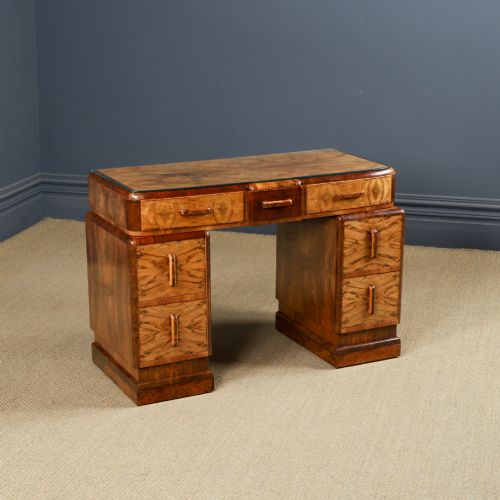
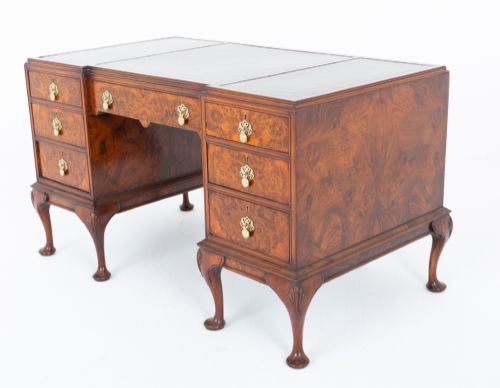
Cabinet makers constructed these desks using dense hardwoods like mahogany, oak, and walnut, frequently applying fine burr walnut or satinwood veneers to create striking grain patterns on drawer fronts and top surfaces. Structural stability relied on traditional joinery methods, housing drawers within pedestals that supported the heavy top boards without warping.
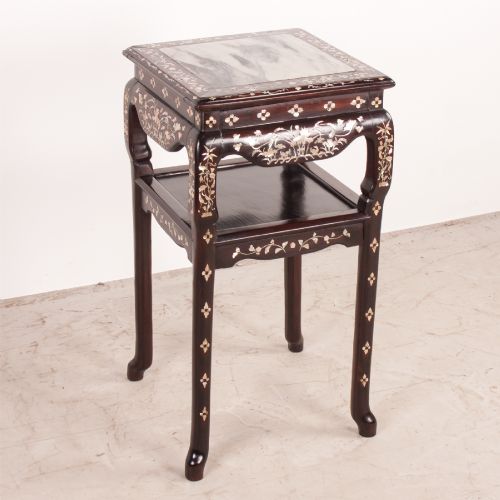
Writing surfaces were typically inset with panels of supple leather, often highlighted with blind or gilt tooling around the perimeter. Brass hardware, including drop handles and escutcheons, completed the construction, alongside occasional use of ormolu mounts and mother of pearl inlay on specific continental and revival pieces.
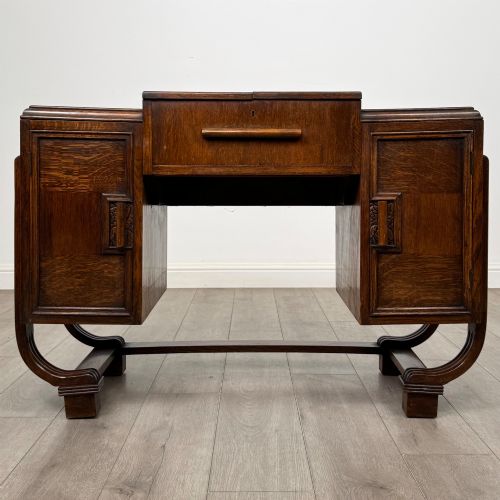
Listings span multiple decades, incorporating Victorian and Edwardian examples alongside 1930s Art Deco walnut and oak pedestal desks.
What varies in quality
The distinction between standard examples and the finest pieces rests upon the selection of timber and the precision of the veneer work. Desks utilising highly figured burr walnut, satinwood, or finely matched mahogany display a depth of grain and warmth that marks out superior cabinet making.
Execution of detail further separates the range, observed in the crispness of hand-carved mouldings, the neat integration of dovetailed drawer boxes, and the harmonious proportions of pedestals to the central kneehole. The integrity of original leather writing surfaces and matching brass hardware also elevates an example within its period.
Mercier Frères
The Antique Style Pedestal Desk Glossary
- Pedestal desk
- A freestanding desk comprising two supporting columns of drawers with a central writing surface bridging the gap.
- Partners desk
- A large double-sided desk designed so two people can work opposite each other simultaneously, featuring drawers and cupboards on both faces.
- Kneehole desk
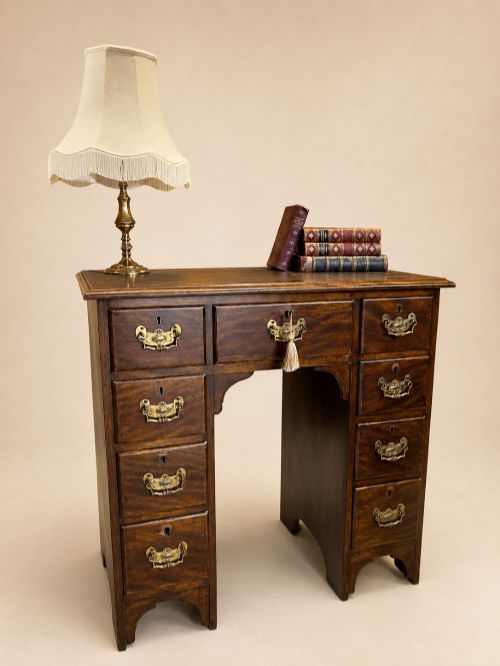
- A compact pedestal desk characterised by a recessed central space beneath the desktop for the user's legs, flanked by narrow drawer stacks.
- Tooled leather
- Leather writing surfaces decorated with decorative gold leaf or blind-stamped impressions around the outer edges.
- Dovetail
- A traditional interlocking joint used to construct sturdy drawer boxes by interlocking trapezoidal pins and tails.
Antique Style Pedestal Desk: Frequently Asked Questions
What is a partners desk?
A partners desk is a large, double-sided workstation built to accommodate two people sitting opposite one another. These pieces feature banks of drawers and cupboards accessible from both sides.
They were originally commissioned for banks, legal offices, and grand libraries where business partners or associates needed to share a single large writing surface.
How do I care for leather desk tops?
Leather writing surfaces benefit from gentle cleaning with a slightly damp cloth followed by regular application of a specialised leather balsam or wax. This prevents the hide from drying out and cracking over time.
Avoid using harsh chemical cleaners or placing hot drinks directly on the leather, as these can strip the original polish and leave permanent rings.
Are these desks suitable for modern offices?
These desks offer substantial surface areas and deep drawer storage that easily accommodate modern paperwork and desktop equipment. Their finished backs also allow them to float in the middle of a room rather than being pushed against a wall.
Buyers should carefully measure their kneehole height and overall floor space, as antique proportions can differ significantly from contemporary office furniture.
How do I distinguish Victorian from Georgian desks?
Georgian desks typically display restrained architectural lines, often in solid mahogany with subtle cockbeading around drawer edges and bracket feet. Victorian examples tend to be heavier in proportion, sometimes incorporating bolder carvings, plinth bases, and more exuberant revival styles.
Examining the construction of the drawer linings and the type of secondary wood used inside the carcass helps confirm the manufacturing period.