





Burr Walnut Home Office Desk
A burr walnut home office desk brings striking timber grain and traditional writing forms together for practical daily work.
Burr Walnut Home Office Desk
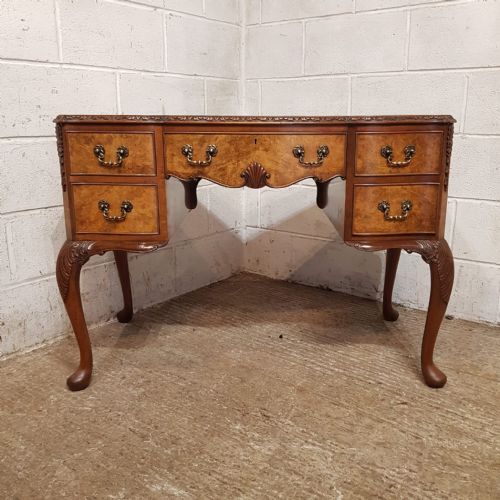
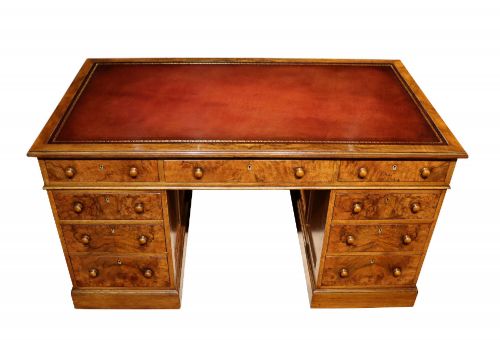
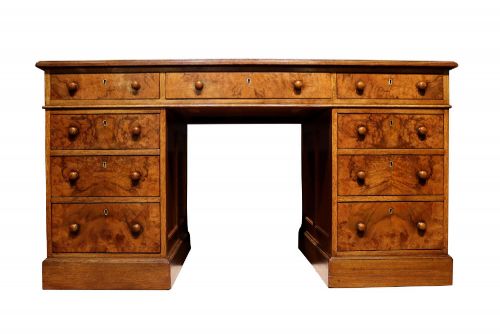
A burr walnut home office desk provides a practical workspace wrapped in deeply figured timber. These pieces span pedestal desks, writing tables, kneehole desks, and compact bureaus.
The selections on this page range from Victorian pedestal examples and writing tables to Edwardian, Art Deco, and revival styles. Victorian and nineteenth century pieces form the bulk of the traditional pedestal designs.
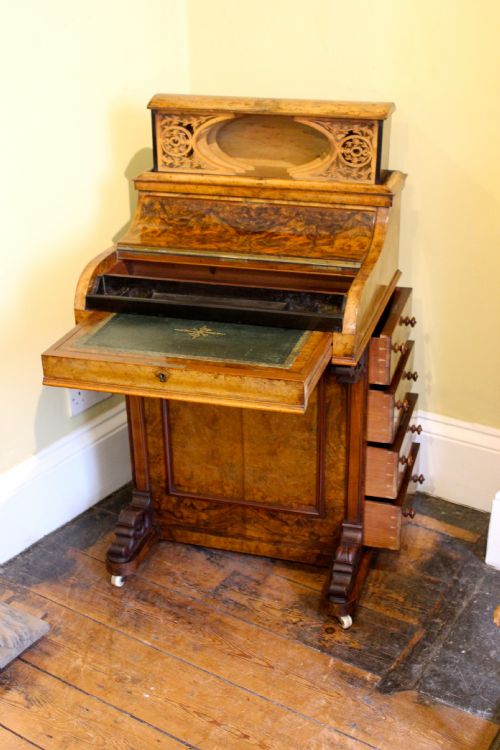
Makers such as Wylie and Lochhead Glasgow, Maples of London, Holland and Sons, and Maurice Adams appear alongside unlabelled vernacular pieces. Bureau desks, Davenport desks, and partners desks offer varying configurations of drawers and writing surfaces.
How they were made
Cabinetmakers constructed these desks using solid timbers like oak and walnut for internal frames and carcases, applying highly figured burr walnut veneers to external surfaces. Crossbanding and ebonised wood details often frame the principal grain patterns.
Writing surfaces frequently feature inset tooled leather bordered by gilt tooling. Brass handles, escutcheons, and occasional metal mounts provide functional hardware across the drawers and pedestals.
Forms include pedestal desks, partners desks, Davenport desks, and serpentine fronted writing tables.
What varies in quality
The choice and matching of the burr walnut veneer dictate much of the visual impact. Exhibition quality pieces display continuous, symmetrical grain patterns across drawers and top surfaces.
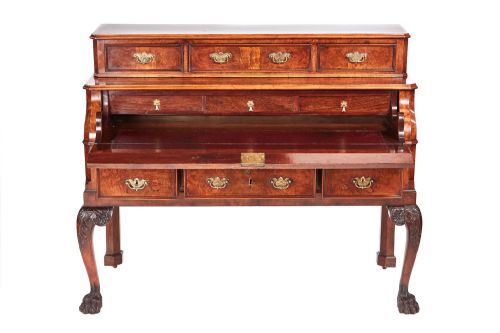
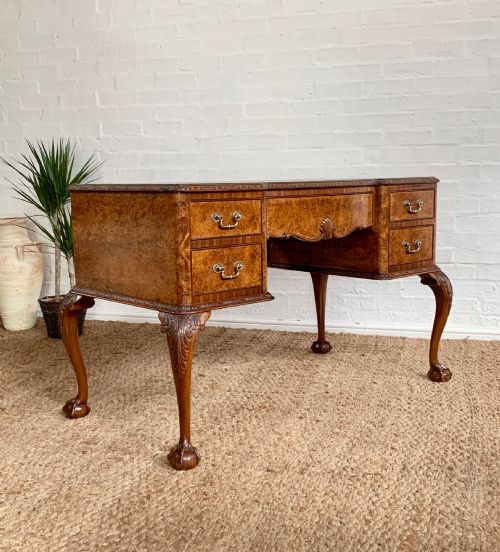
Carved details, such as the paw feet seen on specific Victorian examples, demonstrate the sculptor's hand. Secondary timbers, drawer linings, and the crispness of brass hardware separate standard workshop production from high-end cabinetmakers.
Wylie and Lochhead Glasgow·Maples of London·Holland and Sons·Maurice Adams
The Burr Walnut Home Office Desk Glossary
- Burr walnut
- A timber harvested from the wart-like growth on a walnut tree, yielding a swirling, highly decorative grain pattern used for veneers.
- Pedestal desk
- A heavy freestanding desk comprising two supporting pedestals of drawers beneath a wide top, sometimes termed a partners desk when fitted for two users.
- Davenport
- A compact writing desk featuring a sloping, leather-lined lid above a bank of side drawers.
- Crossbanding
- A decorative border of veneer laid with the grain running perpendicular to the surrounding surface.
- Bureau plat
- A freestanding French writing table with a flat top and one or more drawers in the frieze.
- Kneehole desk
- A compact desk featuring a central recess for the user's legs, flanked by smaller drawers or cupboards.
Burr Walnut Home Office Desk: Frequently Asked Questions
What is a burr walnut home office desk?
A burr walnut home office desk is a traditional writing table or pedestal desk veneered in highly figured burr walnut timber. These pieces provide functional work surfaces while showcasing decorative wood grain.
They range from compact Victorian Davenport desks to large nineteenth century partners desks and twentieth century Art Deco designs.
Are these desks suitable for daily work?
Many nineteenth and twentieth century desks provide sturdy writing surfaces and ample drawer storage for modern study use. Pedestal and kneehole formats accommodate contemporary seating and equipment.
Leather writing surfaces offer a durable, traditional top for writing and computer work.
What is the difference between a pedestal desk and a writing table?
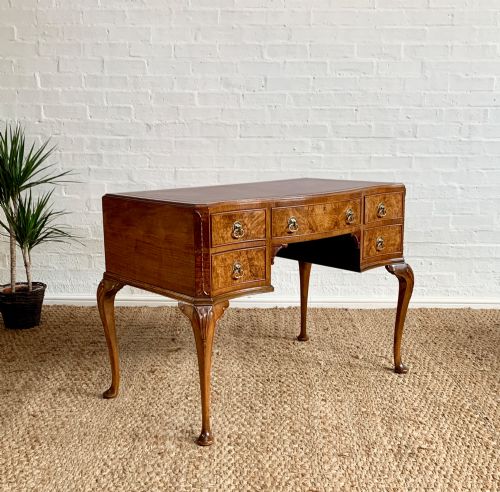
A pedestal desk incorporates banks of drawers beneath both sides of the desktop, offering substantial storage and weight. A writing table stands on four legs with one or more drawers built into the frieze.
Writing tables generally present a lighter, more open silhouette than pedestal variants.