




Tooled Leather Top Desk
A tooled leather top desk brings a tactile writing surface to the study, combining supple hide with rich timber framing.
Tooled Leather Top Desk
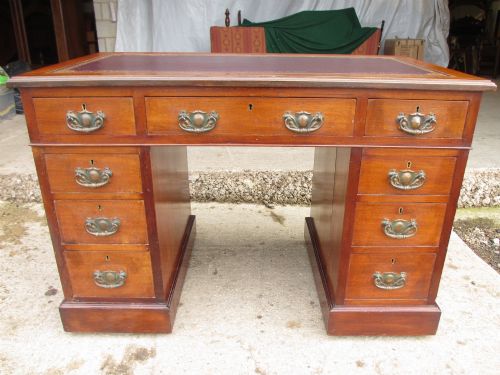
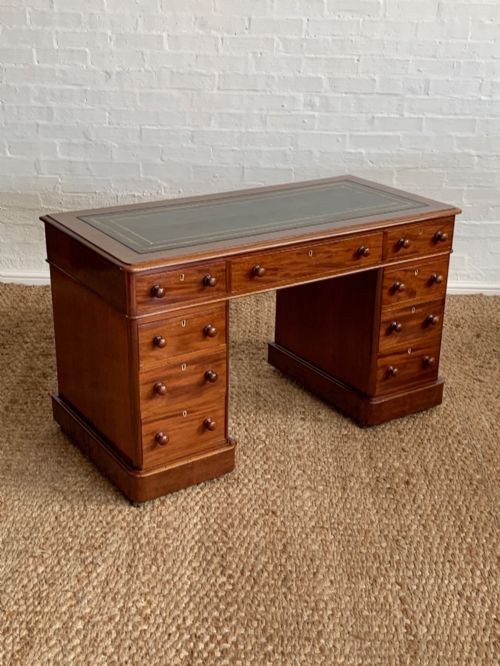
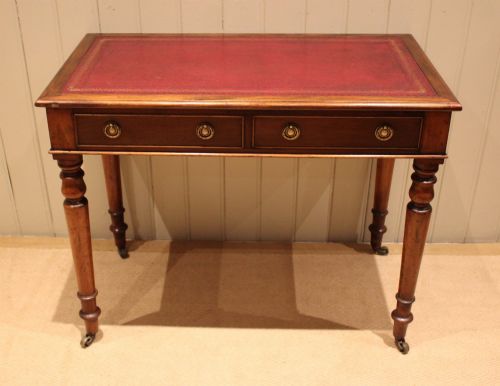
A tooled leather top desk provides a dedicated writing and working surface distinguished by a decorative perimeter border stamped into the hide. These pieces range from compact ladies writing tables and single pedestal formats to grand partner desks designed for two users.
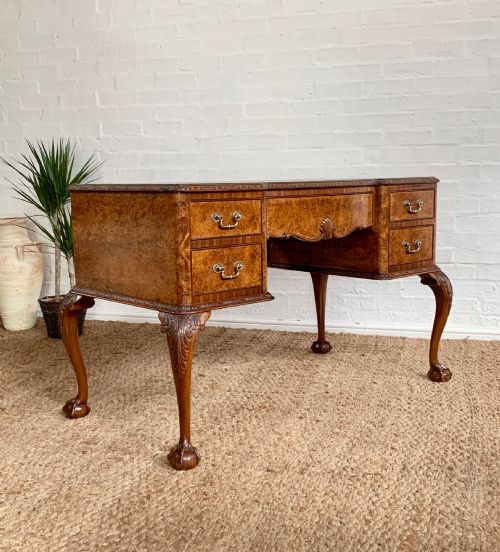
Victorian and nineteenth century examples dominate the selection, frequently constructed in mahogany, walnut, or oak. Variations include kneehole configurations, kidney shapes, and library tables featuring inset writing surfaces.
Makers from the Edwardian period onward also contributed lighter oak designs alongside traditional pedestal forms. The writing surface itself typically displays blind tooling or gilt leaf impressions framing the central panel.
Materials and Construction
Cabinetmakers utilised dense hardwoods such as mahogany, walnut, and oak to form the structural carcasses and pedestals. Secondary timbers were often employed for internal drawer linings while primary display surfaces received polished veneers or solid boards.
Leather hides were cut to fit the writing surface inset, then treated with gold leaf or blind tooling applied via heated brass wheels and stamps. Brass hardware, including drop handles and casters, completed the functional assembly.
Periods represented across the records span Victorian, Edwardian, Regency, and Reformed Gothic styles.
Determinants of Quality
The refinement of the timber selection largely dictates the standing of a piece, particularly when burr walnut or figured mahogany veneers are present. Superior examples display careful grain matching across drawer fronts and pedestals.
The crispness and depth of the gilt tooling upon the leather surface indicate the skill applied to the finishing details. Original brass mounts, sound drawer construction, and secondary woods appropriate to the stated period further elevate the piece.
Maple & Co
The Tooled Leather Top Desk Glossary
- Pedestal desk
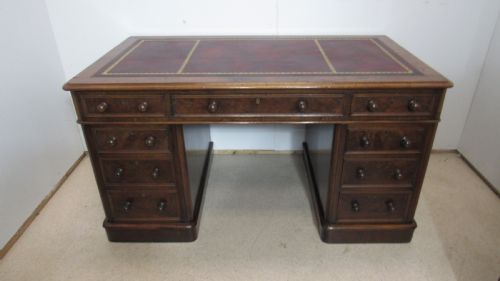
- A form comprising two freestanding drawer pedestals supporting a wide top. A central kneehole space sits between the pedestals.
- Partners desk
- A large format desk designed with drawers and cupboards on both sides so two individuals can work opposite each other. These often feature expansive tooled leather writing surfaces.
- Blind tooling
- A process of impressing leather with heated metal tools without applying gold leaf. This creates a subtle, recessed decorative pattern along the border of the writing surface.
- Gilt tooling
- The technique of impressing gold leaf into leather using heated brass rolls and stamps. It produces a bright, metallic border framing the work area.
- Kneehole
- The central recess of a desk positioned between supporting pedestals. It allows the user to sit comfortably directly in front of the writing surface.
Tooled Leather Top Desk: Frequently Asked Questions
How do I care for the leather top?
Clean the leather surface gently with a dry or barely damp cloth, avoiding harsh chemical cleaners that can strip the natural finish. Apply a suitable leather conditioner periodically to keep the hide supple and prevent cracking.
Protect the surface from direct sunlight and sharp objects to preserve the gilt tooling and the integrity of the hide over time.
What is the difference between a writing table and a pedestal desk?
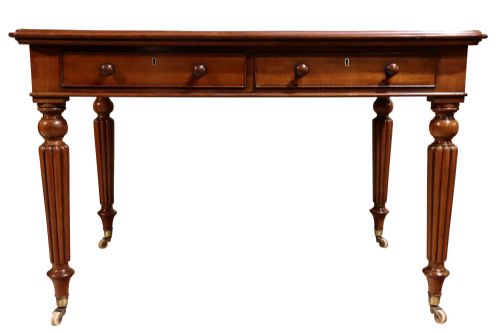
A writing table typically stands on four legs without banks of drawers beneath the top, offering a lighter silhouette. A pedestal desk incorporates substantial drawer columns on one or both sides, providing greater storage capacity and a heavier structural presence.
Both forms frequently share the characteristic tooled leather insert, though writing tables are more commonly found in smaller occasional formats.
How can I tell if the leather is original?
Examine the wear patterns around the edge where arms rest, looking for even patination that matches the age of the wooden frame. Original leather often shows subtle cracking, minor fading, and consistent wear consistent with nineteenth or early twentieth century use.
Replacement leather usually appears distinctly cleaner and stiffer than the surrounding aged timber, lacking the authentic integration of a period surface.
Where should I place a freestanding desk?
A freestanding or partner desk is finished on all sides, making it suitable for placement in the centre of a room rather than pushed against a wall. Ensure there is adequate clearance around the pedestals for seating and movement.
Positioning the desk away from direct heat sources prevents the leather insert and solid timber from drying out or warping.