
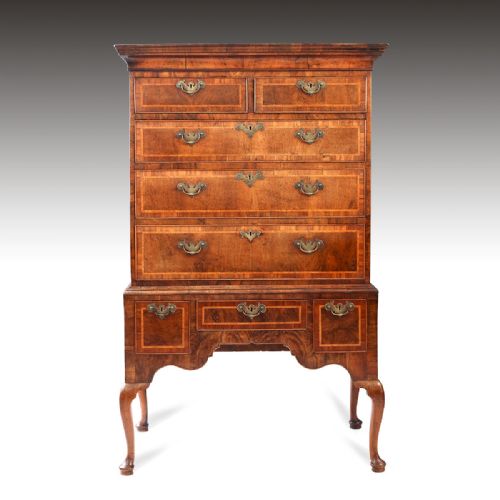
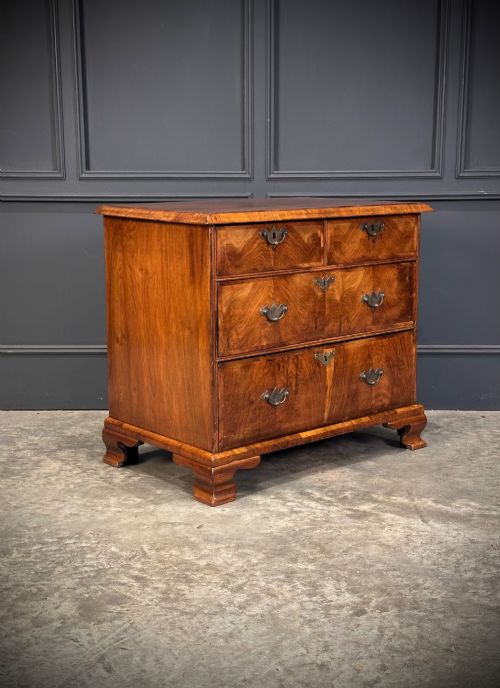
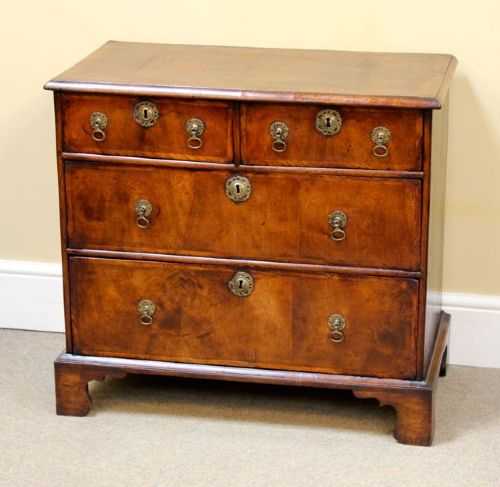
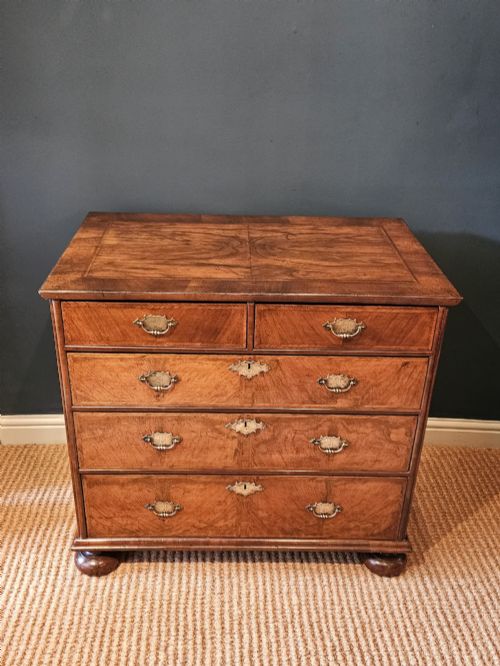
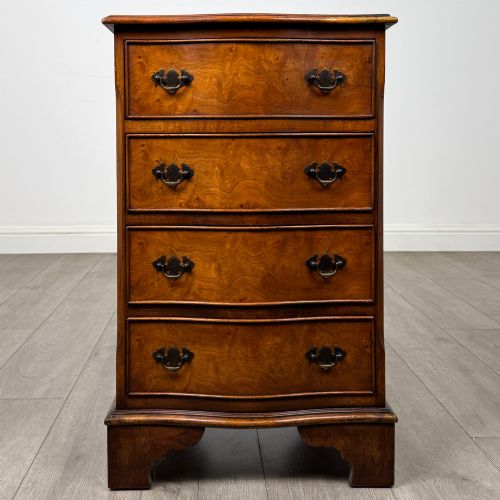
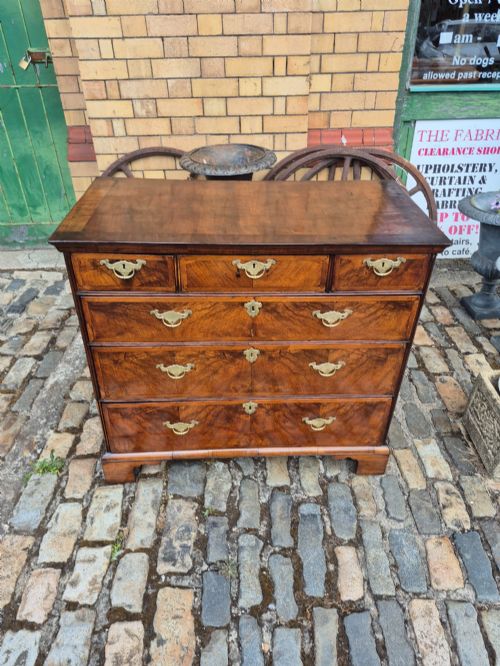
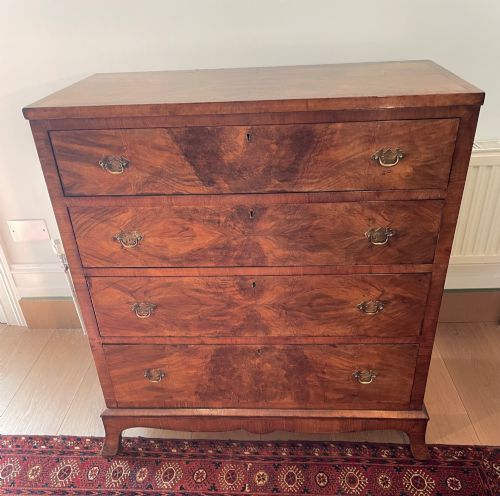
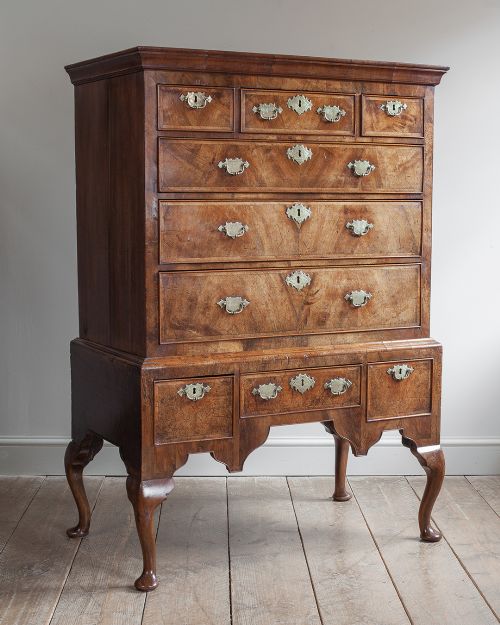
Georgian Walnut Dresser
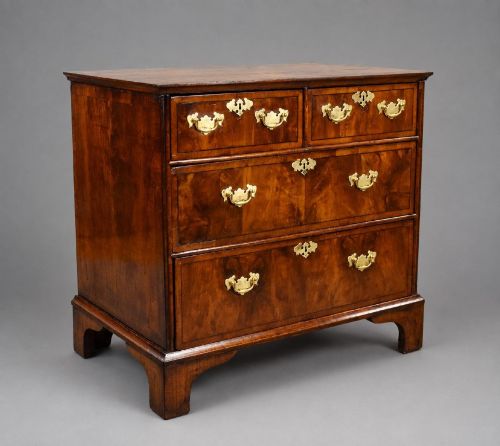
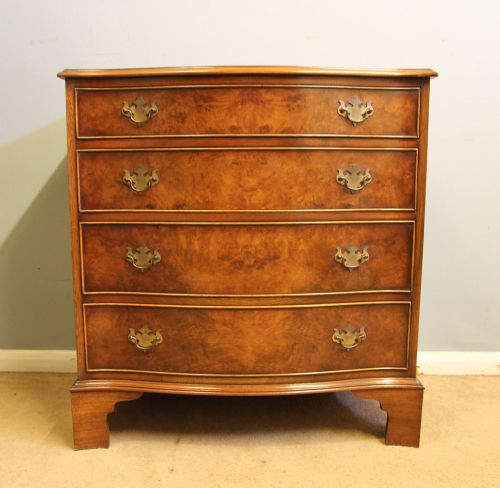
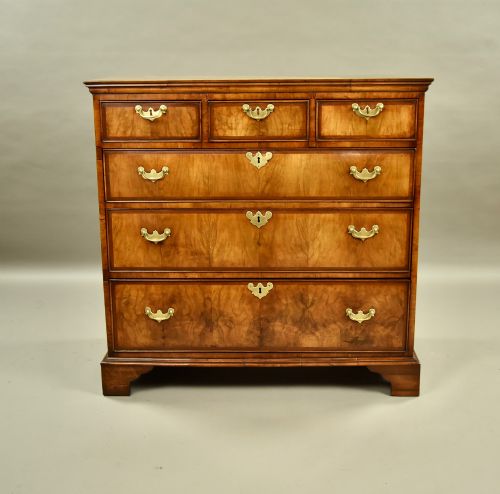
These pieces of georgian walnut dresser bring warmth and architectural presence to a room, offering deep, figured timbers and generous storage.
Georgian Walnut Dresser
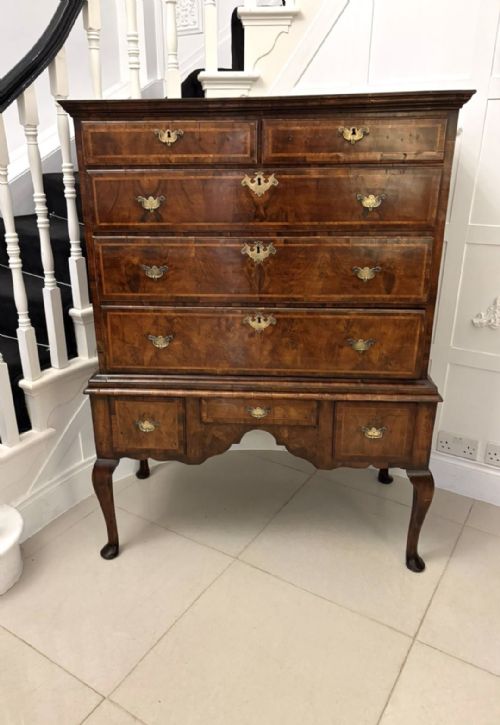
A georgian walnut dresser covers a range of deep-toned storage pieces, from tall chests on stands to low sideboard bases and formal drawer units. The selection spans the early eighteenth century through to later revivals, capturing Queen Anne, George I, and George II influences alongside twentieth-century interpretations.
The most common formats on this page are chests of drawers and dresser bases, frequently combining walnut with secondary structural timbers like oak or pine. Many incorporate raised stands or bracket feet, reflecting the domestic requirements of period interiors.
Materials and Technique
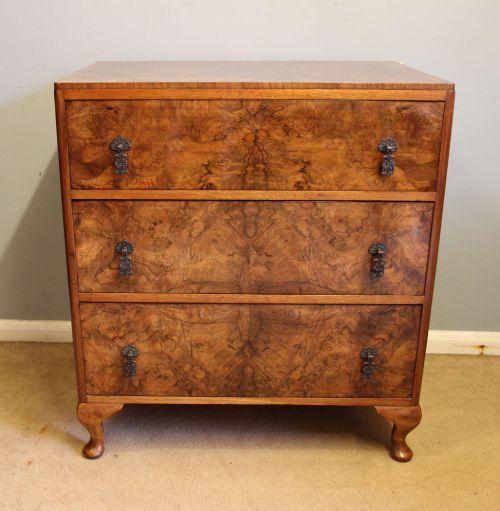
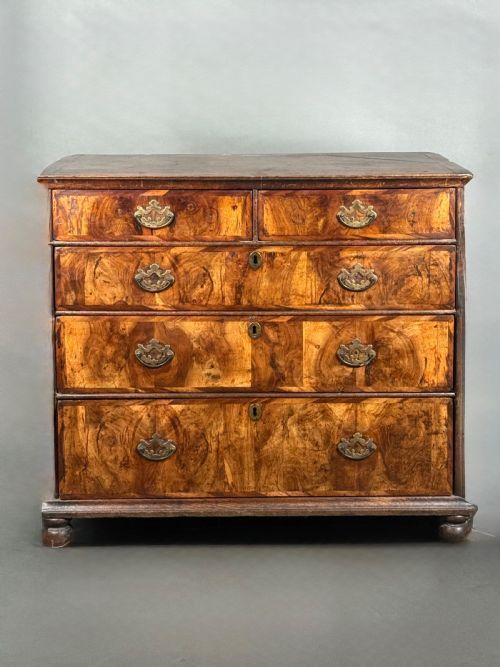
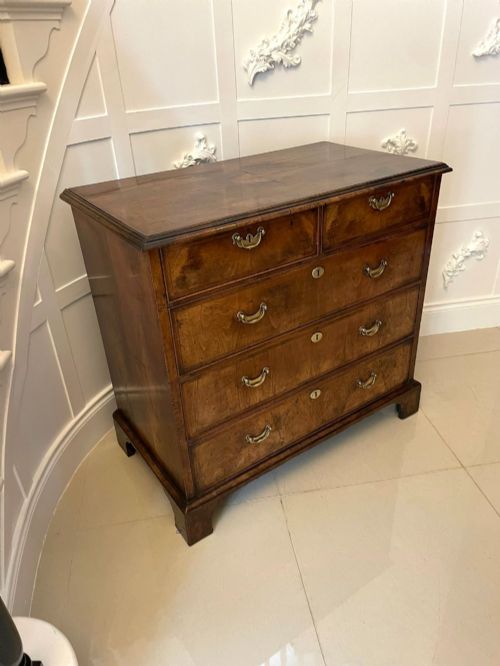
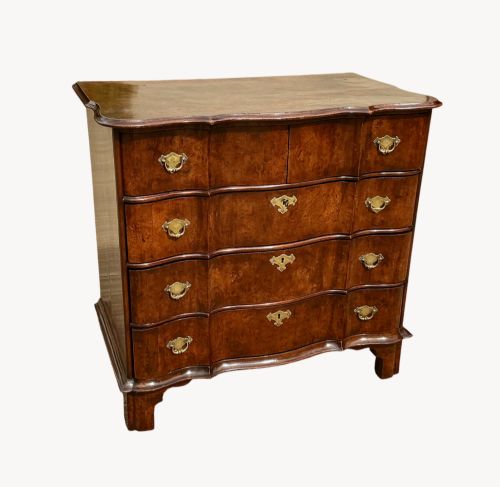
Cabinetmakers relied on solid walnut and decorative veneers, often selecting burr walnut or figured timber for the primary drawer fronts and top surfaces to display rich grain patterns. Crossbanding and herringbone inlay frequently frame these panels, demonstrating careful alignment of the contrasting wood fibres.
Secondary timbers such as oak and pine provide robust internal framing for drawer linings and carcases. Drawer pulls and escutcheons are typically cast in brass, secured with traditional fixings that complement the deep brown tones of the polished wood.
The documented forms span chests of drawers, chests on stands, and sideboard bases, illustrating the diverse storage configurations developed in the Georgian era.
Distinction in Craft
The hierarchy of quality rests on the selection of the veneer and the precision of the cabinetwork. Pieces featuring symmetrical burr walnut or meticulous herringbone banding display a level of artistry that distinguishes them from simpler, plain-timber constructions.
Structural integrity and the retention of original surface patination elevate a piece significantly. Fine examples maintain crisp timber edges, harmonious proportions, and hardware that corresponds correctly to the period of manufacture.
The Georgian Walnut Dresser Glossary
- Burr walnut
- A figured wood grain taken from the growth excrescences of the walnut tree, prized for its swirling patterns. It is typically sliced into thin veneers for principal display surfaces.
- Crossbanding
- A decorative technique where narrow strips of veneer are laid perpendicular to the grain of the surrounding panel. This creates a neat border that frames drawer fronts.
- Herringbone
- A v-shaped arrangement of inlay banding used to edge drawer borders. The alternating grain direction catches the light differently.
- Chest on stand
- A tall cabinet form elevated on a separate frame with legs. This configuration lightened the visual weight of heavy drawer units in early interiors.
- Feather-banding
- A delicate inlay technique utilising two strips of veneer laid to meet at a central angle, resembling the spine of a feather. It is characteristic of early eighteenth-century work.
Georgian Walnut Dresser: Frequently Asked Questions
How do I identify a genuine period piece?
Examine the construction methods visible within the drawer linings and carcase joints, noting the use of period timbers like oak alongside the walnut exterior. Subtle irregularities in hand-cut dovetails and the natural ageing of the wood surface help separate eighteenth-century examples from later revivals.
Compare the secondary woods and handle configurations against known historical standards. A consistent patina that develops naturally across decades of use provides further reassurance of age.
Where should I place a dresser in my home?
These pieces suit living rooms, dining spaces, or hallways where their rich timber tones can anchor the room's colour scheme. Ensure the chosen location avoids direct sunlight and sudden humidity shifts to protect the delicate walnut veneers.
Allow sufficient clearance for drawers to open fully without obstruction from other furniture. Their architectural presence works well against plain walls that allow the figured grain to stand out.
How do I care for walnut veneer surfaces?
Dust the timber regularly with a soft, dry cloth to prevent grit accumulation on the polished finish. Avoid silicone-based sprays and keep the furniture away from direct heat sources that might cause the veneer to lift.
Apply a traditional beeswax polish occasionally to nourish the wood and maintain its soft lustre. Gentle handling of brass handles and sliding top panels preserves the mechanism over time.
What distinguishes Queen Anne style from George III?
Queen Anne pieces often display softer, curving lines with cabriole legs and pad feet, prioritising continuous rounded forms. Walnut veneer and herringbone banding are particularly characteristic of this earlier aesthetic.
George III furniture tends toward straighter structural lines, bracket feet, and more pronounced geometric inlay. Burr walnut returns in this later Georgian phase alongside refined bracket arrangements and cockbeaded drawer edges.