
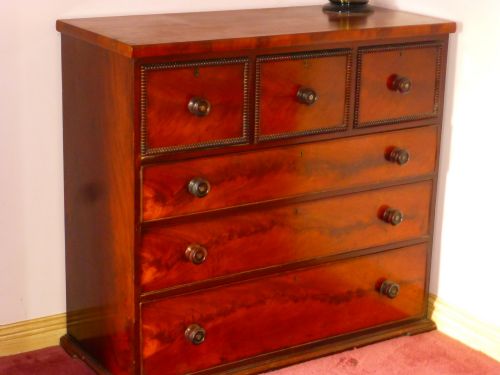
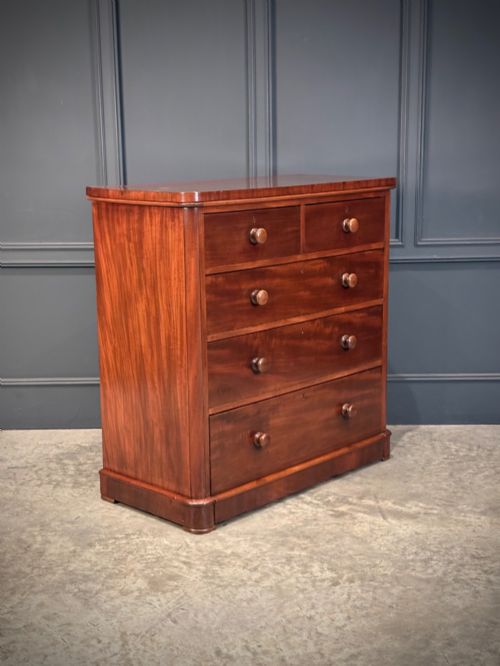
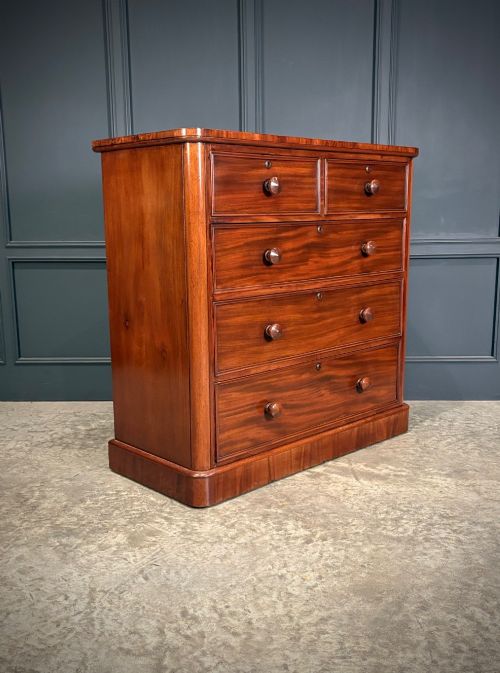
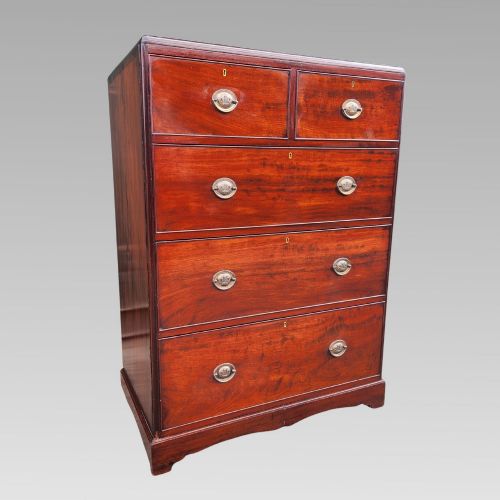




Red Mahogany Dresser
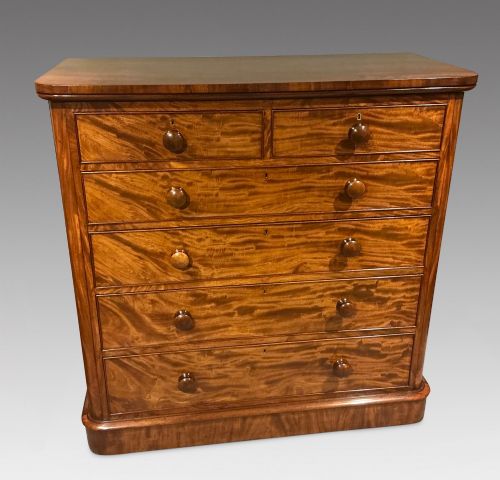
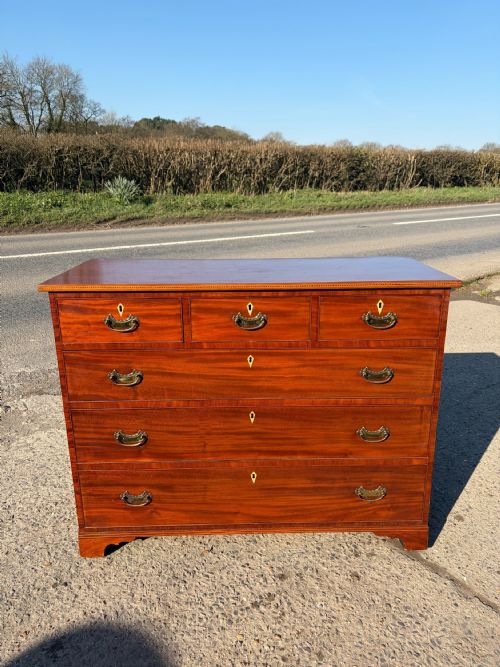
These red mahogany dresser items are solid timber storage pieces built to last, offering rich grain and practical utility for any interior.
Understanding red mahogany dresser designs
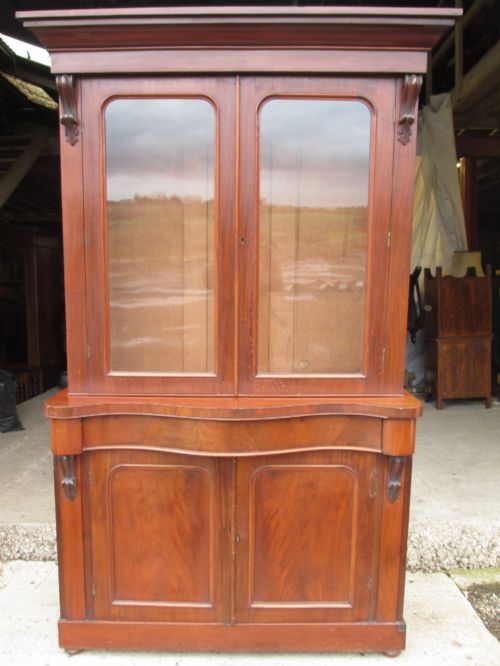
Buyers searching for a red mahogany dresser are examining sturdy storage furniture designed primarily as chests of drawers, alongside occasional cupboard combinations. The selection spans distinct eras from the eighteenth century through the Victorian period, reflecting both British and American cabinetmaking traditions.
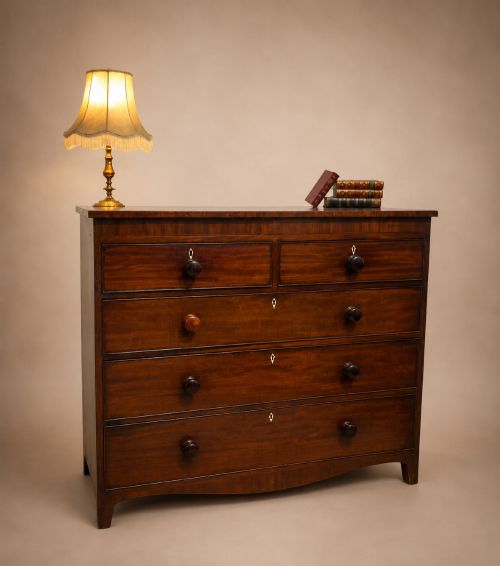
Victorian examples and George III pieces dominate the available range, often featuring classic chest of drawers formats. Federal style variants and miniature apprentice pieces also appear, demonstrating the diverse scale and proportion of these works.
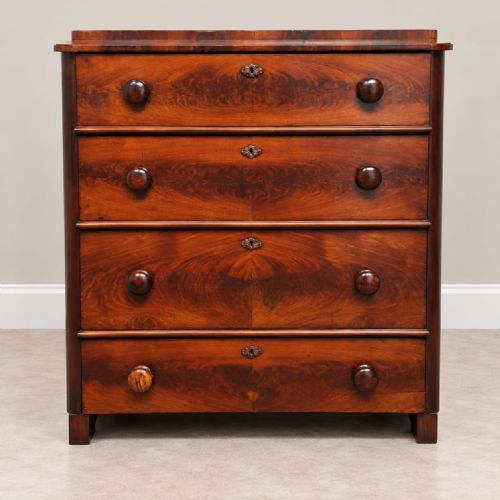
The construction relies heavily on rich tropical timbers, with flame mahogany veneers and figured surfaces frequently enhancing the visual depth. Walnut and boxwood occasionally appear as complementary materials within the regional styles.
Materials and construction methods
Cabinetmakers utilised dense mahogany timber and decorative flame mahogany veneers applied over secondary woods to create deep, lustrous surfaces. Selected pieces incorporate contrasting boxwood stringing or subtle walnut details to frame the drawer fronts.
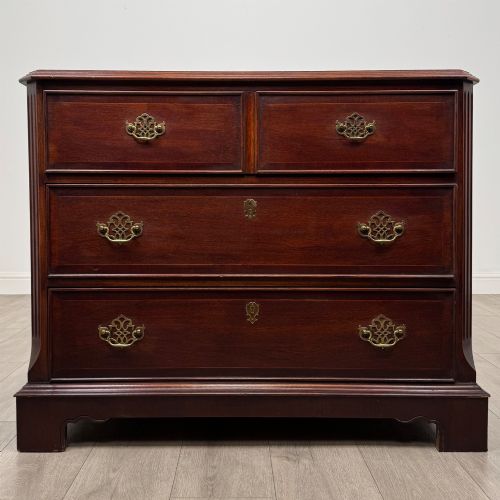
Functional metalware such as brass handles secures the drawers, while structural joinery relies on traditional hand-cut dovetails. The finish builds up through successive polish applications that highlight the natural grain patterns.
Retail Price Guide 2026
Typical UK retail prices for red mahogany dresser, calculated from the Sellingantiques database of over a million retail prices indexed since 2003. This retail price guide relies exclusively on Sellingantiques data; no external sources or auction records are used, so the figures do not describe the wider market.
Site listings span from the eighteenth century to the Victorian era, utilising solid mahogany, flame mahogany veneer, walnut, and boxwood.
Distinguishing finer examples
Quality rests in the selection of the timber figures, where symmetrical flame mahogany veneer requires superior craftsmanship to apply without flaw. The richness of the natural grain and the depth of the polish dictate the visual presence of each piece.
Structural integrity reveals itself in the tightness of the joinery and the original patination of the brass hardware. Finer specimens maintain crisp drawer edges and uncompromised proportions that speak to the skill of the original workshop.
The Red Mahogany Dresser Glossary
- Flame mahogany veneer
- A thin slice of wood cut from the fork of the mahogany tree to create a distinctive, flickering flame pattern across the surface. This technique requires considerable skill to match across multiple drawer fronts.
- Bowfront
- A curved cabinet front that swells outward in the centre, softening the geometric lines of a standard chest. It represents a more complex form of construction.
- George III period
- The era spanning from the mid to late eighteenth century, known for balanced proportions and restrained neoclassical ornamentation. Pieces from this time utilise high-grade timbers and precise joinery.
- Apprentice piece
- A miniature model created by a craftsman to demonstrate mastery of a trade before gaining full guild membership. These smaller items replicate full-scale furniture with exact detail.
Frequently Asked Questions
How do I date a chest of drawers?
Dating relies on examining the timber species, construction joinery like hand-cut dovetails, and the style of the hardware. Secondary woods and finishing techniques also provide clear chronological markers.
Comparing the drawer construction methods and overall proportions against documented historical periods helps establish the exact era of manufacture.
What is flame mahogany?
Flame mahogany is a highly decorative wood veneer harvested from where branches join the main trunk. It creates a rippling, flame-like pattern prized by cabinetmakers.
This distinct figure was utilised on prominent surfaces of fine furniture to catch the light and display wealth and taste.
How should I care for mahogany furniture?
Protect the timber by keeping it away from direct sunlight and maintaining steady room humidity. Regular dusting with a soft, dry cloth preserves the polish.
Avoid using silicone-based sprays, relying instead on traditional wax formulations when the surface requires nourishment.