
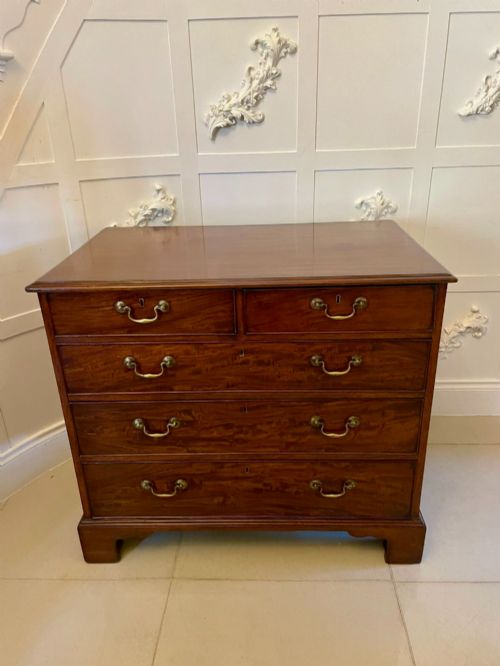
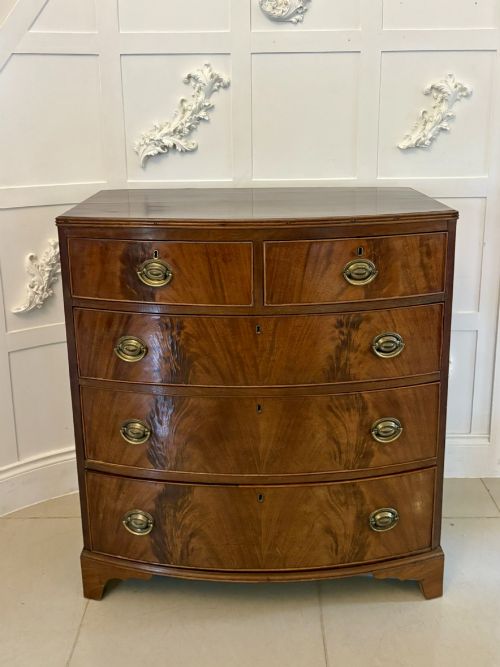
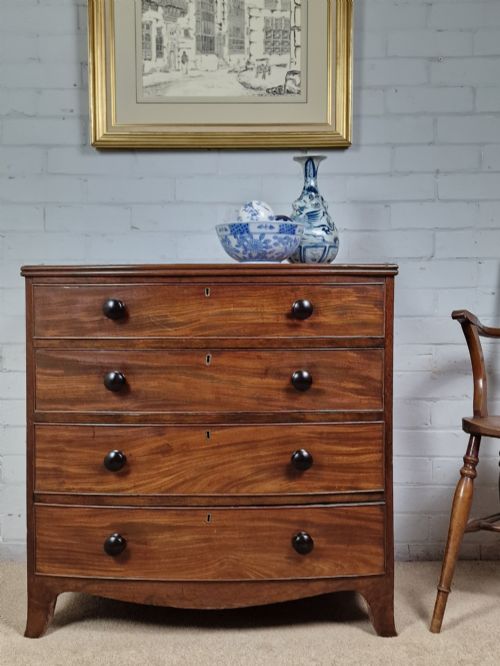
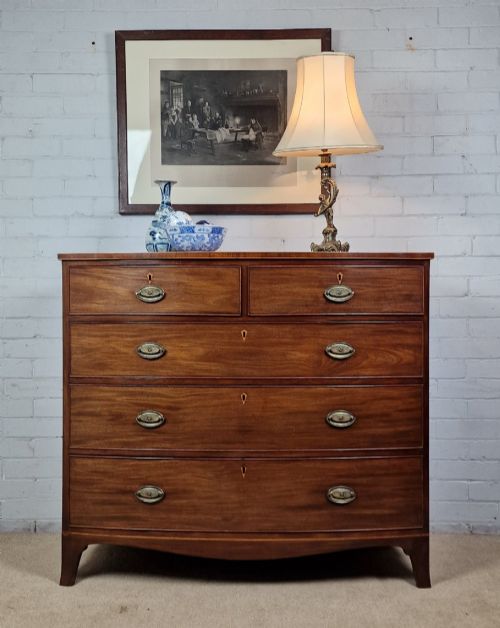
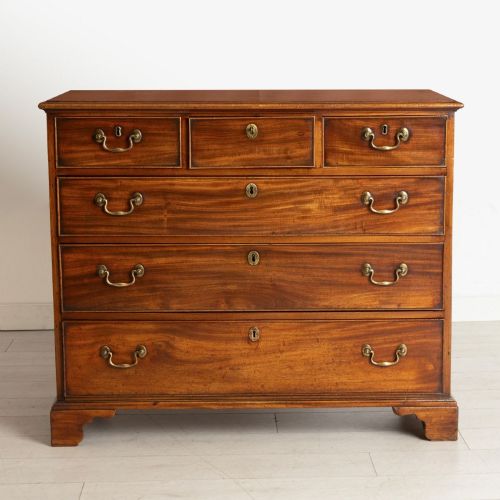
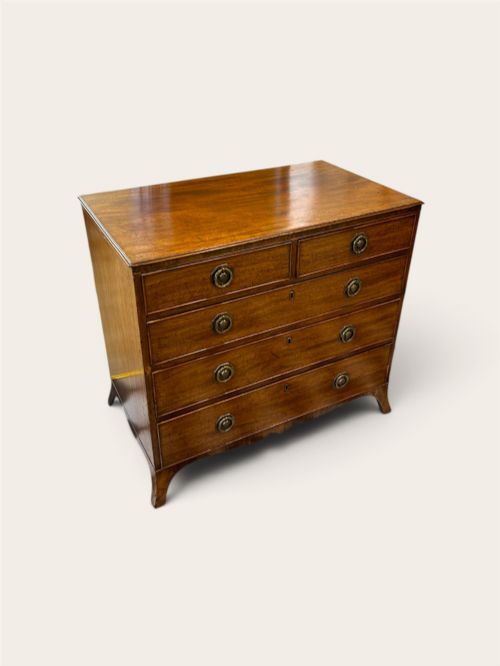
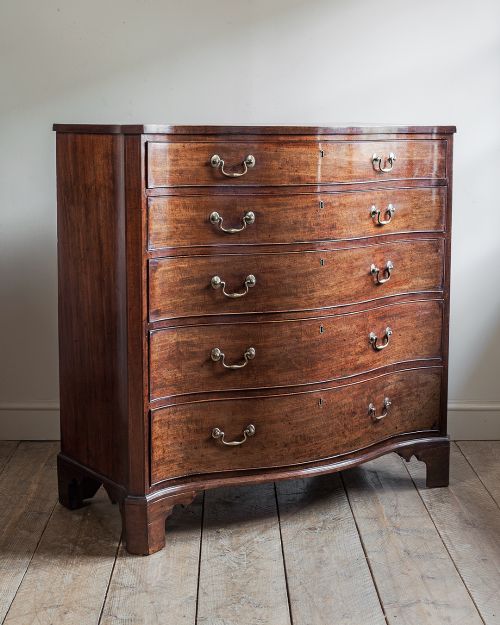

George III Mahogany Tallboy
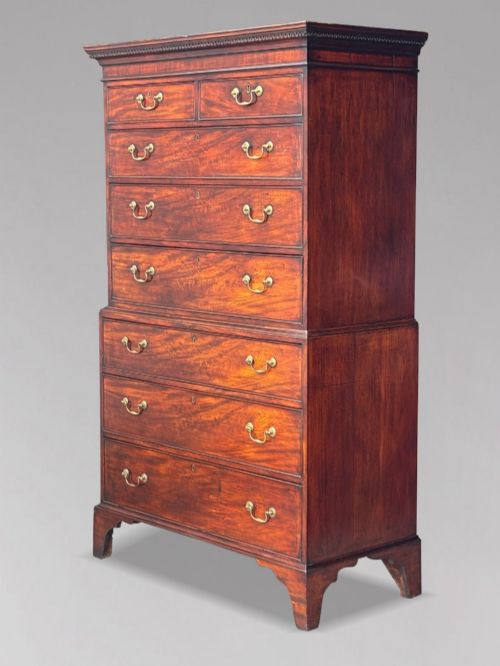
A George III mahogany tallboy is a commanding eighteenth-century chest on chest that offers serious vertical storage.
What they are
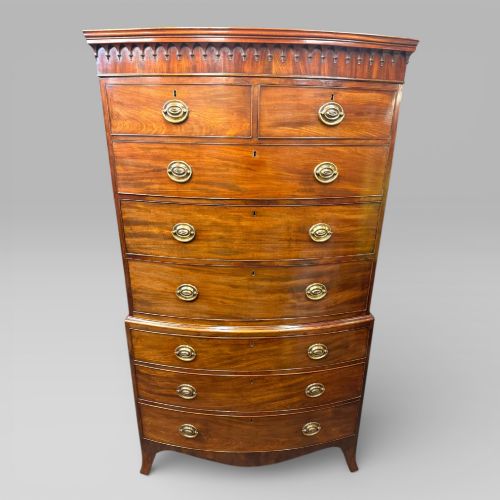
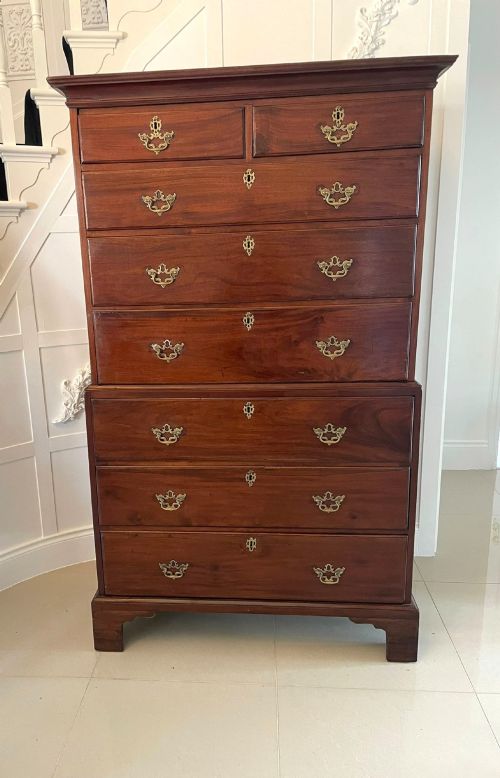
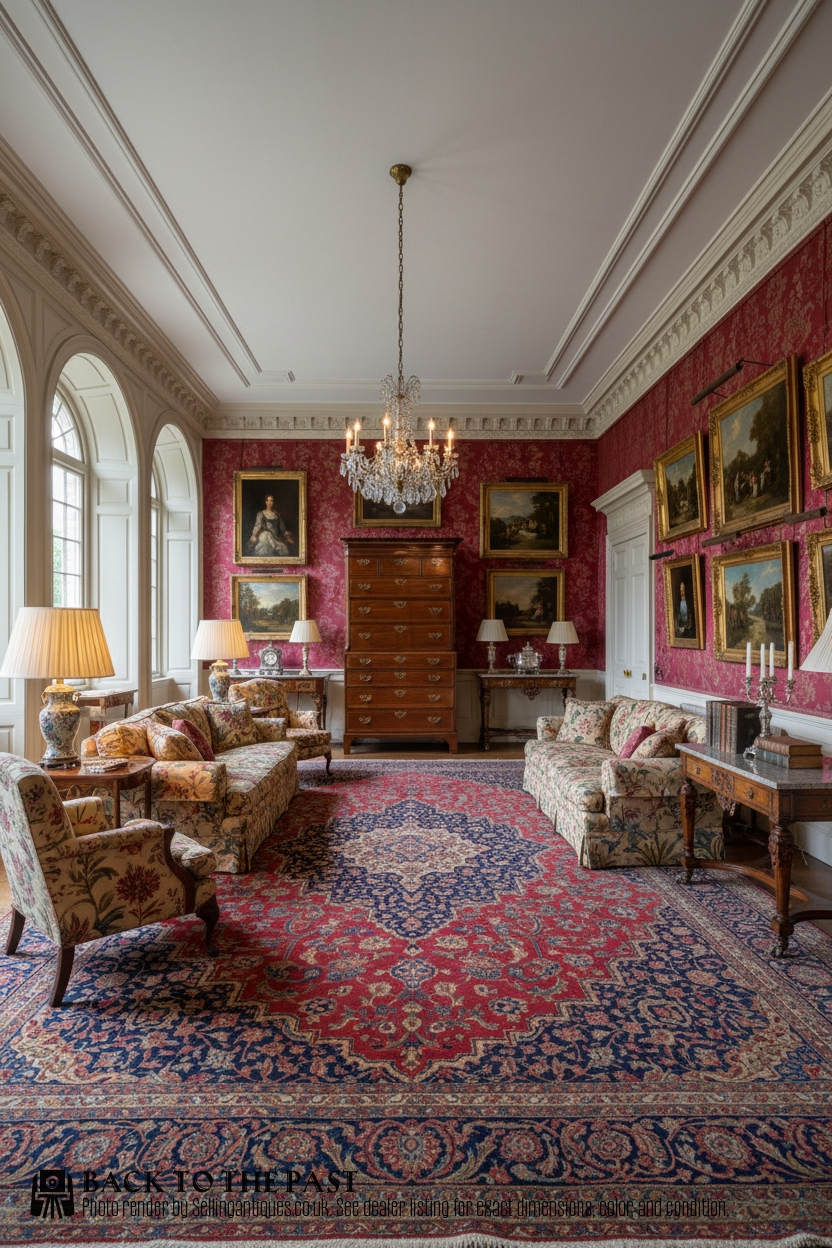
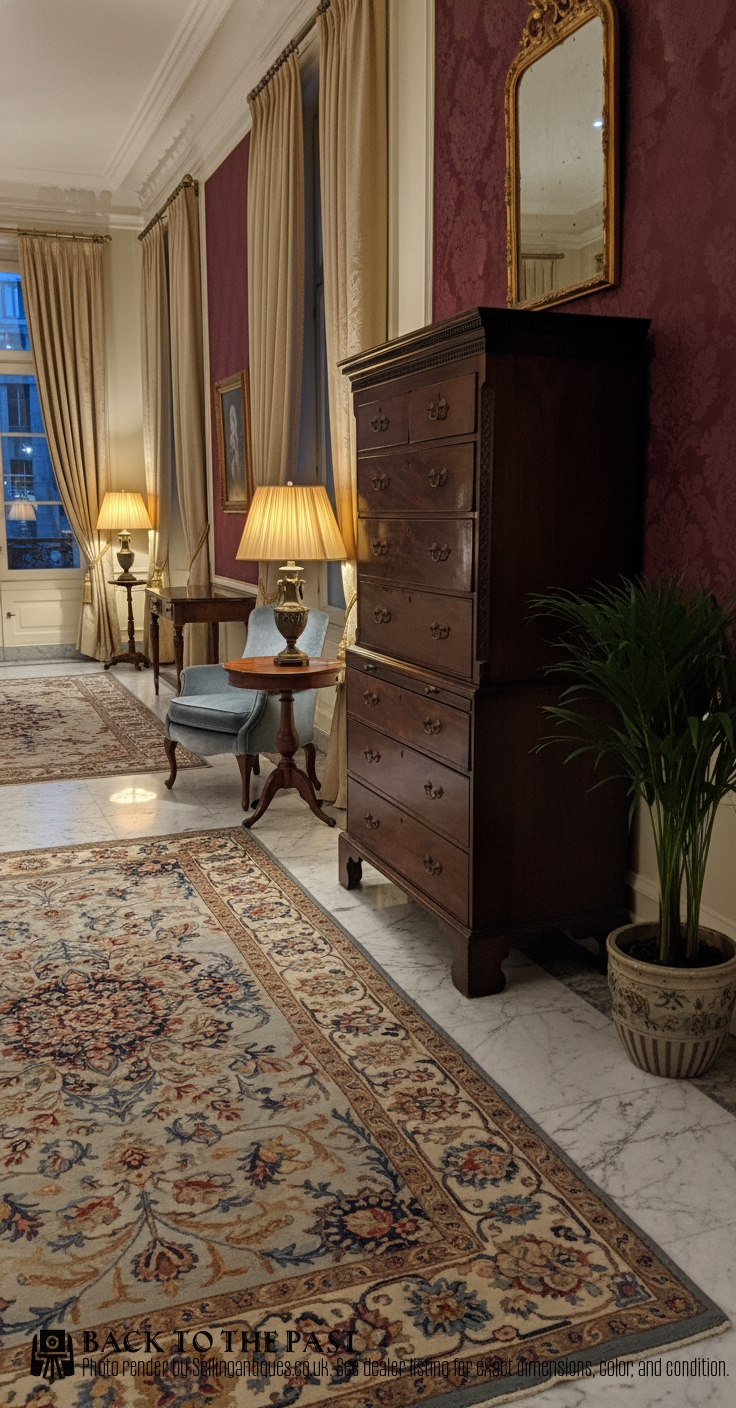
A george iii mahogany tallboy is a substantial two-stage storage piece designed during the eighteenth century. These items combine a lower chest of drawers with a narrower upper chest stacked directly upon it.
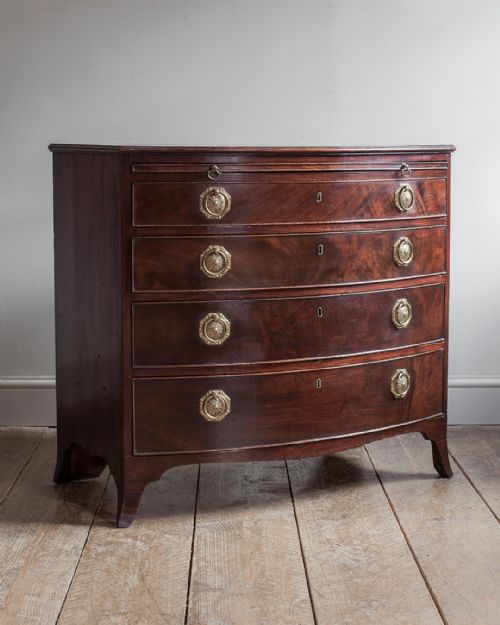
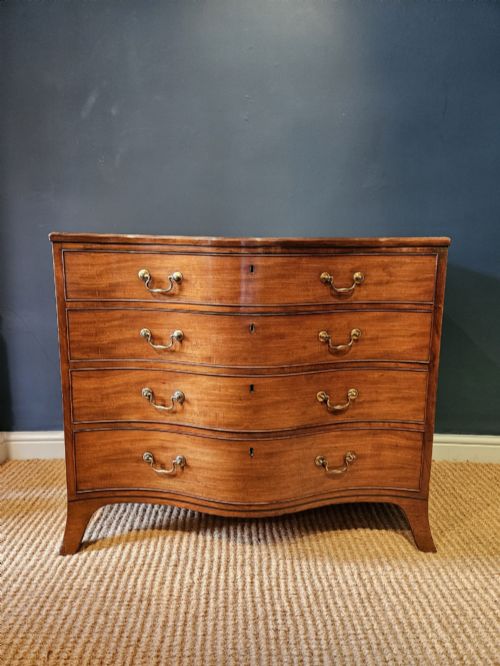
The evidence shows forms ranging from standard chests on chests to bow front, serpentine, and secretaire variations. Regional examples include Irish interpretations alongside pieces incorporating yew.
Buyers frequently encounter variants featuring an integrated brushing slide placed between the upper and lower sections. Proportions vary from tall, imposing carcasses down to remarkably small sizes.
How they were made
Cabinetmakers constructed these carcases primarily using solid mahogany and figured mahogany veneers, often pairing them with oak and yew. Secondary internal timbers and drawer linings typically relied on native hardwoods.
Surface decoration incorporated subtle boxwood inlay alongside fine brass hardware for drawer pulls and escutcheons. Joinery methods of the period ensured stability across the stacked upper and lower sections.
Retail Price Guide 2026
Typical UK retail prices for george iii mahogany tallboy, calculated from the Sellingantiques database of over a million retail prices indexed since 2003. This retail price guide relies exclusively on Sellingantiques data; no external sources or auction records are used, so the figures do not describe the wider market.
The documented records show materials spanning solid mahogany, figured mahogany, oak, yew, brass, and boxwood inlay.
What varies in quality
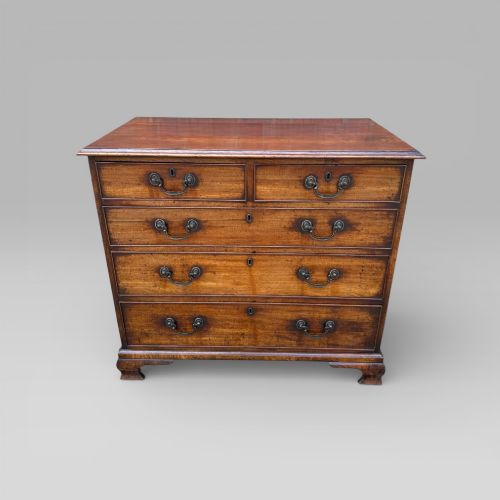
Quality rests on the selection of timber, particularly the grain pattern of figured mahogany across the drawer fronts. Superior execution shows in the crispness of the mouldings and the precision of the joinery.
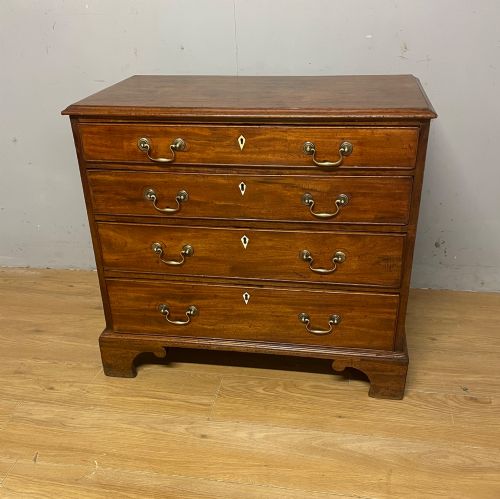
The presence of original brass hardware and well-figured secondary woods such as yew elevates the standard of a piece. Proportional balance between the upper and lower sections also distinguishes finer examples from heavier, plain carcasses.
The George III Mahogany Tallboy Glossary
- Tallboy
- A tall chest of drawers built in two stacked sections, commonly known as a chest on chest. This form maximises vertical capacity without expanding footprint.
- Brushing slide
- A pull-out shelf integrated into the carcase frame, positioned beneath the upper drawers. It served as a temporary surface for sorting items or grooming.
- Secretaire
- A fitted writing drawer containing small compartments and pigeonholes behind a drop-front panel. It turns the upper section into a compact desk.
- Serpentine
- A front profile shaped with a convex centre flanked by concave curves. This undulating line requires advanced cabinetmaking skill.
- Figured mahogany
- Timber showing distinctive, rippled grain patterns such as flame or feather. Cabinetmakers reserved these decorative veneers for primary visible surfaces.
Frequently Asked Questions
How do I use a tallboy today?
These pieces provide deep and versatile storage for bedrooms or dressing rooms, holding folded garments and linens with ease.
The pull-out brushing slide offers a practical ledge for temporary items while you organise the contents of the drawers.
What is the difference between a tallboy and a chest on chest?
In eighteenth-century cabinetmaking terminology, the terms are frequently used interchangeably to describe a two-section vertical chest.
Some regional variants or specific proportions might lean towards one label, but both refer to the same stacked architectural form.
Are all these pieces from the eighteenth century?
The evidence records these items originating strictly within the eighteenth century during the Georgian and George III periods.
Construction details and timber selections align with the prevailing standards of that era.
Do these pieces come apart for moving?
Because they are built as a chest on chest, the upper section lifts off the lower base. This two-part construction makes relocation significantly easier than a single solid unit.