

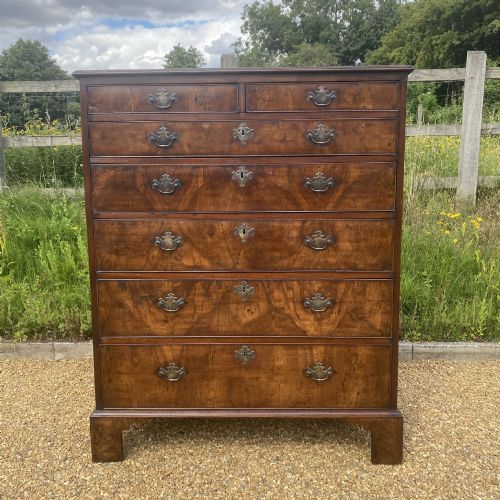
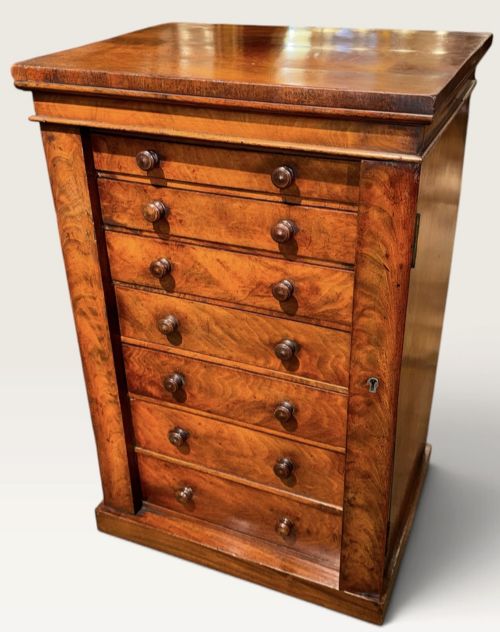
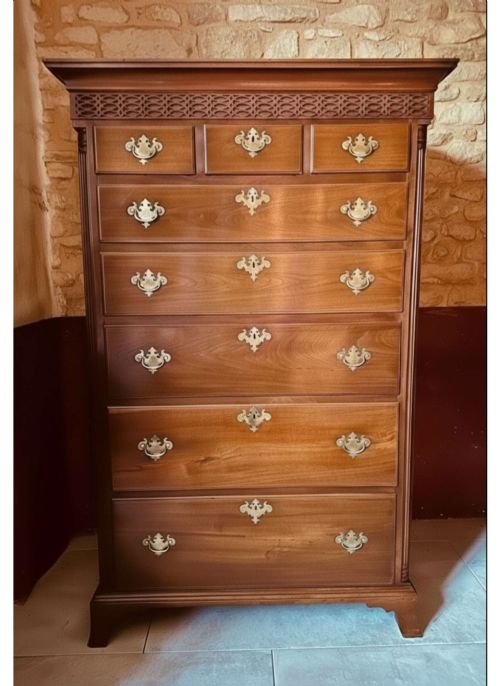
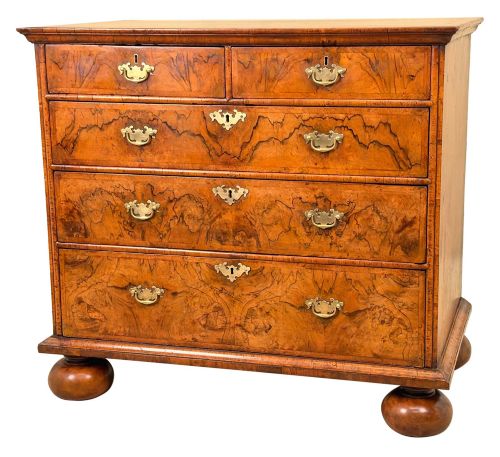
Georgian Tallboy Walnut
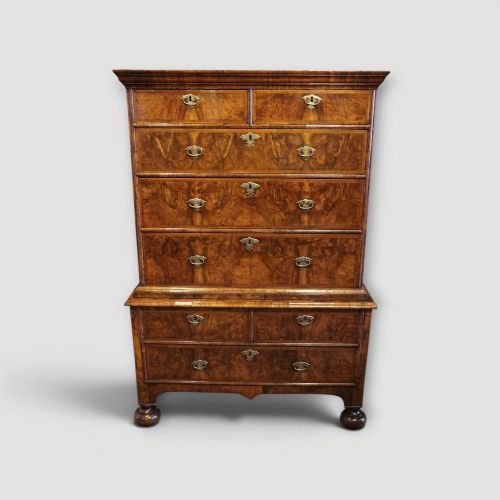
A georgian tallboy walnut provides towering presence and rich grain, offering serious storage in two stacked sections that anchor a room.
Georgian Tallboy Walnut
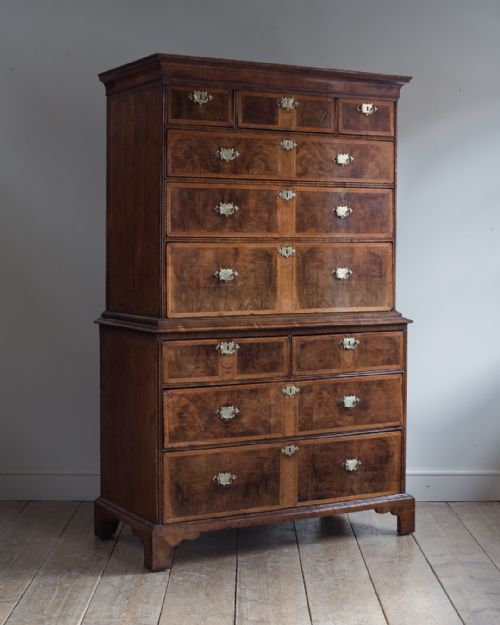
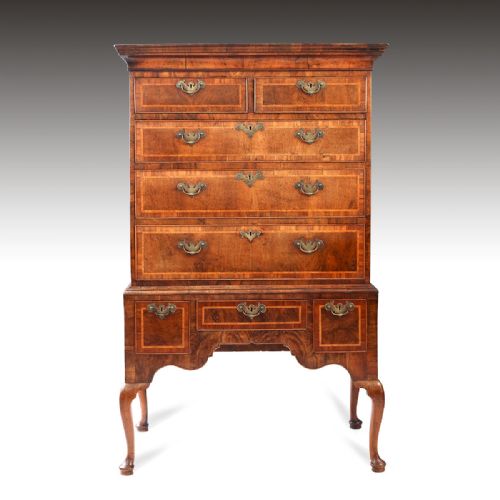
A georgian tallboy walnut brings together vertical storage and dramatic timber figures, taking the form of a chest on chest or a cabinet on stand. These pieces rise in two distinct sections, placing smaller drawers above deep ones to maximise capacity while keeping a modest footprint on the floor.
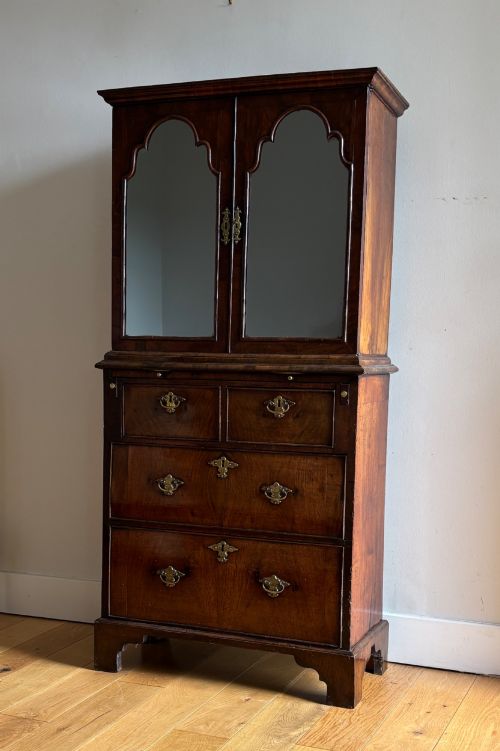
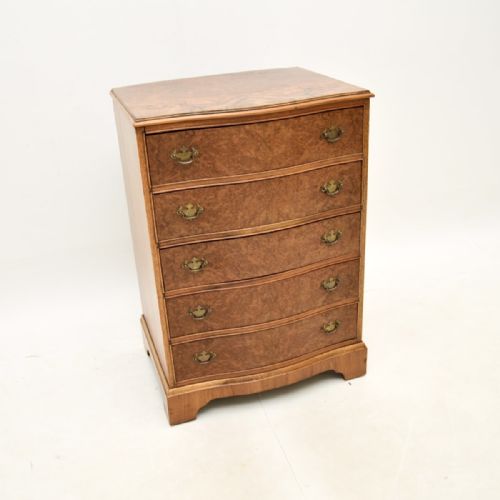
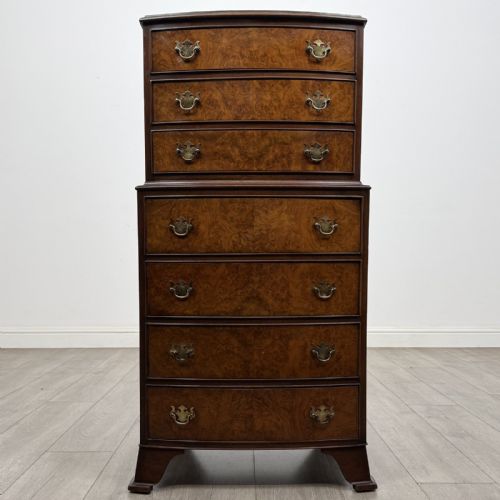
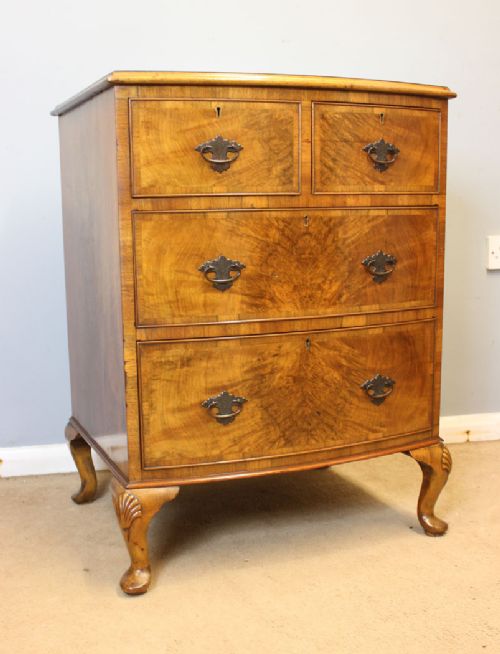
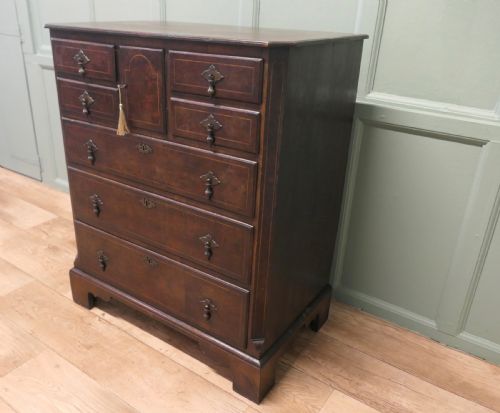
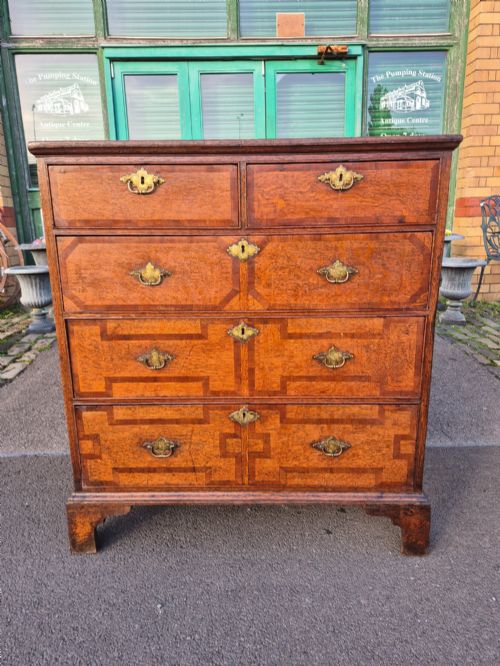
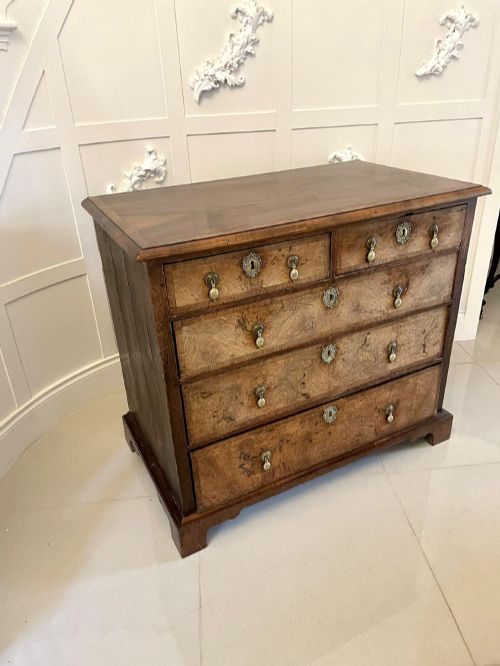
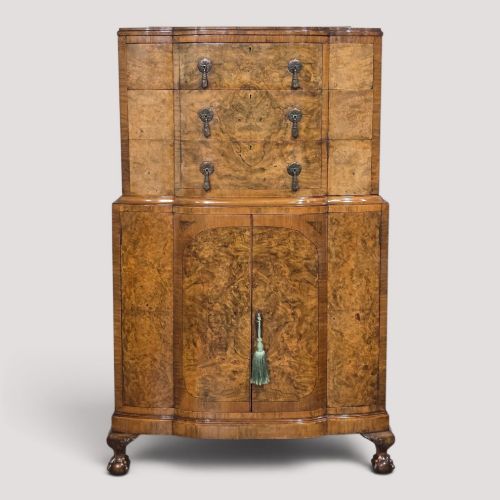
The pieces on this page span from the early eighteenth century through to later revival periods, bringing together authentic Georgian examples and twentieth-century interpretations in burr walnut. Alongside traditional chest-on-chest forms, listings include linen presses, chests on stands, and bow-fronted variants.
Early examples display the plain or figured timber characteristic of the reigns of Queen Anne and George I, while later revival items often utilise burr walnut veneers and serpentine fronts. Oak frequently appears as a secondary wood in drawer linings and carcases, grounding the softer walnut exterior.
Materials and Construction
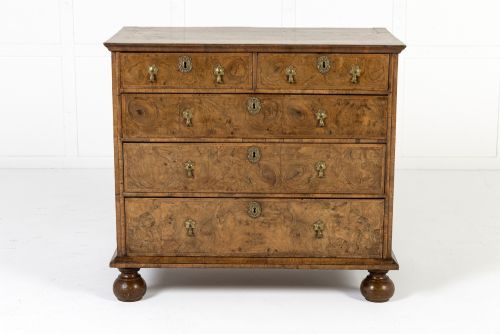
Cabinet makers relied on solid walnut and decorative veneers laid over sturdy secondary timbers like oak and pine. Figured and burr sections of the tree were sliced thin and arranged symmetrically across drawer fronts to create striking patterns.
Brass handles and escutcheons punctuate the dark timber, fastened with traditional fixings that contrast against the figured grain. Fine line inlay frequently defines the drawer borders on formal George II pieces, adding crisp geometric detail to the curved surfaces.
Georgian Tallboy Walnut Retail Price Guide 2026
Typical asking prices for georgian tallboy walnut among the pieces listed under this phrase on Sellingantiques today, from the lower quarter to the upper quarter. They describe what is for sale here now, not the wider market.
Listings feature periods ranging from the early eighteenth century through to 1930s revival pieces, utilising walnut, burr walnut veneer, oak, and brass.
Distinguishing Quality
The standard of a walnut tallboy rests upon the boldness of the timber figure and the preservation of the original surface patination. Pieces that retain their early brasses and untouched polish display a depth of colour that sanding and modern refinishing permanently alter.
Proportion and execution set the finer items apart, seen in the clean graduation of the drawers and the crispness of any line inlay or cornicing. The integration of the two stacked sections requires precise joinery so the waist mouldings meet with absolute harmony.
The Georgian Tallboy Walnut Glossary
- Tallboy
- A tall chest of drawers made in two stacked sections, often taking the form of a chest on chest. This configuration allowed maximum storage without consuming extra floor space.
- Burr Walnut
- Timber taken from the warted growths on a walnut tree, yielding highly swirled and mottled grain patterns. Cabinet makers prized these sections for decorative veneer panels.
- Chest on Stand
- A drawer section raised on a separate frame with legs, lifting the storage higher off the floor. This form is typical of early eighteenth-century pieces.
- Line Inlay
- Narrow strips of contrasting wood inserted into shallow grooves on the furniture surface. It creates delicate borders around drawer fronts and panels.
- Serpentine Front
- A curved furniture front featuring a convex centre flanked by concave curves. This contour requires skilled carpentry to shape and veneer.
Georgian Tallboy Walnut: Frequently Asked Questions
How do I clean walnut furniture?
Dust the surface regularly with a soft, dry cloth to prevent grit accumulation.
Feed the timber occasionally with a traditional wax to maintain the moisture and lustre of the grain.
Are these pieces made in two parts?
Most tallboys and chest-on-chest configurations divide horizontally into an upper and lower carcase. This split made heavy furniture manageable to transport up staircases in historic homes.
Lift the top section straight off the base during any relocation rather than tilting the entire chest.
What is the difference between walnut and oak?
Walnut offers a darker, highly figured brown tone with decorative grain patterns that suit formal reception rooms. Oak provides a coarser texture and greater structural strength, which is why makers used it for drawer linings.
Many early pieces combine both woods, using oak for internal carcases and walnut for external display surfaces.
How do I spot a revival piece?
Twentieth-century revival pieces often display machine-cut dovetails and modern internal construction methods alongside older styles. The timber finishes on these items tend to look more uniform than the varied patination found on eighteenth-century surfaces.
Check the secondary woods and construction details to confirm whether a piece dates to the Georgian era or the 1920s.