
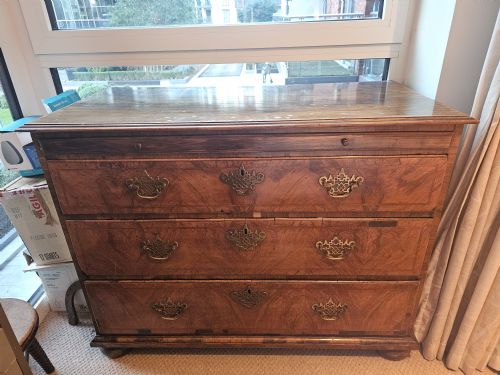

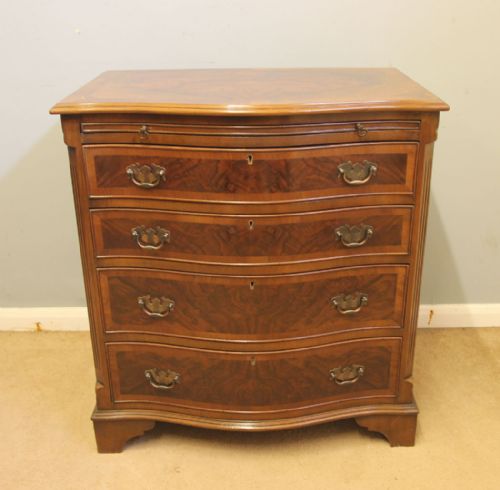


Walnut Brushing Slide Chest
A walnut brushing slide chest combines the storage of a drawer chest with a pull-out surface for writing or sorting.
What a walnut brushing slide chest is
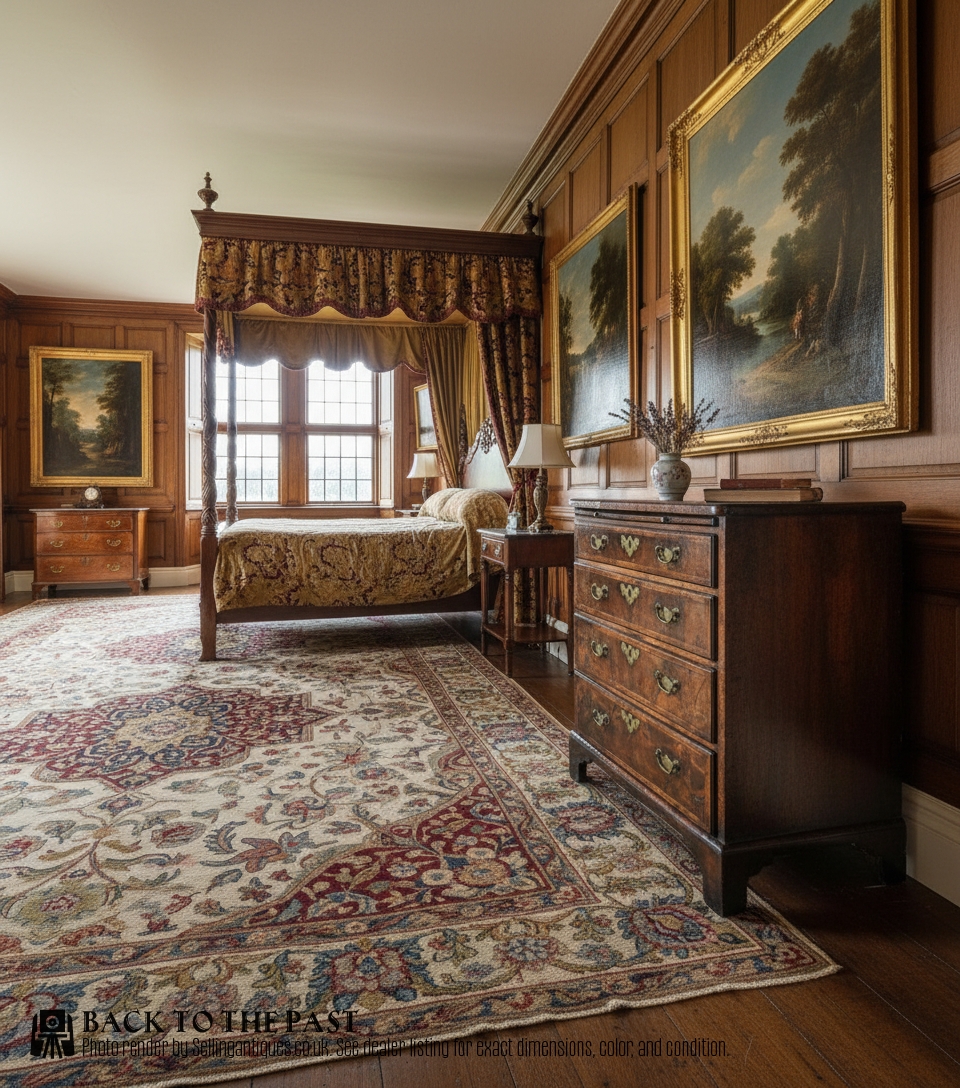
When you search for a walnut brushing slide chest, you encounter case furniture designed for domestic use during the 18th century and later revived in the 20th century. These pieces combine a set of drawers with a horizontal pull-out shelf positioned just below the top surface. The layout allows for temporary workspace without occupying extra room in a bedchamber or parlour.
The versions most frequently met on this page span the 18th century, including Early Georgian, George I, and George II periods, alongside 1930s revivals. Many examples exhibit compact proportions, appearing as small chests, bow fronts, serpentine fronts, or taller chest on chest configurations. The underlying carcase typically houses graduated drawers beneath the sliding panel.
How they were made
Cabinet makers constructed the foundational carcase using solid timbers such as oak, applying figured walnut or burr walnut veneers to the external visible surfaces. This technique displayed rich grain patterns across the drawer fronts and top panels. Solid walnut also appeared in various early pieces.
Hardware such as pull handles and escutcheons were cast in brass and fitted to the drawer fronts to complement the dark wood tones. The sliding panel operated on wooden runners integrated directly into the framing beneath the top board.
Retail Price Guide 2026
Typical UK retail prices for walnut brushing slide chest, calculated from the Sellingantiques database of over a million retail prices indexed since 2003. This retail price guide relies exclusively on Sellingantiques data; no external sources or auction records are used, so the figures do not describe the wider market.
Early cabinet makers occasionally miscalculated drawer depths, leaving sliding panels to brush the topmost handles on closure.
What varies in quality
The distinction between a standard piece and a superior example rests upon the choice of veneer and the handling of proportions. Highly figured burr walnut or carefully matched grain panels elevate the visual depth of the facade. Smaller proportions and untouched surface patination also define the upper tier of surviving examples.
Construction fidelity separates original 18th-century work from later 20th-century Georgian revival pieces. Precision in the dovetailing of internal drawer boxes and the smooth operation of the brushing slide indicate the standard of craftsmanship applied during manufacture.
The Walnut Brushing Slide Chest Glossary
- Brushing slide
- A pull-out shelf integrated into the upper section of a chest, historically used for folding clothes or writing notes. It slides back flush with the furniture frame when not in use.
- Burr walnut
- A specialised wood veneer harvested from the warted growths on walnut trees, prized for its swirling, intricate grain patterns. It was extensively utilised on high-end cabinet work.
- Chest on chest
- A tall case furniture form consisting of a smaller chest stacked directly on top of a larger base chest, creating substantial vertical storage. This format maximises capacity within a compact floor footprint.
- Serpentine front
- A furniture facade shaped with a concave central section flanked by two convex ends, creating a gentle wave effect. This curved profile requires advanced woodworking skill to execute cleanly in veneer.
- Patina
- The deep surface sheen and colour developed on wood through decades of handling, light exposure, and polishing. Untouched patina remains a key indicator of age and original finish.
Frequently Asked Questions
What was a brushing slide used for?
The slide provided a convenient horizontal surface for light tasks such as sorting papers, writing letters, or folding garments in a bedchamber.
Users pulled the panel out when needed and pushed it flush into the frame to save space once the task was finished.
How do I tell an 18th-century piece from a 1930s revival?
Examination of internal timber construction, secondary woods like oak, and hand-cut dovetail joints helps distinguish early work from later manufacturing.
Surface wear patterns and the method of veneer application also provide clear indicators of period origins versus 20th-century reproduction.
Where should I place a chest with a sliding shelf?
These chests fit well in bedrooms, hallways, or living spaces where surface area is useful but floor space remains limited.
Keeping the piece away from direct heat sources protects the walnut veneers and prevents the sliding mechanism from sticking.